










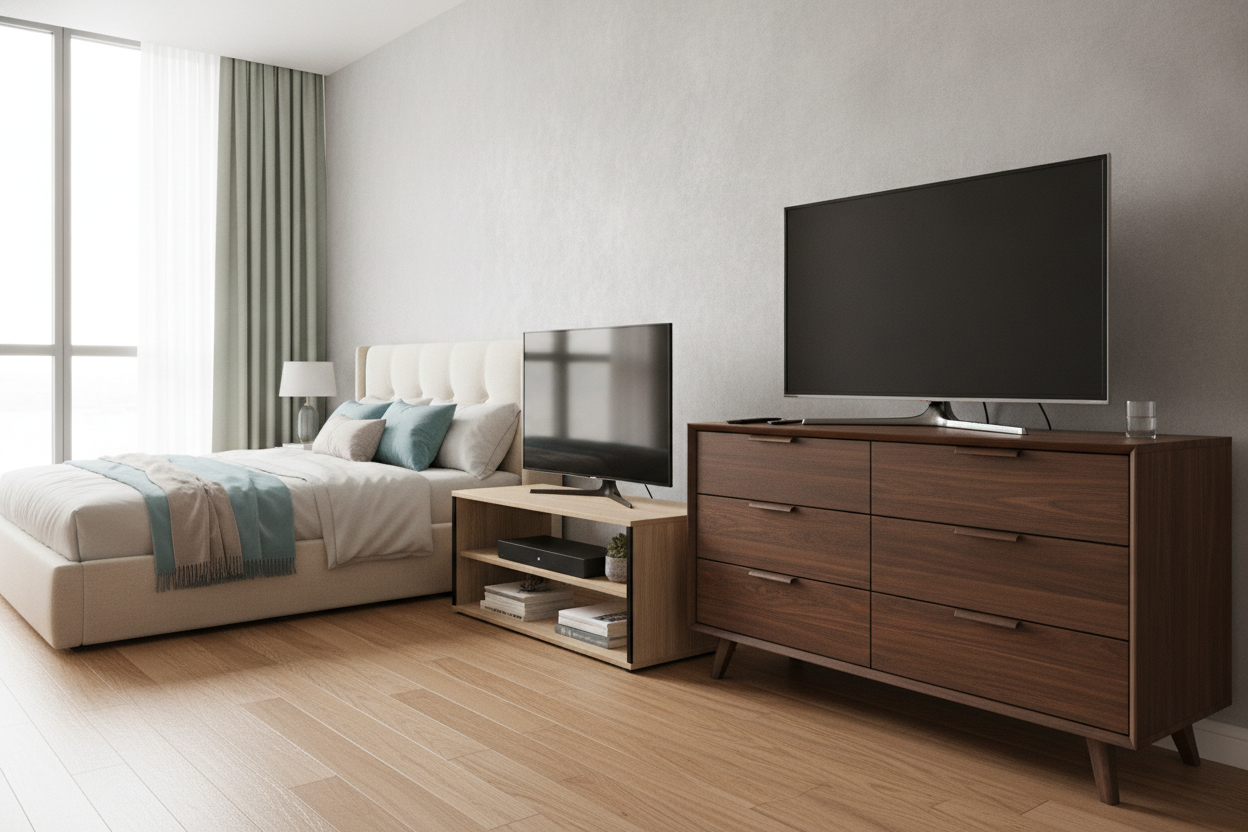
I spent three years watching prestige dramas on a TV perched atop a six-drawer dresser. By the time I finished the series, I was spending more on my physical therapist than my streaming subscriptions. We do this because the dresser is already there, but it is a storage unit, not a table for tv in bedroom. Using a tall dresser is the fastest way to turn your wind-down time into a literal pain in the neck.
- Standard dressers are 32-36 inches tall, which is about 8 inches too high for comfortable horizontal viewing.
- Viewing angles should be slightly below eye level to prevent cervical spine strain.
- Dedicated stands offer cable management that dressers lack, preventing the 'rat's nest' look.
- A shallower media table saves floor space in tight bedroom walkways.
The 'Dresser TV' Is Ruining Your Neck (And Your Vibe)
Most master dressers are designed for a standing person to reach for socks, not for a reclining person to watch a movie. When you are propped up on two pillows, your eye level is significantly lower than you think. Placing a flat-screen on a high dresser forces your chin toward your chest or your eyes to strain upward. It’s an ergonomic nightmare that leads to tension headaches before the credits even roll.
Beyond the physical toll, a dresser used as a bedroom tv shelf just looks cluttered. You end up with a mess of jewelry dishes, cologne bottles, and a tangle of black power cords competing for space. It feels temporary, like a college dorm room that never grew up. A bedroom should be a sanctuary, not a graveyard for mismatched electronics and tangled wires.
I’ve made the mistake of thinking 'it’s fine for now,' only to realize six months later that I’m dreading my nightly ritual because the screen is too high. The height of the furniture dictates the energy of the room. A lower, sleeker surface makes the ceiling feel higher and the space feel more intentional.
How to Find the Right Table for TV in Bedroom
When you start shopping for a master bedroom tv stand, you need to ignore the 'living room' sections of most furniture sites. Living room stands are often too wide or too low. In the bedroom, you need a goldilocks height—usually between 24 and 28 inches. This allows the screen to sit perfectly in your line of sight without requiring you to stack four pillows behind your head.
Depth is the other silent killer. Most dressers are 18-22 inches deep, which eats into your walking path. A dedicated media table can be as slim as 12-14 inches, especially since modern LED TVs have such a small footprint. If you are dealing with a weird layout where the only open wall is blocked by a door swing, a small tv stand for bedroom corners can save you from a cramped, awkward floor plan.
Look for materials that match your nightstands rather than your dresser. It creates a cohesive look that frames the bed as the centerpiece of the room. I personally prefer a mix of wood and metal—something that feels sturdy but doesn't have the visual bulk of a solid wood chest. Avoid the cheap 1.5 lb density particle board; it will sag under the weight of the TV within a year, and nothing looks sadder than a bowed shelf.
The Mattress Test for Viewing Height
Before you buy anything, do the mattress test. Sit in bed exactly how you normally watch TV. Have a partner or a friend measure the distance from the floor to your eyes. Now, measure your TV. You want the top third of the screen to be at that eye-level height. This ensures your neck stays in a neutral position.
If you find that your eye level is 38 inches from the floor, and your TV is 20 inches tall, you need a tv shelf for bedroom that sits around 25 inches high. It sounds like a lot of math for a Tuesday night, but your cervical spine will thank you. I once skipped this step and bought a beautiful mid-century console that was only 18 inches high; I spent the next month feeling like I was sitting in the front row of a movie theater.
My Favorite Alternatives to the Clunky Dresser Setup
If you want to move away from the dresser but don't want a traditional 'media unit,' consider a long console table. They are typically thinner and have an open base that makes a small bedroom feel much larger. It’s a sophisticated way to incorporate a tv stand for master bedroom layouts without making the room feel like a second living room.
For guest rooms or smaller spaces, styling a TV stand for 27 inch TV is a great way to add utility without over-crowding the room. A smaller screen allows you to use a more decorative table, like a reclaimed wood bench or a floating shelf. The goal is to make the tech blend in, not dominate the wall.
I always suggest browsing a collection of dedicated TV stands to see the various heights available. I recently swapped a bulky chest for a minimalist metal frame stand with a single oak shelf. The change was instant—the room felt ten square feet larger just because I could see the baseboards again. Don't be afraid to go for something with open shelving to keep the 'vibe' light and airy.
What About the Cords? (Keeping Your Sleep Space Zen)
The biggest downside to moving away from a dresser is losing the ability to hide cords behind a giant wooden box. However, visible cords are the enemy of sleep. If you choose an open-style table, you have to be aggressive about cable management. Use adhesive J-channels along the back of the table legs to guide wires down to the outlet unseen.
I use black Velcro ties instead of plastic zip ties. They are easier to adjust when you inevitably swap out a streaming stick or add a soundbar. If your outlet is in an awkward spot, a cord cover painted the same color as your wall is a five-minute fix that makes a massive difference. A clean, cordless look is what separates a professional-looking master suite from a cluttered bedroom.
FAQ
Is it better to wall mount or use a table?
Wall mounting is great for saving space, but it’s permanent. A table gives you flexibility to rearrange your furniture and provides a spot for a soundbar or a few decorative items to soften the look of the 'black mirror' on the wall.
How wide should my TV table be?
Ideally, the table should be at least 4-6 inches wider than the TV on both sides. This prevents the setup from looking top-heavy and reduces the risk of someone knocking the TV over as they walk past.
Can I use a bench as a TV stand?
Only if it's rated for the weight. Some decorative benches are meant for pillows, not 40-pound electronics. Always check the weight capacity before you trust your expensive OLED to a piece of accent furniture.

Dejar un comentario
Este sitio está protegido por hCaptcha y se aplican la Política de privacidad de hCaptcha y los Términos del servicio.