










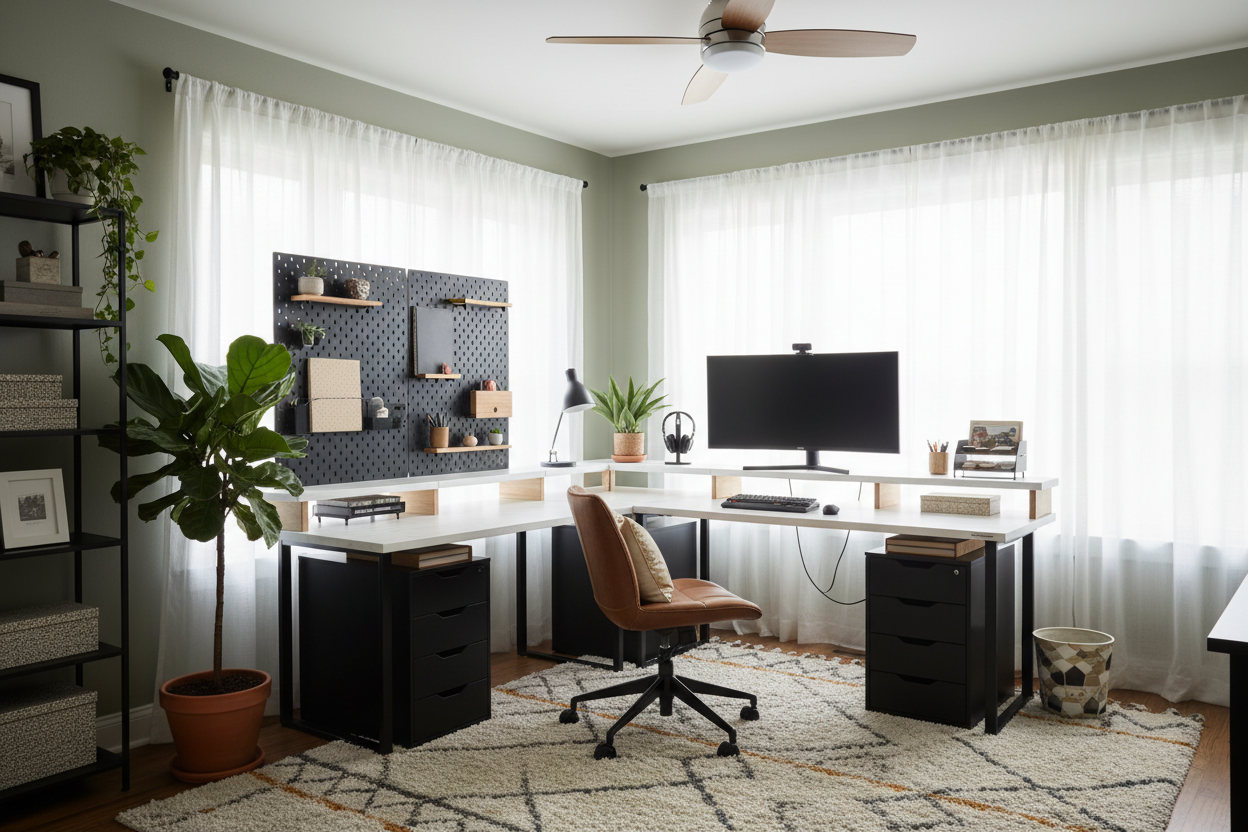
We have all been there: you clear out a spare bedroom or a living room corner, assemble a basic desk, and suddenly your space feels less like a professional studio and more like a college dorm. The challenge of creating a work from home ikea environment is real. You want the affordability and modularity the Swedish retailer offers, but you do not want the room to look like a showroom catalog.
By strategically choosing the right materials, understanding visual weight, and mixing textures, you can build an ikea work from home setup that feels bespoke, mature, and built to last through years of daily use.
Quick Decision Guide
- Skip the honeycomb paper interiors: Opt for solid pine or bamboo tops for desks that will not warp under heavy monitor mounts.
- Mind your clearances: Leave a minimum of 36 inches behind your desk to push your chair back without scraping the wall.
- Mix, do not match: Avoid buying a complete matching set; instead, pair an affordable desk with a vintage rug or a non-IKEA ergonomic chair to break up the uniformity.
- Upgrade the hardware: Swapping factory-standard drawer pulls for solid brass or matte black metal instantly adds a custom, high-end feel.
Material Choices That Dictate Longevity
When you are outfitting a home office on a budget, the materials you select determine whether your desk survives three years or ten.
Solid Wood vs. Engineered Veneers
IKEA offers a massive range of core materials. The most affordable options rely on a honeycomb paper core wrapped in fiberboard and acrylic paint. While incredibly light, these surfaces have zero tolerance for moisture and will inevitably bow under the weight of a dual-monitor mount. If you want durability, look for solid wood options or bamboo tabletops. These materials offer better structural integrity and a warmer, more organic texture that grounds the room.
The Visual Weight of Metal Frames
A common mistake in small suburban offices is using heavy, blocky drawer units as desk legs on both sides. This creates a dense visual weight that makes the room feel cramped. Instead, use a solid storage unit on one side and an open metal A-frame on the other. This negative space allows light to pass through and makes the footprint feel significantly lighter.
Space Planning Your Home Office
North American homes often feature open-concept living areas or awkwardly sized spare bedrooms. Dropping a standard desk against the longest wall is rarely the smartest layout.
Floating Your Desk
If you have the square footage, try floating your desk in the center of the room facing the door. This instantly creates a command position, making the space feel like a legitimate executive office rather than an afterthought. Just ensure you run cable management along the legs and under a rug to avoid tripping hazards.
Ergonomic Clearances
Comfort goes beyond your chair's lumbar support. When planning your layout, measure a 36-inch radius behind your desk. This gives you enough clearance to roll back, stand up, and stretch without hitting a bookshelf or scuffing your baseboards. If you are placing a credenza behind your desk, increase that gap to 48 inches so you can comfortably open drawers while seated.
Designer's Honest Take: Lessons from My Own Projects
Early in my career, I tried to save a client money by using a 78-inch tabletop supported only by two drawer units at the ends. It looked incredibly sleek and minimalist on installation day. Six months later, I got a call.
The client had placed two heavy 27-inch monitors and a custom desktop tower right in the center. Because we did not install a central support leg, the engineered wood had visibly sagged by nearly an inch in the middle. The veneer also started peeling at the edge where his watch band repeatedly rubbed against it. I learned the hard way that you cannot cheat physics with hollow-core furniture. Now, I always specify a steel support beam or a central leg for any desk spanning over 50 inches, and I insist on solid wood or high-pressure laminate for primary work surfaces.
Frequently Asked Questions
How long does IKEA home office furniture last?
It depends entirely on the material. Solid pine or bamboo pieces can last 10 to 15 years with proper care. However, hollow-core fiberboard desks typically show significant wear, edge peeling, or sagging within 3 to 5 years of daily, heavy use.
What is the best IKEA desk for multiple monitors?
The Idåsen sits at the top of the list for heavy setups. Its underframe is solid steel, and it comes with an impressive weight capacity that easily handles dual monitors, monitor arms, and heavy audio equipment without a hint of wobble.
How can I make my IKEA office look more expensive?
The secret is in the styling and context. Swap out the standard plastic drawer pulls for solid brass hardware. Add a high-quality desk mat, like full-grain leather or thick wool felt, to hide the seams and protect the surface. Finally, ensure your lighting is layered by skipping the harsh overheads and using a sculptural brass task lamp.


Dejar un comentario
Este sitio está protegido por hCaptcha y se aplican la Política de privacidad de hCaptcha y los Términos del servicio.