










I spent three hours measuring the perfect height for my new 65-inch 4K screen, drilled four massive holes into my rental’s drywall, and stepped back only to realize I’d made my living room look exactly like a Buffalo Wild Wings. It was just a black rectangle hovering in a sea of white paint. No soul, no architecture, just... tech.
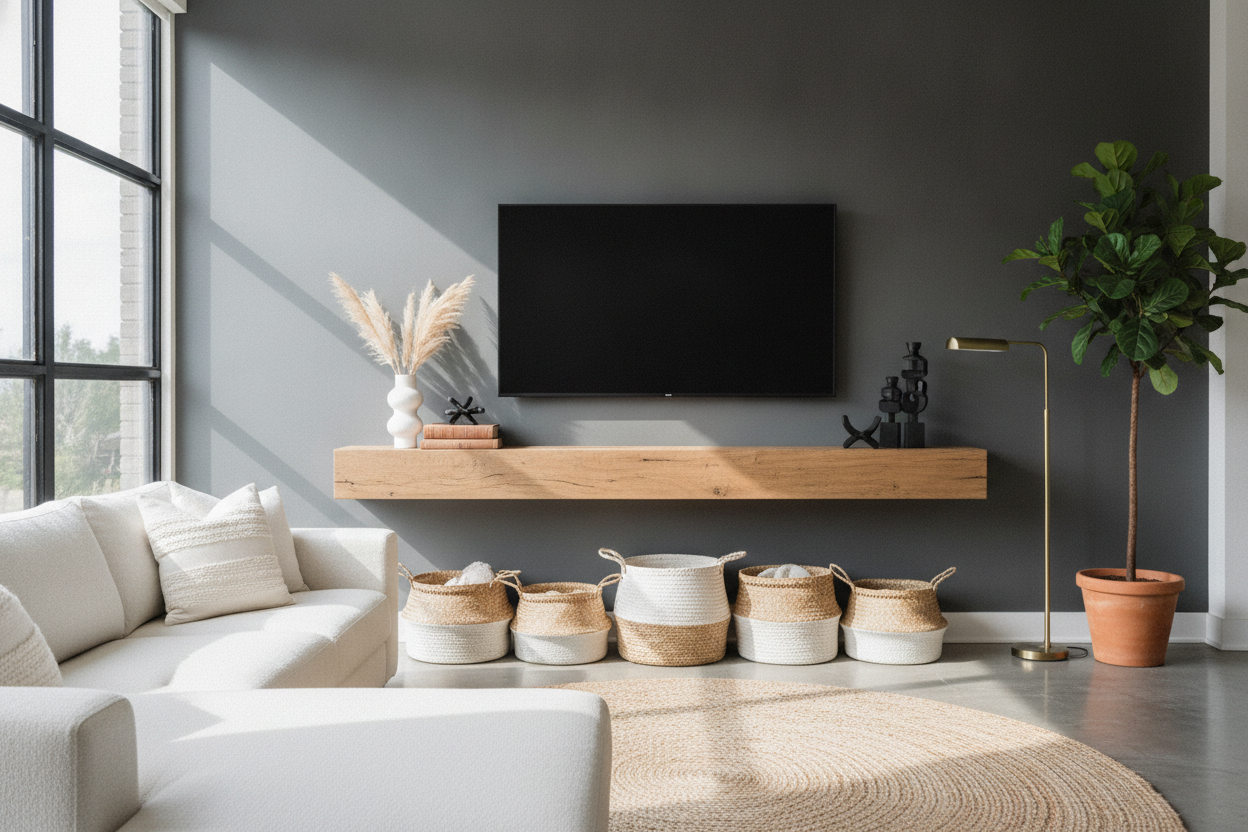
That is the curse of the floating TV. Without something to anchor it to the ground, your screen looks like an afterthought. I eventually fixed it by installing a mantel for tv—a simple, chunky piece of wood that transformed the wall from 'waiting room' to 'curated home.'
Quick Takeaways
- Visual grounding is the difference between a home and a media room.
- A mantel shelf saves floor space compared to bulky media consoles.
- Aim for the mantel to be 6 to 12 inches wider than the TV screen for proper scale.
- Ergonomics matter: keep the center of the TV at eye level, not ceiling level.
The Problem With the 'Floating Black Box'
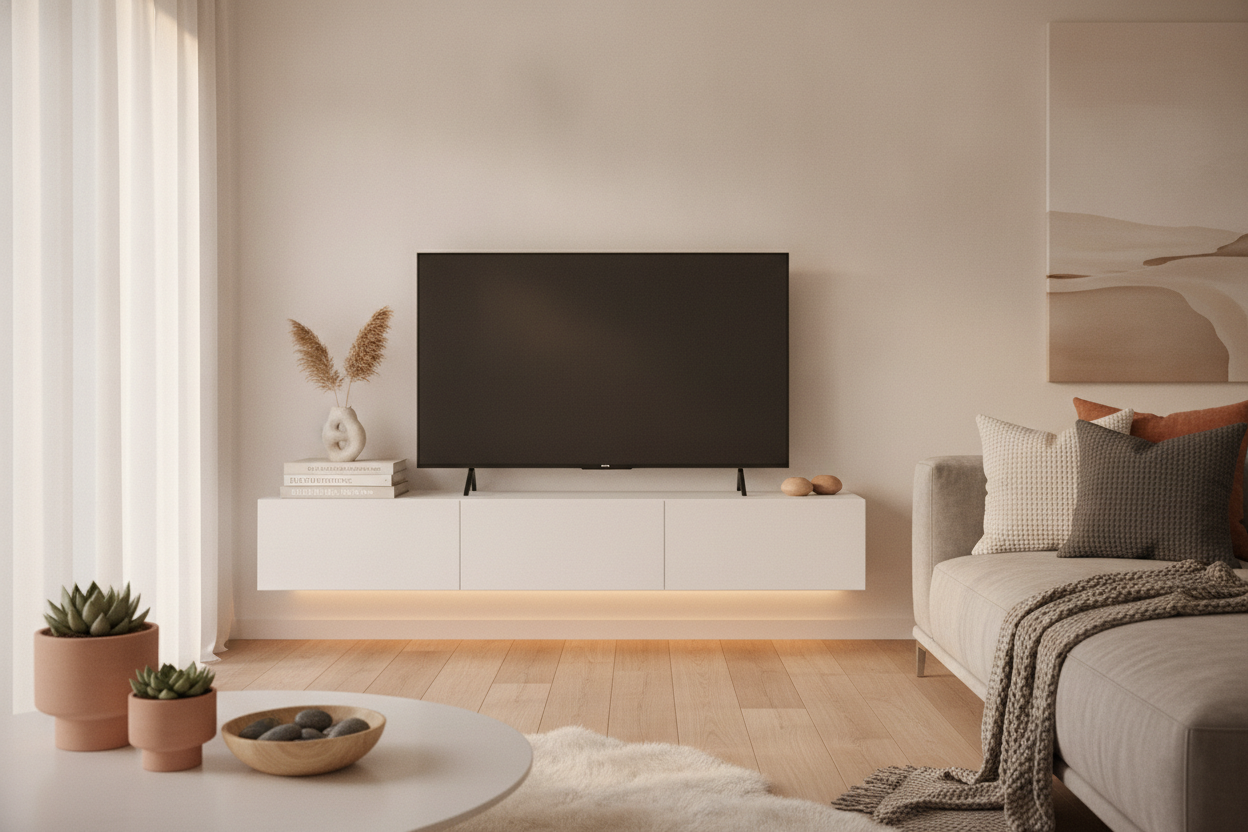
We’ve all seen it: a beautiful, thin TV mounted four feet off the floor with absolutely nothing beneath it. It’s a design void. Unless you live in a minimalist concrete bunker in Berlin, a floating TV feels unmoored. It lacks the architectural weight that a room needs to feel settled. It’s the visual equivalent of wearing a tuxedo with flip-flops.
In my first apartment, I thought I was being 'clean' by keeping the floor clear. Instead, I just stared at a tangle of black cords dangling like vines. Even if you hide the wires behind the wall, the lack of a horizontal line underneath the screen makes the proportions of the room feel top-heavy. You need a base. You need something that says, 'This TV belongs here, and I meant for it to stay.'
Enter the Fake-Out: The Mantel Shelf Under TV Hack
If you don't have the space or the budget for a $1,200 solid oak media console, a mantel shelf under tv is your best friend. I’m talking about a thick, 4-to-6-inch deep beam of wood—real wood, please, skip the hollow MDF if you can help it—mounted directly to the studs. It provides that much-needed architectural ledge without eating up 18 inches of floor depth.
This is especially vital for small apartments. When I moved into a 500-square-foot studio, every inch of floor was precious. A traditional stand was out of the question. By using a mantel shelf, I kept the floor open, which made the room feel twice as large. Just make sure you get the proportions right; you should check the exact math for a floating shelf before you start drilling, because a shelf that’s too short makes the TV look like a giant mushroom. Aim for something roughly 20% wider than the screen itself.
What If You Actually Have a Hearth?
If you’re lucky enough to have a fireplace, the challenge changes. Now you’re dealing with heat and competing focal points. Installing a shelf over fireplace for tv isn’t just about looks; it’s a literal heat shield. Rising hot air can fry the sensitive internals of your OLED over time, and a thick mantel helps divert that flow away from the screen.
The trick here is balance. You don't want the TV to feel like it's crowding the fire. I usually suggest a mantel that’s at least 8 inches deep to provide enough of a buffer. It acts as a visual break, separating the 'cozy' element of the flames from the 'modern' element of the Netflix binge. It’s the bridge between 19th-century charm and 21st-century habit. Just be prepared: mounting into brick or stone is a two-person job and requires a masonry bit that will make your neighbors hate you for an hour.
Wait, How High Should a Lower Fireplace Mantel for TV Go?
This is where most people mess up and end up with a literal pain in the neck. If you’re installing a lower fireplace mantel for tv, you have to resist the urge to mount it at chest height. If the mantel is too high, the TV goes higher, and suddenly you’re looking up like you’re in the front row of a movie theater.
The sweet spot for the mantel is usually around 30 to 35 inches from the floor, depending on your seating. This allows the TV to sit just above it while keeping the middle of the screen at eye level when you're slumped on the sofa. I once mounted mine too high in a fit of 'aesthetic' inspiration and spent three months wondering why I had a tension headache every night after watching the news. Don't be me. Use blue painter's tape to mock up the height before you touch a drill.
Styling the Ledge So It Doesn't Look Accidental
Once the shelf is up, don't just leave it bare. That’s how it looks like a construction mistake. You want to layer it. I like to use trailing plants—something like a Pothos—on one end to soften the hard edges of the screen. On the other side, a couple of low-profile coffee table books or a small ceramic bowl can balance the weight.
The biggest hurdle is the tech. If you have a soundbar, it should live on this shelf. If you have a bulky cable box or a gaming console that the shelf can't hide, look into adjustable shelf storage units that can sit off to the side. The goal is to make the mantel the star. If you're struggling with what goes where, there are plenty of guides on what to put on a shelf for under the tv that won't block your remote's IR sensor or look cluttered. Keep it simple, keep it low, and keep it intentional.
FAQ
Can I install a mantel on a rental wall?
Yes, but use heavy-duty toggle bolts. You'll have to patch some holes when you move out, but it's worth it for the year or two of actually liking your living room. Just check your lease before you go drilling into brick.
How deep should the mantel be?
I recommend at least 6 inches. Anything shallower looks like a picture ledge and won't have the visual weight to anchor a large TV. If you want to put a soundbar on it, measure the soundbar first—most need at least 5 inches of clearance.
Does the mantel have to match the floor?
Not at all. In fact, I prefer it when it doesn't. If you have light oak floors, a dark walnut mantel adds a nice bit of contrast. Just try to match the vibe—don't put a rustic reclaimed barn beam in a high-gloss modern apartment.


Dejar un comentario
Este sitio está protegido por hCaptcha y se aplican la Política de privacidad de hCaptcha y los Términos del servicio.