










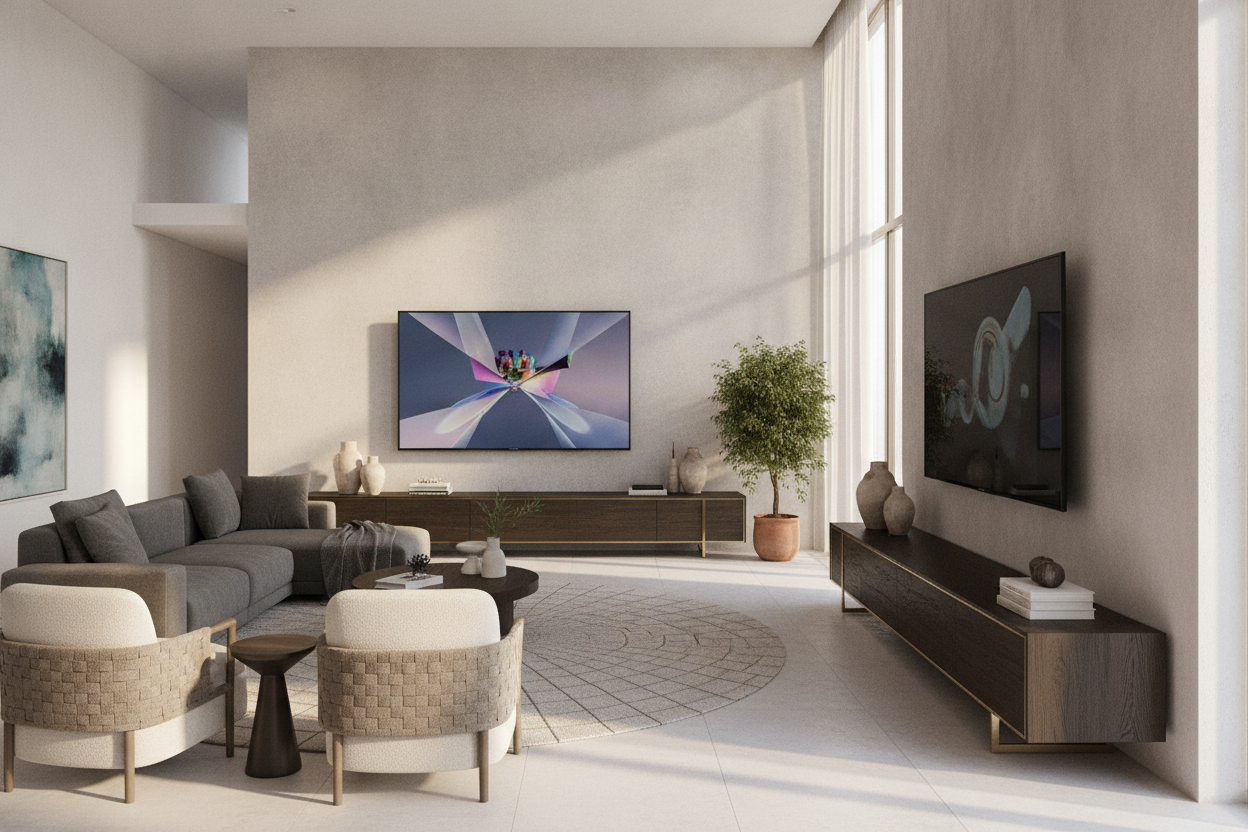
I remember helping a friend mount a massive 85-inch OLED last summer. We spent three hours perfectly cable-managing and leveling the bracket, only to realize his existing 60-inch media stand looked like a toddler’s toy underneath it. The TV hung off the edges by several inches on each side, creating a top-heavy visual disaster. It didn’t just look bad; it looked precarious. That is the exact moment I realized why an 88 inch tv console isn't just a piece of furniture—it is a structural anchor for your entire home aesthetic.
Quick Takeaways
- A console should always be at least 10-20% wider than the TV screen itself.
- Center support legs are non-negotiable for any unit spanning over 75 inches.
- Large, singular pieces of furniture reduce visual clutter more effectively than multiple small pieces.
- Solid wood or heavy-duty metal frames prevent the dreaded 'mid-span sag' over time.
The 'Floating Postage Stamp' Problem
The 'floating postage stamp' is a design crime I see in half the homes I stage. You spend thousands on a state-of-the-art screen, but you pair it with a standard-sized media stand that was designed for the 42-inch plasmas of 2010. When the TV is wider than the furniture beneath it, the room feels upside down. The eye is drawn to the awkward overhang, and the screen looks like it’s barely clinging to the wall.
Using a tv stand for 88 inch tv setups solves this by providing a visual base. It creates a 'grounding' effect. Without that extra length on the left and right, the TV feels like an intruder in the room rather than a part of the architecture. I’ve seen beautiful living rooms ruined because the owner was afraid to 'go big' with the console. Don't be that person. You need that horizontal line to stretch across the wall to balance out the height of the screen.
Why an 88 Inch TV Console Changes the Math
Interior design is often just a game of proportions. Designers often refer to the 'Golden Ratio,' and while you don't need a calculator to buy a couch, you do need to understand scale. An 85-inch TV is roughly 75 inches wide. If you put that on a 75-inch stand, it looks cramped. If you put it on an 88-inch stand, you suddenly have about six inches of 'breathing room' on either side. This tiny bit of negative space is what makes the setup look like a purposeful luxury lounge instead of a dorm room.
When you go extremely wide with your console, you’re also creating a platform for other design elements. It bridges the gap between the floor and the tech. A wide console allows the TV to sit lower or higher without feeling disconnected from the rest of the furniture. It turns the 'black box' on the wall into a focal point that actually makes sense with your sofa and rug layout. I always tell my clients: the furniture should always be the frame, and the TV is the art. You wouldn't put a massive painting in a tiny frame, so don't do it with your tech.
Finding a TV Stand for TVs Up to 88 Inches (That Doesn't Bow)
Here is the cold, hard truth about furniture manufacturing: most 'budget' brands aren't built to span seven feet. If you buy a tv stand for tvs up to 88 inches made of thin particleboard, it will start to smile at you—and by smile, I mean the middle will sag under the weight of the TV or even its own gravity. When you are dealing with this much length, you need to look at the underside. Does it have fifth or sixth support legs in the center? If not, walk away.
I’m a huge advocate for upgrading to a solid wood console whenever possible. Kiln-dried hardwoods like oak, walnut, or mango wood have the structural integrity to handle an 88-inch span without warping. If you must go with manufactured wood, ensure it has a steel sub-frame. I once tested a cheap 90-inch MDF unit that developed a noticeable dip within three months just from the weight of a few coffee table books. It’s worth spending the extra $300 now to avoid replacing a sagging unit in a year.
How to Style a TV Stand for 88 Inch TV Setups
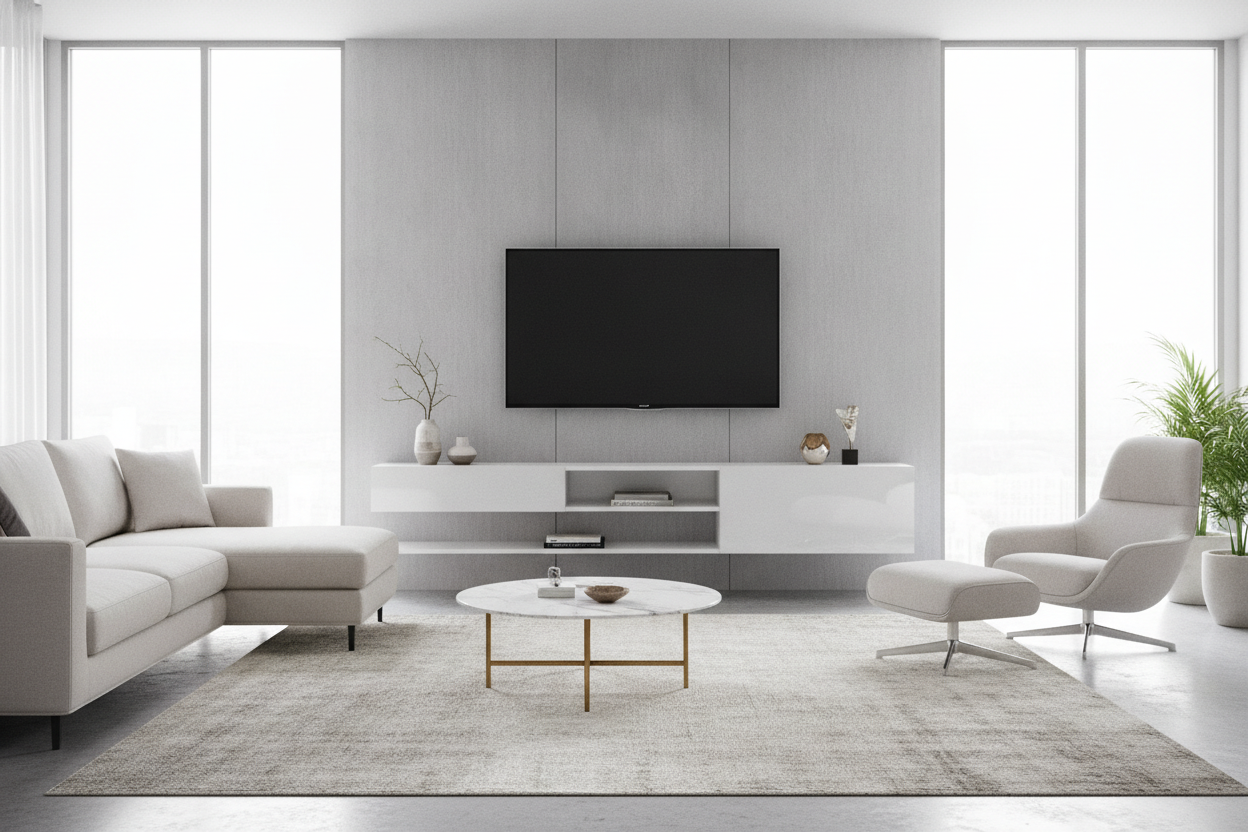
Once you have all that glorious surface area, the temptation is to fill it with every souvenir you’ve ever owned. Resist that urge. The goal is to make the tech look integrated, not cluttered. I like to use the 'Rule of Three' on these long consoles. On one end, place something tall and architectural—think a heavy ceramic vase or a high-end table lamp. On the other end, a stack of three oversized coffee table books. This balances the height of the TV screen.
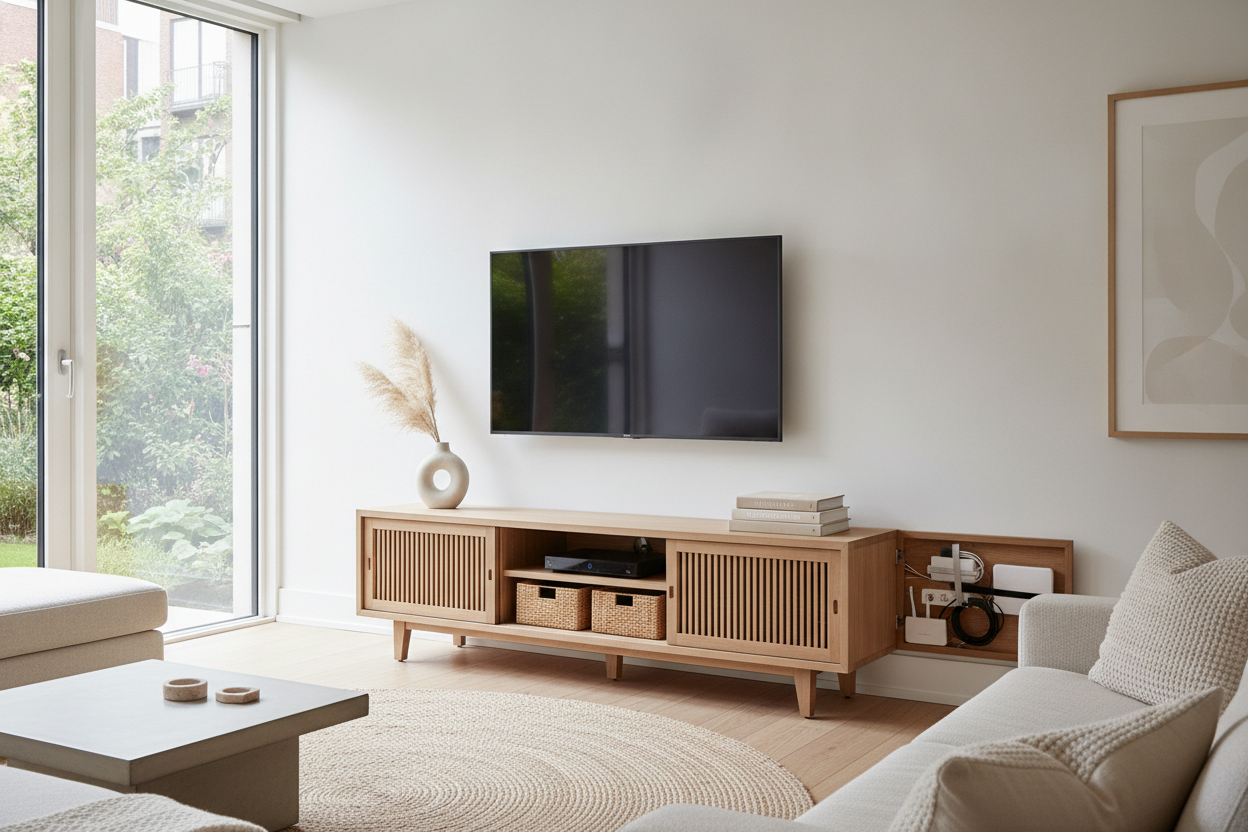
Intentional negative space is your secret weapon. You don't need to cover every inch of a tv stand for 88 inch tv. Leaving a foot of empty space between your speakers and your decor makes the room feel airy and expensive. If you have visible wires, hide them behind the console or use paintable cord covers. Nothing kills the 'luxury lounge' vibe faster than a tangle of HDMI cables hanging down like vines in a jungle. Use the drawers of the console for the ugly stuff—remotes, controllers, and manuals—and keep the top surface strictly for aesthetics.
Wait, Will This Swallow My Living Room?
The most common fear I hear is that an 88-inch piece of furniture will make a room feel smaller. It’s actually the opposite. When you use several small pieces of furniture—a small TV stand, a separate bookshelf, a little side table—you chop up the visual flow of the room. This makes the space feel 'busy' and cramped. A single, long, low-profile console draws the eye across the room in one continuous line, which actually makes the wall feel wider and the ceiling feel higher.
Even in an average-sized room, a long console can work if you keep the depth slim. Look for units that are 15-18 inches deep rather than 24. This keeps the walkway clear while giving you that massive horizontal presence. If you're still worried it's too big for a normal room, choose a model with legs that lift it off the floor. Seeing the floor continue underneath the piece tricks the brain into thinking the room is larger than it is.
Personal Experience: The 'Two-Stand' Mistake
Years ago, I tried to save money by pushing two 40-inch media cabinets together to support a new TV. I thought I was being clever. In reality, it looked terrible. There was a visible seam in the middle that was never perfectly level, and the wood grains didn't match. Every time I sat on the sofa, my eyes went straight to that gap. I eventually sold them both on Marketplace for a loss and bought a proper 88-inch unit. The difference was night and day. The room finally felt 'finished.' Don't hack it—just get the right size the first time.
Frequently Asked Questions
How much wider than the TV should the console be?
Ideally, your console should be at least 6 to 10 inches wider than your TV on each side. For an 85-inch TV (which is 75 inches wide), an 88-inch to 95-inch console is the sweet spot.
Can I put a smaller TV on an 88-inch console?
Absolutely. A smaller TV on a large console looks like a deliberate design choice. It gives you more room for lamps and decor, which can actually make the room look more high-end.
Do I need a center support leg?
Yes. For any furniture over 70 inches long, a center support leg is vital to prevent the top surface from bowing over time, especially if you aren't wall-mounting the TV.

Dejar un comentario
Este sitio está protegido por hCaptcha y se aplican la Política de privacidad de hCaptcha y los Términos del servicio.