










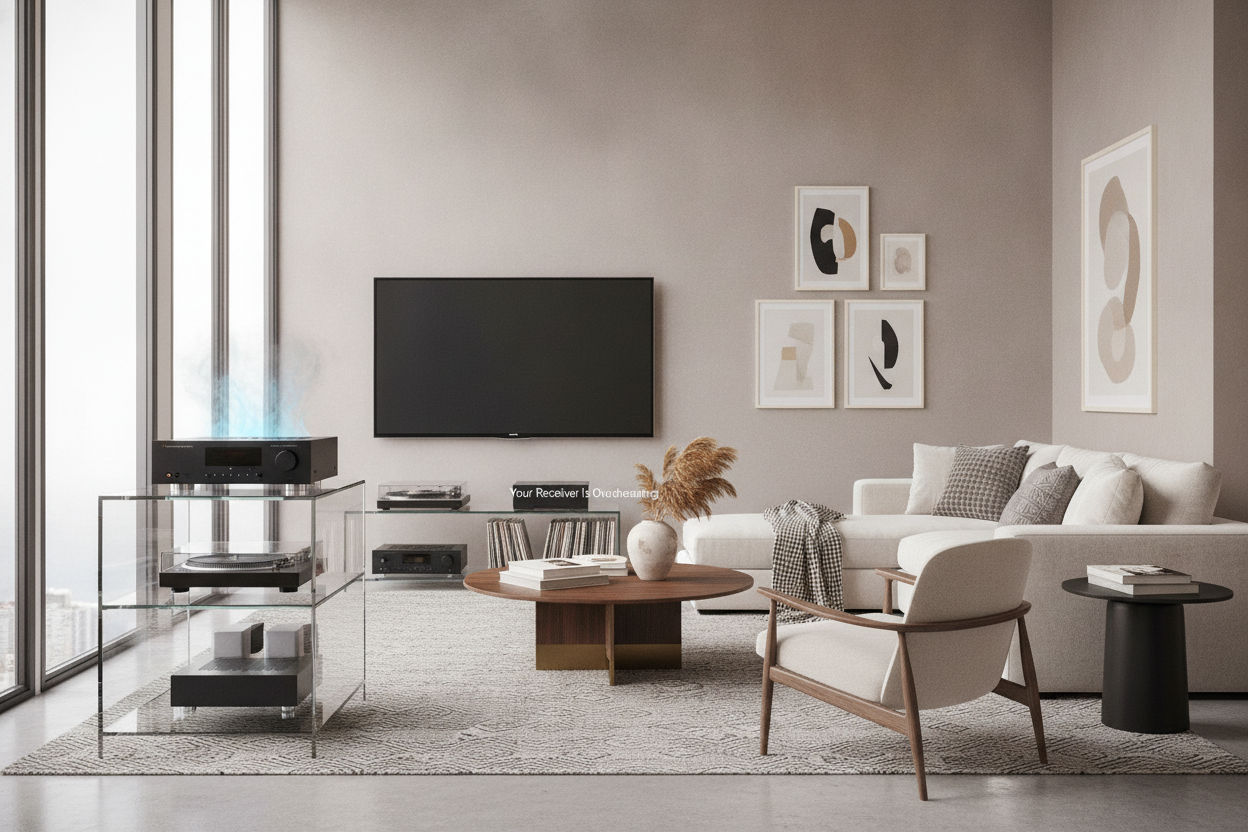
I spent three months hunting for the 'perfect' mid-century credenza. I finally found a teak beauty, tucked my vintage Marantz receiver inside, and felt like a design genius. Then, forty minutes into a listening session, I smelled something like melting plastic. I touched the top of the cabinet and it was hot enough to sear a steak. My $800 amp was cooking in its own juices because I prioritized 'the look' over basic physics.
That was the day I realized that most media furniture is designed for people who don't actually turn their electronics on. If you care about your gear, you need a glass entertainment shelf. It’s the only way to get the airflow your components crave without making your living room look like a Best Buy clearance aisle.
- Vertical stacking saves massive amounts of floor space in small apartments.
- Open-air designs prevent heat-related component failure.
- Tempered glass provides a rigid, low-resonance surface for turntables.
- Cable management is easier when you aren't trapped inside a wooden box.
The Day My Vintage Receiver Almost Caught Fire
Wood is a fantastic insulator. That’s great for a log cabin, but it's a death sentence for a Class A/B amplifier. Most vintage receivers and high-end modern amps vent heat out of the top. When you slide that unit into a wooden cubby with only an inch of clearance, that heat has nowhere to go. It builds up until the internal solder joints start to crack or the capacitors dry out.
I learned this the hard way when my Marantz started clipping and smelling like a scorched hair dryer. I had to pull it out and let it sit on the floor for two days just to feel safe plugging it back in. That's when I ditched the 'aesthetic' credenza for a vertical glass entertainment shelf. The difference was immediate. The amp stayed cool to the touch, and I stopped worrying about my house burning down every time I played a record.
Why Low Consoles Are Actually Terrible for Audio Gear
Low, wide consoles look great in staged photos, but they are functionally a nightmare. First, the height is all wrong. If you have a turntable on top of a 20-inch high console, you're hunched over like a gargoyle every time you want to flip a record. Second, the cable bird's nest is real. Trying to swap an RCA cable in the dark, cramped space behind a heavy wooden cabinet is a recipe for a pulled muscle.
Transitioning to an open entertainment center shelf forces you to finally confront and manage your messy tech clutter. You can't just hide the tangles behind a sliding door anymore. It demands a level of organization that actually makes your system easier to use and maintain. Plus, the open back means you can actually see the ports you're trying to plug into.
Enter the Vertical Glass Entertainment Shelf
The beauty of a vertical glass entertainment shelf is the visual lightness. Because the shelves are transparent, the unit doesn't feel like a giant monolith taking over your wall. It lets light pass through, which is a godsend if you're trying to build a high-end glass entertainment system in a room that isn't a dedicated basement man-cave. It looks intentional, like a gallery display for your gear.
When shopping, don't cheap out on the materials. You want thick, heavy shelving. A tempered glass top is non-negotiable, especially if you’re placing a turntable on it. Turntables are incredibly sensitive to vibration; you need a surface that is dense and level. Cheap, thin glass will ring like a bell and mess with your sound quality, but heavy tempered glass provides the stability your needle needs.
The Importance of Dialing in Your Dimensions
Before you buy, measure your largest component—usually the receiver. You need at least two inches of clearance on all sides for proper convection. I always recommend looking for adjustable shelf storage. Your setup will change. You might swap a slim digital streamer for a massive tube power amp next year, and you don't want to be stuck with a unit that has fixed, 6-inch openings.
How to Style a Glass Entertainment System (Without the 90s Best Buy Vibe)
The biggest fear people have with glass and metal racks is that they look a bit 'bachelor pad.' To avoid this, treat the rack like a piece of furniture, not a server closet. Don't just stack black boxes. Add a small potted snake plant on one of the middle shelves, or lean a few of your favorite LP jackets against the side. The mix of organic shapes with the hard lines of the glass softens the whole look.
Keep in mind the purpose of your storage. While a 3 shelf glass cabinet is better suited for displaying delicate records or dust-sensitive collectibles, an open rack is specifically for the heavy hitters that need to breathe. If you have a massive vinyl collection, keep the records in a separate, closed cabinet and let the glass rack be the dedicated stage for your hardware.
A Few Non-Negotiable Rules for Open Cable Management
Since glass is transparent, your cable management has to be flawless. This is the 'honest downside' of an open system: you have nowhere to hide. Buy a pack of black Velcro straps—never use plastic zip ties, because you’ll inevitably want to move a component and you'll hate having to cut them off. Run all your power and signal cables down the rear support pillar of the rack. If the rack doesn't have a built-in cable channel, use a mesh cable sleeve to bundle everything into one neat 'snake.' It takes twenty minutes of effort but makes the difference between a high-end setup and a total mess.
FAQ
Is glass strong enough for a heavy vintage amp?
Yes, provided it is tempered glass and the manufacturer specifies a weight limit. Most high-quality audio racks can support 50-75 lbs per shelf, which is more than enough for even the beefiest power transformers.
How do I keep the glass from looking dusty?
There's no magic trick here—you have to wipe it down. Keep a microfiber cloth tucked behind your receiver. A quick five-second wipe once a week keeps the fingerprints and dust bunnies at bay.
Does glass affect the sound?
Actually, many audiophiles prefer glass or stone because they don't resonate at the same frequencies as hollow wood. If you're worried about 'ringing,' you can use small isolation feet under your components to decouple them from the glass.

Dejar un comentario
Este sitio está protegido por hCaptcha y se aplican la Política de privacidad de hCaptcha y los Términos del servicio.