










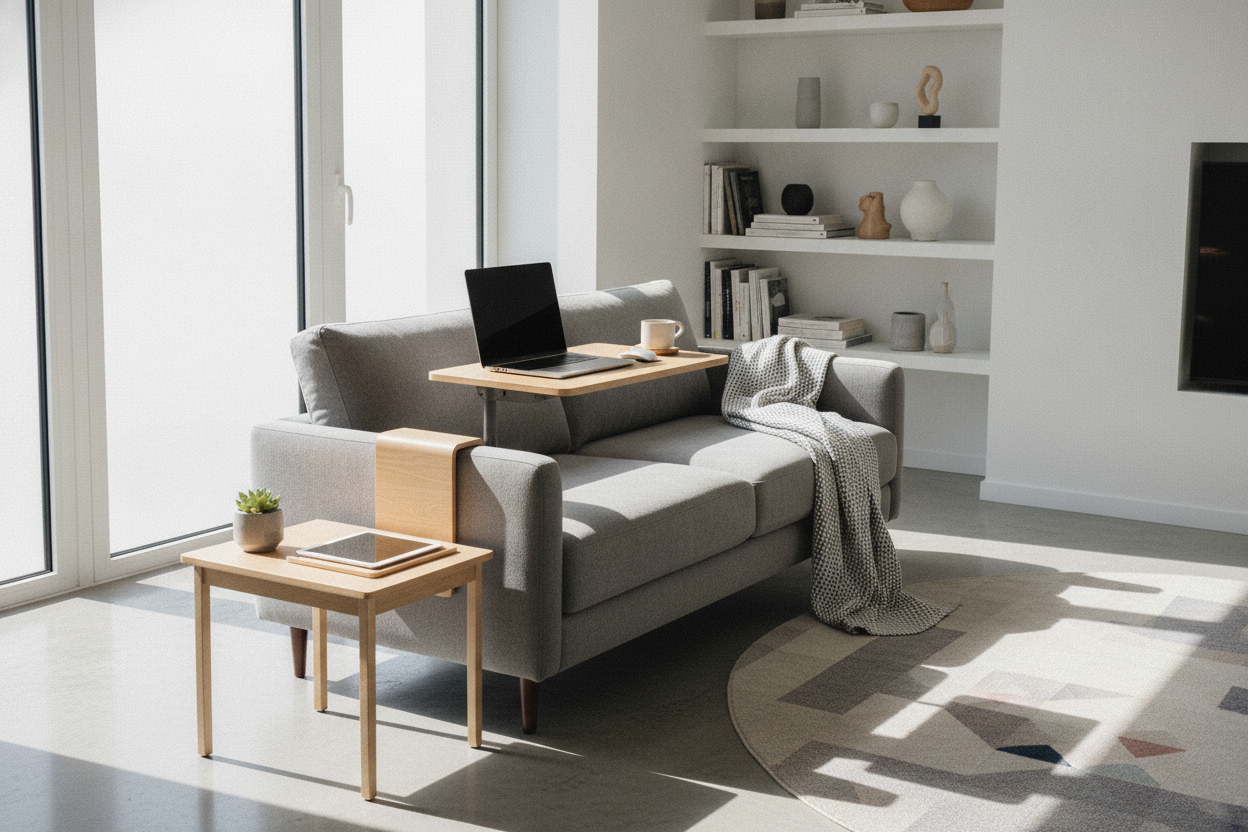
I spent three months trying to convince myself that my $2,000 sectional was a viable workspace. It wasn’t. By 3 PM every Tuesday, my lower back felt like it had been through a slow-motion car wreck, and my focus was non-existent. Staring at 47 browser tabs of nightstands at 1 AM didn't help, but the real issue was my posture. The problem wasn’t just the soft cushions; it was the stagnation.
I’d start at the kitchen island, migrate to the sofa by noon, and end the day nearly horizontal. It took a while to realize I didn’t need a bigger office—I needed a way to move. That’s where portable desks saved my sanity. They provide the middle ground between a rigid, corporate desk and the slouchy, productivity-killing trap of the living room couch.
Quick Takeaways
- Ditch the sofa; your spine will thank you for the upright support.
- Look for 'C-shaped' bases that slide under furniture for closer access.
- Prioritize rubber casters over cheap plastic wheels to save your floors.
- Weight matters—too light and it’s a tipping hazard for your laptop.
- Room-hopping is the best cure for the dreaded afternoon slump.
The Couch Trap (And Why My Posture Was Ruined)
The 'work from the couch' dream is a lie sold to us by stock photos of people smiling while holding a latte. In reality, you’re hunched over a laptop that’s generating enough heat to cook an egg on your thighs. My personal low point was using a stack of coffee table books as a makeshift riser while sitting on a floor pillow. It felt productive for twenty minutes; then the throbbing in my neck started. This vicious cycle of starting at the kitchen island and slowly collapsing into the upholstery by mid-afternoon is a recipe for burnout.
A portable home office desk acts as the essential middle ground. You aren't tethered to a dark corner of a spare bedroom, but you aren't sacrificing your lumbar health either. When I finally got a proper portable office desk for home, the difference was immediate. I could sit upright, my elbows were at the right angle, and I stopped ending my days at the chiropractor. It’s about creating a dedicated workspace that can actually follow you, rather than you trying to adapt your body to furniture designed for napping.
Most people think they need a dedicated room to be productive. I’ve found the opposite. A portable office desk allows you to follow the light and the quiet. If the neighbor starts mowing their lawn or the dishwasher is too loud, you just wheel your portable office table to the other side of the house. It’s mobility without the 'lap-desk' compromises that eventually ruin your spine.
The 3 Non-Negotiables for Good Portable Desks
Not all portable work desks are created equal. I’ve bought the $40 specials from big-box retailers only to have them wobble like a jelly mold every time I typed a sentence. If you’re going to use this daily, you have to look past the price tag and check the structural specs. A legitimate portable work desk for home needs a steel frame—preferably powder-coated—and a surface that isn't just thin particle board that will bow under the weight of a monitor.
Sturdiness vs. Weight (The Annoying Trade-off)
Finding a compact portable desk is an exercise in physics. You want it light enough to push with one hand, but heavy enough that it doesn't flip over if you lean on it while thinking. I once tested a portable home desk that was so light I nearly sent my MacBook flying just by resting my forearms on the edge. It was a terrifying moment that taught me the value of a weighted base.
Look for a base that has some actual heft. A 'C-shape' design is standard because it allows the legs to slide under your sofa or bed, but that design is inherently prone to tipping if the engineering is lazy. The best portable work desks I’ve used have a weighted bottom or a wider wheelbase to counteract that top-heavy lean. Aim for something in the 25-30 pound range. It’s still easy to move, but it won’t succumb to gravity the moment you put a heavy cup of coffee on it.
Don't Ignore the Caster Wheels
Nothing ruins the vibe of a portable office workstation faster than cheap plastic wheels. You know the ones—they squeak, they scratch your expensive oak floors, and they get absolutely defeated by a low-pile area rug. If the wheels look like they came off a toy car, keep looking. I’ve spent way too much time picking carpet fibers out of cheap casters to ever recommend them to a friend.
I always recommend hunting for a portable work desk that features heavy-duty, lockable rubber casters. They glide silently, which is great if you’re working while a partner is sleeping, and they actually stay put when you lock them. There is nothing more frustrating than your office desk portable slowly drifting away from you while you're in the middle of a Zoom call because the 'locks' are just decorative pieces of plastic that don't actually grip the floor.
How 'Room Hopping' Fixed My Afternoon Brain Fog
There is a specific kind of fatigue that sets in when you stare at the same four walls for eight hours. Around 2 PM, my brain usually turns to mush and I find myself scrolling through social media just to feel something. I used to reach for a third cup of coffee, but now I just unlock the wheels on my portable office desk and move. It’s a physical reset that mental willpower can’t match.
I start my morning in the kitchen where the light is bright and the coffee is close. By mid-afternoon, I’ve usually wheeled my setup to the living room window to catch the late sun. This physical movement resets my internal clock and keeps me from hitting that wall. Even if you’re moving your office table portable just ten feet, it signals a shift in your day. Plus, having a mobile setup means you can style a desk in a home office or any room of the house so it looks like a deliberate design choice.
I’ve styled mine with a small brass lamp and a single plant so that no matter where it parks, it feels like it belongs there. It doesn't look like medical equipment; it looks like a curated corner. That aesthetic intentionality matters when you’re working in shared living spaces. You want to feel like a professional, even if you’re working three feet away from where you eat dinner.
When You Actually Just Need a Massive Fixed Desk
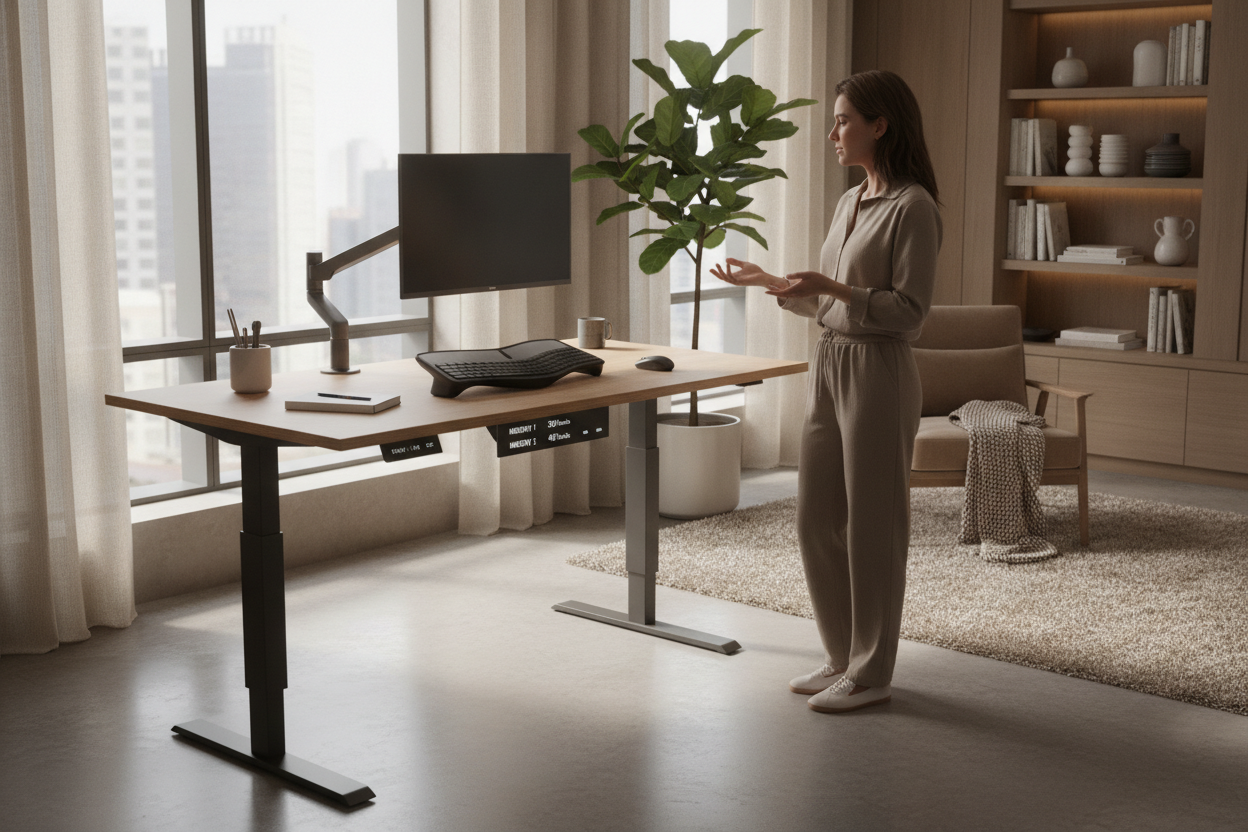
I’ll be the first to admit that a portable home desk isn't a silver bullet. If your job involves three 27-inch monitors, a dedicated microphone arm, and a nest of external hard drives, 'room hopping' is going to be a nightmare of tangled cables. You are the prime candidate for a motorized sit-stand up desk that stays put. You need the rock-solid stability that only a heavy, stationary frame can provide.
Similarly, if you have a dedicated room with a door that shuts out the world, you might prefer the permanence of a traditional writing computer desk. There’s a certain psychological security in having a 'throne' to return to every morning. Portable setups are for the rest of us—the ones living in apartments, the ones who get bored easily, or the ones whose 'home office' is also the guest bedroom. If you heavily rely on filing cabinets and physical paperwork, the mobile life will likely just make you feel disorganized.
But if you find yourself constantly adjusting your seat, rubbing your neck, or staring blankly at the wall, your environment is likely the culprit. A portable office workstation gives you the freedom to change your perspective without losing your workflow. It cured my afternoon slump, and it might just save your back too.
FAQ
Can a portable desk handle a dual-monitor setup?
Generally, no. Most are designed for a laptop and maybe a small tablet. If you try to mount two heavy monitors on a compact portable desk, you’re asking for a tipping disaster. If you need multiple screens, stick to a stationary desk.
Will the wheels ruin my carpet?
As long as you get high-quality rubber casters, they shouldn't. Cheap plastic wheels might snag or leave indentations over time, but rubber ones glide over low-pile rugs quite easily without causing damage.
How long does it take to assemble?
Most portable work desks take about 15 to 20 minutes. It’s usually just a matter of bolting the uprights to the base and attaching the top. If it takes longer than a sitcom episode, it’s probably over-engineered.
Are they height adjustable?
Most are! Look for the ones with a pneumatic lever rather than the ones where you have to unscrew a knob and lift it manually. The pneumatic versions are much easier to adjust throughout the day.

Dejar un comentario
Este sitio está protegido por hCaptcha y se aplican la Política de privacidad de hCaptcha y los Términos del servicio.