










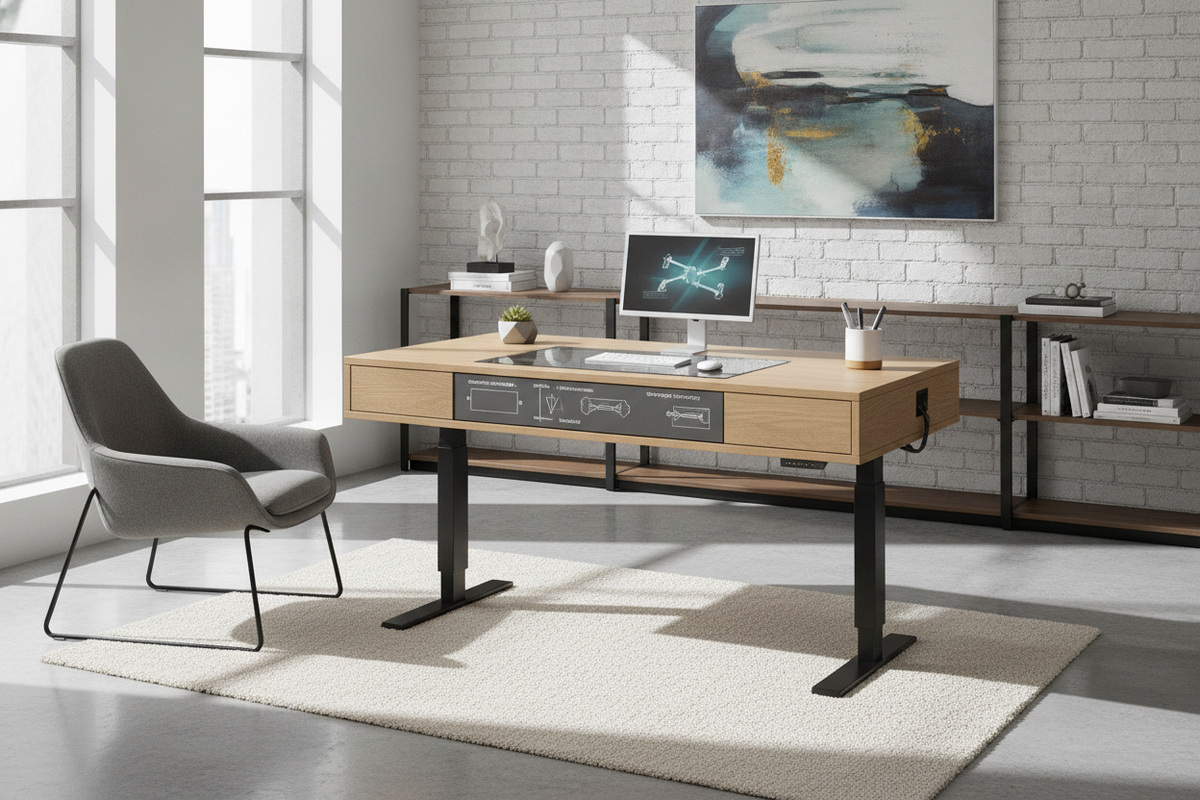
Designing a productive home workstation in a restricted footprint requires balancing surface utility with smooth vertical movement. A 36 inch wide electric standing desk represents a sweet spot for urban apartments, shared multipurpose rooms, and bedroom nooks. By combining motorized sit-to-stand transitions with compact frame dimensions, this workstation profile lets remote professionals sustain dynamic posture habits without crowding floor traffic.
Compact Footprint Architecture: The Strategic Role of a 36-Inch Desk
In compact spatial planning, every inch of width dictates circulation paths and functional clearances. While standard office desks often occupy broad perimeter zones, a compact motorized workstation bridges the gap between static writing surfaces and sprawling executive suites. When evaluating floor layouts, exploring our maximizing small spaces with a 28-inch wide desk guide demonstrates how smaller profiles fit into tight corners, whereas a 36-inch motorized platform offers room for dedicated tech gear alongside active height adjustments.
Placing a desk in an alcove, near a window, or alongside hallway partitions demands thoughtful planning around door swings and walkway margins. A compact width leaves perimeter margins open for natural lighting and room passage, allowing residential spaces to remain open and uncluttered throughout daily work routines.
Surface Ergonomics and Peripheral Zoning on a 36 Sit Stand Desk
Managing desktop layout on a 36 sit stand desk relies on deliberate zoning. Because lateral space is focused, dividing the desktop into primary focal, input, and utility zones preserves clean sightlines and comfortable arm positioning:
- Primary Focal Zone: Mounting a single display or an ultrawide screen via a desk-clamp monitor arm elevates the monitor off the surface, reclaiming valuable surface area underneath for notebooks or docking stations.
- Input Zone: Selecting a compact or tenkeyless keyboard alongside a contoured mouse maintains aligned shoulder posture, leaving room for wrist support across the working center.
- Utility Margins: Placing secondary accessories such as beverage coasters or compact charging pads along the rear corners keeps the center clear of visual clutter.
Adopting an elevated monitor mount on a standing desk 36 wide prevents peripheral creep, ensuring that necessary work equipment does not encroach on primary typing and writing zones.
Kinetic Lift Clearances and Dynamic Travel Mechanics
Electric height-adjustable desks require unobstructed kinetic travel paths. Because a motorized frame shifts vertically throughout the day, planning for vertical clearance prevents interference with surrounding architectural elements:
- Vertical Travel Envelopes: Verify clearance beneath wall-mounted shelving, framed artwork, window sills, and hanging lighting fixtures before establishing standing presets.
- Dynamic Cable Slack: Route power cables, display connections, and peripheral cords with sufficient slack loops so that motorized movement does not pull connectors loose or pinch wiring at lower height settings.
- Leveling on Varied Surfaces: Adjustable leveling glides beneath dual-column feet help stabilize the frame on hardwood, tile, or area rugs, mitigating wobble during typing in elevated positions.
Material Selection and Structural Durability for Compact Frames
Structural stability and surface resilience are key considerations for compact sit-stand furniture. Desktop surfaces crafted from dense engineered wood or high-pressure laminate resist moisture, scuffs, and daily wear from mice and writing utensils. Smoothly beveled or radiused front edges minimize contact stress against forearms during sustained computer work.
Underneath the worktop, dual-column motorized legs constructed with powder-coated steel provide structural rigidity throughout height cycles. A durable finish protects the frame from scuffs caused by footwear or rolling chair bases, ensuring the desk blends seamlessly into modern interior design schemes.
Auxiliary Storage Synergy: Solving the Compact Workstation Storage Deficit
Because a standing desk 36" wide prioritizes an agile footprint, it generally omits integrated pedestal drawers. Maintaining an orderly workstation requires pairing the motorized desk with dedicated secondary storage elements:
- Mobile Under-Desk Pedestals: Low-profile rolling drawer units fit neatly beneath the frame during sitting mode or roll out alongside the desk to serve as an extended staging surface.
- Vertical Perimeter Shelving: Utilizing wall-mounted bookcases or nearby credenzas offloads reference manuals, printers, and archival storage away from the main active desk surface.
For users who require extensive horizontal surfaces and integrated storage in larger spaces, contrasting a compact platform with a broader 54-inch electric lift standing desk with memory presets or an expansive wide computer desk with glass cabinets highlights how space planning changes based on overall square footage and storage requirements.
Assembly Planning, Power Routing, and Daily Workflow Integration
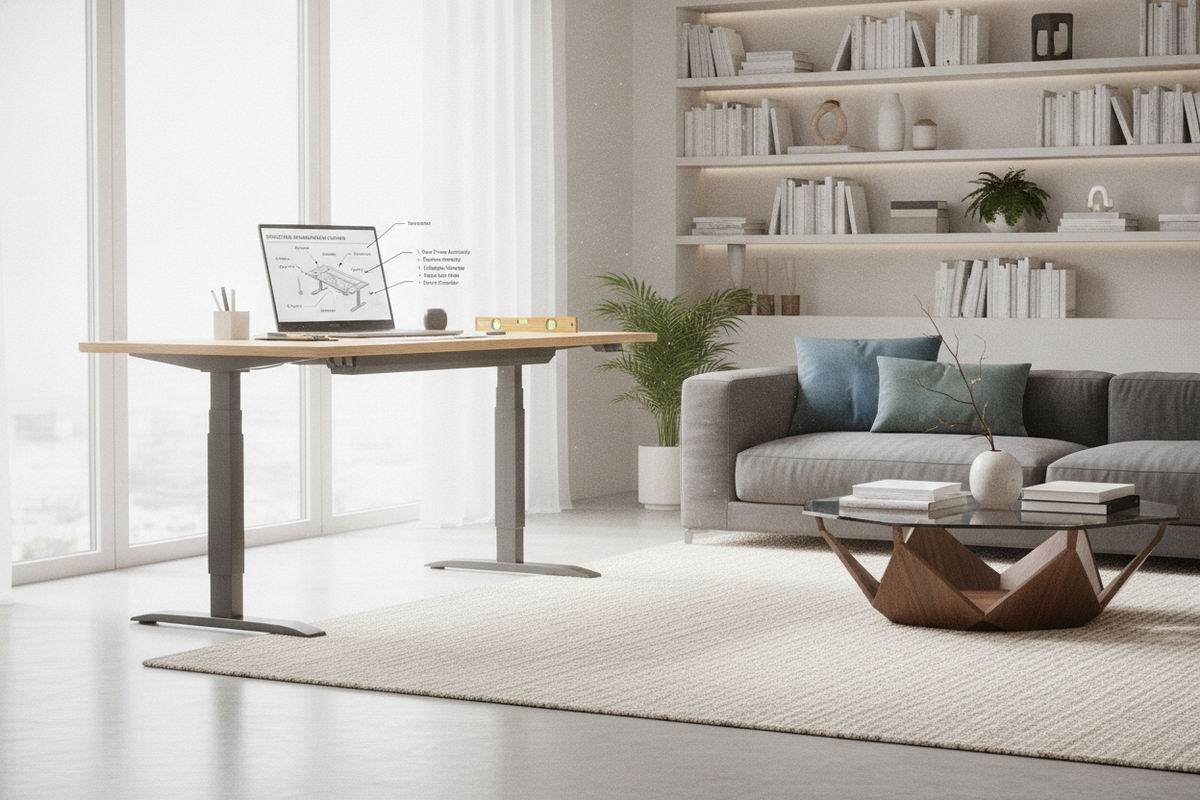
Executing an organized assembly process ensures your motorized workstation functions smoothly over time. Unpacking components on a soft blanket protects the desktop surface while securing the crossbeam and motorized columns. Once upright, consolidating display and computer power supplies into an under-desk cable basket creates a clean single-plug connection to the wall outlet.
Integrating the desk into your daily routine is best done with gradual postural changes. Alternating between seated focus and standing periods throughout the day encourages natural movement patterns, turning a compact home office corner into an ergonomic and organized productivity hub.

Dejar un comentario
Este sitio está protegido por hCaptcha y se aplican la Política de privacidad de hCaptcha y los Términos del servicio.