


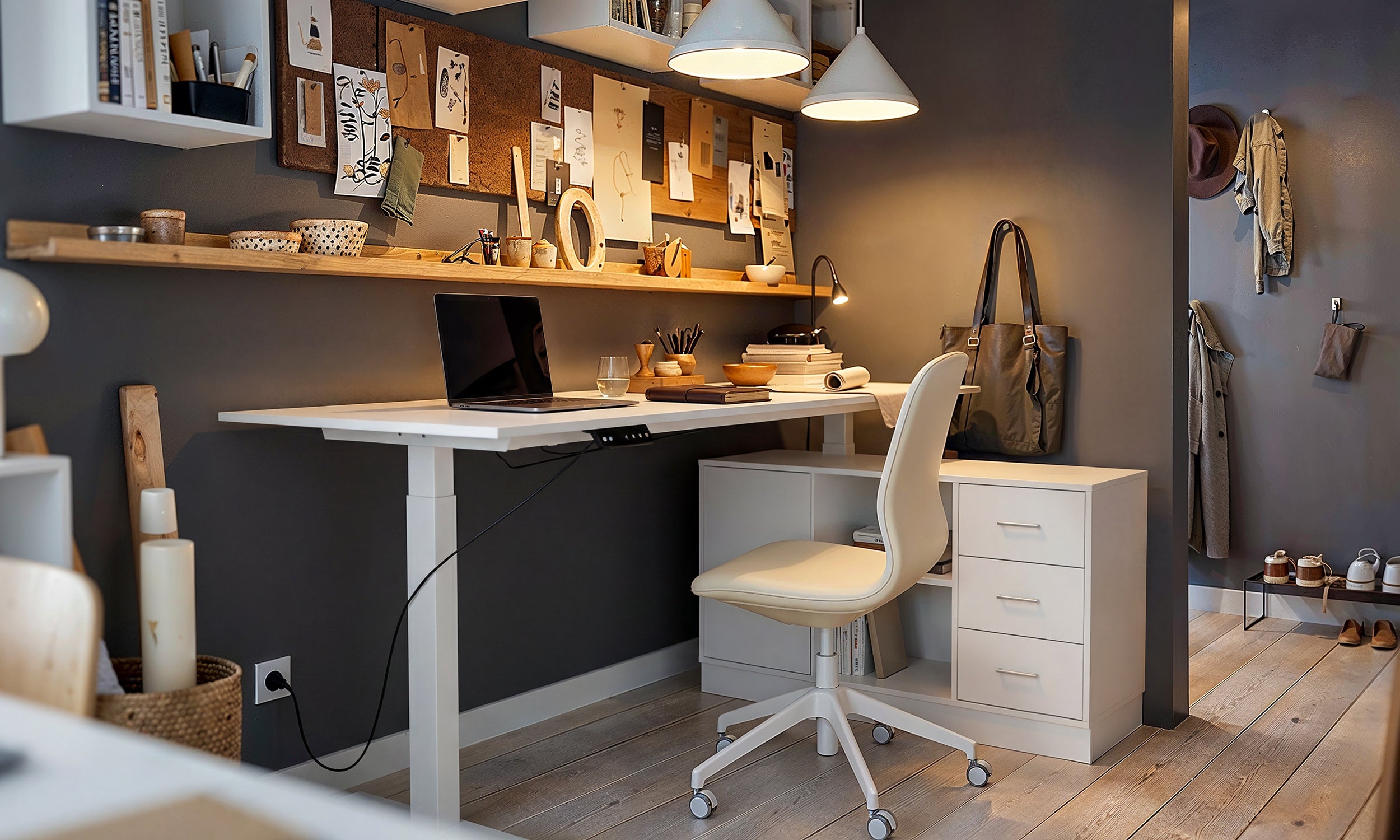
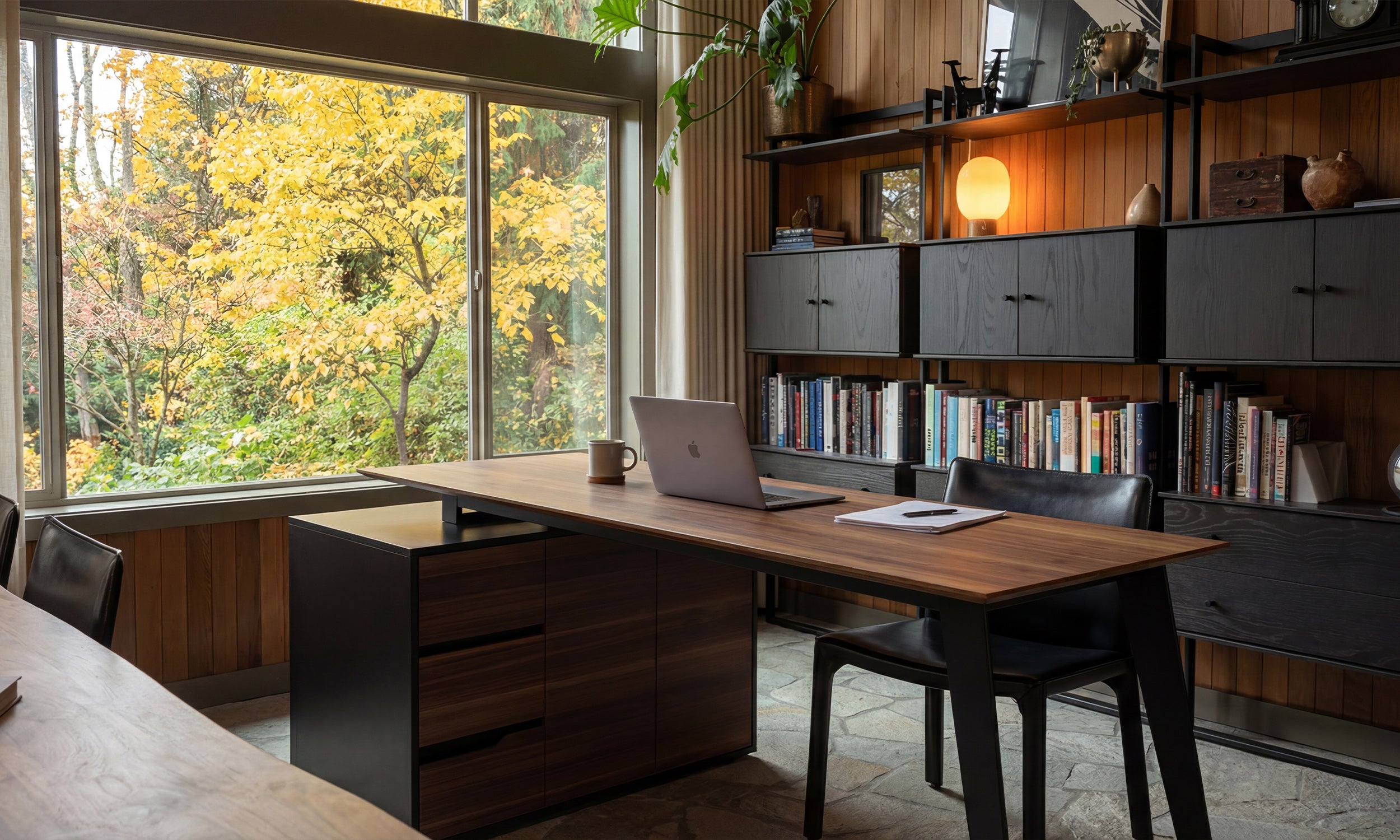


Finding the right balance between desktop surface area and everyday room flow can be challenging. A 60-inch standing desk has become one of the most reliable options for modern home offices because it offers a generous five-foot expanse without overtaking an entire room. Whether you manage multiple displays, work from a laptop with auxiliary tablets, or need dedicated surface area for paperwork, this size strikes an accommodating middle ground.
Why a 60-Inch Standing Desk Fits Most Workspaces
When planning a home office, standard desks typically run either too narrow or excessively broad. A compact 42-inch or 48-inch desk can feel restrictive once you add a full-sized monitor, keyboard, and lamp. Conversely, oversized executive tables spanning beyond 70 inches can crowd doorways, windows, and perimeter walkway corridors. Choosing a 60 inch standing desk delivers five full feet of lateral space, which comfortably supports modern workflows while maintaining an open feel in bedroom corners, dens, and dedicated workspaces.
Exploring diverse standing desk options allows you to evaluate how different desktop shapes and lifting mechanisms fit your floor plan. For many remote professionals, a standing desk 60 inch profile provides the exact surface span needed to transition smoothly between seated focused tasks and active standing routines throughout the day.
Planning Surface Space and Equipment Zones
A five-foot tabletop gives you freedom to establish clean functional divisions across your desk. Instead of crowding accessories around your keyboard, a 60 standing desk lets you configure distinct primary and secondary work zones:
- Primary Central Zone: Reserve the middle 24 to 30 inches for your primary display or dual screens, ergonomic keyboard, and mousepad. Keeping this line clear helps support natural posture.
- Peripheral Tech Zone: Use the left or right side of the desk for a docked laptop, tablet mount, or charging station without infringing on your primary mousing area.
- Utility and Task Area: The remaining side can hold an adjustable desk lamp, reference documents, notebooks, or daily beverage coasters.
If you run a dual monitor setup, a standing desk 60 span easily accommodates two standard 24- to 27-inch monitors side by side. Utilizing a desk-clamped monitor arm frees up valuable depth beneath the screens for small utility trays or soundbars. For an in-depth breakdown on desktop proportions across broader dimensions, reviewing our midsize electric desk guide can help you evaluate how varying inches alter screen layouts.
Storage Solutions: Desks with Drawers and Shelves
One common drawback of minimalist sit-stand furniture is the absence of integrated storage. While open-frame designs look sleek, office supplies, charging cables, and paperwork can quickly accumulate on top of the surface. Selecting a 60 inch standing desk with drawers resolves this issue by keeping everyday essentials concealed and accessible.
Integrated storage designs come in multiple convenient formats:
- Under-Desktop Slim Drawers: These shallow drawers glide beneath the work surface, providing quick access to pens, notebooks, and cables without reducing knee clearance.
- Tiered Shelving and Risers: Built-in upper shelves elevate monitors to eye level while offering storage cubbies underneath for audio gear and desk tools.
- Integrated Pedestals: Some wider units incorporate a dedicated side tier or low drawer bank that moves with or stands adjacent to the height-adjustable frame.
For individuals who require organized storage directly on their workstation, a standing desk with drawers and shelves provides a practical solution with modular compartments and wire management channels. If your workflow requires even more extensive filing, an adjustable desk with side storage cabinet combines corner utility with generous drawer capacity.
Room Clearances and Height Adjustment Considerations
Integrating a 60 inch adjustable desk requires planning for both horizontal floor area and vertical clearance. Because the desk moves, you need to ensure smooth travel without obstructing nearby walls, windowsills, or wall art.
Keep these measurement tips in mind when placing a 60in standing desk:
- Wall Spacing: Leave at least one to two inches of clearance between the back edge of the desktop and your wall. This prevents monitor mounts, cables, or the tabletop itself from rubbing against drywall as the desk rises.
- Pathway Clearances: Ensure you have roughly 30 to 36 inches of open space behind the desk. This allows your office chair to roll back smoothly and leaves adequate walking room when you stand.
- Vertical Obstructions: Check overhead clearances for floating wall shelves, angled attic ceilings, window treatments, and sconce lighting.
- Cable Slack: Power cables running from the wall to your computer must have sufficient slack at maximum standing height to prevent snagging or disconnecting equipment.
If you are coordinating a tighter layout in a guest room or alcove, comparing your measurements against our compact standing desk guide can clarify whether a smaller profile might better preserve open floor space.
Choosing the Right Materials and Finishes
Because a 60" standing desk serves as a visual centerpiece in your office, its materials and build quality influence both aesthetics and longevity. Desktop surfaces are commonly crafted from laminated manufactured wood, durable engineered composite, or solid wood veneers. Textured wood-grain finishes, such as walnut, rustic oak, and clean white laminates, offer easy maintenance and resistance against routine wear.
Underneath the work surface, stability relies on a heavy-gauge steel frame. Dual-stage or three-stage lifting columns provide stable upward travel, while broad floor feet minimize wobble when typing at full standing height. Pairing a sturdy frame with an easy-to-clean desktop material ensures that your standing workstation remains dependable through daily adjustments.
Frequently Asked Questions About 60-Inch Standing Desks
Can a 60-inch standing desk accommodate two large monitors?
Yes. A 60-inch desk easily supports two 24-inch or 27-inch monitors placed side by side. Using a dual-screen monitor arm frees up desk surface below the screens for notebooks, a keyboard, and audio gear.
Is a 60-inch desk too big for a bedroom office?
In most medium-sized bedrooms, a five-foot desk fits neatly along an open wall. Before purchasing, verify that you retain at least three feet of walkway space behind the desk so the chair and walking paths remain unobstructed.
Do drawers reduce legroom on an adjustable desk?
Slim, shallow under-desk drawers are designed specifically to preserve seated knee clearance. Desks that feature side pedestals or elevated shelves keep the central seated zone open, allowing you to stretch comfortably without bumping your legs.


Dejar un comentario
Este sitio está protegido por hCaptcha y se aplican la Política de privacidad de hCaptcha y los Términos del servicio.