




Home Work Room Ideas for Modern Daily Productivity
Finding the right balance between personal comfort and productive concentration begins with thoughtful spatial planning. Today's remote work schedules often call for dedicated settings that go far beyond placing a laptop on a dining table or kitchen island. Exploring practical home work room ideas allows you to convert spare corners, guest rooms, or alcoves into structured, reliable environments suited for regular work from home duties. A thoughtfully arranged home work room helps create a clear boundary between everyday domestic life and workday obligations.
When you start mapping out your workspace, the central aim is simple: establish an environment that supports tidy routines and reduces visual distraction. Whether you have an entire spare room or need an efficient arrangement within a shared living area, practical work room ideas emphasize smooth movement, clear work surfaces, and dependable storage. By prioritizing sensible furniture sizing, balanced lighting, and organized cord paths, you can build a supportive workstation layout that stays comfortable throughout the entire week.
Room Design for Work from Home: Selecting the Right Spot
A successful room design for work from home begins by evaluating household foot traffic, noise levels, and available floor space. If family members or roommates frequently move past your desk, maintaining sustained focus can feel challenging during key projects. Before committing to a permanent furniture arrangement, consulting a design work guide can help you evaluate how noise patterns and household routines interact with your planned setup.
Dedicated Rooms vs. Multifunctional Spaces
A private room with a closing door offers an ideal setting for regular phone calls, conferences, and tasks requiring sustained silence. In many households, however, square footage dictates a dual-purpose room, such as a guest bedroom, sunroom, or living area corner. When planning a small work room or hybrid space, adding a freestanding room divider, a folding screen, or a tall open shelving unit can establish a helpful visual boundary between work activities and leisure zones.
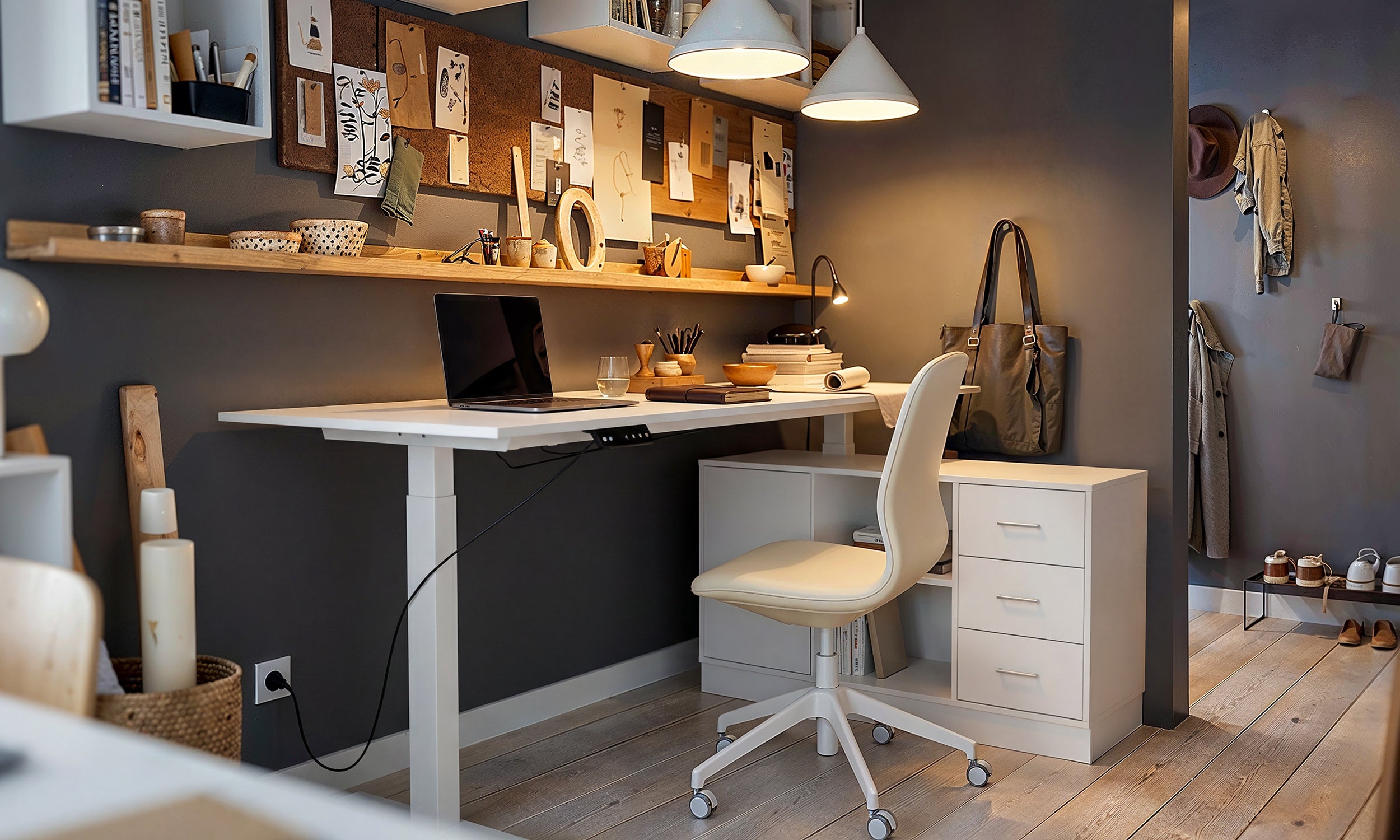
For those working within tighter floor plans, consulting a design work guide for compact rooms offers practical strategies for arranging furniture so compact footprints remain open and functional. In shared floor plans, designating a clear dedicated workspace prevents office papers and hardware from spreading into shared living areas. Even a shallow alcove outfitted with a compact floating desk and overhead shelving can serve as an efficient station without disrupting the surrounding decor.
Desk Placement and Natural Light Balance
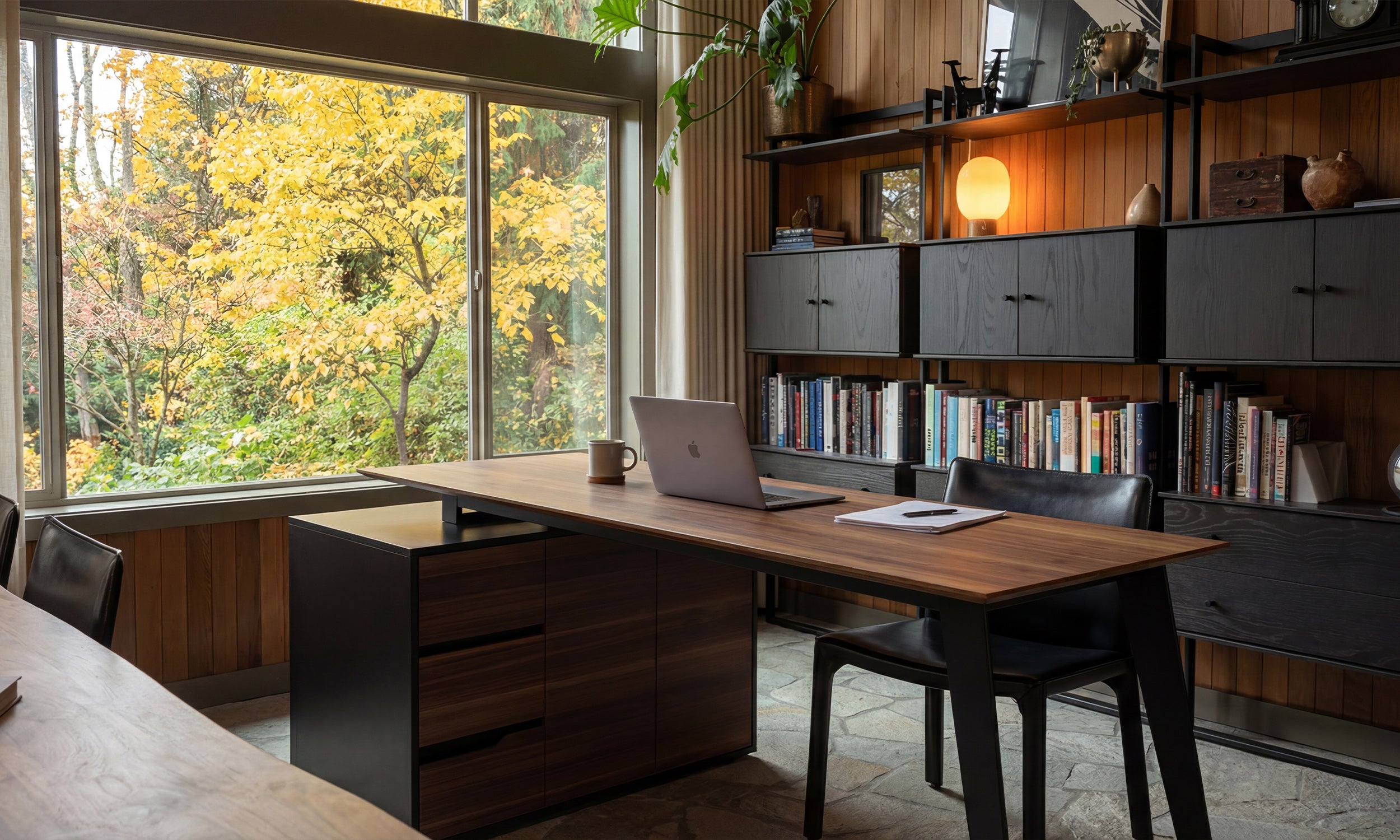
Thoughtful desk placement plays a meaningful role in visual comfort throughout the day. Positioning your primary desk perpendicular to a window allows pleasant natural light into the space while reducing direct glare across computer monitors. Placing a desk directly facing a window offers restorative outdoor views, though bright afternoon sun may require adjustable sheer curtains or blinds to soften contrast. Conversely, placing a desk with its back directly against a bright, unshaded window can cause screen reflections during video meetings and make displays harder to read. Testing different angles during peak daylight hours helps identify the most balanced position for your workstation.
Essential Furniture and Dimensions for Work Rooms
An effective home office setup depends on well-proportioned furniture designed for daily use rather than improvised surfaces. Selecting pieces that fit the room's physical dimensions ensures comfortable movement and easy access to needed supplies.
Desk Depth and Walkway Clearances
Your main desk needs sufficient depth to accommodate a monitor, keyboard, and reference notebooks without crowding your forearms. Generous desktop depth keeps screens at a comfortable viewing distance, while wider surfaces provide staging room for desk lamps, organizers, and secondary displays. When floor space is limited, a streamlined FUFU&GAGA desk or a minimalist writing table maintains comfortable legroom while preserving open circulation paths.
Clearance around your desk is equally important for daily comfort. Planning sufficient space behind the work surface allows an ergonomic chair to slide back freely without scuffing baseboards or bumping into adjacent furniture. Keeping surrounding walkways open ensures that interior doors, storage drawers, and closet entries can swing open without catching on desk legs or chair wheels.
Office Storage Cabinets and Vertical Shelving
Keeping daily paperwork and peripheral cords behind closed doors can help maintain visual order across the work area. Integrating closed office storage cabinets allows you to stow printers, charging cords, and file boxes out of the central sightline. A low-profile office credenza positioned behind or adjacent to your desk provides practical staging space for hardware while preserving open surface room.
To make efficient use of wall height without crowding your walkway, consider adding tall bookshelf storage or sturdy wall shelving. Vertical shelving units draw the eye upward, helping a compact room feel open while providing reliable space for reference binders, storage boxes, and decorative accents. A coordinated FUFU&GAGA cabinet offers structured concealed storage that keeps notebooks, tools, and stationery organized, making it easier to close up work at the end of the day.
Smart Organization and Cable Control
A well-planned furniture arrangement works best when paired with orderly cables and deliberate storage habits. Establishing structured storage solutions helps keep daily routines smooth and avoids surface clutter:
- Cord management: Install under-desk cable baskets, run adhesive wire guides along table legs, and group related cords in flexible sleeves to keep power strips off the floor and away from foot traffic.
- Drawer organization: Use shallow dividers inside desk drawers to categorize pens, notebooks, memory drives, and clips so small items remain visible and orderly.
- Peripheral placement: Position heavy items like printers, scanners, and backup drives on credenza shelves or inside ventilated cabinets to keep the primary desktop clear.
- Paper sorting: Implement labeled desktop file sorters or vertical magazine files to separate active weekly projects from long-term household records.
Adopting systematic storage habits helps preserve open desk space and keeps everyday tools within easy reach.
Styling and Atmosphere for Focus
The visual environment of your workspace can shape how you feel throughout the workday. Choosing a balanced neutral color palette, such as soft taupe, muted gray, linen, or warm off-white, provides a calm backdrop that encourages focus. Introducing organic materials like natural wood finishes, woven canvas organizers, and subtle hardware textures adds warmth without creating visual busyness.
Layered lighting helps maintain comfortable visibility in changing weather or evening hours. Supplement overhead ceiling fixtures with directional task lighting, such as an adjustable desk lamp fitted with a warm bulb. For remote workers who attend video calls, background staging deserves thoughtful attention. Reviewing a work design guide for video backdrops can help you arrange wall decor, shelving, and accent lighting behind your chair to project a tidy, balanced setting during virtual meetings.
Frequently Asked Questions About Home Work Rooms
How can I set up an effective home work room in a small space?
Focus on compact vertical furnishings, such as slim desks paired with tall wall shelving or an integrated hutch. Maintain open walkways, keep cords routed neatly, and use neutral finishes to help the space feel open and uncluttered.
Where is the best desk placement for room design for work from home?
Placing your desk perpendicular to an exterior window is often ideal. This angle brings in daylight while helping avoid direct glare and reflections across your computer monitor.
What furniture pieces are essential for a home work room?
Key foundational pieces include a sturdy, appropriately scaled desk, a comfortable supportive chair, and closed storage furniture such as a credenza or cabinet to keep files and accessories orderly.
How do you organize storage in a shared home office room?
Establish clear boundaries by assigning separate drawers, storage bins, and shelf tiers to each user. Utilizing closed cabinets helps maintain a uniform, calm appearance throughout shared household spaces.


Dejar un comentario
Este sitio está protegido por hCaptcha y se aplican la Política de privacidad de hCaptcha y los Términos del servicio.