










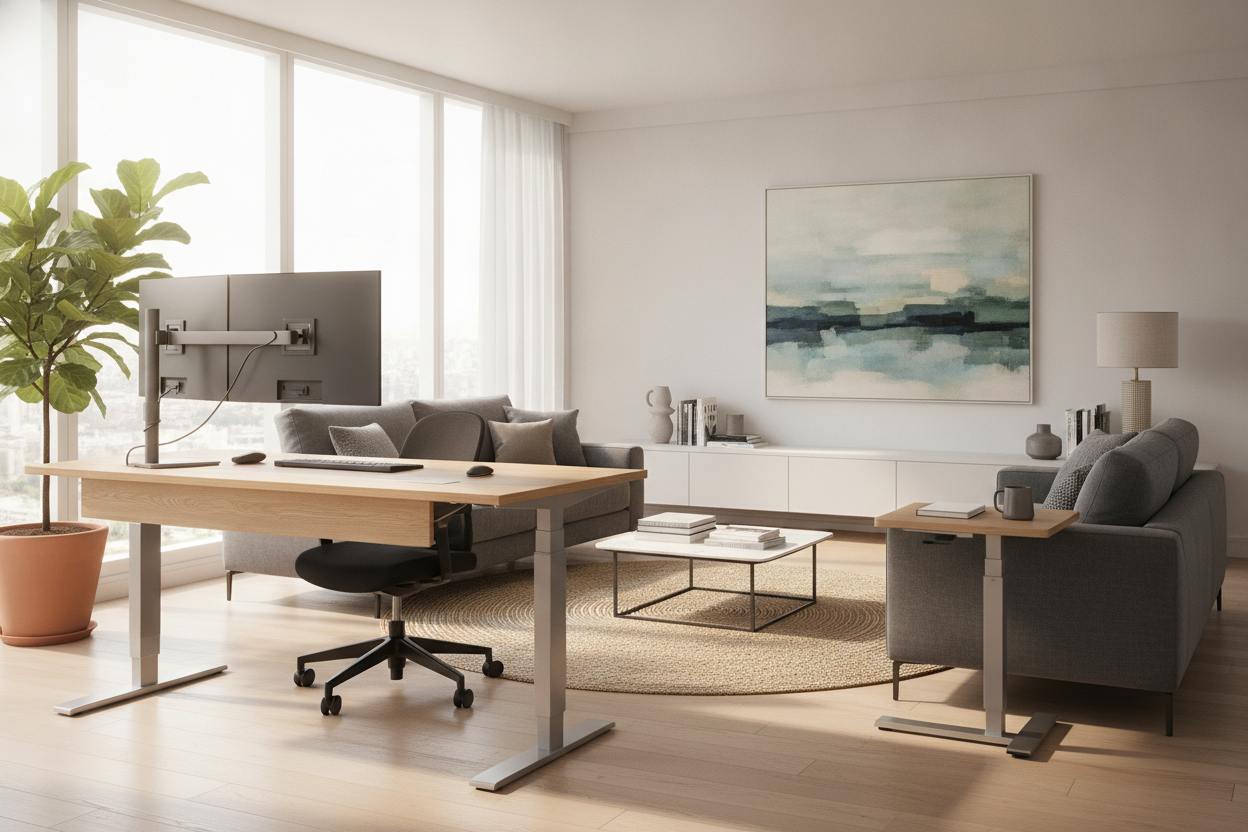
The Core Value Equation: What Makes an Adjustable Desk Worthwhile?
Evaluating whether a height-adjustable workstation justifies its place in your home office requires looking beyond trends. The fundamental value of any adjustable desk lies in how effectively it integrates into your everyday routine, spatial boundaries, and organizational habits. Rather than remaining locked into a single posture throughout the day, having the option to shift between sitting and standing introduces functional versatility to a workspace.
Shifting from Static Seating to Dynamic Movement
Static desk setups require users to adapt their posture entirely to fixed surfaces. Over long working sessions, this rigid setup often limits physical variety during focused tasks. An adjustable frame allows individuals to alternate positions smoothly during routine activities like video calls, drafting, reading, or typing. Incorporating dedicated solutions like a standing desk product can provide the generous surface depth required to support complex home office configurations while facilitating smooth daily height adjustments.
Evaluating Long-Term Utility vs Upfront Investment
An adjustable workstation generally represents a higher initial investment than a standard stationary table. Determining whether it is worth the cost comes down to long-term usage frequency. If a desk allows multiple family members of differing heights to share the same surface comfortably, or enables seamless transitions throughout the day, the functional return on investment increases significantly over the life of the furniture.
Sizing Tiers and Room Geometry: Matching Desk Dimensions to Your Layout
Room proportions and perimeter clearance are essential factors when planning an active workstation setup. Because an elevating surface moves vertically, clearance must be maintained not just along the floor, but across the entire vertical wall path above and beside the desk.
Compact Workstations for Multi-Use Rooms and Nooks
In smaller apartments, guest bedrooms, or dedicated alcoves, a compact adjustable desk helps preserve walkable floor space while still providing height versatility. In these layouts, keeping the desktop depth proportional to the room avoids crowding adjacent furniture pieces or obstructing natural walkways.
Standard and Extended Desktops for Multi-Screen Workflows
For power users who manage multiple monitors, desktop peripherals, reference books, and task lamps, surface real estate becomes paramount. Selecting a broader format, such as an expansive standing desk product, ensures adequate horizontal clearance so monitors and accessories do not feel cramped as the desk transitions between seating and standing heights.
The Storage Dilemma: Managing Organization on an Elevating Surface
One of the primary structural differences between a traditional desk and an adjustable model is the approach to built-in storage. Stationary desks frequently incorporate deep pedestals, file drawers, or hutches, whereas adjustable lifting frames require unobstructed vertical clearance.
Why Traditional Drawers Differ on Adjustable Frames
Because motorized frames rely on central lifting columns and crossbars, integrated under-desk cabinetry is often minimal or intentionally omitted to maintain balance and prevent mechanical strain. As a result, users accustomed to deep, built-in pedestal drawers must rethink how they organize daily office essentials.
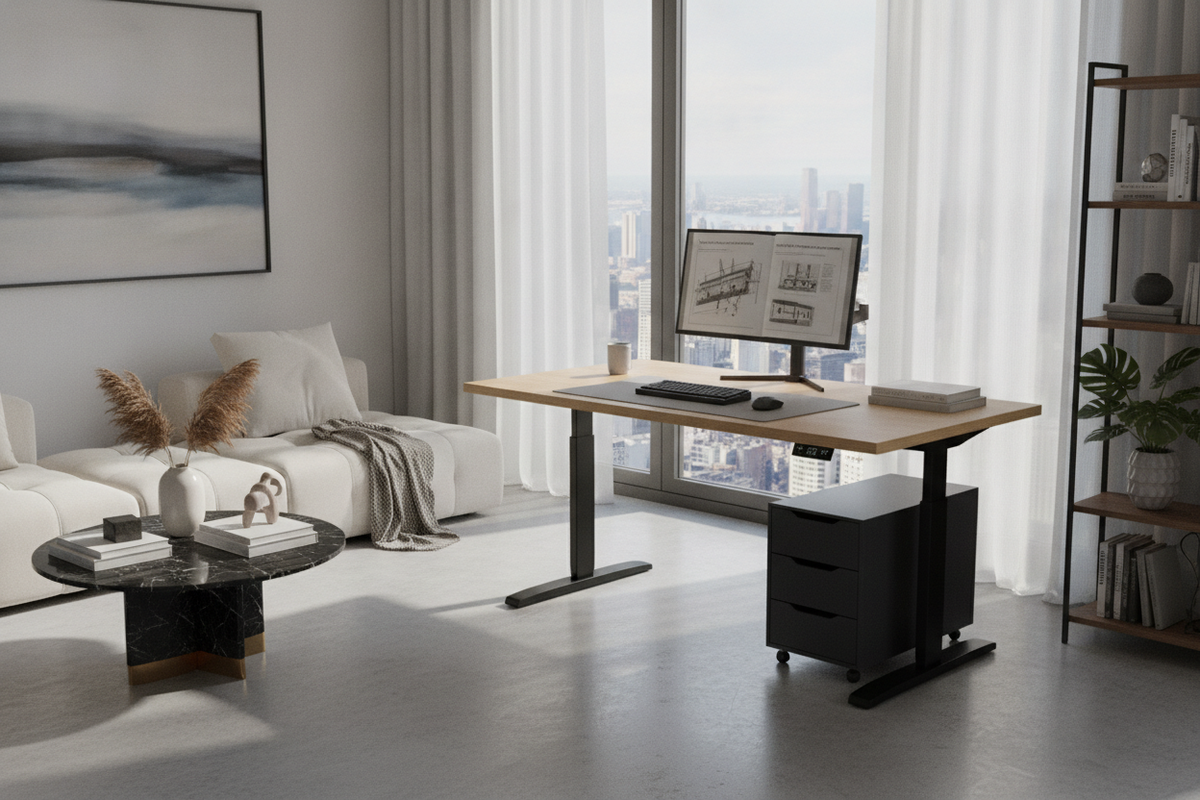
Pairing Mobile Pedestals and Surrounding Storage Units
To maintain a clean, organized working area without compromising dynamic functionality, pairing an adjustable table with surrounding storage pieces is an effective strategy:
- Mobile File Pedestals: Low-profile drawer units positioned neatly beside or under the frame keep files organized without interfering with height adjustment.
- Adjacent Credenzas and Bookcases: Wall-adjacent shelving offers abundant storage for reference materials, printers, and decorative accents.
- Desktop Organizers: Compact desk trays and monitor risers keep high-frequency tools readily accessible.
Frame Mechanics and Stability: Electric Lifts vs Alternative Formats
The mechanical foundation of a height-adjustable desk determines its daily reliability and overall stability at maximum elevation.
Motorized Lifting Columns and Memory Handsets
Modern electric frames utilize motorized telescoping columns designed for smooth, level vertical travel. Models equipped with digital handsets allow users to save preferred sitting and standing heights. Choosing an option such as an standing desk product streamlines daily height adjustments, allowing you to return to exact ergonomic settings at the touch of a button.
Top-Heavy Weight Distribution and Floor Clearance Considerations
As any workstation rises toward standing height, its center of gravity naturally shifts upward. Sturdy steel base plates, wide foot supports, and rigid crossbars help counteract top-heavy sway. When positioning the desk, ensuring all leveling glides make firm contact with hard flooring or low-pile rugs prevents wobbling during active typing.
Workflow Assessment: Who Needs a Standing Desk and Who Can Skip It?
Not every work routine demands an electric height-adjustable system. Assessing your specific daily tasks helps clarify whether an adjustable frame or a dedicated static surface best fits your functional needs.
Scenarios Where Active Height Adjustability Excels
Adjustable workstations offer substantial value for:
- Remote workers spending extended hours on diverse computing and communication tasks.
- Shared households where users of varying heights utilize the same desk.
- Creative professionals who alternate between seated computer work and active, standing layout tasks.
When a Dedicated Traditional Desk Remains the Better Choice
Conversely, reviewing a broader desks worth guide illustrates that stationary executive desks, credenza desks, and built-in writing tables remain excellent choices for users who prioritize deep drawer storage, classic architectural woodworking, or specialized built-in cabinetry over dynamic movement.
Practical Setup Realities: Cable Management and Assembly Logistics
A well-planned height-adjustable setup requires thoughtful installation and cable planning to ensure smooth, unobstructed operation across all height levels.
Dynamic Slack Routing for Power and Peripherals
Unlike stationary desks where wires remain motionless, adjustable desks require flexible cable routing. Power cables, display cords, and peripheral connections must have sufficient slack to travel freely from minimum to maximum height without pulling or snagging. Consulting a detailed desk worth guide can offer practical inspiration for integrating cable channels, under-desk trays, and spine organizers into a neat workspace layout.
Structural Assembly and Weight Considerations
Because adjustable workstations incorporate heavy steel leg assemblies and motorized lifting mechanisms, assembling the frame with care ensures long-term operational integrity. Placing the desktop on a soft, protective surface during frame fastening helps safeguard both the surface finish and hardware alignment.
Final Decision Checklist: Determining Your Personal Return on Investment
Before purchasing, use this five-point assessment matrix to determine if a standing desk aligns with your home office requirements:
- Daily Duration: Do you spend multiple hours at your workstation across varied administrative or creative tasks?
- Vertical Clearance: Is your wall space free of low shelves, hanging artwork, or low windowsills along the travel path?
- Storage Strategy: Have you planned modular storage solutions, such as mobile pedestals, to accommodate supplies?
- Power Access: Is there a nearby electrical outlet with sufficient capacity for the lift motor and your office devices?
- Multi-User Utility: Will the desk serve multiple individuals who benefit from customized height presets?
By weighing these practical factors, you can confidently decide whether an adjustable standing desk provides the ideal blend of versatility, design harmony, and daily utility for your home workspace.

Dejar un comentario
Este sitio está protegido por hCaptcha y se aplican la Política de privacidad de hCaptcha y los Términos del servicio.