










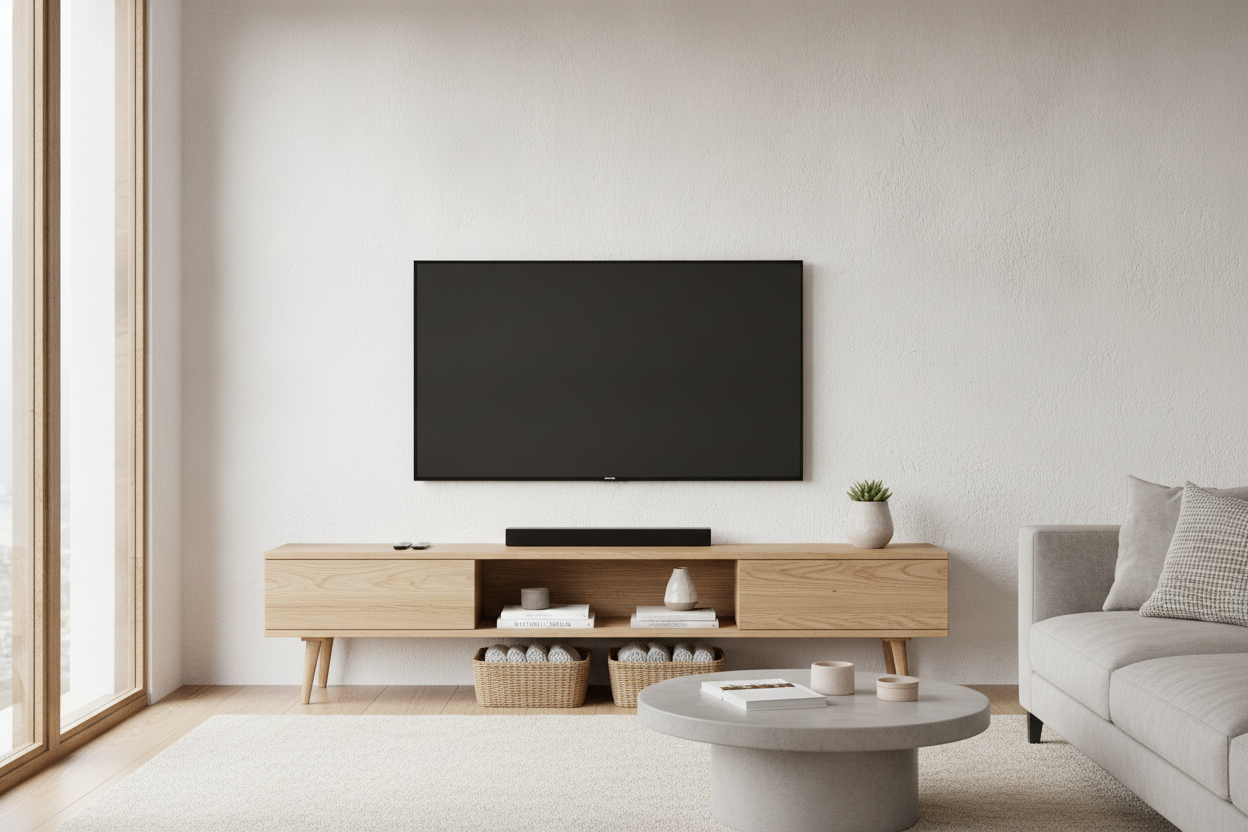
I spent three years staring at a media console that was 22 inches deep. In my 600-square-foot apartment, that thing was practically a second roommate that did not pay rent. I finally hit a breaking point when I realized the bottom drawers were filled with nothing but old Wii remotes, tangled RCA cables, and a manual for a microwave I sold in 2018. If you are tired of shimmying past your furniture, it is time to admit that a slim tv console is probably all you actually need.
We are living in an era where our TVs are as thin as a stack of pancakes, yet we are still using furniture designed for the 90s. I decided to ditch the bulk and see if a narrower profile would actually work or just leave me with a mess on the floor. Here is the honest truth about making the switch.
Quick Takeaways
- Most modern media tech (Apple TV, routers, switches) is less than 4 inches deep.
- Deep cabinets often become 'junk graveyards' for items you do not use.
- Sliding doors are superior to swinging doors for narrow furniture pieces.
- Wall-anchoring is non-negotiable for slim units to prevent tipping.
The Problem With 20-Inch Deep Cabinets
Traditional entertainment centers were built for a different world. They were designed to house massive CRT tube TVs that weighed 80 pounds and had a backside that stuck out a foot and a half. They had deep shelves for VCRs, DVD players, and massive stereo receivers. But unless you are a vintage tech enthusiast, you are likely using that 20-inch depth to store things that have no business being in your living room.
When I measured my old unit, I realized I was losing nearly four square feet of floor space just to support a TV that is only two inches thick. That is a lot of real estate in a small room. This 'depth creep' makes living rooms feel crowded and heavy. We keep these big units because we are afraid of losing storage, but in reality, we are just storing air and dust bunnies. A tv console slim enough to hug the wall can open up a room in a way that feels like you just added a whole new window.
I have found that most people fill deep cabinets with stuff they would otherwise throw away. If you have to reach past three layers of clutter to find what you need, the furniture is not working for you. It is working against you. Shifting to a thinner profile forces you to prioritize what actually belongs in your social space.
The Reality Check: What Actually Fits Inside?
Let's talk logistics. If you buy a slim under tv cabinet that is only 10 or 12 inches deep, you have to be realistic about your inventory. An Apple TV 4K is less than 4 inches square. A Nintendo Switch dock is about 4 inches deep. Even most modern mesh routers can sit comfortably on a narrow shelf. These things fit perfectly into a slim profile without any wasted space behind them.
The problem arises with legacy items. If you are still rocking a launch-edition PlayStation 5 or a vintage record player, you are going to struggle. Those items need depth. I had to move my board game collection to a dedicated bookshelf because most standard game boxes are 11.8 inches square—they will hang off the edge of a truly slim unit. You also need to consider your screen size; getting a slim tv stand for 65 inch tv proves that you do not need a massive footprint to support a large display, provided the weight is centered and the unit is sturdy.
Soundbars are another 'gotcha' moment. Most soundbars are between 3 and 5 inches deep, so they fit easily on top of a slim console. However, if you want to hide the soundbar inside a cabinet behind a mesh door, you need to measure the internal clearance carefully. I found that I could fit all my essentials—remotes, a few controllers, and the internet hub—with room to spare, but I had to say goodbye to my stack of oversized coffee table books.
Finding a Slim TV Console With Storage That Works
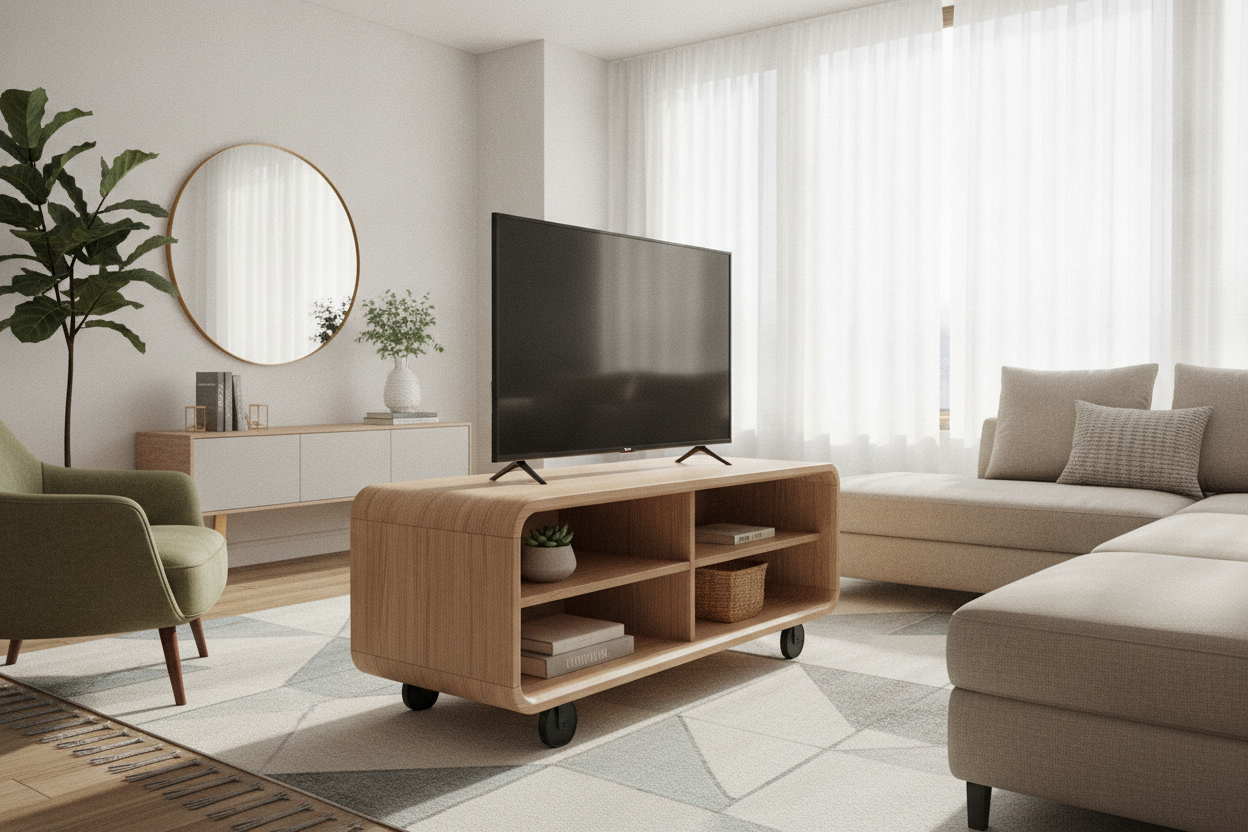
When you are shopping for thin tv cabinets, do not just look at the depth. Look at the height. Since you are losing horizontal space, you need to gain it back vertically. I recommend looking for units that are 28 to 32 inches tall. This gives you two or three tiers of storage while still keeping the TV at a comfortable viewing height if it is sitting on top.
Material choice matters more when the piece is narrow. I avoid that flimsy 0.5-inch particle board. Because a slim tv console with storage has a smaller base, it needs to be made of something with a bit of weight, like kiln-dried oak or a high-quality MDF with a real wood veneer. This keeps it from feeling 'tippy' every time someone walks past it.
I also look for sliding doors or 'tambour' doors. In a narrow room, the last thing you want is a cabinet door that swings out 15 inches and blocks the entire walkway. Sliding doors keep the profile tight even when you are digging for a charger. And please, check the back panel for cord management. A slim unit with no holes for wires is just a very expensive hallway table.
How to Style a Narrow Top Without It Looking Cluttered
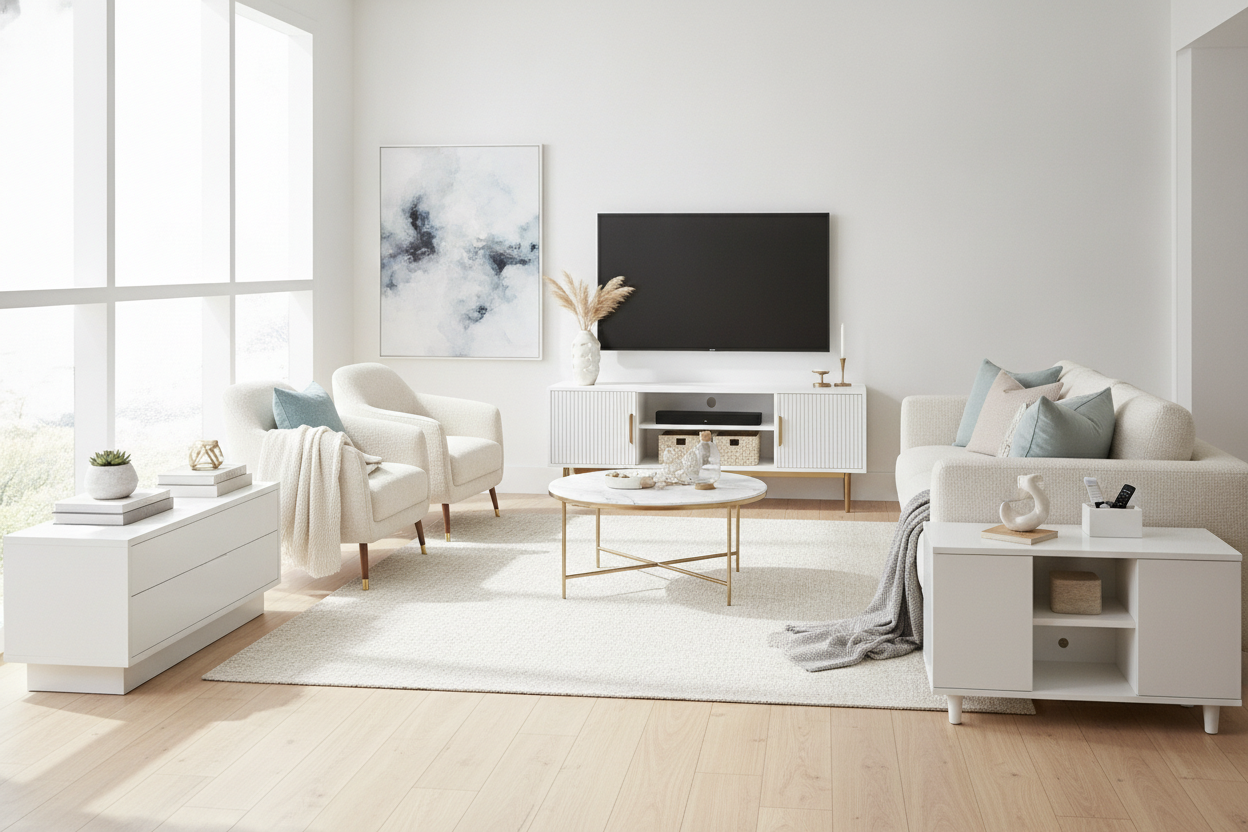
Styling a slim tv console table requires a 'less is more' approach. You do not have the luxury of layering objects from front to back. Instead, you have to layer from side to side. I like to use the 'rule of three': a tall element on one side (like a 14-inch ceramic vase), the TV in the center, and a lower, wider element on the other side (like a small tray for remotes).
If you find that the top still feels too crowded, draw the eye up. Use wall-mounted sconces or a piece of art hanging just above the TV to add visual interest without taking up any surface area. If you are on a budget, you can find a slim console table tv Walmart hack where you take a standard entryway table and reinforce it for media use. It is a great way to get that high-end minimalist look for about a hundred bucks.
Avoid putting small, 'fussy' items on a narrow stand. A bunch of tiny coasters and figurines just look like clutter when the surface is only 10 inches deep. Stick to bold, singular items that have some weight to them. It keeps the lines clean and makes the whole room look more intentional.
My Verdict: Is the Space Savings Worth the Purge?
After three months with my modern slim tv stand, I can honestly say I do not miss the old beast. Yes, I had to spend a Saturday afternoon untangling a 'spaghetti' of old cords and deciding which electronics were actually worth keeping. I donated a DVD player I had not turned on since 2015 and threw away three broken universal remotes. It felt great.
The biggest win is the floor space. My living room feels like it grew by 20 percent. I can walk from the sofa to the kitchen without having to turn sideways. The 'purge' was a necessary evil that made me realize I was valuing my 'stuff' more than my actual living environment. If you can live without a drawer full of ancient instruction manuals and half-dead batteries, the slim life is the way to go.
FAQ
Can a slim console hold a heavy 75-inch TV?
It depends on the leg spread of the TV. Many large TVs have legs at the very edges that might be too deep for a 10-inch console. Always check the distance between your TV's feet before buying. If the TV is wall-mounted, a slim console is the perfect companion.
How do I prevent a thin console from tipping over?
You must use the anti-tip kit that comes with the furniture. Because these units are narrow, they have a higher center of gravity. Secure it to a wall stud, especially if you have kids or pets who might bump into it.
Will my gaming console overheat in a slim cabinet?
It might. Slim cabinets have less internal air volume. If you are putting a console inside, make sure the back is open or that you have drilled extra ventilation holes. I prefer keeping my console on the top surface for maximum airflow.

Dejar un comentario
Este sitio está protegido por hCaptcha y se aplican la Política de privacidad de hCaptcha y los Términos del servicio.