










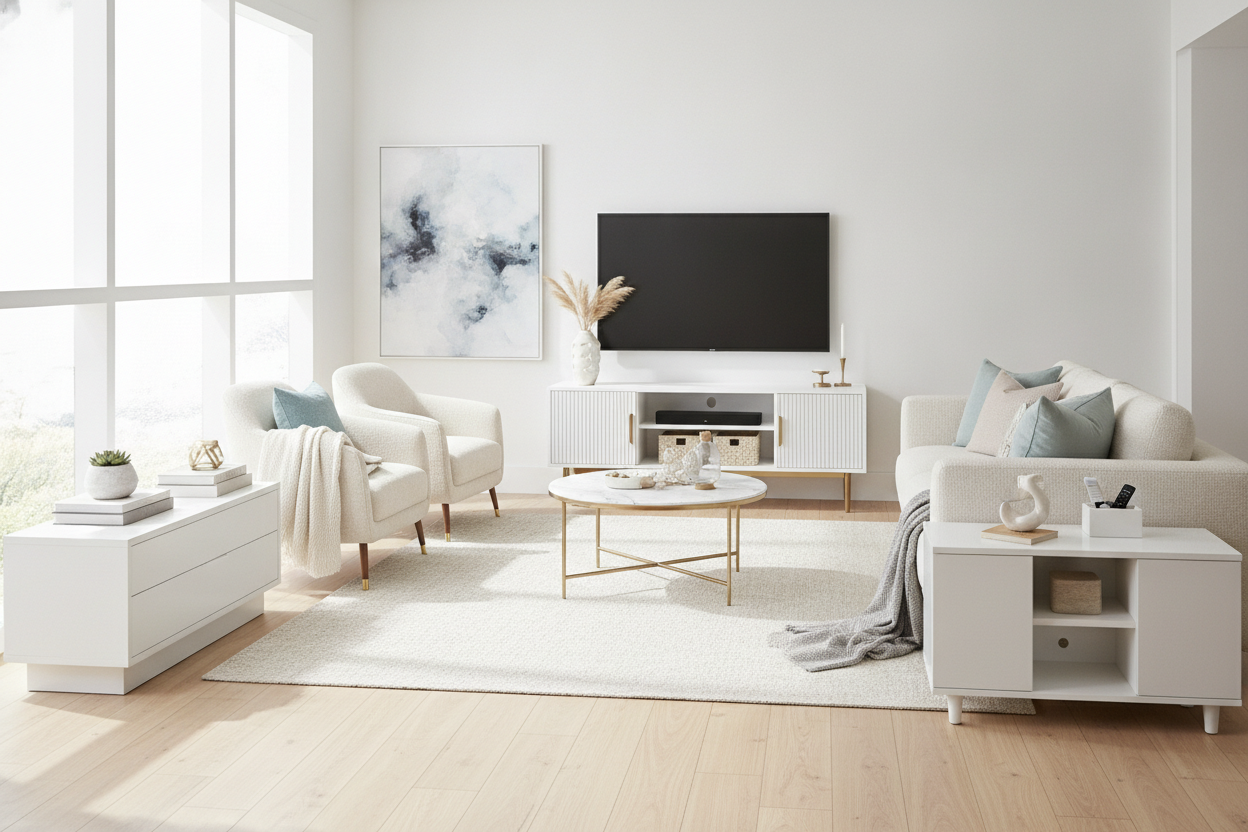
I spent four hours last Tuesday staring at 47 different browser tabs, all showing essentially the same amazon tv stands white. You know the feeling—the reviews all look suspiciously similar, the brand names are a string of random consonants, and you are 90% sure the lifestyle photos are just bad Photoshop jobs. My living room was a graveyard of tangled HDMI cables and a TV sitting on a cardboard box, so I finally snapped.
Instead of playing it safe, I ordered the three most popular models at three different price points. I wanted to know if the extra $100 actually buys you better wood, or if we are all just paying for a different brand of cardboard. I built them all in one weekend, lost a fair amount of my sanity to Allen wrenches, and returned two of them. Here is what actually happened.
Quick Takeaways
- If the box weighs less than 40 pounds, it is basically a glorified shoebox.
- Plastic hardware is the enemy—always budget $20 to swap out the handles.
- Check the height; many cheap stands are built for floor-sitting, not couch-viewing.
- Instruction manuals are mostly suggestions written in riddles.
Why I Decided to Play Amazon Furniture Roulette
Buying an amazon white tv stand is a gamble. You are looking for that clean, Scandi-chic aesthetic, but you are terrified of the furniture arriving with cracked corners or missing cam-locks. I was tired of guessing. I needed to see if a white entertainment center amazon listed for under $200 could actually handle a 55-inch OLED without bowing in the middle like a wet noodle.
The search results are a mess. One listing says solid wood, but the fine print says MDF with a paper veneer. Another shows a beautiful matte finish that turns out to be high-gloss plastic in person. I picked the best-seller, the mid-range trend-setter, and the heavy-duty sleeper pick to see which one deserved a spot in my home.
Contender 1: The $80 Too Good to Be True Bargain
This was the first to arrive. The box was so light I thought they forgot half the parts. Spoiler: they didn't, the material was just that thin. The instructions were three pages of blurry diagrams that looked like they had been photocopied since 1994. It took me two hours to assemble because the pre-drilled holes didn't align with the flimsy backing board.
Once it was up, the scale was just wrong. My 55-inch TV looked like a giant hat on a tiny head. The white finish was a weird, bluish-cool tone that made my cream walls look dirty. It wobbled if I walked too fast past it. This is the kind of tv stand white amazon shoppers regret buying three months later when the shelves start to sag.
Contender 2: The Mid-Century Fake-Out
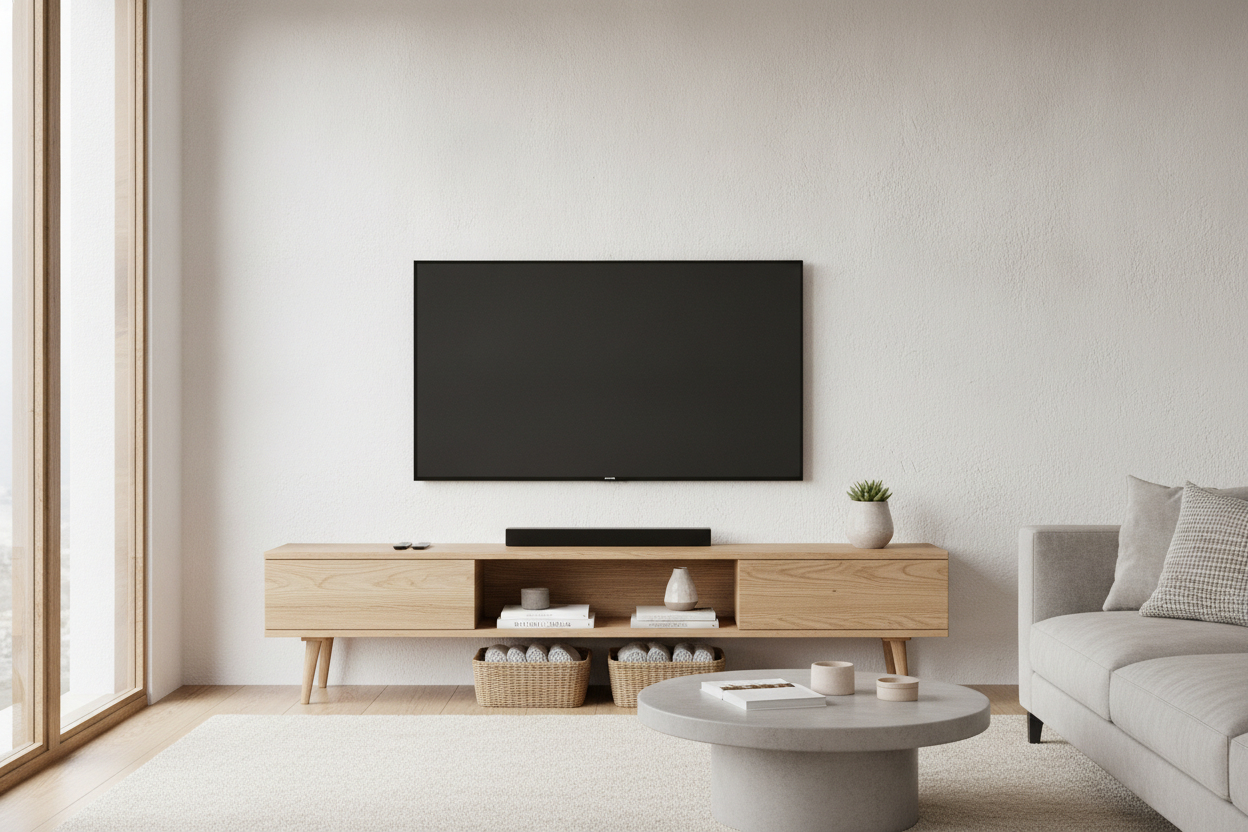
This one looked stunning in the photos. It had those iconic tapered legs and a sleek minimalist profile. When I opened the box, the finish was actually decent—a nice, warm white. But then I touched the legs. They were hollow, wood-grain-printed plastic. It felt like a toy. I almost packed it back up right then and there.
However, the frame itself was sturdy MDF. I realized that with a quick trip to the hardware store, I could save it. I swapped the plastic legs for solid wood ones and replaced the generic knobs with brushed brass pulls. It is a solid trick to make a modern white TV stand look expensive without the four-figure price tag. It was a contender, but the storage was still a bit cramped for my gaming consoles.
Contender 3: The Heavyweight That Actually Survived
This was the most expensive of the three, and it showed. The box was a two-person lift. The finish was a thick, durable laminate that didn't chip the second my screwdriver slipped. It felt like actual furniture, not a temporary solution. The drawer glides were smooth, and the cable management holes actually lined up with where a human would put a receiver.
While it lacked some of the fancy modular features of high-end minimalist entertainment centers with adjustable width, it held its own. It felt anchored. I did not feel like a stiff breeze would topple my setup. The drawers offered real depth, enough to hide my unsightly collection of remotes and old controllers. This was the one I kept.
3 Red Flags to Watch for When Browsing
First, look at the shipping weight. If a 60-inch stand weighs 35 pounds, it is made of air and hope. You want density. Second, zoom in on the 'white' finish. If it looks reflective like a mirror, it is high-gloss, which is a nightmare for dust and fingerprints. Look for 'matte' or 'wood grain texture' for a more premium feel.
Lastly, check the hardware. If the handles look like generic silver plastic in the close-ups, they probably are. If you aren't into DIY upgrades, you might want to browse other TV stands that come with metal hardware out of the box. Don't settle for something that will look like junk in six months.
FAQ
Is Amazon furniture hard to assemble?
It depends on your patience. Most pieces take 1-3 hours. If you have a power drill (used gently) and a second pair of hands, it is manageable. Just don't trust the included 'tools.'
Will a white TV stand turn yellow over time?
Cheap paper veneers can yellow if they are in direct sunlight. Look for UV-resistant laminates or powder-coated finishes if your living room gets a lot of sun.
How do I know if my TV is too heavy for the stand?
Check the weight capacity in the specifications, not just the screen size. A '65-inch' stand might only hold 50 lbs, while some heavy-duty models can hold 150 lbs. Always aim for a 20% buffer.

Dejar un comentario
Este sitio está protegido por hCaptcha y se aplican la Política de privacidad de hCaptcha y los Términos del servicio.