










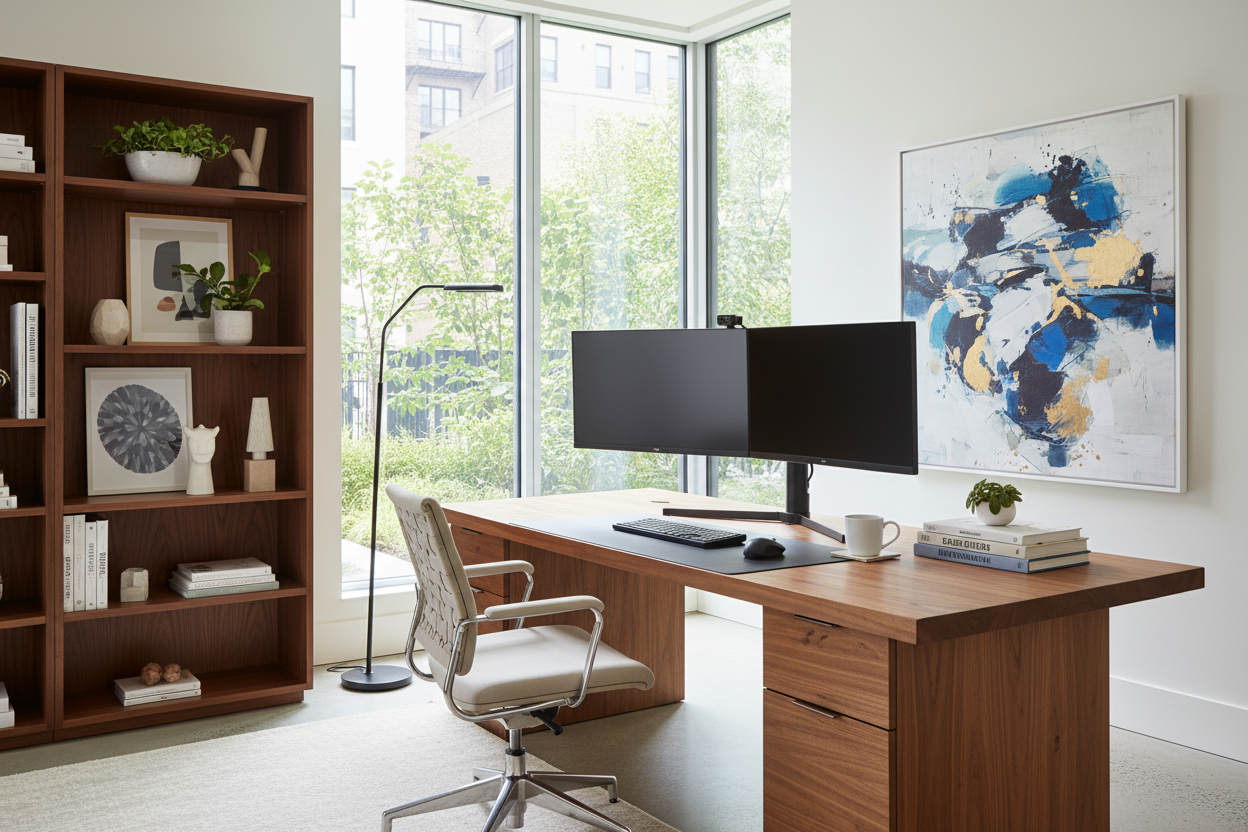
We have all fallen down the rabbit hole of scrolling through endless home office desk ideas pinterest feeds, captivated by perfectly staged vignettes and minimalist sanctuaries. However, there is often a sharp disconnect between a curated image and a functional Tuesday afternoon filled with deadlines. As an interior designer, my job is to bridge that gap. Translating those viral images into a livable reality requires looking past the styling props to understand the architecture of the furniture itself. This guide is designed to help you deconstruct those inspirational photos and select pieces that offer both the visual impact you crave and the durability your workflow demands.
Key Features to Look For
Before committing to a purchase based on an aesthetic, evaluate the desk against these core functional criteria to ensure long-term satisfaction:
- Surface Material: Determine if the finish can withstand heat from laptops and moisture from coffee cups (e.g., sealed solid wood vs. porous veneer).
- Cable Management: Look for integrated grommets or modesty panels; many office furniture ideas pinterest showcases hide cords that, in reality, clutter the visual flow.
- Ergonomic Height: The standard desk height is 29-30 inches, but ensure the clearance accommodates your specific chair’s armrests.
- Footprint vs. Visual Weight: A heavy oak desk anchors a room, while a glass or slender metal frame expands the perception of space in smaller areas.
Decoding Materiality and Texture
When you save office furniture pinterest boards, you are likely drawn to texture without realizing it. The tactile experience of a desk is paramount. Solid hardwoods like walnut or white oak offer longevity and can be refinished, developing a patina that tells a story over time. In contrast, engineered woods or laminates provide uniformity and scratch resistance but often lack that soulful, organic warmth.
For a modern, industrial silhouette, metal and glass are frequent contenders. However, be mindful of the thermal properties; glass surfaces run cold and can be uncomfortable on the wrists during extended typing sessions. If you opt for these cooler materials, I often recommend using a high-quality leather desk blotter to introduce warmth and improve mouse tracking.
Balancing Aesthetics with Ergonomics
Many work desk ideas pinterest highlights feature vintage dining tables repurposed as desks. While visually stunning, these often lack the ergonomic depth required for a monitor setup. A depth of at least 24 inches is critical to prevent eye strain. If you fall in love with a shallow console-style desk, it is best reserved for laptop-only work or handwriting tasks.
Furthermore, consider the "negative space" under the desk. A common design oversight is selecting a desk with thick apron rails or drawers that restrict leg movement, forcing you to sit too low. Always measure the distance from the floor to the bottom of the desk apron, not just the top surface.
Spatial Planning and Lighting
Placement dictates performance. In design, we talk about the "command position"—facing the door rather than the wall. This layout, frequently seen in high-end office furniture ideas pinterest collections, reduces subconscious anxiety. If you must face a wall, ensure your desk has enough depth to accommodate a task lamp without crowding your workspace. Lighting should be layered: ambient light for the room and directional task lighting to reduce screen glare.
Lessons from My Own Projects
I once had a client who was adamant about replicating a specific "floating desk" look she found on Pinterest. It was a stunning slab of raw-edge acacia mounted directly to the wall with no visible legs. It looked ethereal in the photos. However, the reality of installation was a different beast.
We ran into two major issues that the photo didn't show. First, the wall required significant structural reinforcement to hold the weight of the slab plus her equipment—something a standard drywall setup couldn't handle. Second, and more annoyingly, the vibration. Without vertical legs to ground the energy, every keystroke sent a subtle, annoying tremor through the monitor. We eventually had to retrofit discreet steel brackets underneath. It taught me—and the client—that while floating desks look clean, they often lack the rigidity needed for heavy-handed typists.
Conclusion
Building a workspace that inspires you is about more than copying a look; it is about curating an environment that supports your specific way of working. By prioritizing material integrity and ergonomic logic, you can take those aspirational images and ground them in reality, creating a home office that feels as good as it looks.
Frequently Asked Questions
What is the ideal desk size for a dual-monitor setup?
For two monitors, aim for a width of at least 55 to 60 inches. This prevents the screens from overhanging the edges and allows space for speakers or documents without the surface feeling chaotic.
How do I mix wood tones in a home office?
The trick is to keep the undertones consistent. If your desk is a warm walnut, pair it with other warm woods or neutral metals. Avoid mixing cool, grey-toned woods with rich, reddish woods, as this can create visual friction.
Are standing desks worth the investment for home offices?
Absolutely, but focus on stability. Many budget adjustable desks wobble at their highest setting. Look for a motorized frame with a crossbar or heavy feet to ensure the monitor stays steady while you work standing up.


Dejar un comentario
Este sitio está protegido por hCaptcha y se aplican la Política de privacidad de hCaptcha y los Términos del servicio.