










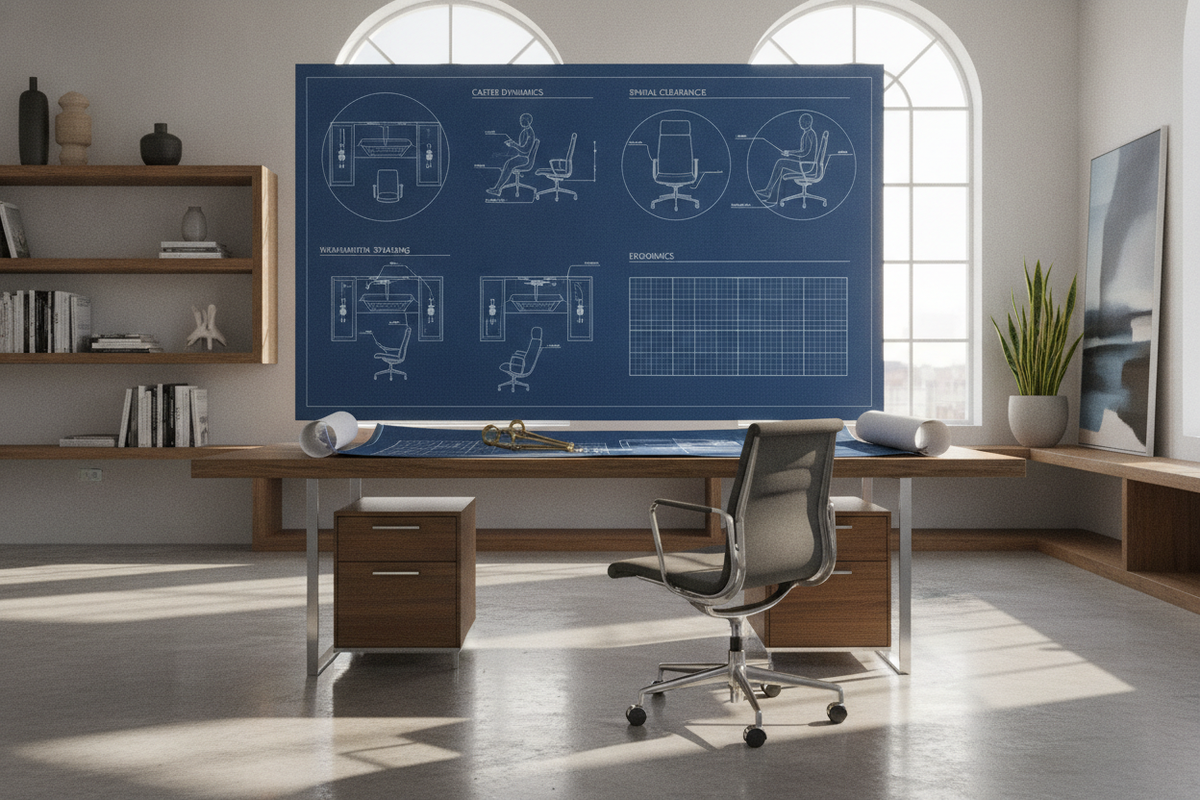
A well-chosen rolling seat serves as the dynamic bridge between your physical posture and the surrounding workspace architecture. Selecting among modern desk chairs on wheels requires looking beyond surface aesthetics. The ideal chair functions as an active spatial component, balancing smooth transit across diverse flooring textures with stable support during focused tasks. Whether you are outfitting a dedicated corporate setup or refining a multifunctional study, understanding how an office chair with wheels interacts with surrounding desk surfaces, credenzas, and storage drawers ensures seamless daily movement and long-term utility.
Core Mechanics of Desk Chairs on Wheels: Base Geometry and Caster Types
The foundation of any dependable chair for desk with wheels lies in its star base geometry and caster wheel composition. A five-star base distribution provides balanced weight displacement, preventing tipping when reaching for lateral filing cabinets or reclining into task positions. However, the true interface of mobility is the caster wheel itself. Casters vary significantly in material density, impacting both rolling resistance and floor preservation:
- Hard Nylon Wheels: Best suited for low-pile carpets and textured rugs where firmer wheel edges navigate fibrous surfaces with minimal friction.
- Soft Polyurethane Wheels: Ideal for hardwood, laminate, vinyl, and tile surfaces, offering smooth transit while protecting delicate finishes from scuffs.
- Swivel Bearing Hubs: High-grade ball bearings allow a full range of directional rotation, preventing caster binding during tight repositioning.
When selecting a chair to pair with pieces from a curated computer desk collection, matching wheel hardness to floor surfaces ensures steady mobility without unintended drifting while typing or drafting.
Dimensional Planning and Under-Desk Clearances
Spatial conflicts frequently occur when the outer dimensions of an adjustable office chair on wheels do not align with desk aprons, modesty panels, or side return drawers. To establish fluid movement within your room layout, spatial planning must evaluate vertical, horizontal, and radial measurements.
First, consider vertical seat travel. An adjustable desk chair with wheels should elevate sufficiently to align your forearms parallel to your work surface while maintaining your feet flat on the floor. Pay close attention to armrest profiles: fixed armrests that sit higher than the desk frame prevent the chair from fully tucking beneath the tabletop, eating into precious floor space when not in use.
For compact spaces, selecting a dedicated small office chair on wheels minimizes the footprint of the caster base. Exploring a practical desk small office guide can help you calculate turning radius thresholds, ensuring your chair maneuvers effortlessly around nearby walls and vertical shelving units.
Ergonomic Architecture and Dynamic Comfort Systems
Sustained productivity depends on dynamic posture support. Premium ergonomic desk chairs with wheels integrate responsive structural contours that adapt to micro-movements throughout the workday. When evaluating comfortable desk chairs with wheels, focus on functional mechanisms rather than mere padding thickness:
- Adjustable Lumbar Support: A responsive lumbar contour aligns with the natural inward curve of the lower spine, reducing passive slouching.
- Contoured Seat Pan with Waterfall Edge: A subtle downward slope at the front of the seat cushion reduces pressure beneath the thighs, promoting comfortable circulation during extended sitting sessions.
- Tilt-Tension and Recline Locking: Synchronized tilt mechanisms let the backrest recline while keeping the seat pan balanced, encouraging active postural shifts.
- Breathable Mesh vs. Layered Upholstery: High-tension mesh promotes ventilation across warmer environments, whereas dense foam with tailored fabric offers structured cushioning.
For users seeking a truly comfortable chair with wheels to accompany a dynamic sit-stand workflow, pairing responsive seating with an ergonomic office desk product allows for smooth transitions between seated drafting and standing focus intervals.
Coordinating Mobile Seating with Desk Types and Storage Layouts
A rolling chair must integrate seamlessly into your broader interior layout. In larger layouts featuring an L-shaped setup or an expansive office computer desk product, a smooth-rolling computer chair on wheels enables effortless transitions between computer monitors, drafting zones, and integrated storage drawers without requiring repeated standing and sitting.
Conversely, in compact or dual-purpose rooms where desks are concealed within cabinetry, mobility requirements shift. If you are integrating a home office desk chair with wheels into an enclosed station or following a computer desk office guide, prioritize low-profile armrests or armless configurations. This ensures the entire chair base rolls completely inside the cabinet enclosure when the workday concludes, maintaining a tidy aesthetic across shared living areas.
Material Durability, Floor Protection, and Assembly Maintenance
Investing in a high-quality office desk chair with wheels requires thoughtful ongoing maintenance to preserve its mechanical integrity and rolling performance. Over time, hair, dust, and textile fibers can accumulate inside caster housing units, impeding smooth rotation. Periodic maintenance routines help extend the life of your mobile workstation:
- Caster Cleaning: Invert the base periodically to clear accumulated debris from the wheel axles using a soft brush or compressed air.
- Protective Floor Mats: Polycarbonate or tempered glass floor mats provide a uniform rolling surface while shielding soft wood or deep-pile carpeting from localized pressure wear.
- Fastener Checkups: Re-tighten bolts under the seat mechanism, armrest mounts, and backrest brackets every few months to eliminate wobbling and creaks.
- Upholstery Care: Wipe faux leather surfaces with mild soapy water to prevent drying, or vacuum woven fabric and mesh panels to prevent dust build-up.
Whether you are outfitting a full suite of office desk chairs with wheels or sourcing a single comfy desk chair with wheels for a creative studio, coordinating caster performance, dimensional clearances, and ergonomic features will elevate both your daily comfort and overall room functionality.


Dejar un comentario
Este sitio está protegido por hCaptcha y se aplican la Política de privacidad de hCaptcha y los Términos del servicio.