










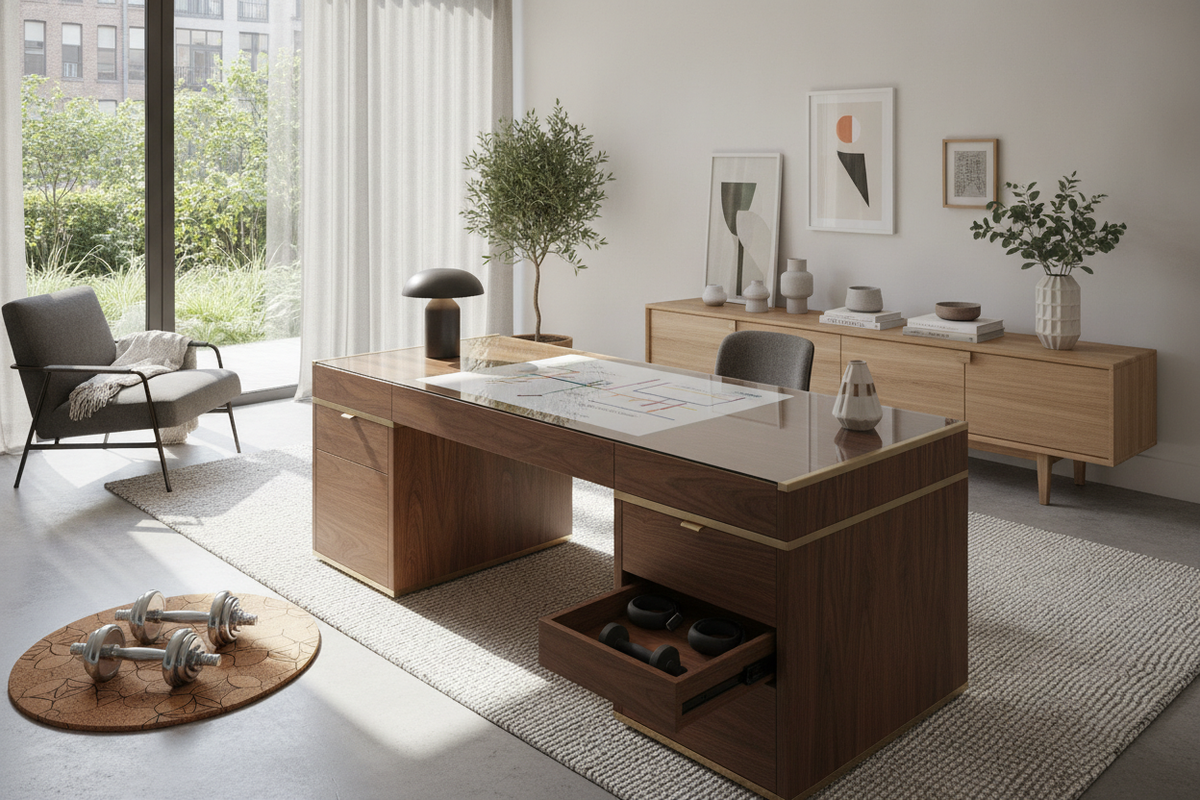
Introduction: Merging Active Micro-Workouts with Home Office Furniture
Modern remote work often encourages long stretches of seated concentration, making movement breaks an essential component of a balanced workday. Integrating desk dumbbell exercises into an existing workstation layout requires more than simply keeping a pair of hand weights nearby. To maintain a functional, orderly, and productive environment, you must coordinate spatial clearances, protect sensitive desktop finishes, and establish dedicated storage within your office furniture ensemble.
When planned thoughtfully, a home office can transition smoothly between high-focus administrative tasks and quick physical movement intervals. By examining how furniture footprints, task chair trajectories, and storage modules interact with basic resistance movements, you can establish an active workspace that remains visually refined and uncluttered.
Spatial Clearance Envelopes: Planning Movement Zones Around Desks
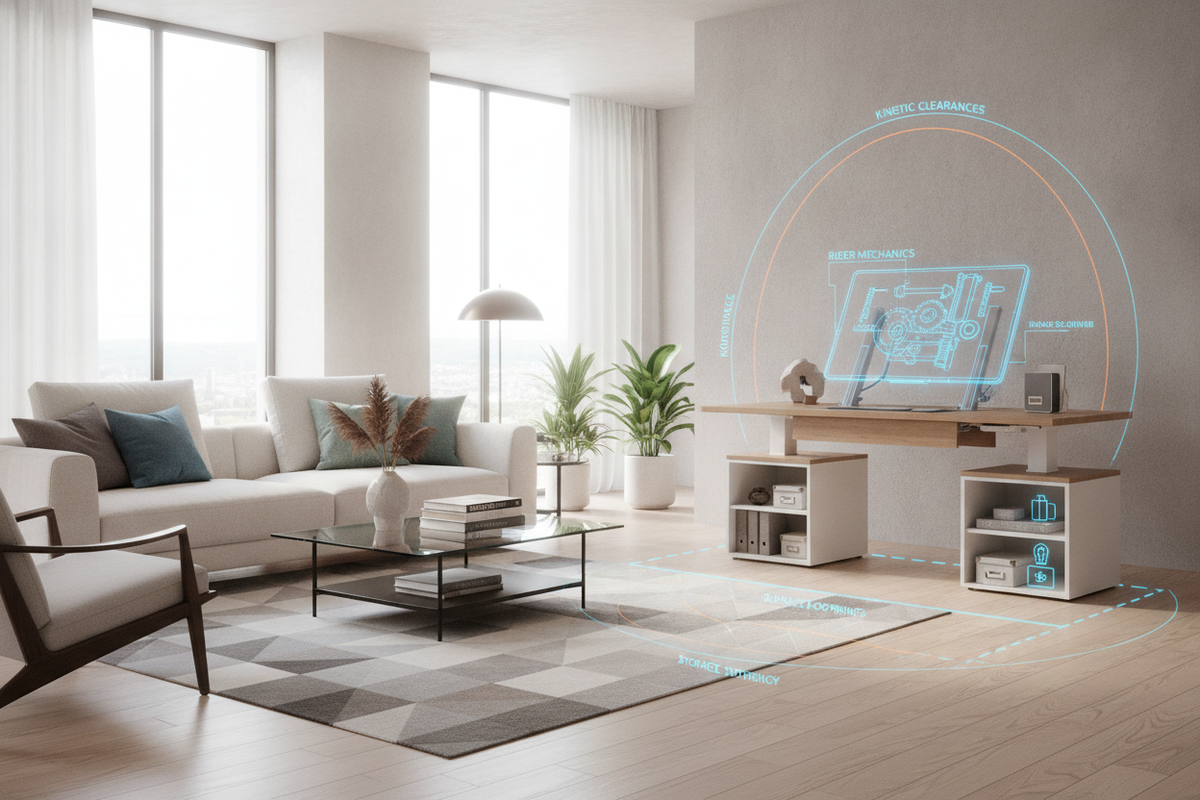
Executing physical movements near delicate computer hardware, multiple monitors, and decorative office accents requires a clearly defined movement envelope. Without adequate buffer zones, hand weights risk bumping into table edges, monitor arms, or nearby storage units.
Seated Arc of Motion and Armrest Boundaries
Performing seated dumbbell routines requires an understanding of your task chair's immediate radius. Seated movements demand lateral clearance that extends well beyond the width of the chair's armrests. If your chair features fixed or wide armrests, lateral arm extensions can feel restricted, potentially leading to awkward movement paths. Ensuring that your desk chair can glide back smoothly from the desk perimeter allows you to establish an unobstructed overhead and lateral path without clipping the underside of the desktop or adjacent filing cabinets.
Standing Transition Footprint and Monitor Buffers
Standing exercises demand a broader footprint behind or adjacent to the primary workstation. Stepping away from the main desk area prevents equipment from traveling too close to display screens and peripheral cables. A practical guideline is to maintain clear standing floor space directly behind the task chair's travel zone. This buffer keeps active movement separated from delicate electronic equipment while allowing complete freedom for vertical and horizontal movements.
Desk Dumbbell Exercise Archetypes: Seated and Standing Movement Frameworks
Structuring quick movement sessions around standard office furniture involves selecting exercise archetypes that suit the spatial constraints of a residential workstation.
Seated Posture-Support Movements
Seated exercises are ideal for short micro-breaks when you prefer to remain within your immediate desk area. Common movement archetypes include:
- Seated Bicep Curls: Executed with the torso upright, utilizing the open clearance on either side of a narrow-profile task chair.
- Neutral Overhead Presses: Performed with a vertical path that requires adequate vertical clearance beneath low ceiling fixtures or overhead shelving hutches.
- Seated Wrist Flexion and Rotations: Compact forearm movements that can be completed directly over the lap, requiring minimal ambient clearance.
Standing Kinetic Movement Chains
When stepping away from the desk surface, standing movements introduce broader movement patterns that engage larger muscle groups:
- Standing Bent-Over Rows: Utilizing the open area behind the desk chair, pulling weights toward the lower ribcage while maintaining a stable hip-hinge position.
- Lateral Shoulder Raises: Requiring an extended horizontal clearance envelope free of floor lamps, bookshelves, or wall hangings.
- Goblet Squats: Holding a single weight at chest level, demanding a clear floor zone free of tangled cords or rolling casters.
Workstation Surface Protection and Structural Considerations
Hand weights, whether made of cast iron, neoprene, or polyurethane, can cause surface scuffs, denting, or finish degradation if placed directly onto delicate furniture surfaces.
Protective Desktop Mats and Edge Guards
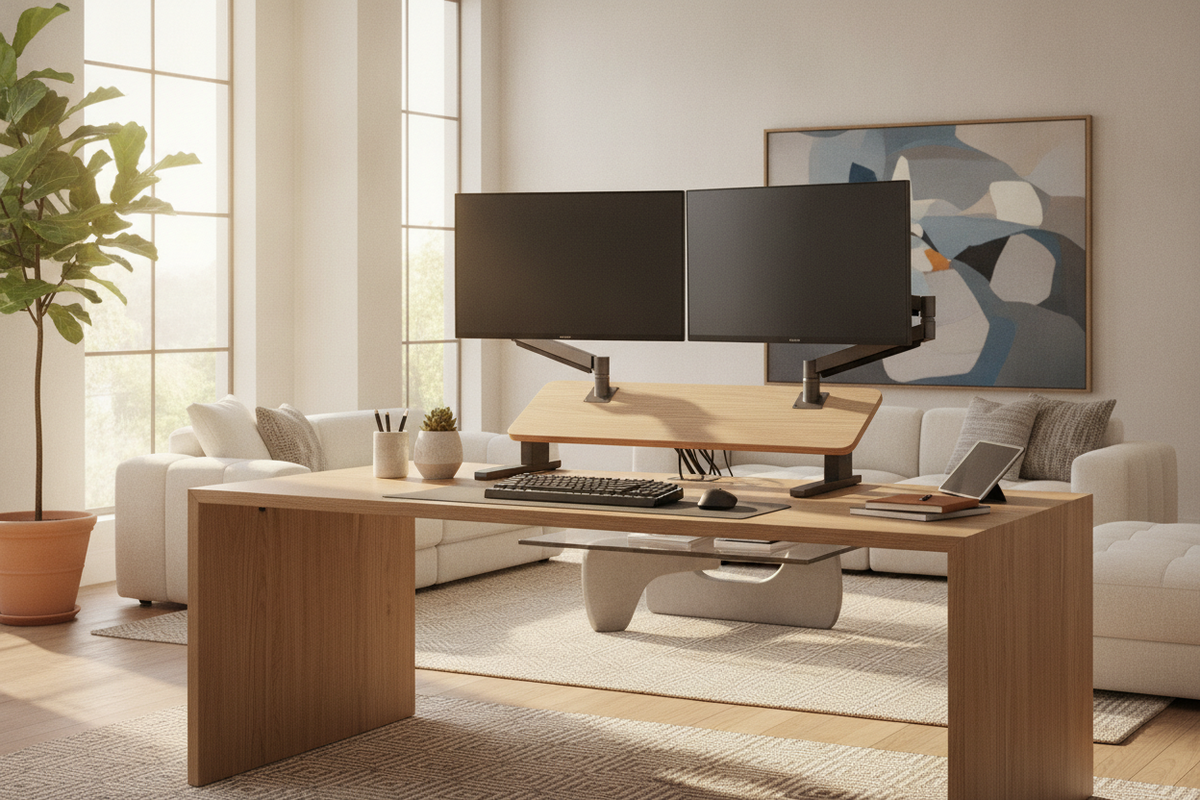
Resting hand weights on bare wood veneer, high-gloss lacquer, or soft laminate can lead to accidental pressure marks and edge chipping over time. Introducing dense felt desk pads, heavy-duty leather mats, or textured rubberized liners creates a protective barrier that dampens contact and shields surfaces from abrasive friction. For desks with sharp perimeter banding, placing protective pads along the working edge prevents accidental dings during transitions.
Weight Distribution and Load Considerations
Desks and ancillary furniture components are designed with specific structural intentions. Fragile keyboard trays, thin floating shelves, and cantilevered return extensions are not engineered to support concentrated point loads from workout equipment. Resting dumbbells should always occur on solid, reinforced surfaces such as the main desktop support plane, a dedicated floor pad, or reinforced lower storage compartments.
Storage Synergy: Integrating Dumbbells into Office Furniture Layouts
Keeping exercise equipment visible on open work surfaces can create visual clutter that detracts from professional focus. Designing seamless storage solutions ensures that hand weights remain easily accessible during movement breaks yet completely concealed during video conferences and focused work sessions.
Under-Desk Pedestals and Reinforced Lower Drawers
Mobile pedestals and low-profile filing cabinets positioned beneath the desk provide an intuitive home for compact dumbbell sets. Storing weights inside bottom drawers distributes mass close to the floor, enhancing the stability of the storage unit. Line these drawers with heavy-duty felt or cork liners to prevent internal scuffing and reduce noise when returning equipment to its designated slot.
Enclosed Accent Cabinets and Modular Shelving
For offices with sufficient perimeter wall space, low credenzas, sideboards, and modular shelving units offer versatile storage. Enclosed accent cabinets with solid door fronts conceal fitness gear behind clean architectural facades, preserving a cohesive interior design aesthetic throughout the room.
Decision Matrix: Workstation Types vs. Dumbbell Workout Viability
Different desk configurations accommodate exercise routines and storage integration in distinct ways:
- Standard Writing Desk: Offers an open leg bay that facilitates quick seated movements, but requires external storage cabinets for concealing equipment.
- L-Shaped Corner Workstation: Provides abundant surface area and a natural separation between active exercise space and primary computer hardware zones.
- Height-Adjustable Sit-Stand Desk: Delivers flexible overhead clearance when raised, allowing seamless transitions between seated desk work and standing dumbbell intervals.
- Executive Desk with Integrated Pedestals: Offers robust built-in lower cabinetry for concealed storage, though the enclosed leg well may limit the lateral arc of seated movements.
Conclusion: Building a Balanced, Active Workspace Ecosystem
Integrating desk dumbbell exercises into your daily routine is an effective way to introduce movement variety into sedentary work patterns. By planning movement envelopes, protecting worktop surfaces with appropriate mats, and selecting reinforced, discreet furniture storage, you can cultivate an active workspace that balances physical movement with a tidy, professional environment.

Dejar un comentario
Este sitio está protegido por hCaptcha y se aplican la Política de privacidad de hCaptcha y los Términos del servicio.