










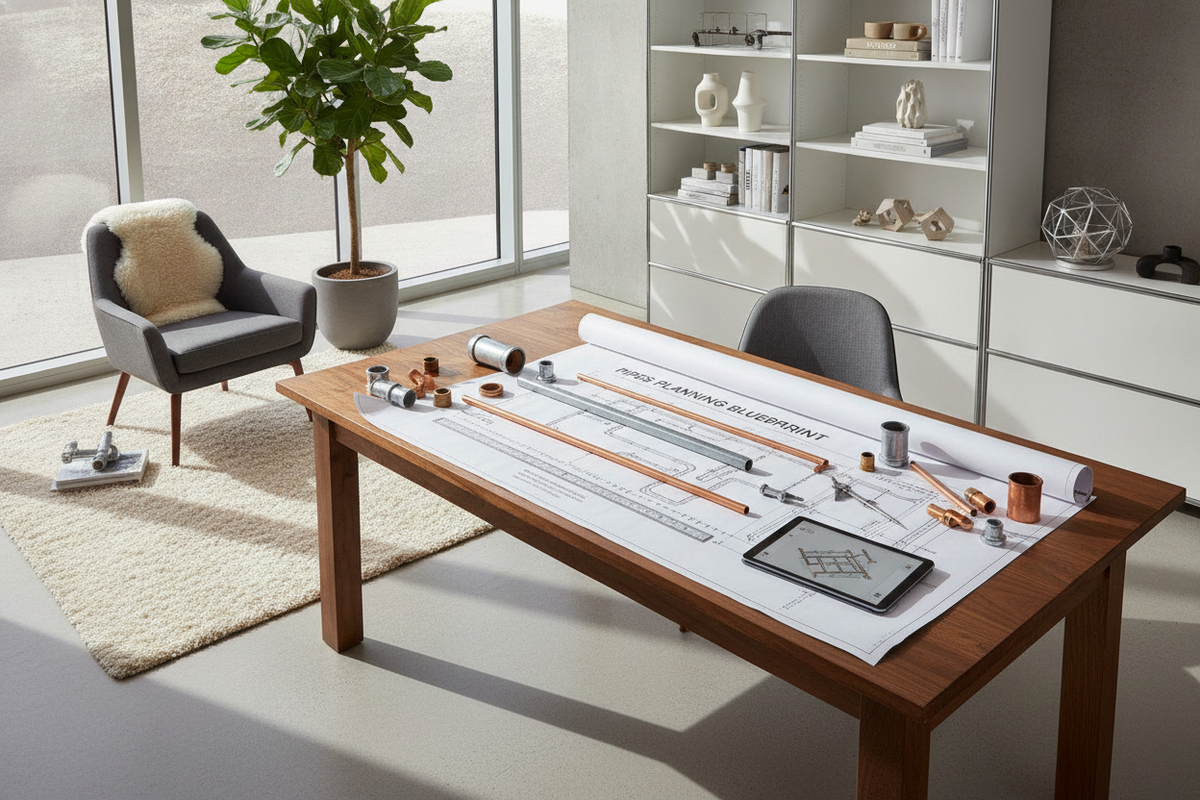
An industrial desk with pipes combines architectural strength with vintage industrial design. Whether you are assembling a custom workstation from individual plumbing components or evaluating a manufactured industrial pipe desk, the combination of threaded metal framework and solid surface materials offers a durable work platform. Understanding how various pipe frame geometries, metal finishes, and tabletop substrates interact allows you to build a sturdy home office setup tailored to your daily workflow.
Industrial Desk with Pipes: Architectural Anatomy and Core Frame Archetypes
The foundation of any pipe frame desk lies in its underlying geometric structure. While the aesthetic draws inspiration from industrial workshops, the mechanical layout dictates structural rigidity, leg clearance, and weight capacity across the work surface.
Straight-Leg vs. Continuous H-Frame and Box-Truss Geometries
Basic desks with pipe legs often utilize four independent vertical supports attached to the underside of the desktop with circular floor flanges. While simple to assemble, independent legs can be vulnerable to lateral sway under heavy typing or equipment loads. To eliminate wobble, builders often implement an H-frame configuration, where horizontal stretchers connect the front and rear legs, joined by a central crossbeam along the back.
For larger commercial setups or dual-monitor workstations, continuous box-truss geometries provide maximum lateral resistance. When comparing custom DIY builds against factory-engineered work surfaces, exploring a dedicated computer desk collection helps identify ideal tabletop proportions and pre-engineered stability systems that provide comparable rigidity.
Vertical Tier and Integrated Shelving Overheads
An advantage of threaded pipe construction is the ability to extend vertical risers above the tabletop. An iron pipe desk with shelves utilizes structural tees above the work surface to anchor overhead display tiers. To design overhead vertical pipe tiers that optimize small room footprints, consult our office desk shelves guide to balance weight distribution and display utility across upper framing.
Pipe Material Selection and Hardware Specifications
Choosing the correct pipe substrate determines the visual tone, maintenance profile, and weight of your desk base:
- Black Malleable Iron: The quintessential choice for a black pipe desk, offering a dark charcoal or matte black aesthetic. It comes coated in protective factory oil that requires thorough degreasing and a clear protective coat to prevent oxidation.
- Galvanized Steel: Coated with a protective zinc layer, galvanized pipe desk components feature a brighter, silver-grey industrial finish with inherent rust resistance.
- Decorative Tubular Steel: Often found in a pre-packaged pipe desk kit, these tubes provide smooth powder-coated finishes that eliminate the need for chemical degreasing while mimicking authentic plumbing profiles.
Fittings, Flanges, and Thread Tightening Calibration
Constructing a pipe fitting desk requires standard threaded components, including 90-degree elbows, structural tees, floor flanges, and coupling unions. Threaded pipe components tighten through tapered NPT threads. When assembling a frame, dry-fitting every connection ensures all four leg bases rest flat on the floor before final tightening and securing the top flanges.
Dimensional Footprints, Height Tiers, and Ergonomic Clearances
Proper dimensional planning ensures your pipe computer desk maintains proper posture and spatial harmony within your room:
- Writing and Laptop Stations: Suited for shallow alcoves, requiring moderate surface depth and a streamlined frame footprint.
- Multi-Monitor Workstations: Require deeper surfaces to maintain healthy focal distances from screens while keeping adequate clearance behind the rear frame stretcher.
- Standing and Hybrid Configurations: A pipe standing desk requires extended vertical risers and reinforced bracing to maintain stability at elevated work heights.
Tabletop Substrates and Material Pairings
The visual impact of a desk with black pipe legs relies on the contrast between the metal framework and the desktop material. Solid butcher block slabs provide dense, warp-resistant surfaces that accept wood screws securely through flange mounting holes. Reclaimed timber planks introduce natural grain patterns and knots for a true rustic pipe desk aesthetic, though they require jointing and sanding to achieve a flat workspace. For a modern, low-maintenance alternative, high-density laminated engineered boards provide consistent flatness and resistance to everyday scuffs.
Storage Solutions: Marrying Open Pipe Frames with Enclosed Cabinetry
The open-frame design of an industrial pipe desk creates an airy visual profile, but practical daily work often requires enclosed organization for paperwork, office supplies, and tech accessories.
For workstations requiring concealed filing and stationery organization alongside open pipe frames, reviewing an office desk drawers guide provides proven strategies for modular storage placement. You can slide independent mobile pedestal drawers beneath open crossbars or mount dedicated wooden drawer cassettes directly beneath the desktop.
If your home office demands high-capacity integrated cabinetry that standard open-frame pipe tables lack, consider an office computer desk product with dedicated tower compartments and drawer units.
Assembly Protocol and Floor Protection Planning
Building a durable diy desk with pipes requires a structured assembly workflow:
- Degreasing and Cleaning: Wash authentic iron pipe parts in warm soapy water or mineral spirits to remove protective machine oils, then dry them completely.
- Protective Sealing: Apply a matte clear coat or specialized metal lacquer to black iron to prevent environmental moisture from causing surface rust over time.
- Frame Squaring: Assemble the leg sets and horizontal stretchers on a level surface, checking diagonal measurements across opposite corners to ensure the frame is square.
- Surface Fastening: Invert the desktop, center the frame, pre-drill pilot holes to avoid wood splitting, and secure the flanges with heavy-duty wood screws.
- Floor Protection: Apply dense adhesive felt discs, rubber boots, or threaded leveling glides beneath the floor flanges to protect hardwood and tile surfaces from metal scratching.
Room Layout Archetypes and Workstation Integration
Positioning an industrial desk depends heavily on room traffic and available corner real estate. In expansive loft spaces, centering a wide pipe workstation allows the structural metal framework to serve as a design focal point. In dedicated study rooms, positioning the desk along a perimeter wall keeps power and monitor cables neatly routed behind the pipe uprights.
For expansive multi-monitor setups where wrapping around perimeter walls is necessary, an office computer corner product offers a clean alternative to complex custom pipe joins, providing an efficient footprint with integrated structural stability.


Dejar un comentario
Este sitio está protegido por hCaptcha y se aplican la Política de privacidad de hCaptcha y los Términos del servicio.