










Architectural Geometry of the Ergonomic L-Shaped Desk
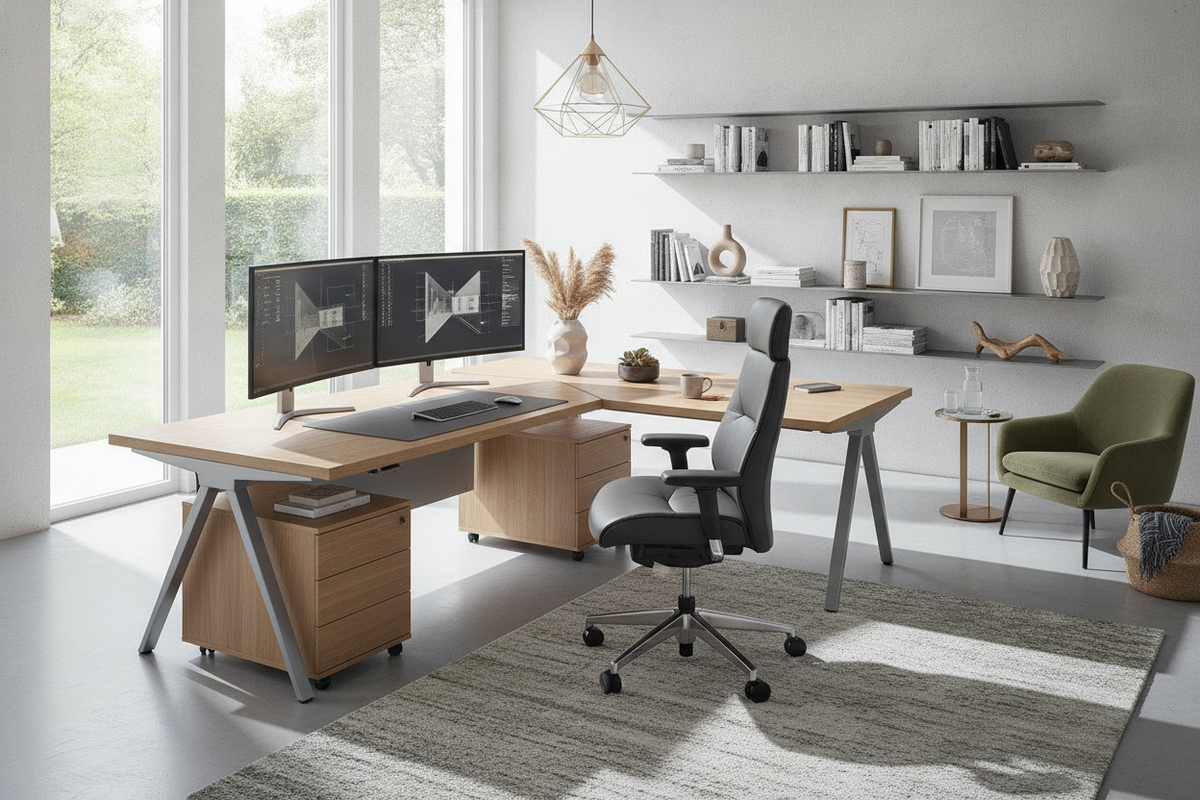
Modern home offices require distinct task zoning to maintain productivity without physical strain. An ergonomic l-shaped desk provides a dual-wing architecture that creates a natural cockpit reach zone. Rather than forcing you to stretch across an elongated linear surface, an l-shaped ergonomic desk wraps around your primary seating position. This curved access arc enables smooth transitions between computing, writing, and peripheral hardware review while encouraging a balanced, neutral sitting posture.
By establishing a primary workstation wing for primary screens and a secondary return wing for reference documents, secondary displays, or analog notebooks, the user avoids repetitive torso twisting. Aligning your main monitor directly in front of your central viewing angle and arranging supplementary gear within an easy swivel radius reduces neck rotation and supports upper-body comfort throughout long working sessions.
Evaluating Workstation Archetypes: Corner Fit vs. Mobile Wing Layouts
Selecting the right desk archetype depends heavily on room flow and daily task dynamics. Traditional corner setups nestle directly into architectural intersections, maximizing floor efficiency in modest bedrooms or multi-purpose living areas. For spatial planning advice on compact nooks, consult our practical desk corner guide.
Conversely, an ergonomic corner desk can also be floated within an open-concept study to delineate clear spatial zones. For dynamic environments where flexible floor plans are essential, an l shaped desk on wheels introduces adaptable versatility. Equipped with locking casters, mobile dual-wing units allow users to reorient their perspective toward natural window light, roll aside for cleaning, or reposition effortlessly during room reconfigurations.
- Static Corner Formats: Anchor firmly along perimeter walls, maximizing interior walking lanes and stabilizing heavier dual-monitor configurations.
- Mobile Dual-Wing Units: Provide fluid mobility across smooth floorings, allowing spontaneous layout adjustments for collaborative tasks or cleaning.
- Reversible Return Desks: Allow left- or right-hand configuration to match specific room doorways, outlets, and window placements.
Dimensional Categories and Room Placement Strategies
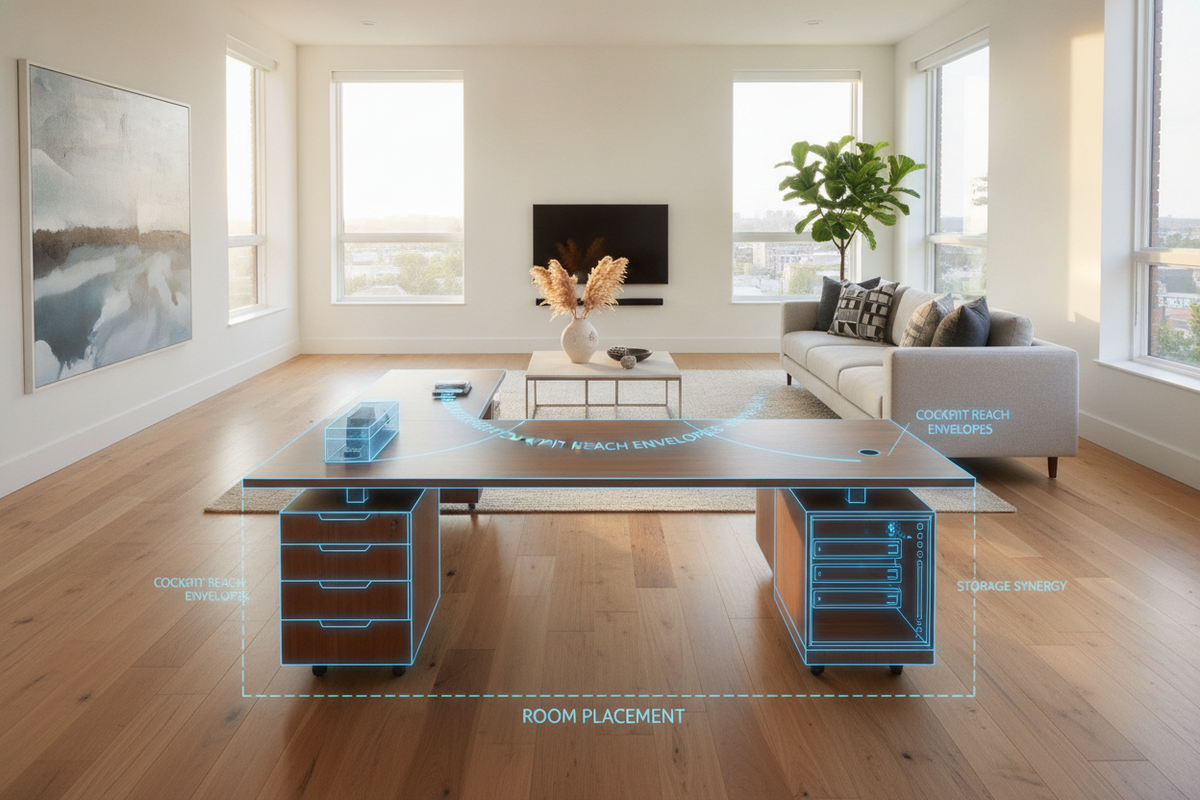
Scale and clearance envelopes dictate whether an ergonomic l desk feels expansive or intrusive. When assessing dimensional categories, measure both desktop depth and return wing length to ensure unhindered chair travel. A standard primary wing provides ample depth for keyboard trays and screen stands, while the return wing offers a streamlined surface for tablets, books, or writing instruments.
Placing an L-shaped workstation requires deliberate clearance around the knee well. Ensure that under-desk support bars or crossbeams do not obstruct knee rotation when pivoting between wings. For compact layouts requiring clean visual lines and modern finishes, exploring a dedicated shaped corner desk product helps optimize tight perimeter square footage while retaining full ergonomic usability.
Surface Materials, Structural Stability, and Frame Rigidity
A stable foundation is critical for any multi-surface workstation. Structural stability prevents monitor wobble during intensive typing or handwriting tasks. High-grade engineered wood surfaces with scratch-resistant melamine veneers resist daily wear while delivering refined aesthetics. For broader styling inspiration and visual balance tips, review our curated corner desk guide.
Frame engineering typically combines heavy-gauge steel supports, reinforced corner gussets, and adjustable leveling glides. These structural elements ensure that even when an l shaped desk on wheels is loaded with hardware, the frame remains rigid. Premium caster assemblies should feature durable urethane treads and dependable wheel locks that prevent unintentional drift when stationary tasks demand rock-solid footing.
Storage Synergy: Incorporating Modular Drawers and Shelving Units
Ergonomics extends beyond physical desk shape; an organized surface directly influences physical ease and mental clarity. An effective workstation combines generous desktop real estate with integrated or modular storage elements. Positioning storage below the secondary wing keeps critical stationery, charging cables, and active projects within arm's reach without cluttering primary keyboard zones.
For workspaces requiring open access to reference files and tech hubs, choosing a shaped corner desk product featuring tiered under-desk shelving keeps essential devices off the main worktop. If your workflow prioritizes concealed organization for office supplies and privacy, selecting a shaped corner desk product with integrated sliding drawers ensures that every tool has a designated home.
Storage Integration Best Practices
- Tiered Risers: Elevate auxiliary monitors or printers while liberating precious worktop real estate below.
- Under-Wing Pedestals: House heavy binders and filing supplies on the non-dominant wing to preserve open legroom under the primary workstation.
- Integrated Cord Channels: Route power strips and data lines along structural legs to avoid underfoot tangling.
Assembly Precision and Long-Term Ergonomic Workflow Maintenance
Proper assembly ensures that an ergonomic l-shaped desk delivers long-term durability and ergonomic benefits. Begin assembly on a protected, level surface to prevent scuffing the veneer panels. Fasten all hardware loosely during initial structural alignment, tightening corner bolts and support brackets evenly only after verifying square joins.
Once assembled, calibrate leveling glides or engage caster locks to eliminate floor unevenness. Complete your setup by routing cables through dedicated grommets, positioning monitor arms at eye level, and adjusting chair height so elbows rest naturally parallel to the work surface. Periodically inspect structural fasteners and enjoy a versatile, organized workstation tailored to daily productivity.

Dejar un comentario
Este sitio está protegido por hCaptcha y se aplican la Política de privacidad de hCaptcha y los Términos del servicio.