










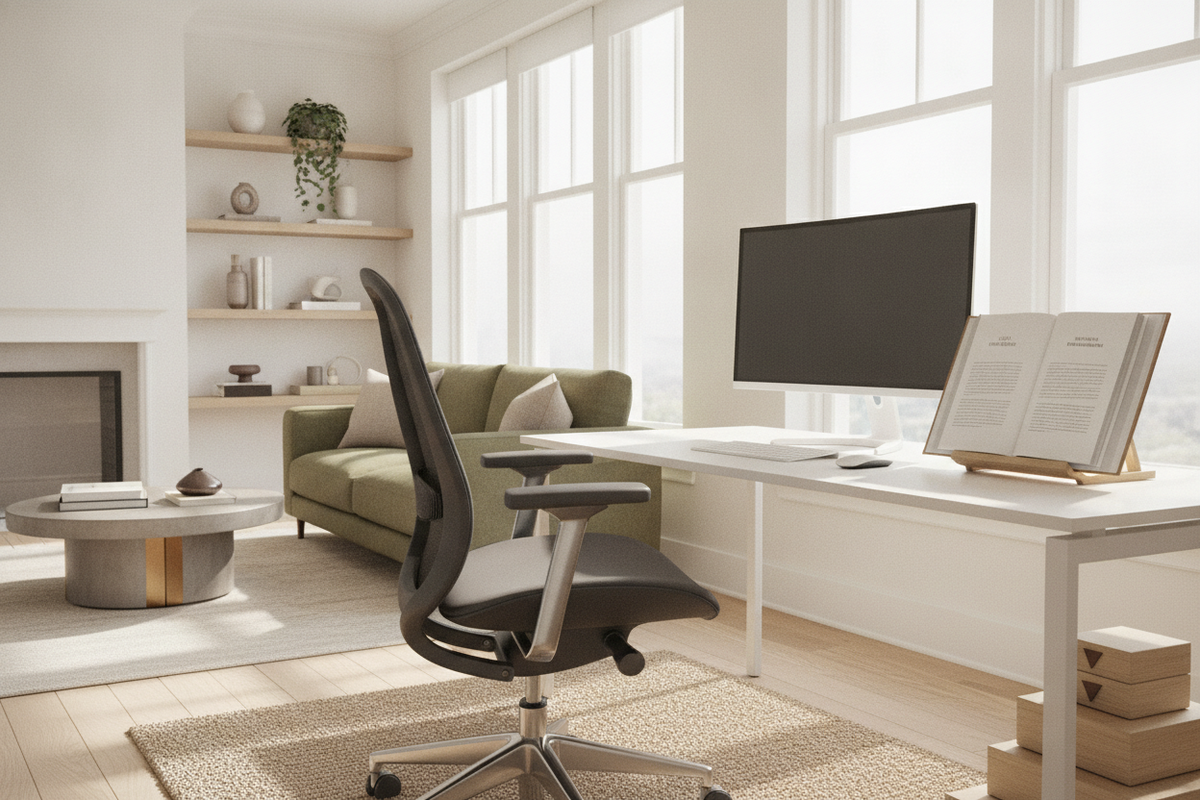
When long work hours demand focused comfort, locating the right task seating becomes a top priority for any home or professional workspace. Searching for an ergonomic office chair nearby offers the distinct advantage of immediate physical trials, allowing you to test lumbar response, seat cushion depth, and armrest mobility firsthand before making an investment. Balancing in-person showroom visits with well-engineered online selections helps you establish an optimized workstation tailored to your personal posture habits.
Navigating the Search for an Ergonomic Office Chair Nearby
Finding a dependable seating solution often begins with scouting local retail showrooms and design centers to explore varied frame profiles and adjustment mechanisms. When you test an ergonomic desk chair nearby, you gain direct insight into how different backrest curves align with your spine during upright typing and relaxed conference calls. Local showroom trials remove the guesswork surrounding seat pan firmness and fabric breathability.
However, local showroom inventory can sometimes be limited in finish options, base configurations, or companion furniture coordination. A balanced purchasing strategy combines physical testing benchmarks with broader design research. Consulting an office desk chair guide can provide helpful inspiration for pairing refined seating silhouettes with modern cabinetry, decorative credenzas, and balanced ambient lighting.
Showroom Testing Blueprint: What to Evaluate in Person
Stepping onto a showroom floor to evaluate an office chair ergonomic nearby requires a systematic approach beyond merely sitting down for a brief moment. To understand how a chair performs across sustained work sessions, focus on several core mechanical touchpoints:
- Seat Depth and Pan Slider: Check that the seat pan leaves a modest gap between the front waterfall edge and the back of your knees when your back rests firmly against the lumbar support.
- Adjustable Lumbar Support: Determine whether the lower back pad moves vertically and horizontally to support your natural inward spinal curve without creating pressure points.
- Multi-Directional Armrests: Test armrests that adjust in height, width, angle, and depth. They should allow your elbows to rest comfortably while your shoulders remain relaxed.
- Recline Tension and Tilt Limiter: Lean back to test the resistance of the tilt mechanism. A smooth recline tension should cradle your torso smoothly rather than snapping back or falling backward abruptly.
- Pneumatic Cylinder Responsiveness: Adjust the seat height to ensure your feet can rest flat on the floor with knees positioned at a comfortable angle.
Workstation Integration: Pairing Your Task Chair with Desks
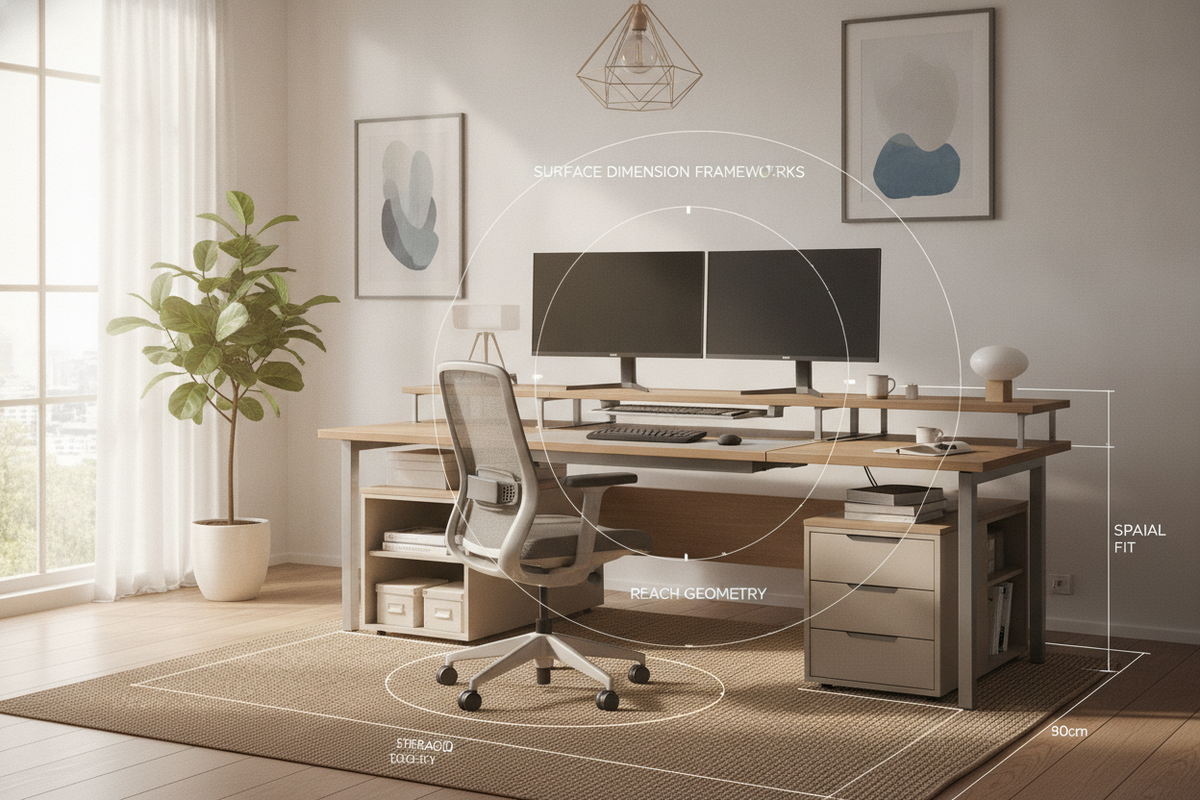
An ergonomic chair cannot perform effectively in isolation; its dimensions and movement range must interface smoothly with your primary work surface. The height of your desk dictates your elbow elevation, monitor sightline, and leg clearance throughout the day. Fixed-height desks can sometimes restrict your posture if the chair armrests collide with the desktop edge or under-desk crossbars.
To achieve seamless spatial alignment, pairing adjustable seating with an ergonomic office desk product allows you to transition between seated and standing postures while maintaining healthy wrist angles and neck alignment. When seated, adjust your chair so your forearms rest parallel to the desktop surface. When moving to a standing mode, your chair can be smoothly glided aside without obstructing floor pathways.
Material Archetypes: Breathability, Cushion Density, and Frame Stability
Evaluating task seating also involves selecting materials that suit your room temperature, maintenance preferences, and visual style. The primary construction archetypes each present unique structural characteristics:
- Suspension Mesh: High-tensile mesh across the backrest promotes continuous airflow, which is especially beneficial in warmer rooms or during extended computer sessions. Ensure the frame perimeter does not press uncomfortably against your shoulder blades.
- Molded High-Density Foam: High-resilience molded foam seats distribute body weight evenly and maintain their supportive contour over extended daily use. Look for contoured seat pans that encourage balanced hip alignment.
- Upholstered and Bonded Finishes: Supple exterior coverings add tactile warmth and executive presence to formal home libraries or modern executive suites. These surfaces require simple regular dusting and gentle spot cleaning.
- Reinforced Five-Star Bases: Whether crafted from polished aluminum or reinforced nylon composite, a wide-diameter five-star caster base ensures stability during dynamic reclining movements.
Room Flow and Storage Synergy: Preserving Spatial Clearances
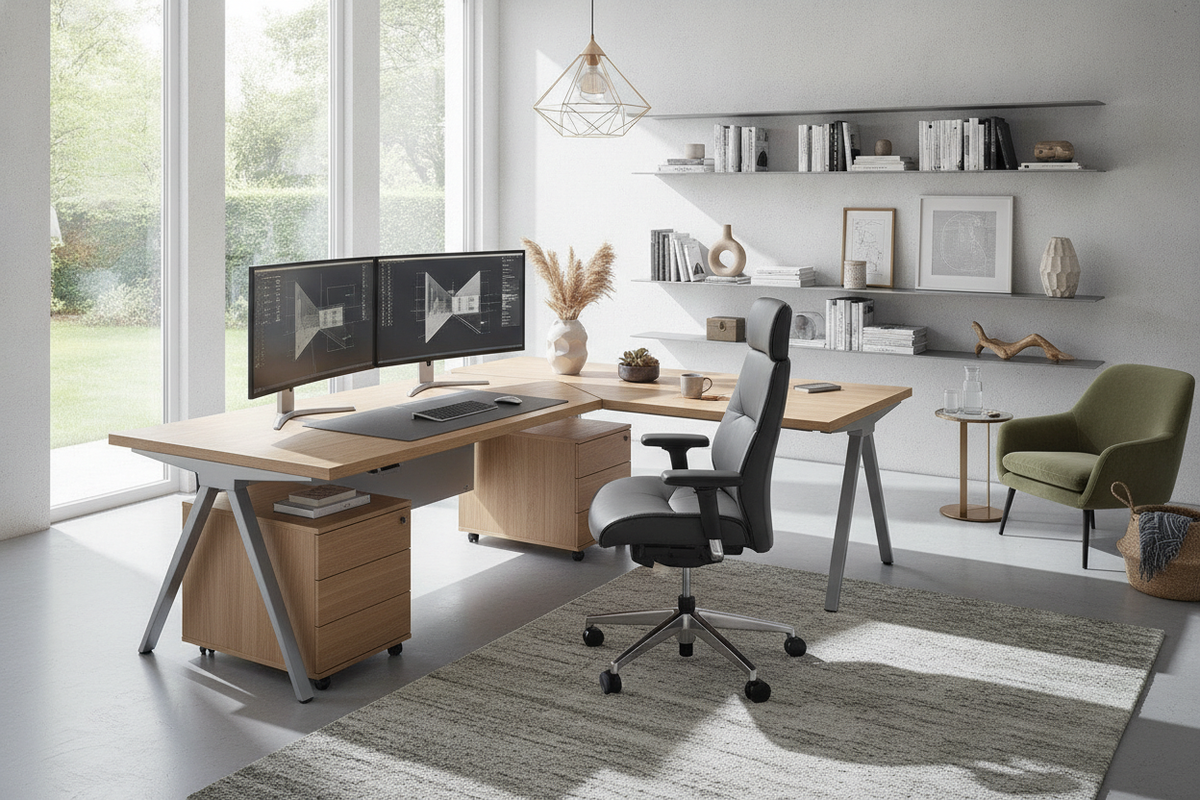
A well-proportioned office chair requires adequate operational clearance to swivel, slide back, and pivot safely. When planning your office layout, ensure that the chair's full pushback zone does not collide with wall-mounted shelving, credenzas, or lateral filing units. Crowded layouts impede daily movement and can scuff nearby cabinet facades.
Integrating your seating area alongside a comprehensive office desk product featuring built-in multi-door cabinetry and organizing drawers keeps paperwork, electronic accessories, and reference materials neatly tucked away. By keeping desktop surfaces uncluttered, you preserve ample perimeter room for smooth caster glide, maintaining an open, productive layout in rooms of any footprint.
Buyer's Decision Checklist: Selecting Your Ideal Ergonomic Seating
Before finalizing your choice for an ergonomic office chair nearby or placing an online order, review this practical decision checklist to confirm fit, function, and aesthetic longevity:
- Measure Available Footprint: Verify that your workspace allows generous clearance behind the desk for full reclining and 360-degree rotation.
- Assess Adjustment Capabilities: Confirm the chair includes independent height, tilt-lock, seat depth, and multi-axis arm adjustments.
- Match Floor Surfaces with Casters: Use soft-tread casters or protective floor mats on hardwood surfaces, while firm dual-wheel casters glide easily on low-pile carpets.
- Align Frame Tones with Room Palette: Choose frame accents—such as matte black, light gray, or polished metal—that complement your desks, bookshelves, and storage cabinets.
- Verify Companion Storage Clearance: Ensure nearby cabinet doors and pull-out drawers can open fully without colliding with the chair base or armrests.

Dejar un comentario
Este sitio está protegido por hCaptcha y se aplican la Política de privacidad de hCaptcha y los Términos del servicio.