










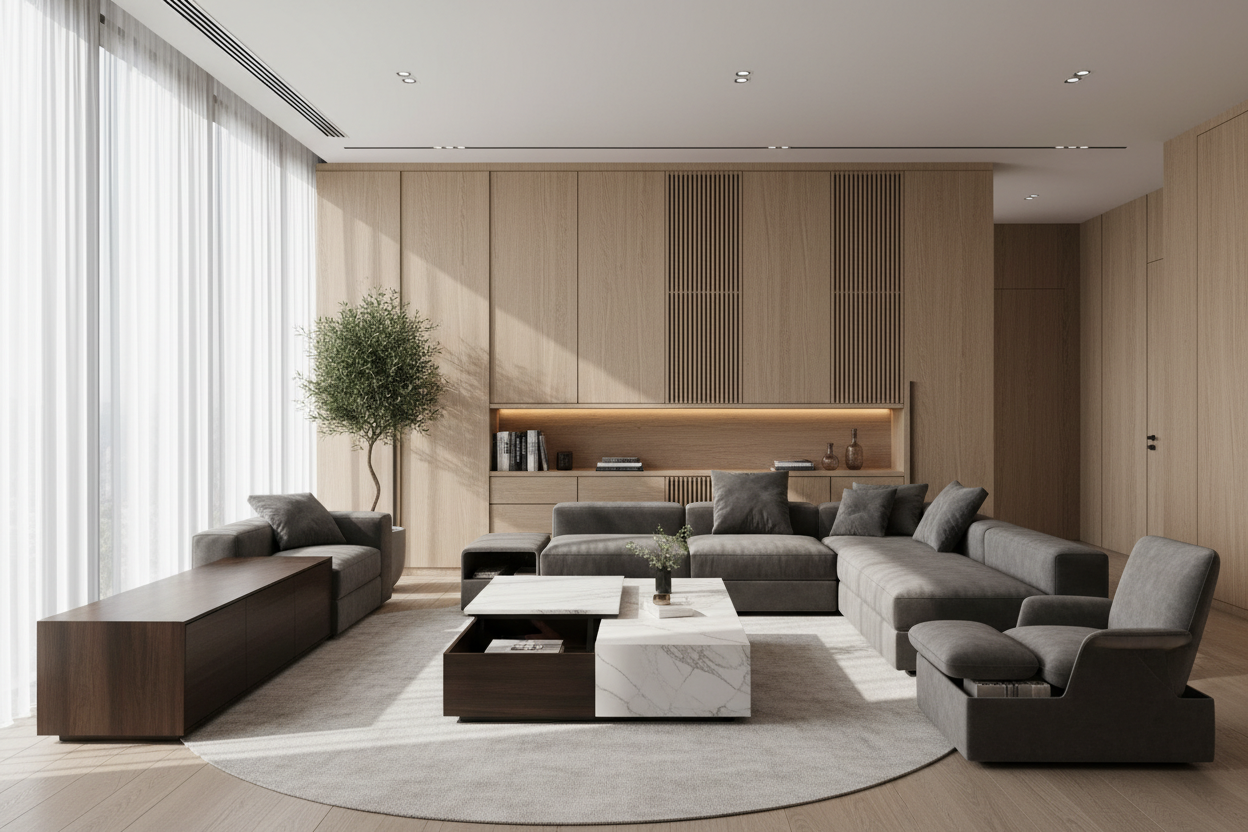
We have all been there. You buy a beautiful sofa, lay down the perfect vintage rug, and suddenly realize there is nowhere to put the throw blankets, remote controls, or the dog's toys. The room quickly devolves into a chaotic mess of plastic bins and mismatched baskets. Mastering furniture and storage is the single most important skill for keeping a home feeling intentional rather than accidental. In this guide, I will walk you through how to source and style pieces that hide your daily life without sacrificing your aesthetic.
Quick Decision Guide
- Opt for dual-purpose pieces like storage ottomans or lift-top benches to maximize square footage in tight layouts.
- Choose storage that looks like furniture—think fluted wood credenzas instead of exposed wire shelving.
- Measure internal drawer dimensions, not just exterior footprints, to ensure your specific items will actually fit.
- Balance visual weight by mixing heavy, closed cabinetry with pieces on raised, tapered legs.
Space Planning: Making Sense of Floor Plans
Navigating Open-Concept Layouts
In sprawling suburban living rooms or tight urban apartments, finding the right furniture with storage requires a strategic approach to layout. When walls are scarce, a low-profile furniture storage unit placed behind a floating sofa can act as both a room divider and a home for board games. For tighter footprints, prioritize small furniture storage like nesting tables with hidden compartments or slim console tables. Always leave at least 36 inches of clearance around any piece with doors or drawers so you can fully open them without hitting a knee or scraping a wall.
Style & Coordination: Avoiding the Boxy Trap
Balancing Visual Weight
The biggest mistake I see with storage home furniture is creating a room that looks like a warehouse. When every piece goes straight to the floor, the room feels incredibly heavy and cramped. To counter this, look for pieces with distinct architectural details—a sideboard on slender metal legs or a media console featuring cane webbing. These details allow light to pass underneath and through the silhouette, reducing its visual bulk while still providing ample room storage furniture capabilities.
Material & Build Quality: Investing Where It Counts
The Hardware Dictates the Lifespan
When shopping for storage pieces, pay less attention to the shiny exterior finish and more attention to the hinges, drawer glides, and internal joinery. Soft-close, under-mount metal glides are essential for pieces you will open daily. A cheap veneer over particleboard might look acceptable on day one, but if the internal storage for furniture is flimsy, the bottom of the drawer will bow the second you load it with heavy books or ceramics. Solid wood or high-quality plywood construction is crucial for long-term furniture storage.
A Designer's Honest Take
Early in my career, I specified a gorgeous, heavy-duty lift-top coffee table for a client's family room. I found it at a high-end storage furniture store and thought it was the ultimate solution for their overflowing magazine and tech accessory collection. The matte walnut finish was stunning. However, I learned a hard lesson about practicality: once the internal cavity was filled, the top became incredibly heavy to lift. Worse, the constant grabbing of the edge caused the wood veneer to chip within six months. It taught me that daily-use storage must be effortless to operate. If it requires two hands and a braced core to open, you will simply stop using it, and the clutter will end up right back on top of the table.
Frequently Asked Questions
How do I choose the right storage furniture for a small room?
Focus on verticality and multi-functionality. A tall, narrow cabinet draws the eye upward and uses dead wall space, while a tailored storage ottoman serves as seating, a footrest, and a hiding spot for seasonal blankets.
What is the best furniture for a storage room or mudroom?
Durability is the absolute priority here. Solid wood benches with built-in cubbies or powder-coated metal lockers withstand wet boots and heavy coats. Avoid delicate veneers or untreated softwoods when selecting furniture for storage room environments.
How can I hide toys in a living room?
Ditch the primary-colored toy bins and integrate the toys into your main decor. A long, low credenza with solid doors can hold soft fabric baskets full of toys on the bottom shelves, keeping them easily accessible for kids but completely hidden when guests arrive.

Dejar un comentario
Este sitio está protegido por hCaptcha y se aplican la Política de privacidad de hCaptcha y los Términos del servicio.