










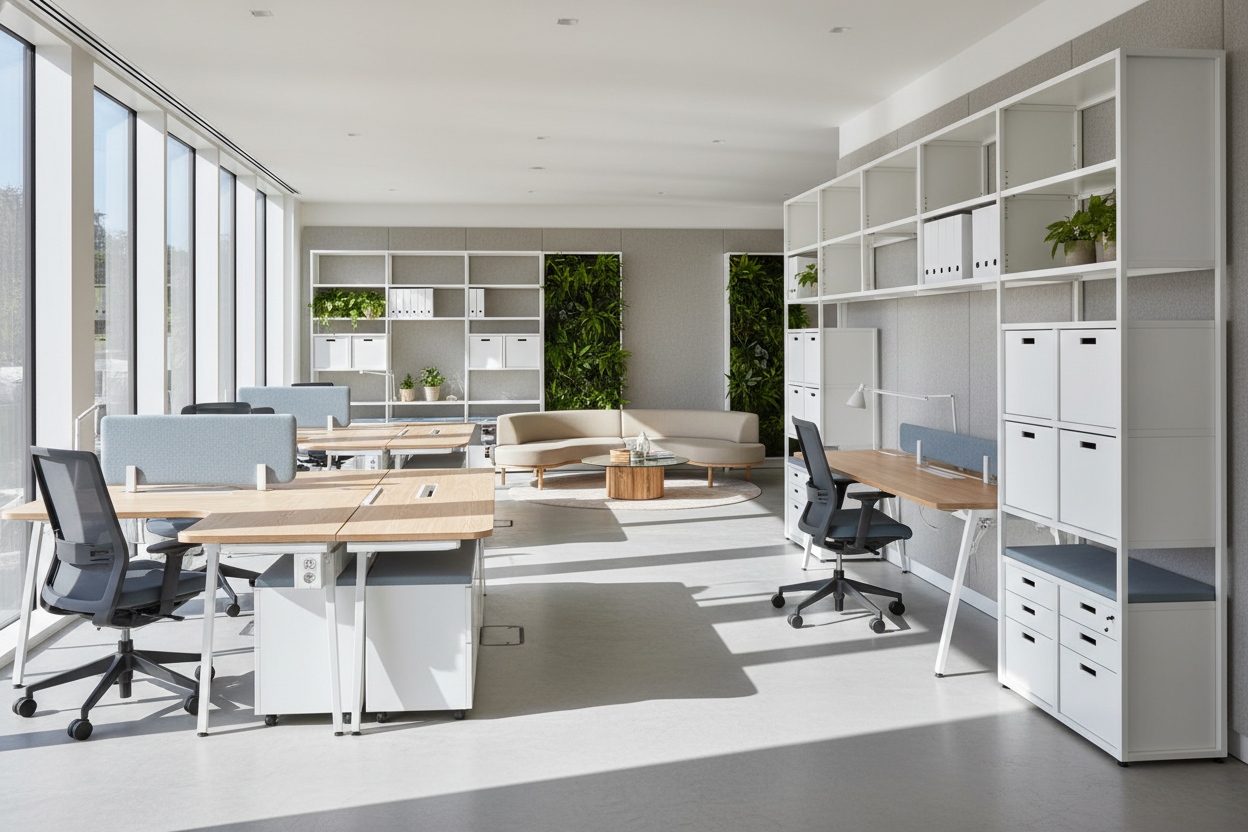
Staring at a static floor plan that no longer serves your team's workflow is a frustration I encounter in almost every initial client consultation. The rigid cubicle farm is obsolete, yet open plans can often feel chaotic without structure. This is where office modular furniture bridges the gap between structure and fluidity. It is not merely about buying desks that connect; it is about curating an ecosystem that evolves alongside your business or home workspace needs.
Key Features to Look For
- Connector Mechanism Quality: Ensure brackets and locking systems are metal-on-metal for longevity during reconfigurations.
- Scalability: Look for collections that offer add-on units rather than requiring standalone purchases later.
- Cable Management Integration: High-quality systems have hidden troughs large enough for modern power bricks, not just thin cords.
- Surface Durability: Prioritize High-Pressure Laminate (HPL) or commercial-grade veneer for high-traffic zones.
- Acoustic Properties: Panels with sound-dampening fabrics are essential for open-plan focus.
Designing for Flow and Function
When selecting modular furniture for offices, the primary objective is spatial zoning. We are not just filling a room; we are directing traffic and behavior. In my design practice, I utilize modular systems to create "micro-environments"—quiet zones for deep work and collaborative hubs for brainstorming.
The beauty of these systems lies in their silhouette. Unlike bulky traditional desks, modular pieces often feature floating aesthetics and cleaner lines, which helps maintain visual permeability in a room. This is crucial for maintaining access to natural light across the floor plate.
Materiality: Durability Meets Aesthetics
The finish you select dictates the longevity of the investment. For executive suites, a wood veneer provides warmth and gravity. However, for general staff areas or high-activity home offices, I always recommend the best modular office furniture lines that utilize thermal-fused laminate. It resists the inevitable coffee rings and laptop scratches far better than organic materials.
Storage Solutions
Clutter is the enemy of productivity. Modular office cabinets are the unsung heroes of a clean workspace. Look for units that serve dual purposes—such as low-profile credenzas that double as bench seating or room dividers. In smaller footprints, vertical modular shelving allows you to utilize wall height without encroaching on valuable floor space.
The Ergonomic Equation
A desk system is only as good as the seating that accompanies it. The modular office chair selection should not be an afterthought. Because modular desks often have varying heights or adjustable components, the chair must offer a wide range of vertical travel and lumbar support. Visually, I prefer mesh-backed chairs in modular setups; their transparency complements the lightweight architecture of the furniture, preventing the space from feeling heavy or overcrowded.
My Personal Take on Office Modular Furniture
I learned a hard lesson early in my career regarding "dye lots" and modular systems. I designed a sprawling startup office using a mid-range modular system in a specific "Harvest Oak" finish. Six months later, the client expanded and ordered ten more units. When they arrived, the new "Harvest Oak" was two shades lighter than the original batch because it came from a different manufacturing run.
It was a visual disaster. Since then, I advise clients to stick to neutral solids (whites, greys, charcoals) for the core structural elements of their modular systems. These standard finishes rarely fluctuate in color between production batches. If you want wood grain, use it on accent pieces or drawer fronts—components that are easier to swap out or don't sit directly flush against an older unit where the color difference would be glaring.
Conclusion
Investing in a modular system is an investment in future-proofing your environment. By prioritizing robust connector hardware, timeless finishes, and ergonomic integration, you create a workspace that supports productivity rather than hindering it. Don't settle for static; choose a layout that moves at the speed of your work.
Frequently Asked Questions
How do I maintain modular office furniture surfaces?
For laminate surfaces, a damp cloth with mild soap is usually sufficient. Avoid abrasive sponges that can dull the finish. For fabric panels, regular vacuuming with an upholstery attachment prevents dust buildup that can degrade air quality.
Is modular furniture suitable for small home offices?
Absolutely. It is often the superior choice because it allows you to customize the footprint to exact dimensions. Corner modular units can maximize dead space that standard desks cannot utilize.
Can I assemble modular furniture myself?
While many direct-to-consumer brands offer DIY assembly, commercial-grade systems often require professional installation due to complex wiring channels and heavy leveling mechanisms. If you are outfitting a full corporate office, professional installation is highly recommended to ensure warranty compliance.


Dejar un comentario
Este sitio está protegido por hCaptcha y se aplican la Política de privacidad de hCaptcha y los Términos del servicio.