










Core Foundations: What Defines Good Chairs for Desk Environments
Finding good chairs for desk setups requires looking past superficial styling to examine structural stability, adjustability, and long-session comfort. A decent office chair should accommodate the user's natural posture while providing stable mechanical support throughout extended work hours.
Dynamic Postural Alignment vs. Static Support
Static seating locks the body into a rigid angle, which can cause muscle fatigue and restlessness over long periods. In contrast, high quality desk chairs incorporate responsive tilt mechanisms, balanced lumbar cradles, and flexible backrests that mirror subtle spinal shifts. Choosing a quality computer chair with dynamic tension control allows individuals to recline smoothly during cognitive breaks while remaining upright during intensive keyboard tasks.
Primary Adjustability Tiers: Seat Pan, Backrest, and Armrests
To qualify as a good work from home chair, a seat must provide multiple intuitive adjustment points:
- Pneumatic Height Adjustment: Ensures the user's feet rest flat on the floor while maintaining parallel thigh alignment with the ground.
- Backrest Angle and Tension: Balances upright tasking angles with relaxed tilt options for versatile daily routines.
- Multi-Directional Armrests: Relieves shoulder strain by supporting forearms at desk level without bumping into workstation edges.
- Adjustable Lumbar Support: Adapts to the natural inward curve of the lower back for consistent seated comfort.
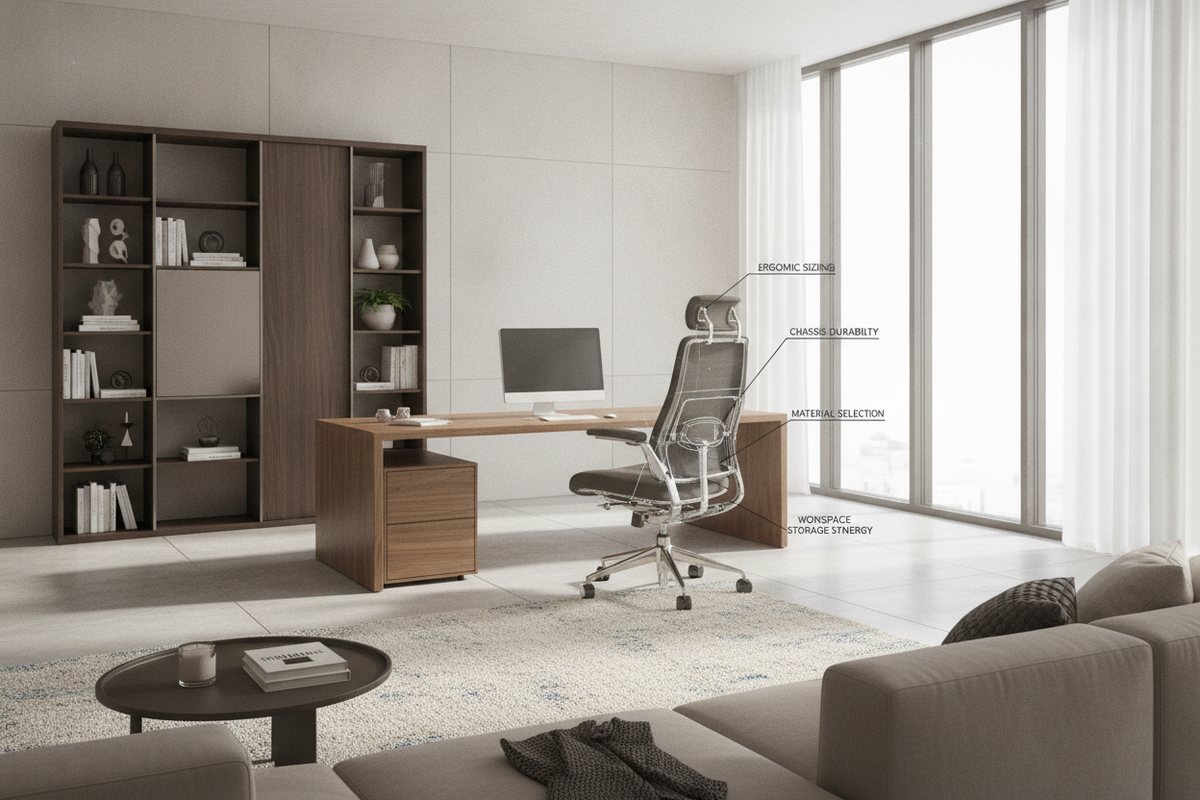
Structural Architecture: Chassis Integrity and Material Selection
The longevity of high quality office chairs depends on their internal load-bearing hardware and exterior upholstery fabrics.
Base Construction, Cylinder Dynamics, and Frame Mechanics
A reliable chair foundation uses reinforced five-star wheelbases made from sturdy nylon composite or cast metal alloys. Heavy-duty hydraulic cylinders ensure smooth height transitions without pressure loss. Robust tilt mechanisms and reinforced steel under-seat plates provide the foundation for a durable, dependable seating experience.
Upholstery Analysis: Breathable Mesh, High-Density Foam, and Leather
Upholstery impacts breathability, thermal comfort, and daily wear resistance:
- Tensioned Mesh: Promotes continuous air circulation, making it ideal for warmer environments or high-activity offices.
- High-Density Molded Foam: Retains its form over years of daily use, distributing body weight evenly across the seat pan.
- Supple Leather or Bonded PU: Delivers an executive aesthetic with wipe-clean surfaces suited to formal office suites.
Dimensional Planning: Chair Geometry, Knee Clearances, and Desk Fit
A high quality chair must match the dimensions of your workstation to prevent cramped leg space and awkward posture. Exploring an expansive computer desk collection helps you align key desk measurements—such as knee-well clearance and desktop height—with your chair's overall profile.
Seat Pan Depth, Width Tiers, and Thigh Support
Proper seat depth supports the thighs without pressing against the back of the knees. A small gap between the edge of the seat pan and the calf allows unobstructed circulation. Generous seat widths also accommodate varying body types and natural shifts in seating position throughout the day.
Armrest Clearances and Under-Desk Parking Geometry
Before purchasing, measure the clearance beneath your desk apron and pencil drawers. Drop-down or multi-axis adjustable armrests allow the chair to tuck fully under the desk surface when not in use, preserving open floor space in compact rooms.
Workspace Synergy: Integrating Seating with Desks and Storage Layouts
Ergonomic chairs function as part of an integrated workspace ecosystem alongside desks, credenzas, and file storage. Coordinating your chair selection with an ergonomic office computer desk product ensures smooth swivel transitions between monitor screens, writing pads, and attached shelf compartments.
Pairing Dynamic Seating with Spacious Writing and Corner Desks
Corner desks and L-shaped stations require a smooth 360-degree swivel radius. Chairs equipped with free-rolling casters and balanced base geometry allow users to pivot effortlessly between computer monitors, drafting surfaces, and side returns without straining the upper body. Integrating thoughtful accessories and following a structured work high office guide further streamlines desk organization, cable routing, and monitor positioning.
Managing Perimeter Clearance Around Lateral Files and Storage Cabinets
Ensure that the chair's footprint does not obstruct the swing radius of lower file drawers, storage doors, or adjacent sideboards. Maintaining clear perimeter space behind the desk allows smooth ingress, egress, and safe reclined movement throughout the workday.
Selection Matrix: Choosing the Right Chair for Specific Work Profiles
Matching seating features to daily work routines ensures long-term comfort and productivity.
All-Day Remote Work vs. Shared Task Seating
Professionals working full-time from home benefit most from top quality office chairs offering synchronous tilt, seat depth sliders, and adjustable lumbar pads. Shared family workstations or hot-desking spaces often work better with streamlined task chairs that offer intuitive, fast-adjust controls suitable for multiple users.
Compact Footprints for Multi-Functional Home Spaces
In dual-purpose rooms such as living-office combinations or guest bedrooms, armless chairs or mid-back designs maintain an open visual flow without dominating the decor. For enclosed or modular home offices, reviewing a practical computer desk office guide offers valuable layout inspiration for pairing compact seating with fold-away or armoire workstations.
Assembly, Maintenance, and Long-Term Performance Care
Proper assembly and routine maintenance preserve the structural integrity and smooth mechanics of your home office seating.
Mechanical Fastener Audits and Gas Lift Care
During initial assembly, hand-thread all bolts into the seat base, arm brackets, and mechanism plate before tightening them sequentially in a diagonal pattern. Periodically checking and tightening these fasteners prevents frame wobble and joint squeaks. Wipe down the chrome or black cylinder shaft occasionally to clear away dust and keep the height adjustment operating smoothly.
Caster Wheel Selection for Hardwood vs. Carpeted Floors
Selecting appropriate wheels preserves your flooring and ensures effortless mobility. Standard dual-wheel hard nylon casters glide smoothly across low-pile carpets, while soft polyurethane rollerblade-style wheels or desk floor mats protect natural hardwood, laminate, and tile surfaces from scuffs and surface wear.


Dejar un comentario
Este sitio está protegido por hCaptcha y se aplican la Política de privacidad de hCaptcha y los Términos del servicio.