










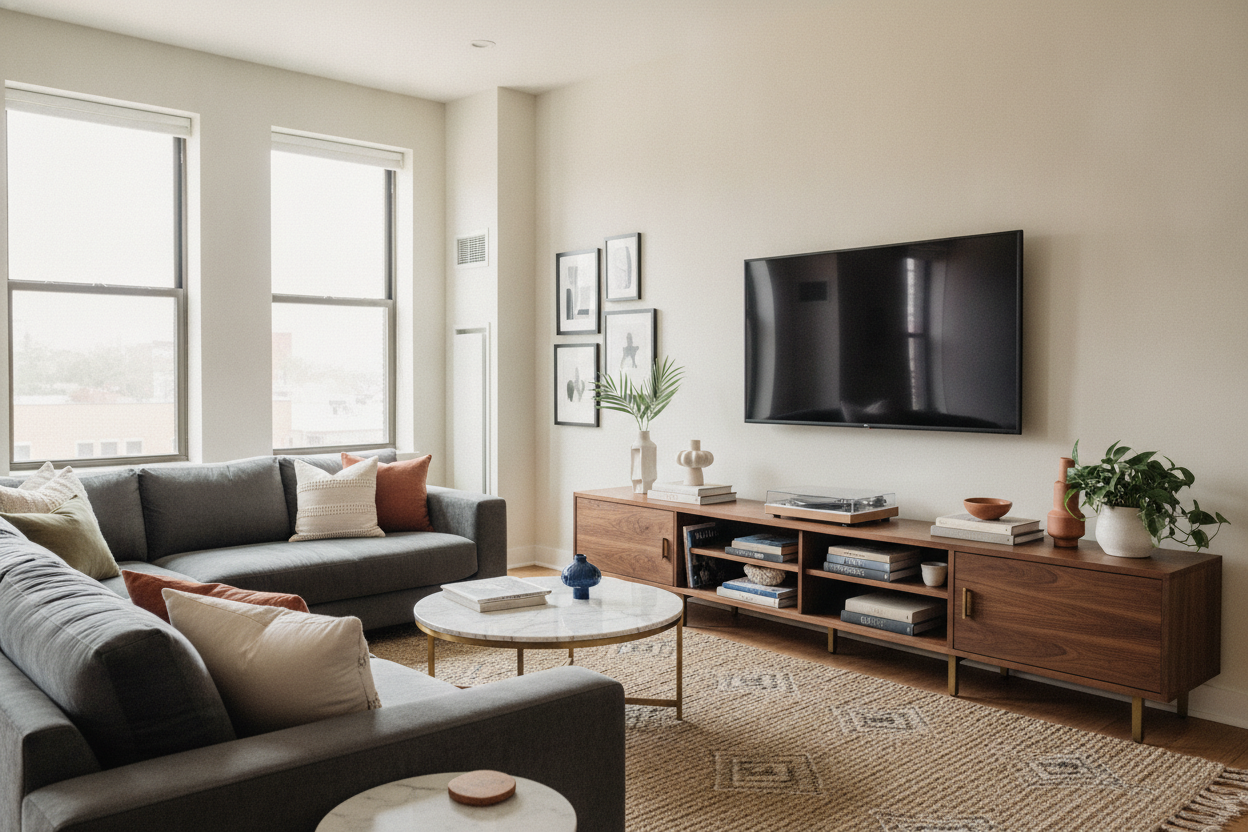
I remember the sweat on my brow after finally drilling those heavy-duty anchors into my drywall. I stepped back, wiped the dust off my hands, and realized my 65-inch OLED looked exactly like a menu board at a local Buffalo Wild Wings. It was just... hanging there. Alone. Cold. I had spent three hours leveling the mount only to realize I’d created a design vacuum. Finding the right furniture for under mounted tv became my weekend obsession because, frankly, the floating-void look is for sports bars, not homes.
- Aim for a console at least 25% wider than your screen to avoid a top-heavy look.
- Low-profile units (under 24 inches) keep the wall from feeling cluttered.
- Floating consoles provide a visual anchor while keeping floor space open.
- Integrated cable management is the only way to hide the 'spaghetti' of HDMI cords.
The Day I Realized My Living Room Looked Like a Sports Bar
We’ve all seen it: the TV mounted too high with absolutely nothing beneath it. When I first mounted mine, I thought I was being a minimalist. I thought I was 'freeing up floor space.' In reality, I had just created a giant black hole that sucked the soul out of my living room. It felt clinical, like a dentist's waiting room where you're forced to watch HGTV on mute while waiting for a root canal.
The wall looked naked. Without a piece of furniture to ground the screen, the TV felt like it was drifting away. I tried putting a basket of blankets under it, then a plant. Neither worked. A 65-inch screen has a lot of visual weight, and a fiddle-leaf fig just doesn't have the heft to balance out a piece of high-end glass and plastic. I needed something substantial to anchor the room.
Visual Weight 101: Why You Still Need to Ground That Screen
In design, 'visual weight' is the idea that certain objects draw more attention and feel 'heavier' than others. A large black rectangle on a white wall is the heaviest thing in the room. If you don't have furniture for under wall mounted tv setups, the room feels off-kilter. It’s like wearing a tuxedo jacket with no pants—it's top-heavy and confusing to the eye.
You need a piece of furniture that acts as a pedestal. It creates a frame for the TV and connects the technology to the rest of your decor. I’ve written before about why you still need mounted TV furniture even if you aren't technically using it to hold the screen. It’s about the architecture of the room. Without that horizontal line underneath, the TV looks like it’s waiting to fall off the wall.
My 3 Favorite Types of Furniture Under Wall Mounted TV Setups
I’ve cycled through three different consoles in as many years. I started with some standard TV stands I found on clearance, but they were almost 30 inches tall, which made the TV feel like it was touching the ceiling. For furniture under wall mounted tv, you have to be picky about height and scale.
The Ultra-Low Minimalist Credenza
If your TV is mounted at the correct height—which is eye level when sitting—you don't have much vertical room left. A low-profile credenza, usually between 18 and 22 inches high, is the sweet spot. I currently use a solid oak piece that’s 80 inches long. It’s hefty enough to ground the TV but low enough that I can still put a few ceramic vases on top without blocking the screen. It feels intentional, not crowded.
The Double-Floating Illusion
If you really want to lean into a modern aesthetic, a wall mounted media console is a genius move. It gives you the storage of a cabinet without the legs. This was a lifesaver in my last apartment. It made the 12x14 room feel twice as big because I could see the floor running all the way to the baseboards. Just make sure you’re hitting studs; a sagging console is a fast way to ruin the look.
The Golden Ratio for Furniture Under Mounted TV Units
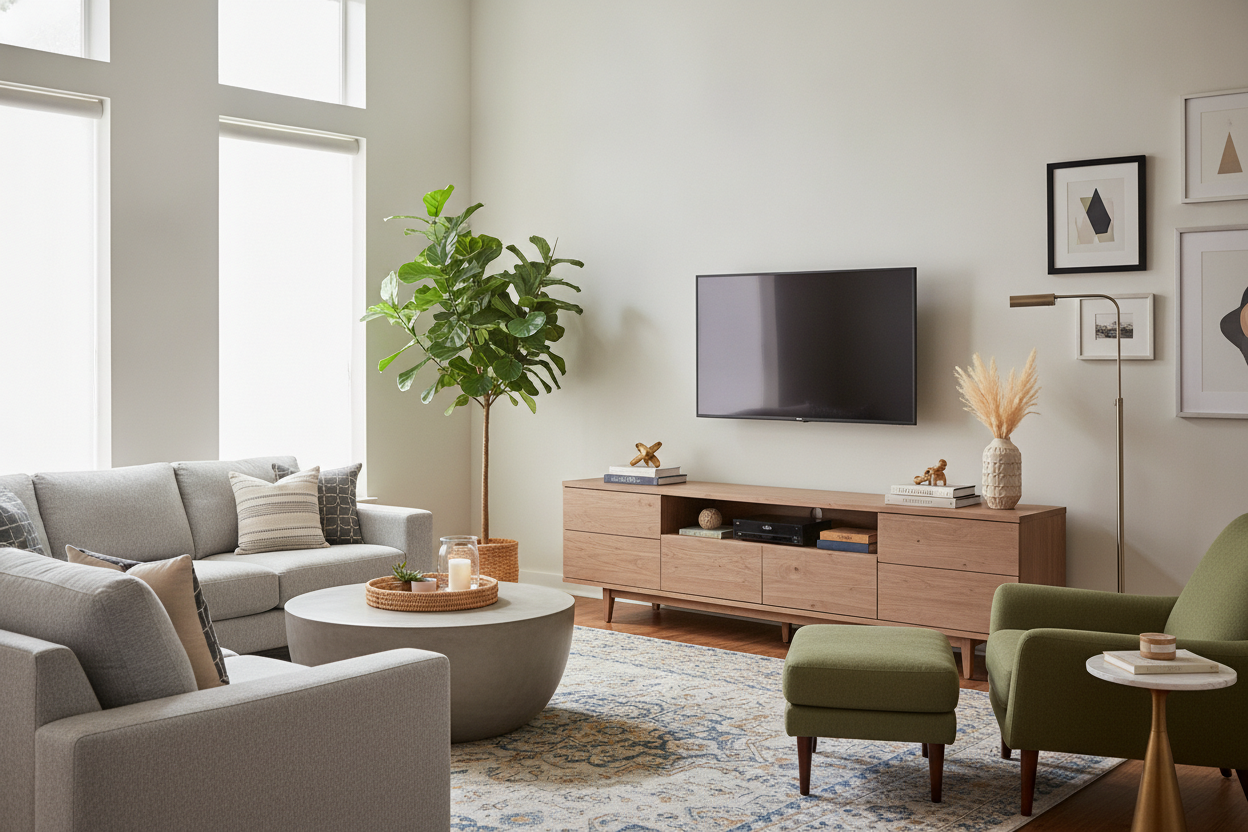
Here is the math I live by: your console should be at least 6 to 12 inches wider than your TV on each side. If you have a 55-inch TV, don't buy a 55-inch console. It will look like a mushroom. You want that 25% buffer to create a sense of stability. For massive 85-inch screens, a freely arranged TV stand allows you to stagger modular pieces to match the scale. This extra width is the secret to furniture under mounted tv layouts that look professional rather than accidental.
Because Dangling Cords Ruin the Magic
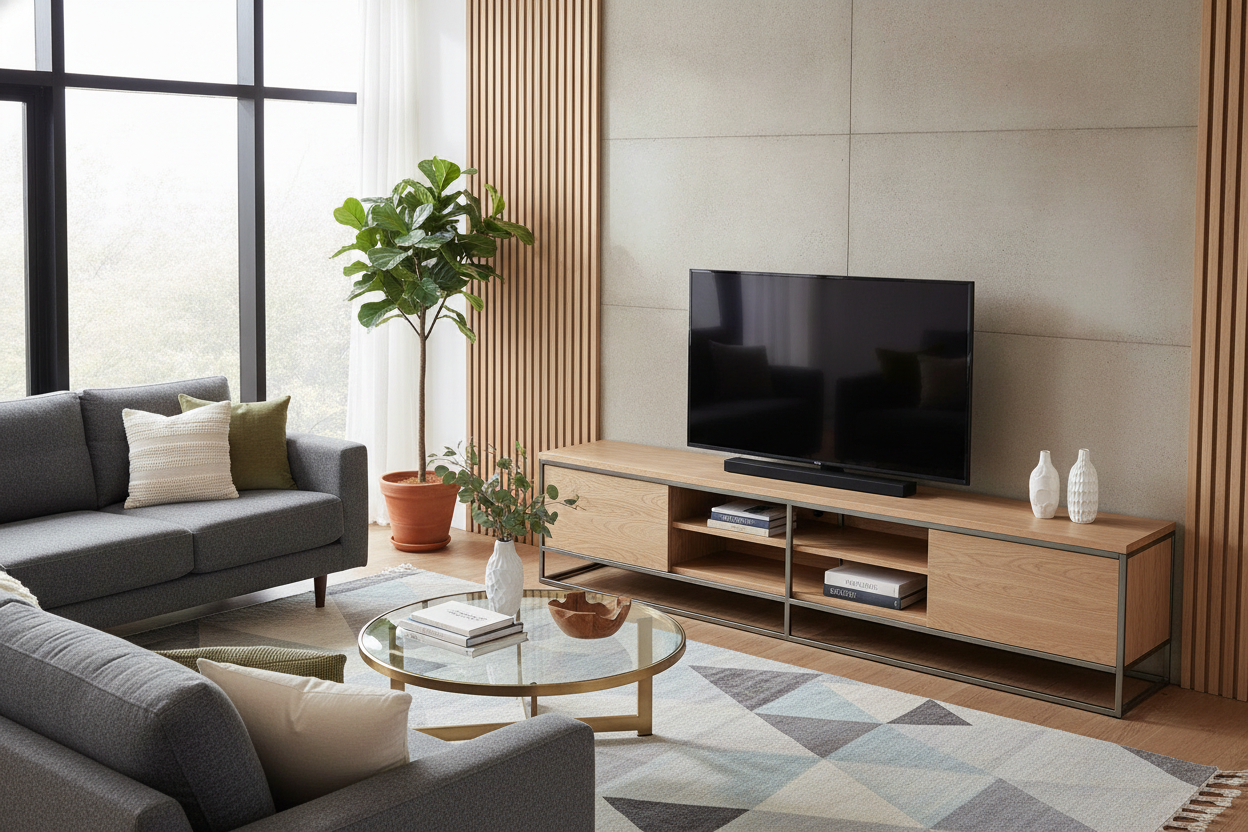
The biggest lie about wall-mounting is that it makes things look cleaner. Unless you’re running wires through the drywall, you’re left with a 'cord waterfall.' Having a physical cabinet below is the ultimate cheat code. I keep my router, my gaming consoles, and three different streaming boxes tucked behind closed doors. Even if the TV is on the wall, the furniture below handles the mess. It’s the functional anchor every tech-heavy home needs.
How high should I mount my TV above the furniture?
Aim for 4 to 8 inches. If it’s higher than that, the TV and the furniture look disconnected. If it’s lower, you can’t put any decor on the console without obscuring the screen.
Can the console be the same width as the TV?
You can do it, but it usually looks 'pinched.' Going wider makes the wall feel more expansive and gives you room for speakers or lamps.
Should I get a console with legs or a solid base?
Legs feel airier and better for small rooms; a solid base feels more traditional and grounded. If you have a lot of 'leggy' furniture already, go with a solid base to add some variety.

Dejar un comentario
Este sitio está protegido por hCaptcha y se aplican la Política de privacidad de hCaptcha y los Términos del servicio.