










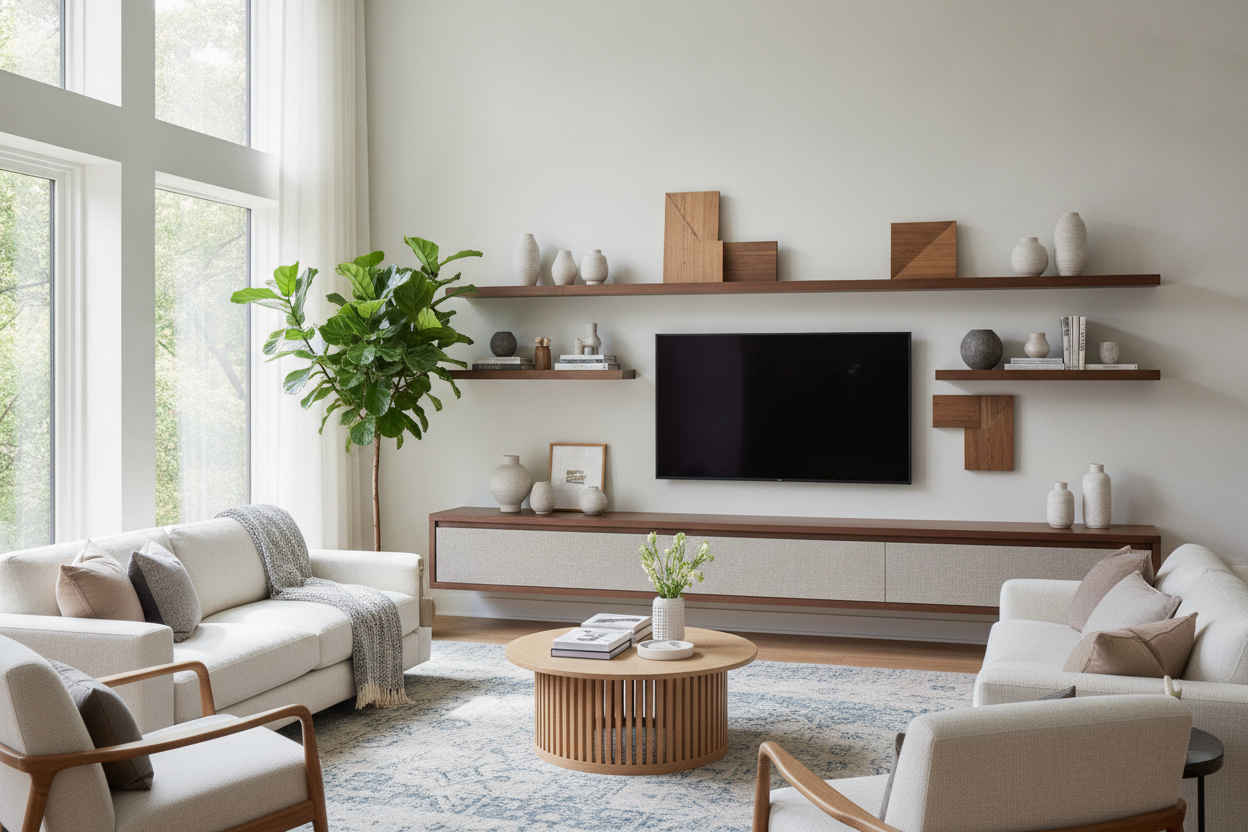
I remember the first time I finally committed to drilling into my rental wall to hang my 55-inch OLED. I stepped back, admiring my level handiwork, and realized my living room suddenly felt like a Buffalo Wild Wings. It was just a black rectangle hovering in a sea of beige paint. Without mounted tv furniture sitting underneath it, the screen looked stranded and the room felt half-finished.
The mistake most people make is thinking the mount replaces the furniture. It doesn't. Mounting the TV is about eye-level ergonomics and clearing up surface area; the furniture underneath is about grounding the room and, let’s be honest, hiding the ugly reality of our digital lives.
- A console provides a visual anchor so your TV doesn't look like it’s drifting away.
- Proper furniture hides the 'cable waterfall' of dangling power cords.
- Storage is non-negotiable for soundbars, consoles, and that one remote you only use twice a year.
- Proportions matter: your furniture should always be wider than your screen.
The Sports Bar Effect (Why Your Wall Looks Naked)
When you mount a TV and leave the floor below it empty, you create a clinical, utilitarian vibe. It’s what I call the Sports Bar Effect. It works in a pub because you aren't trying to feel 'cozy' while eating wings, but in a home, it feels cold. A bare wall under a screen makes the TV the only focus, rather than part of a curated room.
I’ve seen too many people spend $2,000 on a high-end panel only to have it look like a cheap monitor in a corporate lobby. You need a piece of tv wall mount furniture to bridge the gap between the floor and the screen. It fills that awkward negative space and provides a place for your eyes to rest when the screen is actually off.
Floating Consoles vs. Grounded Credenzas
If you want to keep things light, a floating wall mounted media console is the move. These are great for small apartments because you can see the floor underneath, which trick your brain into thinking the room is bigger than it is. Just make sure you’re hitting studs when you install it—MDF doesn't handle the weight of a heavy soundbar well if it's just hanging by a prayer.
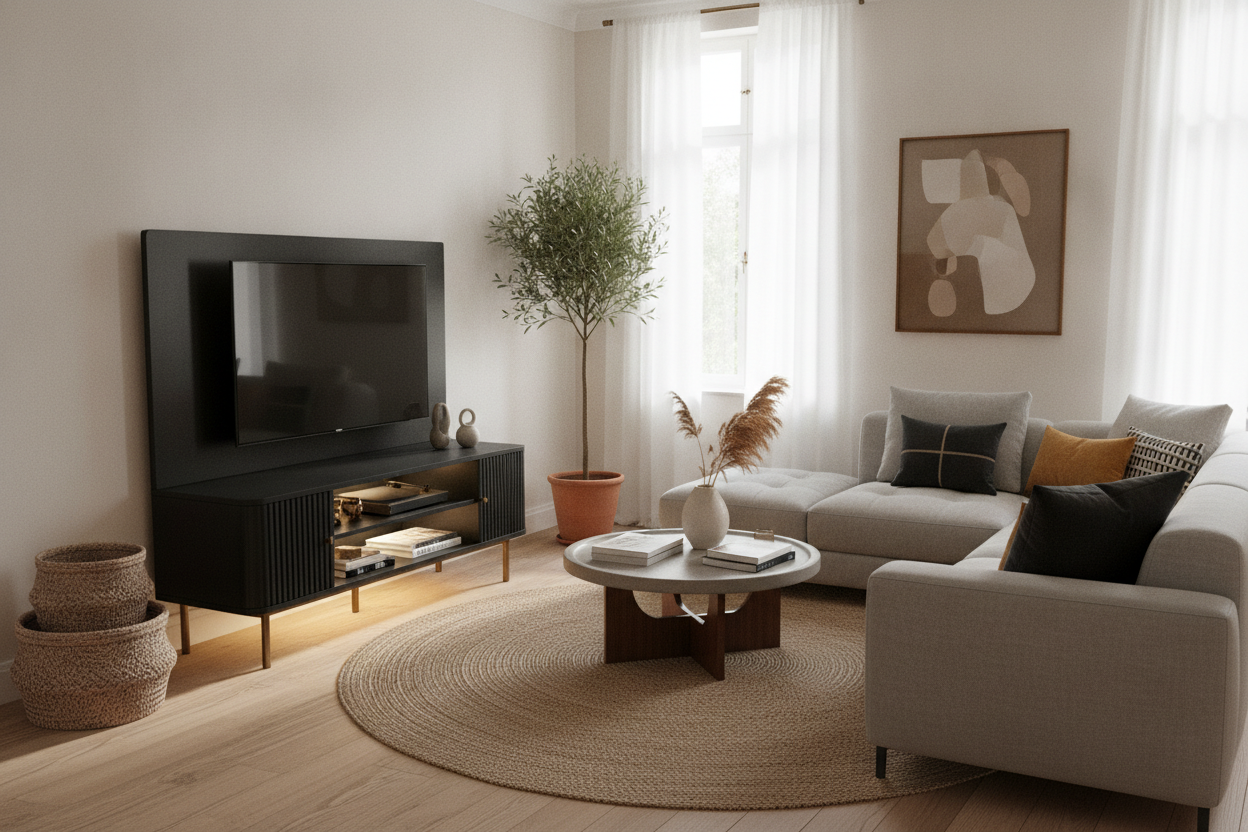
For a more tech-forward look, you might look at a freely arranged TV stand with LED. The ambient light helps reduce eye strain during those 2 AM Netflix binges and adds a layer of depth to the wall. If you prefer a traditional look, a heavy grounded credenza in solid walnut or oak provides a permanent, high-quality feel that a floating shelf just can't match.
Dealing with the Dreaded Cable Drop
Unless you have a professional electrician running wires behind your drywall, you’re going to have cables. A 'naked' mounted TV shows every single one of them. Choosing the right furniture for wall mounted tv setups means looking for pieces with integrated cable management—think pre-drilled holes and hidden channels.
I’ve found that a dedicated TV cabinet for living room use is the best way to handle this. It allows you to shove the power strips, routers, and messy HDMI cords inside while the screen stays clean on the wall. It turns a potential eyesore into a sleek, intentional design choice.
Can I Just Use What I Already Have?
You don't always need to buy something brand new. I once successfully added a furniture TV mount to my antique dresser and it looked fantastic. The trick is making sure the piece is low enough. If you use a standard-height dresser, your TV ends up too high, and you'll be visiting a chiropractor for neck strain within a month.
If you’re repurposing, look for something with a flat top and enough depth (at least 15-18 inches) to accommodate a soundbar. If it lacks cord holes, grab a 2-inch hole saw bit and a drill. It’s a five-minute DIY that saves you from looking at a tangled mess of black plastic cords every day.
The Proportions Rule I Swear By
This is the hill I will die on: your media console must be wider than your TV. Ideally, it should be about 20-25% wider on each side. If you have a 55-inch TV, don't put it over a 50-inch stand. It makes the whole setup look top-heavy and unstable. I always tell friends to browse standard TV stands that are at least 70 inches wide for a standard large-screen setup.
When the furniture is wider, it creates a balanced 'pyramid' shape that is naturally pleasing to the eye. It also gives you room to place a small plant or a stack of books on the ends, which helps blend the tech into your actual decor. Trust me, your living room will thank you.
How high should I mount my TV above the furniture?
Aim for 6 to 10 inches between the top of the furniture and the bottom of the TV. Any higher and it looks like it's floating away; any lower and you can't fit a soundbar or a decorative vase.
Do I really need a console if I have a 'Frame' TV?
Even a TV that looks like art needs a 'base' to feel grounded in a room layout. Without it, the 'art' just looks like it's hanging in an empty gallery rather than a lived-in home.
What is the best material for media furniture?
Avoid thin particle board with paper veneers; they sag under weight. Look for kiln-dried hardwoods or high-quality plywood with real wood veneers if you want the piece to last more than one move.

Dejar un comentario
Este sitio está protegido por hCaptcha y se aplican la Política de privacidad de hCaptcha y los Términos del servicio.