










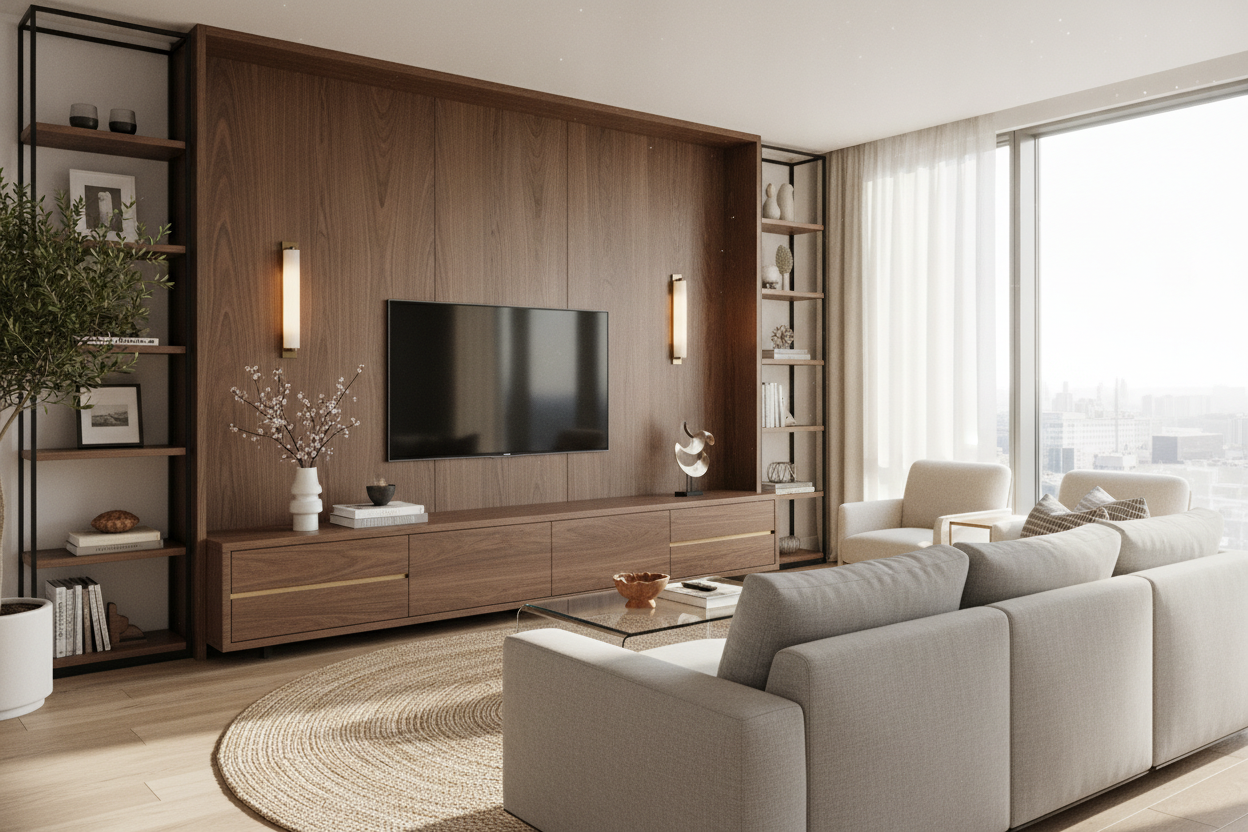
I spent three weeks staring at a 65-inch OLED sitting on a stack of flattened moving boxes. It wasn't because I lacked options; it was because I had become a serial furniture returner. I’d fallen into the trap of buying the best television stand based on filtered photos rather than the messy reality of living room physics. After building and dismantling three different units, I realized that most furniture reviews are written by people who don't actually own a gaming console or a soundbar.
Quick Takeaways
- Weight capacity matters more than style; thin legs will bow under a 65-inch screen within months.
- Closed storage is the only way to survive the 'cable spaghetti' that comes with modern tech.
- The 'eye-level rule' is real; if your console is too low, you're trading aesthetic for chronic neck pain.
- Always check the back panel for cord management cutouts before you hit the 'buy' button.
Why Buying a Media Console Online is a Trap
The internet is flooded with lists of the 'best tv stands' that look stunning in a 4,000-square-foot minimalist loft. But your living room probably isn't a studio. When you search for the best television stand, you’re usually served results that prioritize a 'vibe' over actual utility. I learned the hard way that a unit looking 'airy' in a professional photo usually means it has nowhere to hide the six power bricks and HDMI cables you actually own.
Most generic product reviews are written after the box is opened, not after six months of use. They don't tell you that the 'engineered wood' is actually just compressed paper that will flake the moment you slide a receiver across it. They don't mention that the 'easy assembly' requires the patience of a saint and a proprietary Allen wrench that will strip the first three bolts. To find the best tv console, you have to look past the staging and look at the specs.
I realized I needed to stop looking at the bottom-tier budget sites that prioritize shipping speed over structural integrity. I spent hours trying to browse full collections of TV stands that actually listed the density of the materials used. If a manufacturer won't tell you the weight limit of the top shelf, they're hiding something. Usually, it's the fact that your $1,200 TV is about to take a dive into the carpet.
Return #1: The Flimsy Mid-Century Nightmare
My first mistake was chasing the 'tapered leg' dream. I bought one of those best modern tv stands that looked like it belonged on the set of Mad Men. It was beautiful—walnut veneer, brass accents, and legs so thin they looked like toothpicks. The problem? Physics. A 65-inch television weighs about 50 to 60 pounds, and when you add a soundbar and a heavy-duty receiver, you're pushing the limits of cheap furniture.
Within forty-eight hours, I noticed a subtle but terrifying curve in the top panel. The middle was sagging. Because the legs were only at the far corners, there was no central support to handle the load. It turns out that the best tv table isn't the one with the most 'likes' on Instagram; it's the one with a reinforced center leg. If you see a unit over 60 inches long with only four legs, run the other way.
I also realized that 'solid wood' often means 'solid pine,' which is so soft you can dent it with a fingernail. My beautiful mid-century unit arrived with three 'distressed' marks that were actually just shipping damage from poor packaging. I spent four hours putting it together only to spend another two hours taking it apart to fit it back into the box. It was a lesson in structural integrity over style.
Return #2: The Open-Shelving Dust Magnet
For my second attempt, I went with a heavy-duty industrial unit. It had thick wood planks and metal framing. I thought this was the best tv entertainment center because it felt 'solid.' I was wrong. The issue here was the open shelving. In a catalog, a single, perfectly placed ceramic vase on an open shelf looks curated. In my house, that shelf was home to a PlayStation 5, a router, a messy bundle of purple Ethernet cables, and a thick layer of grey dust.
Open-air designs are a trap for anyone with more than one electronic device. Every light on your router blinks at you while you're trying to watch a movie. Every cable is visible from the side. I felt like I was living in a server room, not a home. I eventually realized that a truly functional best tv cabinet must have doors. You need a place to shove the controllers and the remotes where they won't haunt your peripheral vision.
I eventually pivoted to looking for a stylish black TV stand entertainment center because the dark finish and closed cabinets finally offered the visual 'reset' my eyes needed. Having doors meant I didn't have to spend every Saturday morning with a microfiber cloth dusting between the cooling vents of my Xbox. If you have pets or kids, open shelving is essentially a collection plate for hair and sticky fingerprints.
Return #3: The Neck-Cramping Low Boy
By the third try, I thought I’d nailed it. I bought a sleek, minimalist best tv entertainment unit that sat very low to the ground—only about 14 inches high. It looked incredibly modern and made my ceilings feel ten feet tall. But after one night of watching a movie, my neck was screaming. I was sitting on a standard 18-inch high sofa, looking down at a screen that should have been at eye level.
There is a specific ergonomic science to screen height. Your eyes should naturally hit the top third of the screen when you're sitting comfortably. If you're buying a low-profile console, you're forcing your neck into a permanent downward tilt. I started reading about why a taller cabinet is the best stand for modern living rooms, especially if you aren't mounting your TV on the wall.
I also found that the low-boy units have almost no vertical clearance inside the cabinets. My receiver literally wouldn't fit; it was too tall for the internal shelves. I had to leave the door propped open just to plug in the HDMI cables. It was another case of a designer choosing a 'look' without measuring the actual objects that live inside a media unit. I returned it the next day, finally accepting that I couldn't sacrifice my spine for a minimalist aesthetic.
The 3 Non-Negotiables for My Final Choice
The fourth unit—the one I actually kept—wasn't the trendiest one in the store, but it was the most honest. It had three features I will never compromise on again. First: integrated wire management. The best tv entertainment center should have pre-drilled holes in every single compartment, not just one in the middle. You need to be able to run power from any shelf to any outlet without a drill.
Second: adjustable, ventilated shelving. Electronics get hot. If you lock a gaming console in a wooden box with no airflow, it will die. My final choice had slatted doors that allowed IR signals to pass through and heat to escape. If you're looking for something with a similar vibe but more modern flair, a high gloss console table entertainment center can work, provided it has the depth and ventilation required for your specific gear.
Third: a height of at least 22 to 24 inches. This put my TV exactly where it needed to be. No more neck strain, no more visible wires, and no more sagging shelves. Finding the best television stand isn't about finding a piece of art; it's about finding a piece of infrastructure that supports your life. Don't let a pretty picture talk you into a piece of furniture that doesn't work in the dark.
FAQ
How wide should my TV stand be?
Your stand should be at least 3 to 6 inches wider than your TV on both sides. A TV that overhangs the edges of a console looks top-heavy and unstable. It’s also a safety hazard for anyone walking past.
Is solid wood always better than MDF?
Not necessarily. High-grade MDF or plywood with a thick veneer is often more stable for long spans than solid wood, which can warp or crack with temperature changes. Avoid the cheap 'paper-wrapped' particle board, but don't feel like you have to spend $3,000 on solid oak for a media unit.
Do I really need a ventilated back panel?
Yes. If you have a receiver, a PlayStation, or an Xbox, they generate significant heat. Without airflow, that heat builds up inside the cabinet and can shorten the lifespan of your electronics or even cause a fire hazard.

Dejar un comentario
Este sitio está protegido por hCaptcha y se aplican la Política de privacidad de hCaptcha y los Términos del servicio.