










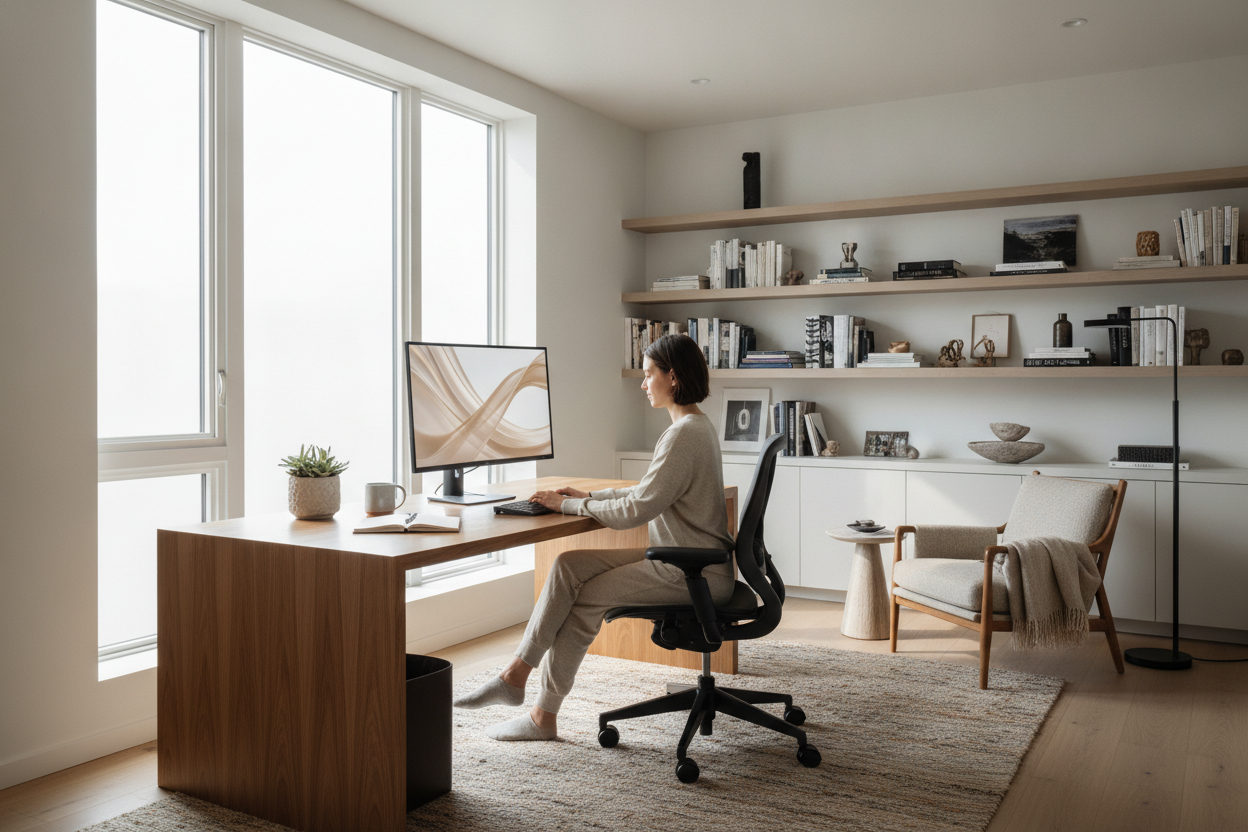
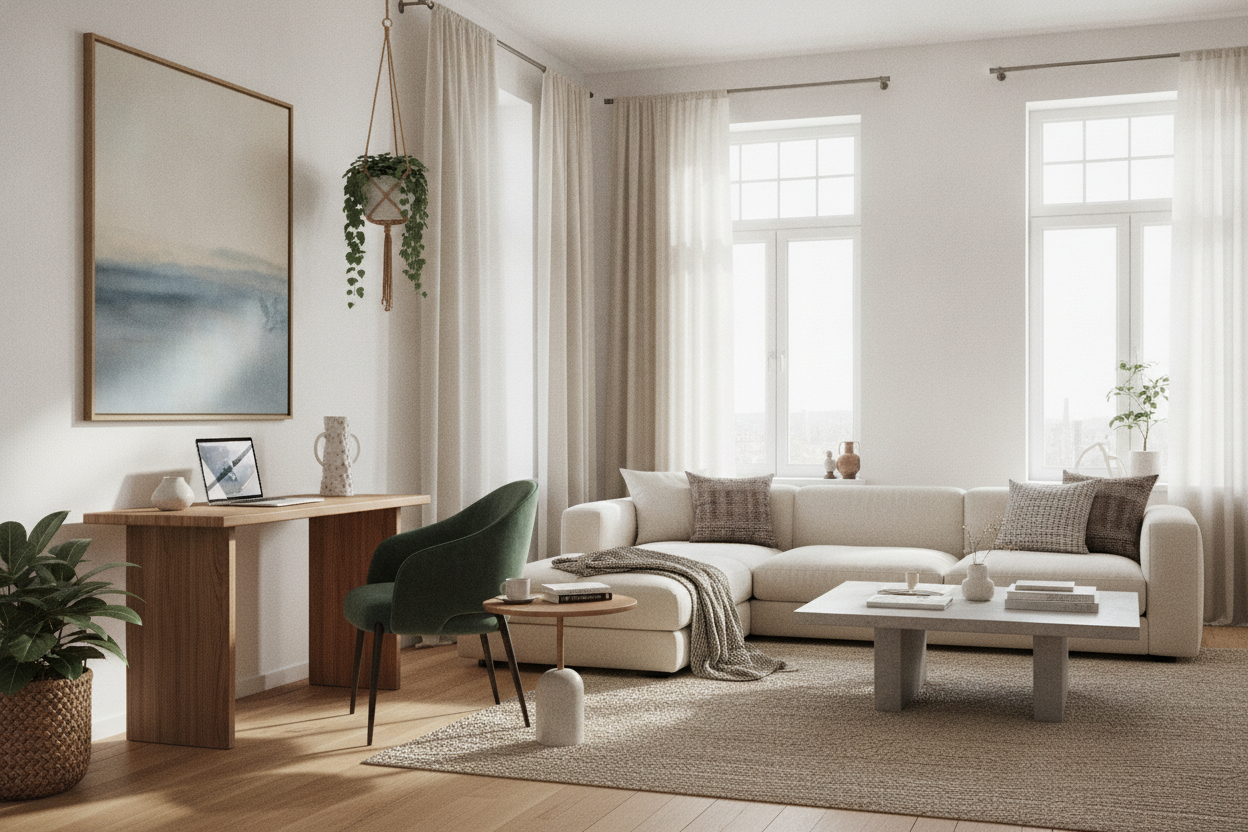
I spent three years convinced that my velvet sofa was the ultimate productivity hub. My cat liked it, my snacks were within arm's reach, and I could pretend I was living some chic minimalist dream. The reality, however, was a constant low-grade ache in my lower back and a laptop that literally burned my thighs while I tried to work on desk tasks from a cushion.
The transition back to a hard surface wasn't just about furniture; it was about undoing the 'shrimp' posture I'd perfected over 500 days of remote work. Staring at 47 browser tabs from a horizontal position is a recipe for brain fog. I had to stop treating my living room like an office and start treating my office like a destination.
- Choose a chair with 2.0 lb/ft³ high-density foam to avoid the 'bottoming out' feeling after an hour.
- Start with short intervals at the desk to build muscle memory and focus.
- Prioritize movement; a static position is the enemy of a long workday.
- Invest in vertical storage to keep your surface clear of 'doom piles' of paper.
The Sofa Trap (And Why My Back Finally Rebelled)
The couch is a liar. It promises comfort but delivers a compressed spine. When I was working from desk-adjacent furniture like the coffee table or the sofa, I was essentially folding my body into a C-shape for eight hours a day. By 4 PM, my neck felt like it was being squeezed by a giant hand. It wasn’t just the physical toll, either—my brain associated the sofa with Netflix and naps, not spreadsheets.
The breaking point came when I realized I couldn't sit through a 30-minute dinner without my lower back throbbing. I had effectively 'sofa-proofed' my productivity into oblivion. Realizing that a soft surface offers zero resistance for your core was the wake-up call I needed. I needed a surface that didn't sag, and I needed a chair that didn't feel like a marshmallow.
Why You Hate Working at a Desk (It's Probably the Chair)
Most people hate working at a desk because they’re sitting on a chair that has the structural integrity of a wet noodle. If you’re using a dining chair or a cheap $40 plastic shell from a big-box store, of course you’re going to migrate back to the couch. A good chair should have adjustable lumbar support and armrests that actually align with your height. If your shoulders are hunched up to your ears, you won't stay put for long.
Working from desk environments becomes a lot more attractive when you aren't fighting your furniture. I learned the hard way that 'aesthetic' chairs with thin metal legs usually lack the ergonomic curves needed for a full workday. Look for kiln-dried hardwood frames or heavy-duty nylon bases. If the seat cushion feels thin enough to touch the base, skip it. You want something that pushes back just a little.
Starting Small Before Committing to a Massive Setup
Don't go out and drop two grand on a mahogany executive setup on day one. I started by clearing off a corner of the dining table just to see if I could handle sitting upright again. It was a struggle. I had to retrain my eyes to look straight ahead rather than down at my lap. If you aren't sure if you're ready for a full-time commitment, try working at a stand up desk using a simple converter first.
Testing the waters allows you to figure out your 'friction points.' Do you need more light? Is the height of the surface hitting your wrists at a weird angle? I realized I needed a lot more legroom than I thought, which meant that the cute little vintage vanity I tried to use was a total non-starter. You need space to stretch your legs, or you'll be back on that sofa within twenty minutes.
Adding Movement to Break the Monotony
The biggest reason we love the couch is that we can shift. We can cross our legs, lean to the side, or sprawl. Traditional desks feel like a cage because they force one position. The fix for me was a sit stand up desk with memory preset. It allowed me to change the entire geometry of my workspace with one button, mimicking the variety of the living room without the spinal damage.
I usually start my morning standing for the first hour to shake off the grogginess. By mid-afternoon, when the 'slump' hits, I transition to a seated position with the lumbar support dialed in. This variety keeps the blood flowing and stops that feeling of being 'stuck' at a station. If you can move the desk, you don't feel the urge to move to the couch.
If It Looks Depressing, You Won't Use It
Let's be honest: most home offices look like a sad corner of a corporate basement. If your desk is a mess of tangled cables and beige plastic, your brain will naturally seek the visual comfort of the living room. I had to learn how to decorate a small office so it felt like a place I actually wanted to spend time in. This meant adding a lamp with warm-toned light, a plant that I haven't killed yet, and a coaster I actually like.
Lighting is the most underrated part of the setup. Fluorescent overheads are a mood killer. A dedicated task lamp with a dimmable bulb makes the desk feel intentional. When the aesthetic matches the rest of your home, the desk stops feeling like an intruder in your living space and starts feeling like a feature.
Creating a Psychological Boundary With Furniture
There is a massive mental shift that happens when you sit down at a dedicated writing computer desk. It’s a signal to your brain that the 'home' part of the day is on pause and the 'work' part has begun. When I was working from the kitchen table, I was constantly distracted by the pile of mail or the dirty dishes in the sink. A dedicated surface acts as a physical boundary.
Choosing a desk with a specific style—whether it's mid-century modern or industrial—helps solidify that boundary. It shouldn't feel like a temporary folding table. It should feel permanent. Once I committed to a solid piece of furniture, I found my focus sharpened. I wasn't just 'on my laptop'; I was at my station.
Vertical Storage is Your Best Friend
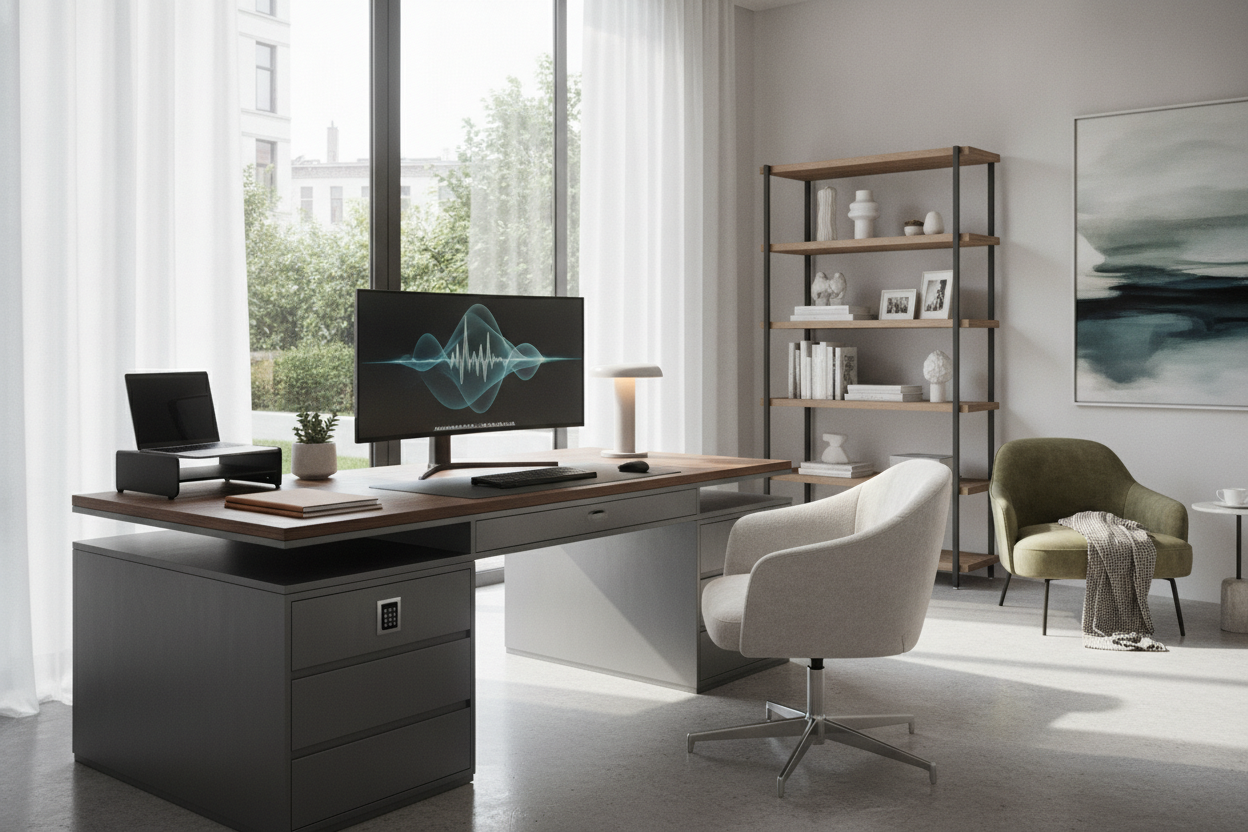
Clutter on the surface is the fastest way to end up back on the bed with your laptop. If I see a stack of papers out of the corner of my eye, I’m done for. I solved this by switching to a computer desk with hutch. It moved all my 'stuff'—the stapler, the notebooks, the extra chargers—up and off the main workspace.
Keeping the eye-level area clear is a psychological trick that makes the work feel less overwhelming. When the surface is empty except for your keyboard and mouse, your brain has fewer things to process. The hutch also gave me a place to hide the power strip, which is a major win for anyone who hates cable spaghetti as much as I do.
FAQ
How long should I sit at a desk before taking a break?
I swear by the 90-minute rule. Work for 90, then get up and walk for 5-10. Your brain and your glutes will thank you. Any longer than two hours and you start to get that 'desk-fatigue' that makes the couch look tempting again.
What is the most important ergonomic feature?
Adjustable height is king, but if you're staying seated, it's lumbar support. If your lower back isn't supported, your neck will overcompensate, leading to those nasty 4 PM headaches. Don't settle for a flat backrest.
Does the desk material really matter?
Yes. Glass is cold and shows every smudge, which is distracting. Cheap particle board can bow under the weight of a monitor arm. A solid wood or high-quality MDF top feels more stable and 'grounded' for long-term use.

Dejar un comentario
Este sitio está protegido por hCaptcha y se aplican la Política de privacidad de hCaptcha y los Términos del servicio.