











I spent three hours last night scrolling through photos of 'executive' workstations, and I finally realized why so many home offices look like depressing DMV waiting rooms. We are all suffering from a collective lack of imagination. We think that to be productive, we need to replicate the exact, soul-crushing desk at work that we left behind in the corporate park.
But your living room isn't a corporate park. It doesn't have 10-foot drop ceilings, industrial HVAC systems, or those weird blue-grey carpets designed to hide coffee stains. When you drop a commercial-grade slab of melamine into a space meant for relaxation, you aren't creating a 'productivity zone'—you're just ruining the vibe of your house.
Quick Takeaways
- Commercial furniture is built for scale, not for your 12x12 spare bedroom.
- Prioritize ergonomic internals over industrial aesthetics.
- Ditch the metal filing cabinets; they are the beige minivans of furniture.
- A smaller, intentional footprint usually beats a massive L-shaped 'command center.'
The 'Corporate Nostalgia' Trap We All Fall Into
There is a weird psychological comfort in buying things that look 'official.' I’ve seen friends buy those bulky, T-shaped legs and 1-inch thick laminate tops because they think it makes them feel like a CEO. In reality, it just makes their guest room feel like a cubicle. We fall into this trap because we equate discomfort and industrial materials with 'real work.'
Before you commit to a 72-inch behemoth, ask yourself: do I need to work at a desk that mimics a 1990s law firm? Usually, the answer is no. You need a surface that supports your laptop and a chair that doesn't kill your back. You don't need a heavy-duty modesty panel to hide your legs from coworkers who aren't even there.
Why Your Office Desk at Work Feels Huge at Home
Commercial furniture is designed for 'open plan' offices where space is cheap and ceilings are high. A standard office desk at work is often 30 inches deep. In a corporate setting, that looks normal. In your home, that 30-inch depth eats up a massive chunk of your floor plan, making the room feel cramped and cluttered. Most of us only need 24 inches of depth for a modern monitor setup.
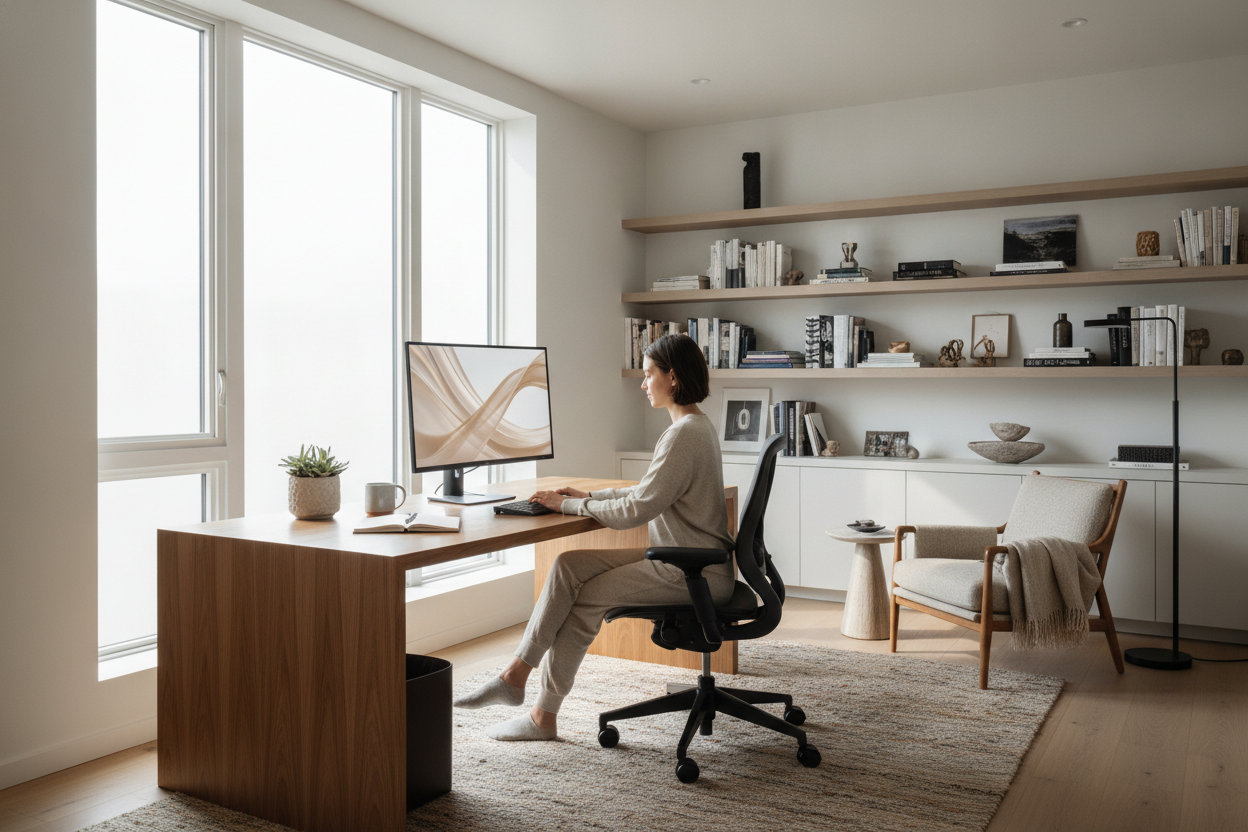
If you're struggling to fit a workstation into a multi-purpose room, stop looking at commercial catalogs. A sleek writing computer desk offers a much narrower profile that fits against a wall without becoming the focal point of the entire room. You want furniture that plays well with your existing decor, not something that looks like it fell off the back of a liquidator's truck.
What to Steal From Corporate (And What to Ditch)
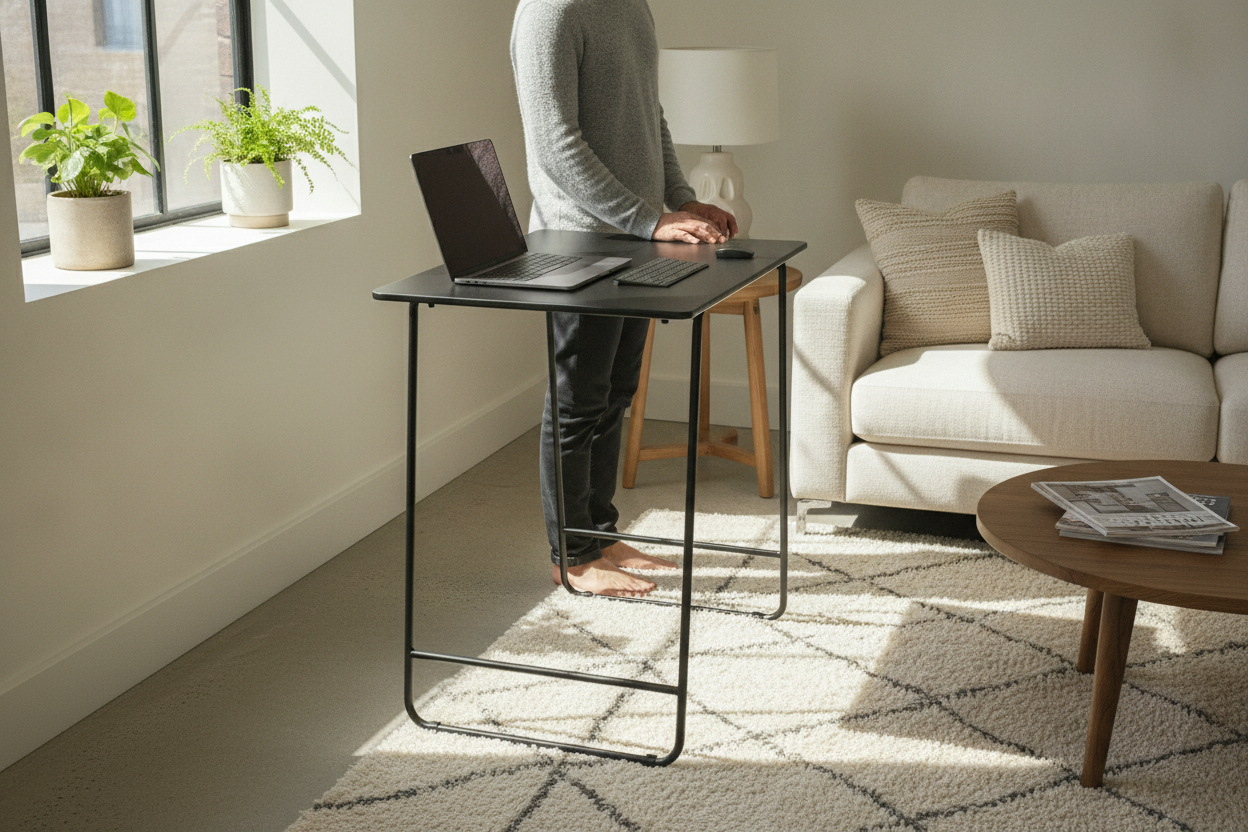
Don't get me wrong—corporate offices get some things right. They invest in ergonomics because HR doesn't want to deal with carpal tunnel claims. You should absolutely steal the 'adjustable' mindset. Instead of a static, heavy desk, look for a sit stand up desk with memory preset. It gives you the health benefits of a high-end corporate office without the industrial 'grey-on-grey' color palette.
What should you ditch? The plastic wire grommets that pop out every time you move a cable. The 'modesty panels' that serve no purpose at home. And for the love of all things holy, ditch the commercial-grade laminate that feels like a school cafeteria table. Go for real wood veneers or powder-coated finishes that feel like actual furniture.
Please Stop Buying Metal Filing Cabinets
I don't know who needs to hear this, but you probably don't have enough physical paperwork to justify a 50-pound cold-rolled steel filing cabinet. They are loud, they scratch your floors, and they have zero personality. If you actually need storage, look for a corner desk with large storage built-in. It uses the vertical and corner space you already have, keeping your tax returns and extra cables hidden in a unit that actually matches your bookshelves.
Save the Cubicle Decor for the Actual Office
Your home should be a sanctuary, not a satellite branch of your employer's headquarters. If you find yourself missing the 'office vibe,' save that energy for the days you actually have to go in. When you're there, feel free to decorate a small office at work with all the staplers and tape dispensers your heart desires. But at home? Let your desk be a piece of furniture first and a workstation second.
I made the mistake of buying a used 'commercial' task chair in a hideous 'corporate blue' fabric because it was a 'steal' at $100. It sat in my living room like a sore thumb for two years. It was comfortable, sure, but every time I looked at it, I felt like I was back in a windowless conference room. I eventually sold it and bought a chair with a linen finish and wooden legs. My back feels the same, but my brain feels a whole lot better.
FAQ
Do I really need a standing desk?
You don't *need* one, but if you're sitting for 8 hours, your hip flexors will hate you. A motorized frame allows you to keep moving without needing a separate 'standing station' that takes up more room.
Is a 48-inch desk too small?
Not if you're a laptop-only worker. If you have dual 27-inch monitors, you'll want at least 55 inches to avoid feeling like you're working in a phone booth.
What is the best material for a home desk?
Solid wood is the dream, but it's pricey. A high-quality birch plywood or a thick MDF with a real wood veneer is the best middle ground for durability and aesthetics.

Dejar un comentario
Este sitio está protegido por hCaptcha y se aplican la Política de privacidad de hCaptcha y los Términos del servicio.