










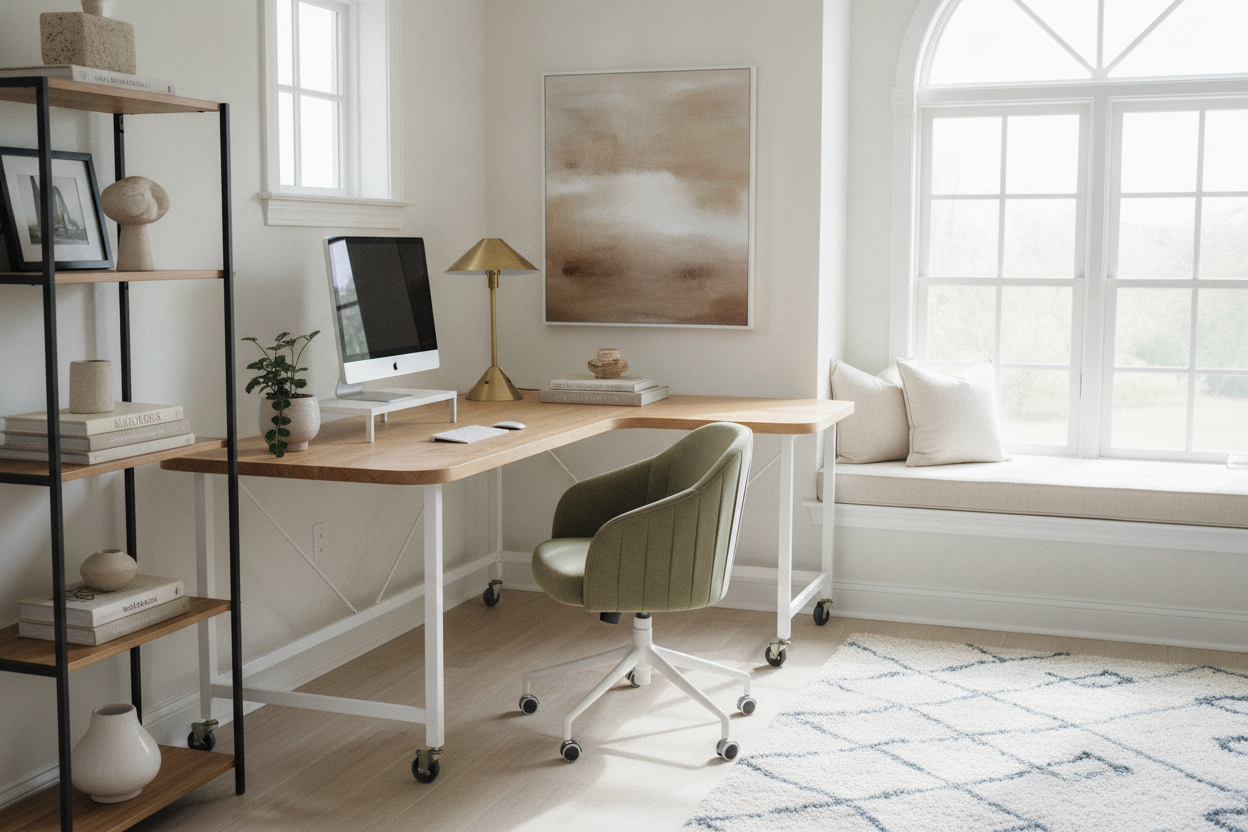
I remember my first real 'work from home' setup. It was a folding card table wedged into a corner behind the sofa. Every time I had a Zoom call, I had to frantically move a floor lamp and pray nobody noticed the laundry pile in the background. When I finally decided to upgrade to a corner desk on wheels, I thought I had hacked my life, but I actually just turned my beautiful living room into a mid-level DMV waiting area. It was functional, sure, but it looked like HR was about to walk in and hand me a performance review.
The struggle is real. You want the L-shaped footprint because it actually fits your monitors, and you want the wheels because your 'office' is also your 'guest room' and sometimes your 'yoga studio.' But mobile furniture has a nasty habit of looking temporary and cheap. After three years of testing different setups, I have learned that you do not have to settle for the corporate aesthetic just to get the mobility you need.
- Choose low-pile rugs (less than 0.25 inches) so your casters actually roll instead of getting stuck.
- Swap the plastic wheels for 'rollerblade style' rubber casters to save your floors and your ears.
- Stick to wood grains or matte finishes; glossy white laminate is the fastest way to make a room look like a call center.
- Use a single 'power umbilical' cord protector to keep your mobile setup from looking like a spider web.
Why Mobile L-Desks Usually Look So Corporate
Most corner desks designed for mobility are built for utility first and vibes... well, never. They usually feature cold metal frames, thin laminate tops, and those screechy plastic wheels that feel like they are grinding your floor into sawdust. When you transition from a small, stationary writing computer desk to a larger mobile L-desk, the sheer mass of the furniture starts to dominate the room. If it is all gray plastic and silver metal, it is going to scream 'cubicle' no matter how many succulents you pile on top.
The problem is the lack of intentionality. We often treat mobile furniture as an afterthought, something we can just 'shove away' when we are done. But because an L-desk is a substantial piece of kit, it needs to look like it belongs in the room's design language. If your living room is all mid-century modern and your desk is 'Industrial Office Gray,' the visual friction is going to drive you crazy. You need to bridge the gap between the productivity you need and the comfort you want.
Anchor the Setup With Texture (Even on Casters)
One of the biggest mistakes people make with a rolling desk is leaving it on a bare floor. It looks untethered, like it might just float away into the kitchen. You need a rug to define the 'zone.' But here is the catch: most rugs are the natural enemy of wheels. If you go for a plush, high-pile shag, you will be getting a workout every time you try to pull your desk out six inches. It is frustrating and, frankly, a great way to ruin a good rug.
I recommend a tight-weave, low-pile rug or even a high-quality flatweave. Look for materials like jute (if it is a fine weave) or treated polypropylene. This gives the desk a visual 'home' so it looks like a permanent fixture of the room rather than a cart that just landed there. The texture under the wheels adds a layer of domesticity that softens the hard lines of the desk. Plus, it dampens the sound. Nothing kills a cozy evening vibe like the roar of plastic wheels on hardwood floors when you are just trying to move your laptop aside for dinner.
Ditch the Sterile Finishes for Warm Materials
If you want your workspace to feel like part of your home, you have to stop buying furniture that looks like it was sold by the pallet to a tech startup. Material choice is everything. A black metal frame with a cherry wood top might have worked in 2004, but today it just looks dated. Instead, look for warmer tones and more substantial textures. A solid L shaped corner desk with drawers in a medium oak or walnut finish does wonders for camouflaging the fact that the whole thing is on wheels.
The drawers are a massive part of this. Open-leg desks with wheels look like utility carts. Desks with integrated storage look like furniture. When you have drawers, you have a place to hide the staplers, the post-its, and the three half-empty packs of gum that usually clutter up the surface. By keeping the top clear of 'office-y' debris and letting the wood grain take center stage, you trick the eye into seeing a library table or a sideboard rather than a workstation. I personally prefer a matte finish; it doesn't reflect your monitor glare and feels much more premium under your hands than cheap, sticky veneer.
The Art of Roaming Cable Management
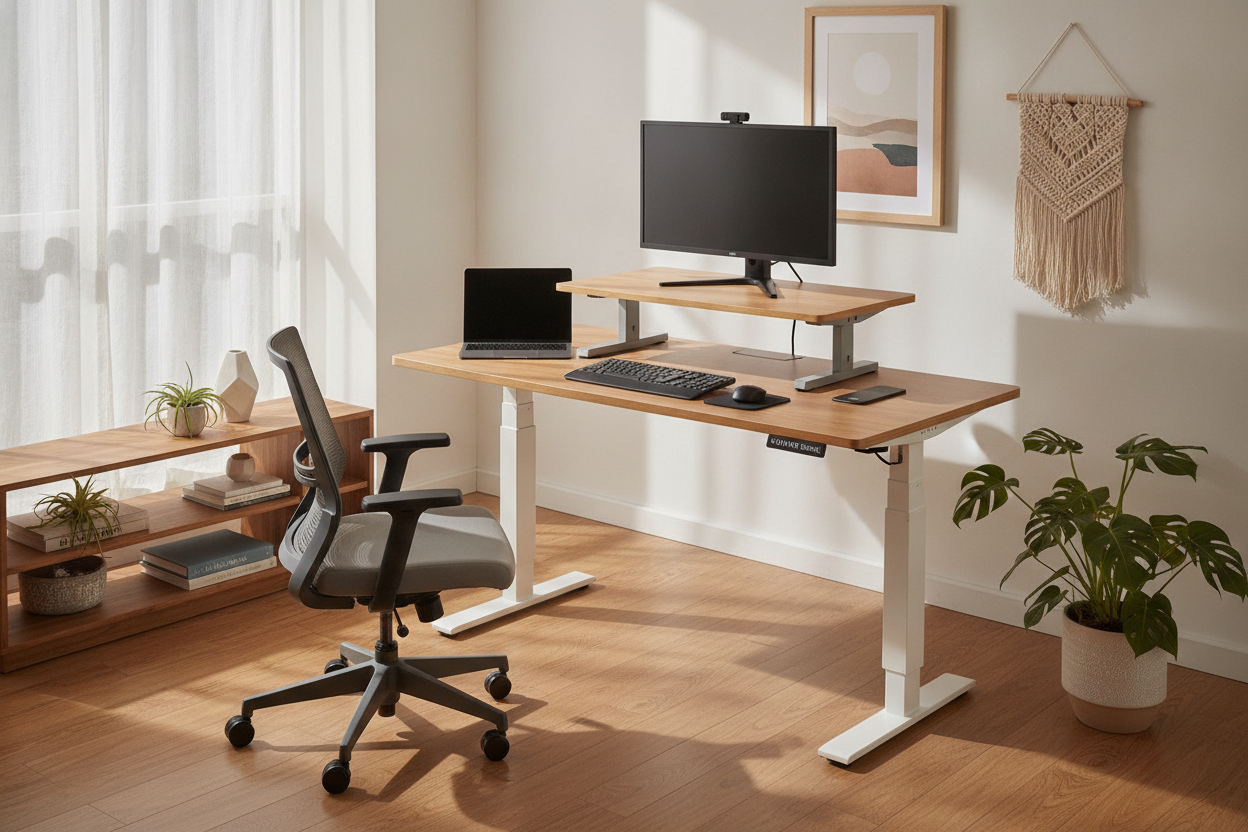
Nothing ruins the 'chic home office' illusion faster than a tail of tangled black cords dragging behind your desk as you move it. It is the ultimate design sin. If your desk is mobile, your cable management has to be twice as good as a stationary one. You can't just tape things to the wall and call it a day. You need a setup that moves with the desk. I spent hours figuring out how I hid the cords on my electric standing desk, and the same logic applies to a rolling corner unit.
The secret is a single 'umbilical' cord. Use a cable spine or a braided sleeve to group every single wire—power, monitor, peripherals—into one neat line. That line should run down one of the legs to a single power strip mounted to the underside of the desk. This way, only one cord actually goes to the wall outlet. When you need to move the desk, you aren't unplugging six different things or worrying about snagging a display cable. It makes the mobility actually usable rather than a chore you avoid because you don't want to deal with the 'rat's nest' underneath.
Pairing Your Setup with Real Living Room Furniture
The final step in de-office-ing your corner desk is to stop using an office chair. I know, the ergonomic experts will come for me, but hear me out. Most high-end 'ergonomic' chairs are hideous. They are giant mesh monsters that look like they belong in a spaceship. Unless you are sitting there for 12 hours straight without moving, you can find a stylish accent chair that offers decent lumbar support. Look for something with a swivel base and a low back so it can tuck under the desk when not in use.
Then, treat the surface like a console table. Add a ceramic table lamp with a linen shade instead of a clinical LED task light. Put your pens in a vintage handmade mug instead of a plastic cup. I even keep a small tray for my keyboard and mouse so I can slide them into a drawer at 5:00 PM. When the 'work' tools are hidden and the 'home' objects are visible, the desk stops being a cubicle and starts being a part of your living space. It is all about blurring those lines.
Is a corner desk on wheels stable enough for typing?
Yes, as long as you get casters that lock. I usually lock the two wheels closest to me and leave the back ones free. If you are on a rug, it won't budge at all. If you are on a slick floor, you might feel a tiny bit of micro-movement, which is why I always recommend swapping cheap plastic wheels for rubber ones—they have way more grip.
Will the wheels damage my hardwood floors?
The cheap ones will. Standard hard plastic casters pick up grit and sand, which then acts like sandpaper on your finish. Buy a set of 'rollerblade' style replacement casters (usually about $25). They are made of soft polyurethane and are much kinder to oak and pine floors.
How do I hide the back of the desk if it's not against a wall?
This is the tricky part of L-desks. If the back is unfinished (common with cheap furniture), you can apply a peel-and-stick wallpaper to the back panel or even a thin piece of painted plywood. However, the easiest way is to just keep it in the corner or use a tall floor plant to mask the 'ugly' side of the desk frame.

Dejar un comentario
Este sitio está protegido por hCaptcha y se aplican la Política de privacidad de hCaptcha y los Términos del servicio.