










I spent five years convinced that my $1,200 ergonomic chair was the only thing keeping my spine from turning into a question mark. But after another afternoon of feeling like a human slug, I realized the chair wasn't the problem—the sitting was. I finally decided to stand at desk to work, thinking I’d be one of those high-energy CEOs by lunchtime. I wasn't. I was just a person with very sore calves.
Quick Takeaways
- Don't try to stand for eight hours on day one; you'll quit by day two.
- Footwear is more important than the desk itself—ditch the socks.
- Anti-fatigue mats are a mandatory investment, not an optional accessory.
- Movement is the goal, not just static standing.
The Delusion of the 8-Hour Standing Shift
When you first look into work standing vs sitting, the internet makes it sound like you’ll suddenly have the stamina of a marathon runner. I fell for it. I thought standing while working would be a breeze because I enjoy a long walk. It turns out that standing perfectly still is a completely different physical demand than moving. Your blood pools, your joints lock, and your focus drifts to your heels.
Before I committed to my current setup, I spent some time working at a stand up desk under $100 just to see if I could hack it. It was a humbling reality check. Standing is a skill you have to build, not a switch you just flip. If you expect to crush a full workday on your feet immediately, you're setting yourself up for a quick return to your swivel chair.
What Actually Happens to Your Body on Day One
The first two hours of standing up working at computer stations feel great. You feel productive, your posture is straight, and you’re convinced you’ve cracked the code. Then hour three hits. For me, it started as a dull ache in my lower back, followed by a bizarre sensation that my heels were being pressed into the floor by a hydraulic lift.
The urge to sit down becomes overwhelming after only forty-five minutes of working standing up for the first time. I found myself shifting from one leg to the other, leaning on my elbows, and eventually just hunching over my keyboard. It’s a raw physical reality that no one tells you about: your body is literally not used to supporting its own weight for that long without the movement of walking to help circulation.
Wait, Why Is Standing Time Important Anyway?
So, if it hurts, why is standing time important? It’s about breaking the sedentary cycle. When you’re standing for work, your heart rate is slightly higher, your core is engaged, and your blood sugar levels stabilize faster after eating. It’s not about burning 5,000 calories; it’s about keeping your metabolic engine idling instead of shutting off completely. Even when my calves were burning, I noticed I didn't hit that 3:00 PM brain fog nearly as hard.
How I Finally Built My Stamina (Without Misery)
The secret to standing and working long-term is the transition. I started using a pomodoro timer—not for tasks, but for posture. I’d do 20 minutes up and 40 minutes down. Eventually, I flipped it. I also realized that trying to stand up at work in bare feet on a hardwood floor was a recipe for plantar fasciitis. You need support, whether that's a pair of dedicated indoor sneakers or a high-quality anti-fatigue mat.
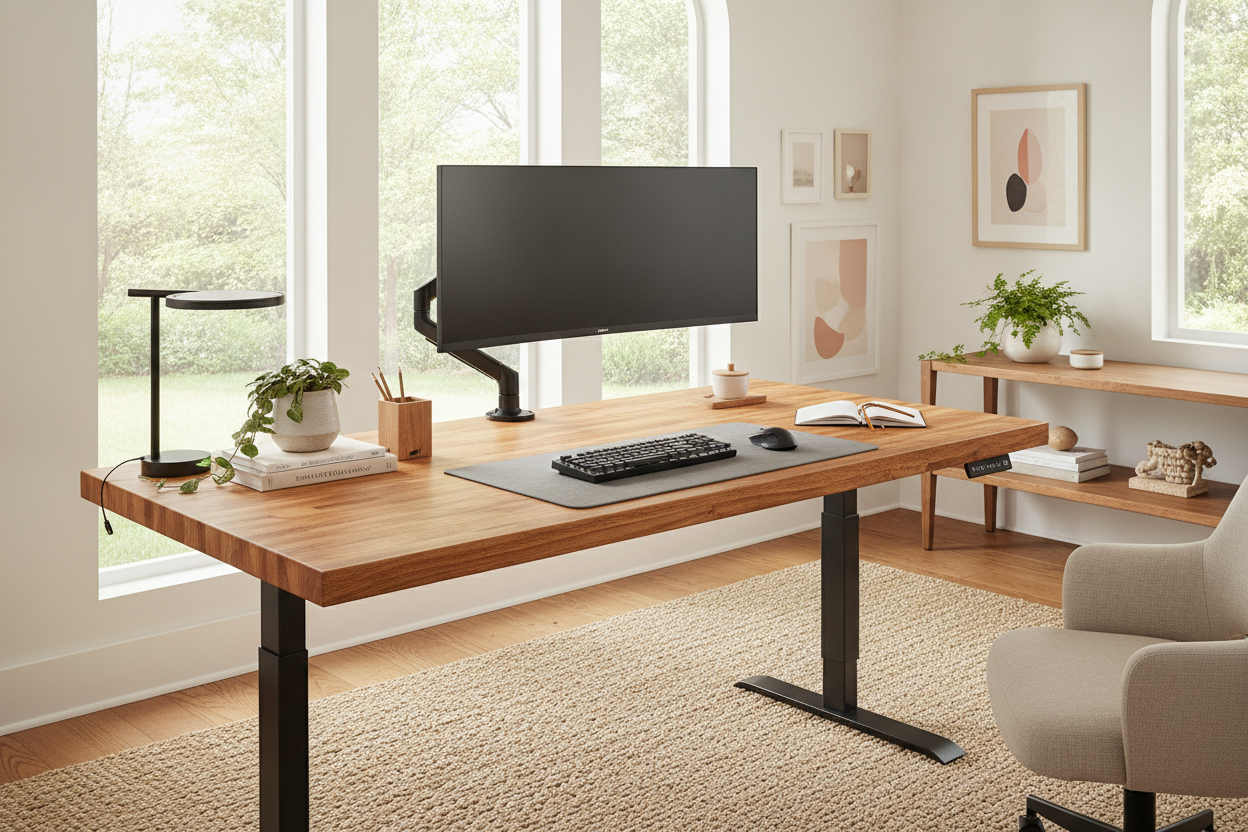
The real turning point was getting a sit stand up desk with memory presets. If you have to manually crank a desk or clear off your monitors to change heights, you won't do it. Having a button that knows exactly where my elbows need to be made the frequent transitions effortless. You have to stand up to work in bursts, and you have to work standing up only as long as your form stays clean.
The Setup Tweaks That Saved My Lower Back
If you stand up and work but your monitor is too low, you’re just trading back pain for neck pain. Your screen needs to be at eye level so you aren't tilting your chin down. I also learned the hard way that my keyboard needed to be lower than I thought—my elbows should be at a 90-degree angle, slightly open.
I’ve tested everything from a budget standing motorized desk to high-end pneumatic frames. The common thread? Stability. If your desk wobbles while you type, you’ll subconsciously tense your shoulders to compensate. A rock-solid frame is what allows you to focus on your actual job instead of the vibrating monitor in front of you.
The Verdict: My New Sit-Stand Routine
I don't stand all day anymore. I’ve landed on a 50/50 split that actually works. I stand for the 'active' tasks—emails, quick calls, and morning planning—and I sit for deep-focus writing or data work. It keeps my energy levels high without making me dread the sight of my office in the morning. My feet don't hate me anymore, mostly because I finally listened to them and bought a decent mat.
FAQ
Is standing all day better than sitting all day?
Actually, no. Both extremes are bad. The goal is 'dynamic working'—constantly changing your position so no single muscle group gets overworked or completely dormant.
Do I need special shoes to stand at my desk?
You don't need 'special' shoes, but you do need support. Standing in flat socks or flip-flops will destroy your arches. A pair of supportive sneakers or a thick anti-fatigue mat is essential.
How high should my standing desk be?
Your elbows should be at a 90-degree angle when your hands are on the keyboard, and the top third of your monitor should be at eye level. If you're looking down, your desk is too low.


Dejar un comentario
Este sitio está protegido por hCaptcha y se aplican la Política de privacidad de hCaptcha y los Términos del servicio.