










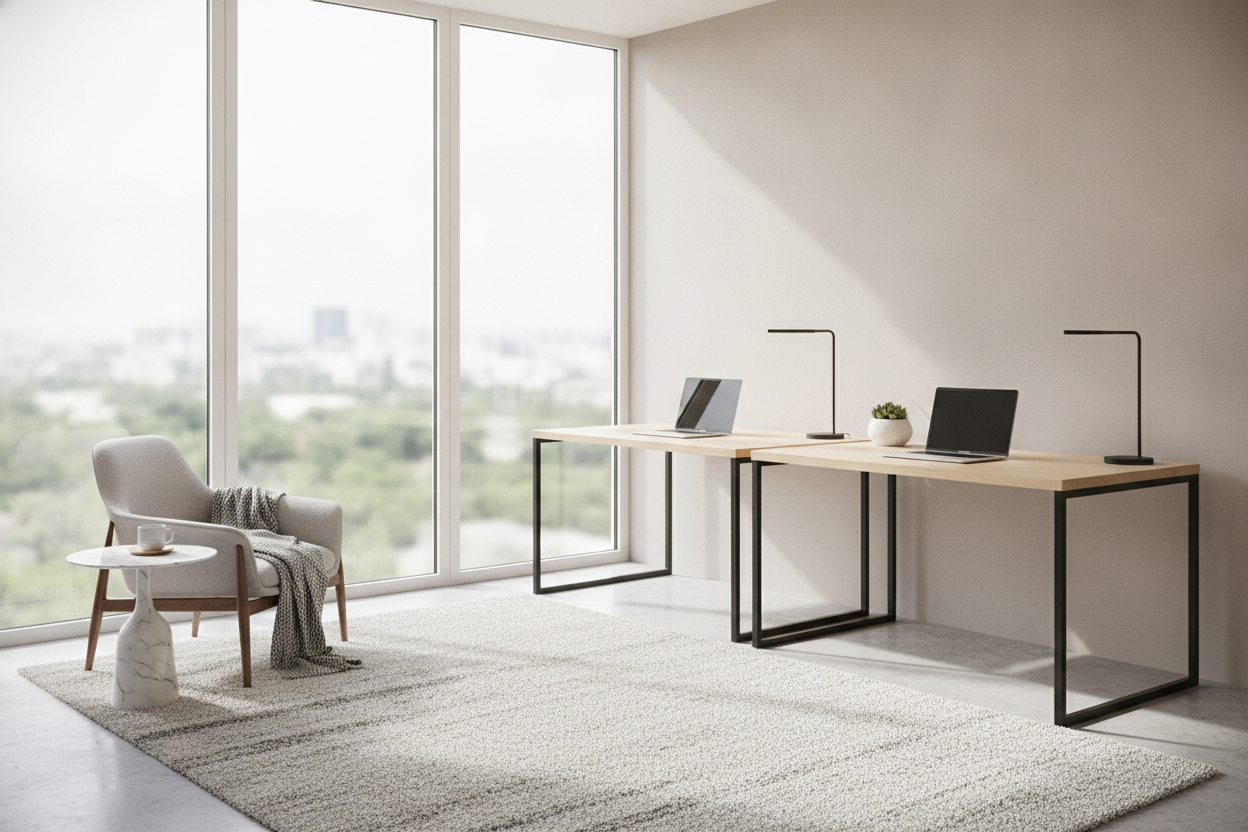
I used to sit at a $1,200 'ergonomic workstation' that had more levers than a fighter jet. I thought the bells and whistles would make me a better writer, but they just gave me more things to dust and fix. After a move across the country, I realized I didn't want to reassemble that beast. I wanted a slab of wood and four sturdy legs. I realized that keeping my desks simple was the secret to actually getting work done without the mental clutter.
- No assembly headaches: Most basic desks take 15 minutes to put together.
- Infinite legroom: No drawers or crossbars means you can actually stretch out.
- Versatility: A simple table works as a desk, a dining spot, or a craft station.
- Visual Peace: Minimalist designs don't dominate the room's aesthetic.
The Ergonomic Command Center Trap (And Why I Escaped)
We’ve been sold this idea that a desk needs to be a 'system.' I fell for it hard. I had the monitor arms, the cable management trays that caught every piece of cat hair, and the adjustable height motor that eventually started squeaking every time I stood up. It was heavy, it was ugly, and it made my spare bedroom feel like a corporate cubicle. I even went through a phase where I tried hacking a standing desk out of a vintage table, but even that felt like I was trying too hard to solve a problem that didn't exist.
The visual weight of heavy furniture is a real thing. When you put a massive, multi-tiered simple office desk in a 10x10 room, the room shrinks. You feel boxed in. When I finally switched to a basic office desk, the room breathed again. I could see the floor. I could move my chair without hitting a metal support beam. It turns out that a simple desk isn't just a piece of furniture; it's mental breathing room.
Why a Basic Office Desk Actually Boosts Productivity
There is a specific psychology to 'visual quiet.' When I sit down at a simple table desk, there are no drawers to rummage through and no built-in shelves to clutter with knick-knacks. It forces me to be intentional about what I bring to the workspace. My laptop, my notebook, and my coffee. That’s it. A basic table desk removes the 'fidget factor'—you know, that thing where you start organizing your drawer instead of writing that email.
Minimal features mean minimal fuss. I don't have to worry about a cable tray being too small for a new power brick or a keyboard tray that doesn't slide quite right. A simple home office table is a blank canvas. It doesn't dictate how you work; it just provides the surface for it. I’ve found my deep-work sessions last longer because there’s nothing in my peripheral vision screaming for attention.
The Underrated Joy of Unrestricted Legroom
Can we talk about legroom for a second? I am 6’1”, and the number of times I have bruised my kneecap on a 'convenient' built-in filing cabinet is embarrassing. Most 'pro' desks are designed for people who sit perfectly still. I’m a leg-crosser and a shifter. A basic office table gives me 48 to 60 inches of pure, unadulterated space under the surface. No hitting the motor housing, no snagging my jeans on a drawer pull. Just space.
How to Style a Simple Home Office Table
The fear people have with an office table simple in design is that it will look like a dorm room setup. It doesn't have to. The trick is quality materials and intentional accessories. Instead of a plastic desk protector, use a large wool or leather desk mat. It defines your work zone and adds a layer of texture that makes a simple table desk feel high-end. I also suggest a single, high-quality task lamp rather than overhead lighting.
Small details matter when the furniture is minimal. Choose a desk with a top that is at least one inch thick—anything thinner looks like a folding card table. If you want to dive deeper into making a plain surface look like a designer piece, you can find some deco office table secrets that focus on scale and balance. A single plant and a heavy brass pen cup are usually all you need to make a basic office table feel like a professional suite.
Dual Purpose: When Your Desk Isn't Just for Work
One of the best things about a home office desk simple enough to blend in is that it doesn't scream 'WORK' when you're trying to relax. If your desk is in your bedroom or living room, a simple office desk can easily double as a vanity or a console table. It’s a very different vibe than a modern vanity desk with mirror, which is beautiful but serves a very specific, singular purpose. A simple table is a shapeshifter.
I’ve used my current desk as a buffet table during a dinner party and as a gift-wrapping station during the holidays. You can't do that with a desk that has a built-in hutch and a CPU holder. By keeping the design basic, you're investing in a piece of furniture that can evolve with your life, rather than a specialized tool that becomes obsolete when your tech setup changes.
My Favorite Writing Computer Desk Options Right Now
When you're shopping, look for stability first. A simple desk should not wobble when you're typing at 80 words per minute. Check the weight capacity—if it can't hold at least 100 lbs, it’s probably made of cheap hollow-core board that will sag in the middle within six months. I always look for solid wood or high-density MDF with a real wood veneer. If you're ready to ditch the clutter, browsing a curated writing computer desk collection is a great place to start finding those clean lines.
FAQ
Is a simple desk ergonomic enough?
Ergonomics mostly come down to your chair and monitor height. You can make any simple table ergonomic by adding a monitor riser or a laptop stand to keep your screen at eye level. The desk's job is just to be a stable base.
How do I manage cables on a desk with no built-in tray?
Self-adhesive cable clips are your best friend. You can run wires down the back of one desk leg using clear zip ties or velcro straps. It looks much cleaner than those bulky plastic trays.
What is the ideal size for a simple home office table?
For most people, 48 inches wide by 24 inches deep is the 'Goldilocks' zone. It’s enough for a monitor and a notebook without taking over the entire room. If you use dual monitors, bump up to 60 inches.

Dejar un comentario
Este sitio está protegido por hCaptcha y se aplican la Política de privacidad de hCaptcha y los Términos del servicio.