










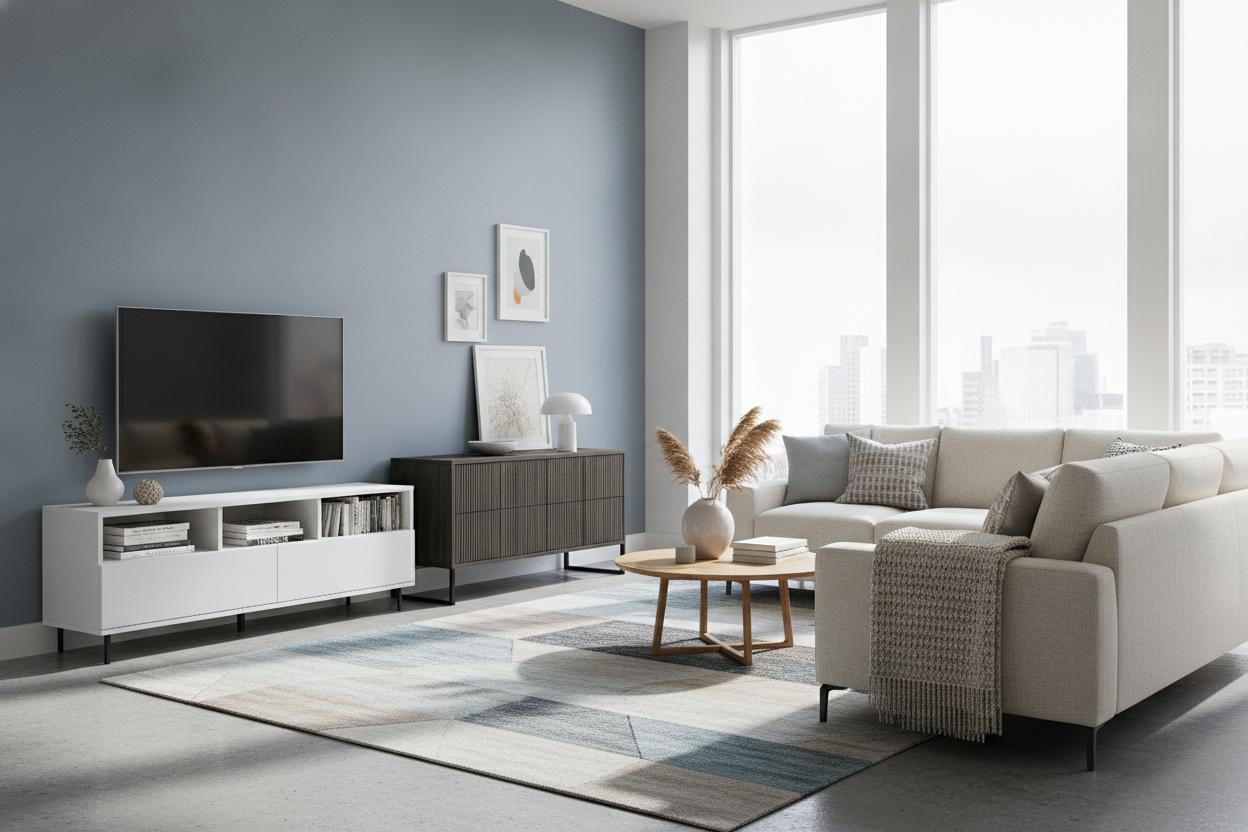
I have spent far too many Saturdays weeping over a hex key while staring at a pile of Swedish particleboard. We have all been there—the instructions look like a cryptic treasure map, and by step 14, you realize you put the finished side of the shelf facing the wall. Last month, I finally snapped. My old media console was bowing under my 55-inch TV like a tired bridge, and I needed a replacement that didn't require a degree in engineering to assemble. I decided to see if a target 60 tv stand could actually hold its own against the blue-and-yellow giant.
Quick Takeaways
- Assembly is notably faster because Target tends to use better pre-drilled holes and more intuitive hardware.
- The 60-inch width is the 'Goldilocks' size for 50-55 inch screens, providing visual balance without eating the whole room.
- Weight distribution is superior to IKEA’s entry-level Lack series, though it still has its limits.
- The veneer finish is prone to chipping during assembly, so keep a matching furniture marker handy.
The Big Box Showdown: Why I Tested This Specific Console
When you are living in a rental, you are constantly playing a game of 'will this survive the next move?' I have owned three different IKEA Besta units over the last decade. They are fine, but they always feel a bit like stage props—hollow and prone to vibrating when the bass hits on a movie. I wanted something that felt more like actual furniture and less like a cardboard box with a wood-grain sticker on it. I opted for a mid-century inspired 60-inch unit from Target’s Project 62 line to see if the extra $50 compared to a basic IKEA unit actually bought me any peace of mind.
The first thing I noticed was the weight. The box was heavy enough that I actually had to ask my neighbor for help dragging it up the stairs. That is usually a good sign. Cheap furniture is light because it is mostly air and glue. This unit felt dense. During the unboxing, I didn't find that annoying layer of white foam dust that usually sticks to everything via static electricity. The hardware was separated into labeled bags, which already put Target ahead of the 'dump everything in one pile' strategy I have seen elsewhere.
The assembly took me exactly 48 minutes while listening to a single podcast episode. I didn't have to use a hammer once, which my downstairs neighbors surely appreciated. The cam locks actually tightened without snapping—a miracle in the world of budget furniture. It felt sturdy from the moment the legs went on, which is usually the point where I start questioning my life choices with cheaper brands.
The 'Sag Test': Can It Actually Hold a Massive Screen?
Let's talk about the dreaded 'media console smile.' You know the one—where the middle of the stand starts to dip after six months because the TV is just too heavy for the span of the shelf. Most modern 55-inch and 65-inch TVs aren't heavy by 1990s standards, but 40 pounds of concentrated weight on a four-foot span of particleboard will eventually win. I placed my 52-pound Sony on the Target stand and held my breath. No immediate creaking. No visible deflection.
The reason this stand holds up better than the Swedish competition comes down to the center support leg. Many IKEA designs rely on the outer frame for structural integrity, but Target’s 60-inch models often include a fifth or even sixth leg tucked under the center. It is a small detail that makes a massive difference in longevity. If you are worried about the weight of a massive OLED or a vintage receiver collection, you might eventually want to upgrade to a solid wood 60 TV stand to avoid any long-term structural anxiety. But for a budget-friendly renter option, this Target build is surprisingly rigid.
I did make one mistake during the 'stress test.' I tried to slide the stand across my hardwood floor while the TV was still on it. Don't do that. The legs are sturdy, but the mounting points are still anchored in engineered wood. I heard a slight groan from the back panel and realized I was pushing my luck. If you need to move it, clear it off first. It is not an heirloom piece of oak; it is a very well-made temporary solution.
Why Proportions Matter More Than You Think
One of the biggest mistakes I see in living room setups is the 'hat on a flagpole' look. This happens when you put a 55-inch TV on a 55-inch stand. The edges line up perfectly, and it looks cramped and top-heavy. It makes the TV look like a giant black void that is about to tip over. By choosing a 60-inch stand for a 55-inch TV, you give yourself about two and a half inches of 'breathing room' on either side of the screen.
That small margin allows the furniture to actually frame the technology. I learned the hard way that a 60 inch oak TV stand provides the necessary visual weight to ground the screen. It stops the TV from floating in space and makes the whole wall feel intentional. Even if you have a smaller TV, going wider with the stand is always the right move. It gives you a place to put a lamp or a small plant, which helps hide the fact that you have a giant plastic rectangle as the focal point of your home.
How to Style It So It Doesn't Look Like a Dorm Room
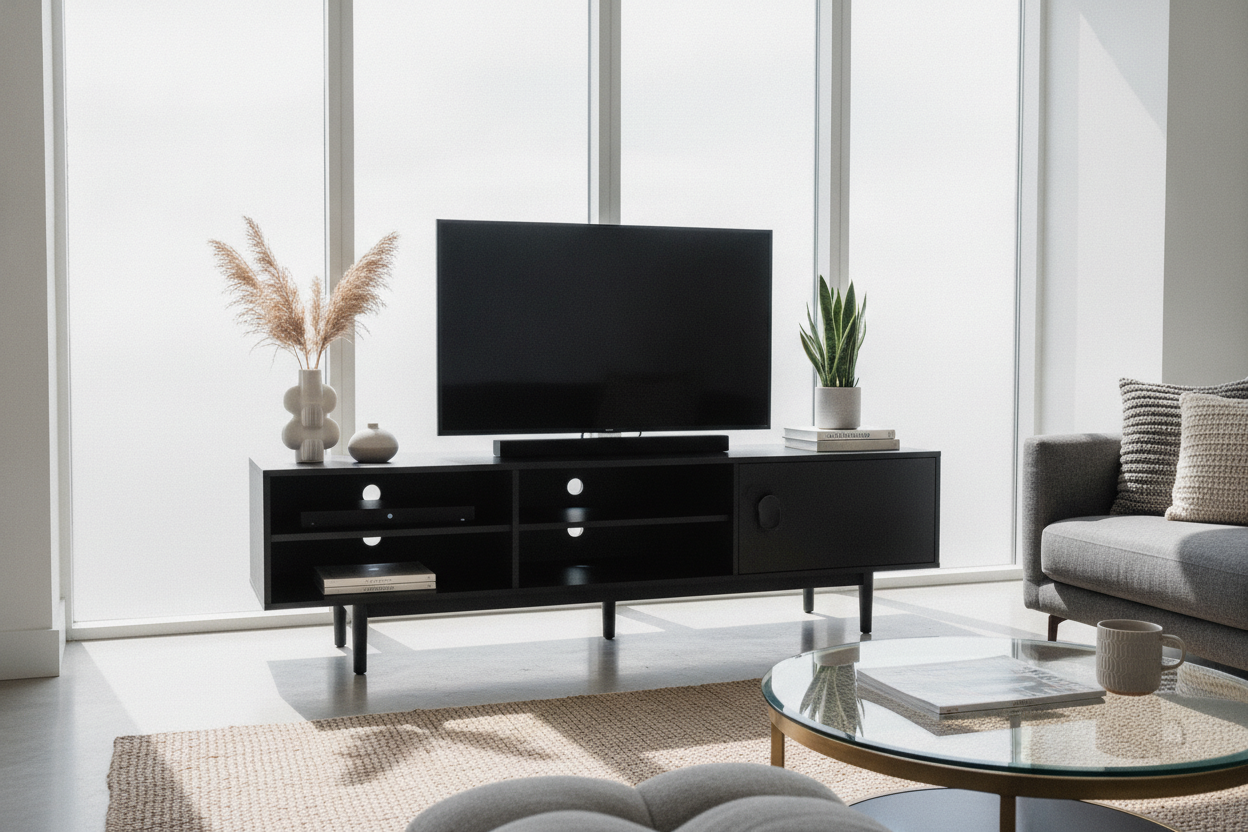
The problem with big-box furniture is that it can look a bit 'catalogue' if you aren't careful. My Target stand came in a 'walnut' finish that looked great from six feet away, but up close, the grain pattern repeated a bit too perfectly. To fix this, I focused on the open shelving. Instead of just shoving my PlayStation and a nest of wires in there, I used some oversized coffee table books to fill the vertical gaps. It adds texture and covers up the cable management holes in the back.
Speaking of cables, the Target stand had decent cutouts, but they weren't quite enough for my setup. I ended up using some adhesive cable clips along the back of the legs to hide the power strip cord. If you can't see the 'spaghetti' behind the unit, the furniture immediately looks five times more expensive. I also swapped out the standard brass knobs for some matte black ones I found at a local hardware store. It took five minutes and made the whole unit look custom rather than something I picked up while buying paper towels and trail mix.
Don't over-style the top. If you have a 60-inch stand, you have enough room for a small tray for remotes and maybe one medium-sized ceramic vase. Anything more than that and it starts to look like a cluttered shelf rather than a media center. Keep the lines clean so the eye focuses on the screen when it's on, and the furniture when it's off.
The Verdict: Is It Worth Your Weekend Assembly Time?
After a month of daily use, I am officially a Target furniture convert. Is it better than IKEA? In terms of assembly frustration and structural support out of the box, yes. It feels less like a disposable item and more like a piece of furniture that can survive at least two or three moves. The center support leg is the real MVP here, preventing the sag that ruins most budget consoles within the first year.
If you are looking for something that looks high-end without the $1,200 price tag, this is a solid win. You get the clean lines of mid-century design with a build quality that doesn't make you nervous every time you set a heavy glass of water down. It is the perfect middle ground for anyone who has graduated from college-era basics but isn't quite ready to drop a month's rent on a designer sideboard.
FAQ
Can a 60-inch TV stand hold a 65-inch TV?
Technically, yes, if the TV stands are located toward the center of the screen. However, a 65-inch TV is usually about 57 inches wide, which leaves you with almost no room on the edges. It will look very cramped and top-heavy. I always recommend the stand be at least 4-6 inches wider than the TV.
How hard is it to move once assembled?
It is heavier than IKEA's hollow-core furniture, so you will want two people. Because it uses cam locks and screws into engineered wood, sliding it across carpet can put a lot of stress on the legs. Always lift it to move it.
Is the 'wood' finish easy to scratch?
It is a paper or vinyl veneer, so it is more durable than paint but less durable than real wood. If you drop a sharp set of keys on it, it will scratch. I recommend using a few felt pads under any heavy decor you place on top to keep the surface pristine.

Dejar un comentario
Este sitio está protegido por hCaptcha y se aplican la Política de privacidad de hCaptcha y los Términos del servicio.