










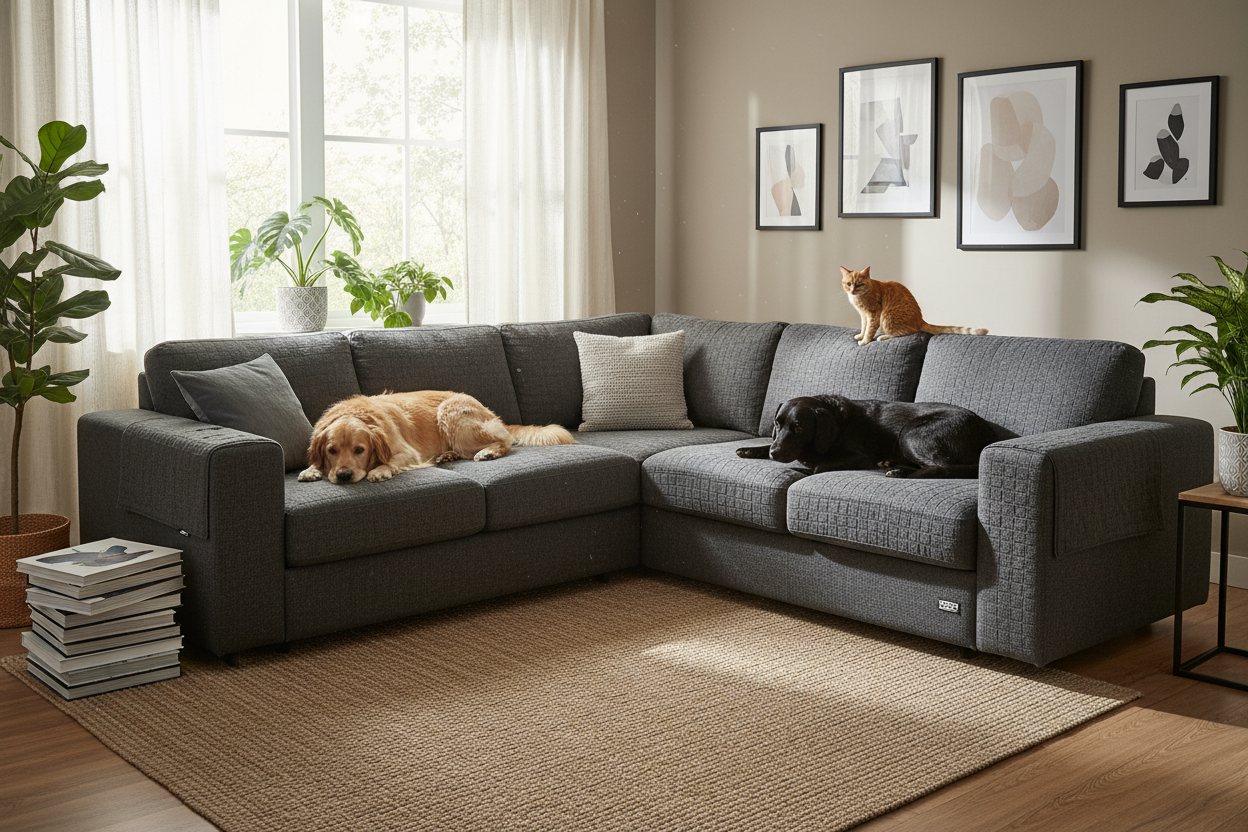
We have all experienced that moment of panic: the sound of claws digging into fabric or the sight of a muddy paw print on a pristine cushion. As a designer, the most common request I receive is not about color trends or mid-century silhouettes; it is about durability. Clients want a piece that looks expensive but behaves like armor. Finding a truly pet friendly sofa ikea sells is often the middle ground where budget meets functionality, but not every model on their showroom floor can handle a 70-pound Golden Retriever or a cat with a scratching habit. Let's dissect which options actually work for a lived-in home.
Quick Decision Guide: Key Features to Look For
If you are rushing through the warehouse, keep these non-negotiable criteria in mind to ensure you choose the best ikea couch for pets:
- Removable, Machine-Washable Covers: This is the gold standard. Avoid fixed upholstery at all costs.
- Tight Weave Synthetic Blends: Look for polyester or polyester-cotton blends (like the Gunnared or Orrsta series). Loose weaves snag easily under claws.
- Martindale Cycle Count: While IKEA doesn't always advertise this prominently, aim for fabrics tested for 25,000+ cycles for heavy domestic use.
- Leg Height: Sofas with elevated legs (like the Landskrona) allow you to easily vacuum hairballs that accumulate underneath.
- Modular Replacement: The ability to replace a single damaged armrest or cushion cover rather than the entire sofa.
Analyzing Material Quality and Texture
When scouting for pet-friendly couches ikea offers, the tactile experience is just as important as the visual. Natural fibers like pure linen or loose-weave cotton are disastrous for pets; they absorb liquids instantly and provide a satisfying texture for cats to shred. Instead, focus on synthetic blends.
IKEA’s Gunnared fabric is a standout here. It is a dope-dyed polyester that feels wool-like but is incredibly resistant to staining. The weave is tight enough that cat claws tend to slide off rather than hook in. From a design perspective, this fabric offers a matte finish that reads as sophisticated rather than "utilitarian," allowing you to maintain a high-end aesthetic without the fragility.
Camouflage and Color Coordination
Design is about managing visual weight, but with pets, it is also about managing visual mess. A pure white sofa is a bold stylistic choice, but it requires a lifestyle that most pet owners simply do not have. Conversely, a black sofa will highlight every single strand of light-colored fur.
I always advise clients to match the sofa tone to their pet’s undercoat or opt for a heathered finish. A textured grey, beige, or greige (grey-beige) breaks up the visual field, making stray hairs virtually invisible until you have time to vacuum. This allows the sofa to remain the focal point of the room for the right reasons, rather than becoming a source of visual stress.
Ergonomics and Structural Longevity
A sofa needs to hold its shape. Dogs often treat furniture like a launchpad. Soft, down-filled cushions (like those found in the Stockholm series) require constant fluffing and can lose their silhouette quickly under the weight of a heavy dog. For a pet-friendly environment, high-resilience cold foam is superior.
Models like the Kivik or Finnala utilize memory foam layers that snap back into shape. This ensures the sofa maintains its architectural lines even after your pet has been napping on the back cushions all afternoon. Firmness equals longevity in a high-traffic, multi-species household.
My Personal Take on pet friendly sofa ikea
I want to be transparent about what "pet-friendly" actually looks like in practice, based on a project I did for a client with two Boxers and a penchant for muddy hikes. We installed a Finnala sectional. Here is the unpolished truth that the catalog won’t tell you: while the covers are machine washable, putting them back on is a workout.
If you dry the covers completely in a dryer, they shrink just enough to make re-zipping them a struggle that threatens your manicure. The trick I learned—and now swear by—is to put the covers back on the frame while they are still slightly damp. The fabric has more give, allowing you to pull it taut over the corners without fighting the zipper. Also, be warned: the Velcro strips on the frame base are magnets for fur. Once a year, you will need to sit down with a stiff brush and clean out the hook-and-loop tape, or the covers will start to look sloppy and loose.
Conclusion
Selecting the right furniture is not just about filling a space; it is about curating a home that serves your lifestyle. You do not have to sacrifice style for the sake of your four-legged companions. By prioritizing tight weaves, washable slipcovers, and forgiving color palettes, you can create a living room that feels luxurious and welcoming to every member of the family—fur included.
Frequently Asked Questions
Which IKEA fabric is best for cats who scratch?
Velvet is surprisingly effective against cats. The Djuparp covers (available on some models) have a cut pile that lacks the loops cats like to hook their claws into. They tend to lose interest in scratching it because it doesn't provide the resistance they crave.
Can I buy replacement covers if my pet destroys one?
Yes, this is the primary advantage of IKEA's modular systems. However, be aware that IKEA frequently discontinues fabric colors. I always advise clients to buy one spare set of covers at the time of purchase to future-proof their investment.
How do I remove pet hair from IKEA fabrics?
For the textured weaves, a standard vacuum attachment works well. For smoother weaves where hair gets woven in, a rubber squeegee or a damp rubber glove is much more effective than a lint roller. The friction pulls the hair out of the fibers instantly.



Dejar un comentario
Este sitio está protegido por hCaptcha y se aplican la Política de privacidad de hCaptcha y los Términos del servicio.