










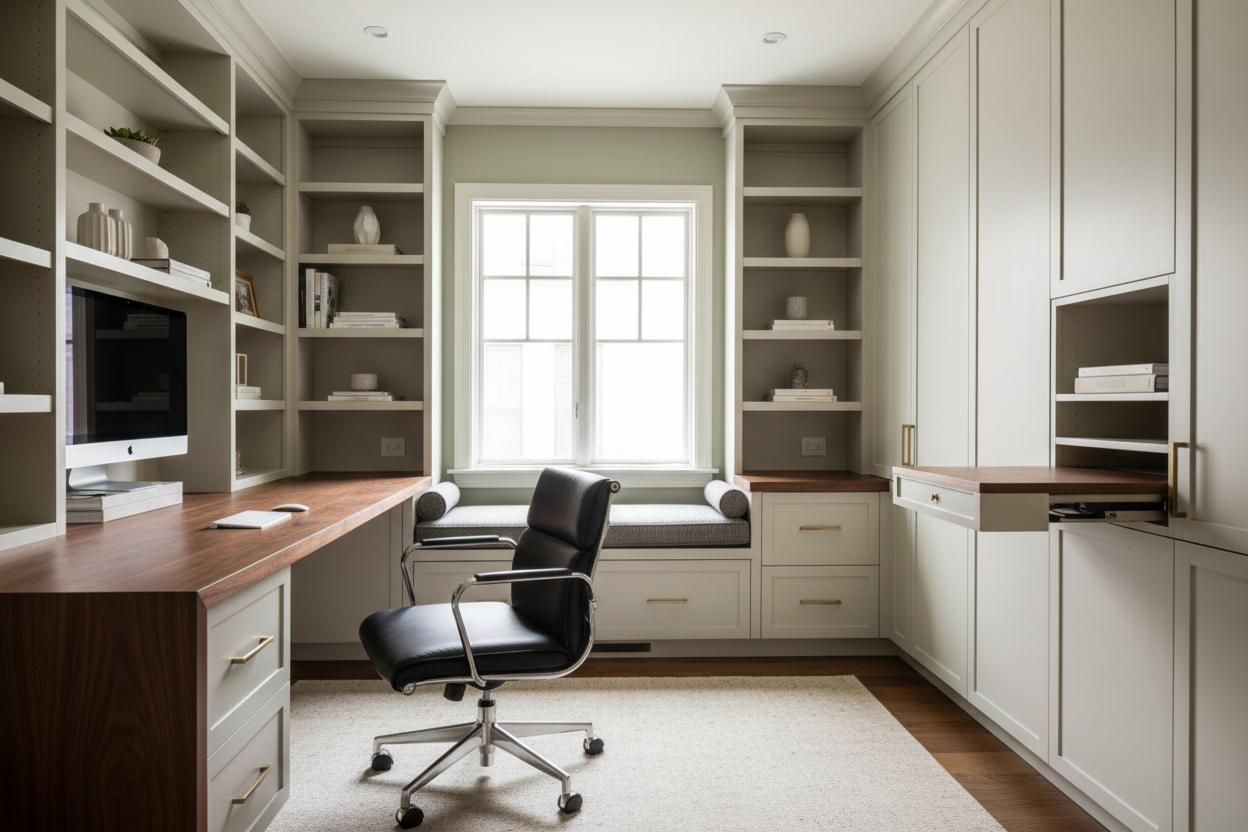
There is a distinct difference between a room containing a desk and a dedicated workspace that commands focus. A haphazard furniture arrangement often disrupts visual flow and fails to utilize the architectural potential of a room. Implementing well-considered office built-in ideas does more than just organize your books; it creates a sense of permanence and intention that freestanding furniture rarely achieves. Whether you are renovating a dedicated library or carving out a niche in a multipurpose room, custom joinery is the bridge between functionality and high-end design.
Key Design Considerations
- Ergonomic Depth: Ensure the desktop surface is at least 24–30 inches deep to accommodate monitors without cramping the user.
- Material Integrity: Prioritize architectural-grade plywood or solid wood nosing over standard particle board for longevity.
- Cable Integration: Plan for grommets and internal chases behind drawers before fabrication begins.
- Lighting Layers: Incorporate dimmable LED strip lighting in shelving to reduce eye strain and add ambiance.
Defining the Architectural Envelope
When we discuss home office built-in ideas, we are essentially talking about manipulating the room's envelope. Built-ins should feel like they were part of the original blueprint, not an afterthought. If you have high ceilings, take the cabinetry all the way to the crown molding. This draws the eye upward, making the room feel expansive rather than cluttered.
For a sophisticated aesthetic, consider wrapping the millwork around a window. This utilizes natural light effectively and frames the view, turning the window itself into a focal point within the cabinetry.
Materiality and Durability
The tactile experience of your workspace dictates how you feel while working. While browsing office built-ins ideas, you will encounter various finishes, but understanding their wear patterns is crucial.
Solid Wood vs. High-Grade Veneers
Solid wood is undeniably luxurious, but it is susceptible to seasonal movement (expansion and contraction). For large built-in units, a high-quality veneer over a stable plywood core is often the superior engineering choice. It offers the warmth of grain without the risk of warping. If you plan to paint the unit, specify a paint-grade maple or high-density MDF, which provides a glass-smooth finish free of grain texture.
Mastering the Small Footprint
Not every home has a dedicated 200-square-foot study. This is where small home office built ins shine. In tighter quarters, visual weight is your enemy. To combat this, I often design "floating" desk units anchored to the wall without legs. This reveals more floor space, tricking the eye into perceiving the room as larger than it is.
Another strategy for small office built ins is the use of closed storage at the bottom and open shelving at the top. The closed cabinets hide the chaos of printers and paperwork, while the open upper shelves allow for curated styling with art and books, preventing the "box-like" feeling of a solid wall of doors.
Lighting: The Forgotten Element
Lighting should never be an afterthought in joinery. Ambient lighting is not enough for a workspace. When reviewing home office built ins ideas, look for integrated task lighting. Routing channels for LED strips on the underside of upper cabinets provides a wash of light directly onto the work surface. This eliminates shadows cast by overhead fixtures and adds a layer of sophistication that elevates the entire structure.
My Personal Take on Office Built-In Ideas
I learned a hard lesson early in my career regarding finish selection for desktops. I once specified a stunning, ultra-matte black laminate for a client’s primary desk surface. It looked incredible on installation day—architectural, moody, and sleek. However, within two weeks, the client called me. The natural oils from their hands left permanent-looking smudges where they rested their wrists, and the matte finish highlighted every speck of dust.
Since then, I strictly advise against solid matte colors for the horizontal work surface. Now, I always steer clients toward a textured wood grain or a commercial-grade Fenix material for the desktop itself, even if the surrounding cabinetry is painted a solid color. It hides the reality of daily use much better and keeps the maintenance realistic for a working home.
Conclusion
Investing in custom millwork is a commitment to your productivity and your home's value. By focusing on proper scale, durable materials, and integrated lighting, you move beyond simple storage and create a workspace that inspires creativity. The best built-in is one that serves your workflow so effortlessly that you hardly notice it's there.
Frequently Asked Questions
What is the ideal depth for built-in shelves?
For standard books and decor, 12 inches is sufficient. However, if you plan to house printers or deeper binders behind lower cabinet doors, you should increase the base cabinet depth to 18 or 20 inches.
How do I handle cable management in built-ins?
Request a "chase" or false back in the lower cabinets. This creates a void behind the drawers where wires can travel unseen from the wall outlet to the desktop grommets.
Is it cheaper to buy pre-made cabinets or go custom?
Pre-made cabinets (stock) are significantly cheaper but often lack the precise fit and finish of custom joinery. Custom built-ins maximize every inch of space and allow for specific ergonomic tailoring that stock units cannot provide.


Dejar un comentario
Este sitio está protegido por hCaptcha y se aplican la Política de privacidad de hCaptcha y los Términos del servicio.