










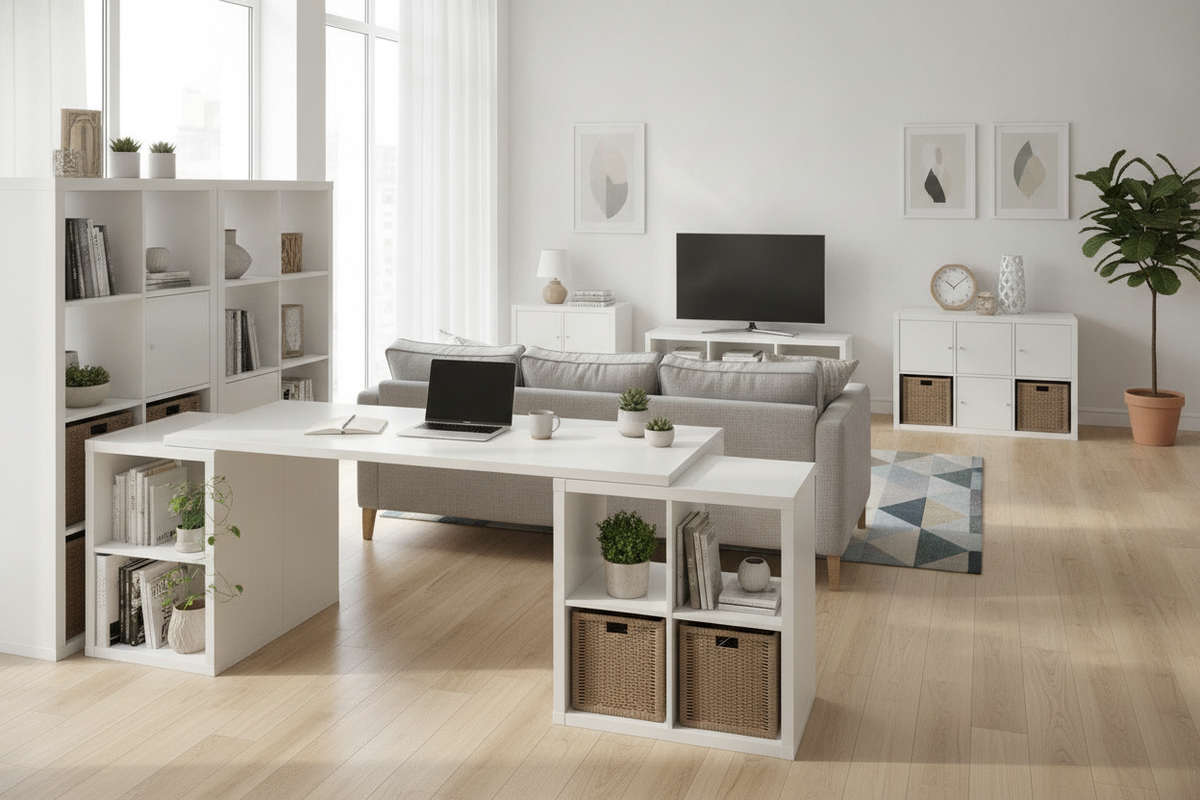
A well-planned workstation balances open work surfaces with accessible storage. The kallax combination desk has emerged as a cornerstone of modular interior design because it fuses open-cell cube shelving with a dedicated desktop work area. Whether you are building a focused remote work setup, an expansive crafting island, or a compact student study nook, understanding how to configure a kallax desk combo allows you to tailor your workspace to your exact floor plan and workflow.
Understanding the Kallax Combination Desk Concept
At its core, a modular desk combination pairs vertical or horizontal cube storage units with a bridge tabletop. Instead of purchasing an inflexible, monolithic desk with fixed drawers, this hybrid approach lets you decide which side of the desk houses storage, how tall the surrounding shelving stands, and how open or concealed your supplies remain.
Why Cube Shelving and Desktop Surfaces Pair Effectively
Cube shelving provides deep, symmetrical storage bays that can adapt to varying organization needs. When paired with a sturdy tabletop, the shelving unit doubles as a structural foundation on one end, eliminating the need for bulky extra legs while keeping reference materials, tech accessories, and files within arm's reach.
Key Differences Between Dedicated Desks and Modular Storage Combos
Traditional computer desks often feature shallow pencil drawers or fixed CPU pedestals that cannot be altered. In contrast, modular cube systems allow you to rotate the shelving, add or remove inserts, and alter the footprint as your room layout evolves. Exploring a table and bookshelf combination design demonstrates how consolidating your vertical and horizontal footprint preserves precious floor area in open rooms.
Dimensional Categories and Spatial Fit Frameworks
Before assembling your desk combo, evaluate your room's traffic flow, window placements, and electrical outlet positions. Spatial balance requires sufficient clearance for your office chair, easy access to adjacent cube cubbies, and an unimpeded perimeter path.
Compact Linear Configurations for Small Rooms and Alcoves
In narrow bedrooms or studio apartments, running your desk and shelving flush along a single wall keeps pathways clear. Placing a compact cube unit at the outer corner of the wall creates a defined workstation boundary without blocking natural light or intruding into the center of the room.
Peninsula and L-Shaped Layouts for Open-Plan Zoning
In larger home offices or multi-use living rooms, extending the tabletop perpendicular to a taller shelving unit forms an L-shaped peninsula. This orientation acts as an architectural room divider, creating a dedicated working zone while keeping the opposite side of the shelving accessible for books, decorative objects, or room accessories.
Extended Dual-Workstation Spans
For shared family spaces or creative partner studios, positioning a central shelving unit between two symmetrical tabletops creates a double workstation. Both users share the central organizer for printing supplies, shared binders, or peripheral charging hubs, while maintaining independent desk surfaces.
Storage Architecture: Organizing the Cube Grid
A major benefit of modular cube frames is their ability to house customizable inserts. Organizing your grid systematically prevents your desk from collecting surface clutter.
Open Bays vs. Enclosed Insert Drawers and Doors
- Top-Tier Open Bays: Reserve upper or easily reachable bays for daily essentials such as notebooks, active project folders, and task lighting hubs.
- Divided Drawer Inserts: Utilize double-drawer modules for loose office stationery, cords, drawing tools, and small electronics.
- Cabinet Door Inserts: Conceal bulk paper supplies, bulky binders, or peripheral tech gear behind solid door fronts for a streamlined look.
Baskets, Fabric Bins, and Tech Wire Routing
Felt, woven rattan, or fabric bins slide smoothly into cube compartments, making them ideal for containing irregular items like fabric bolts, yarn, or gaming controllers. Routing device cables through the rear edge of open bays keeps desktop surfaces clear. For inspiration on upgrading basic components into an elegant workstation, review our guide on desk combo guide.
Structural Support, Tabletop Pairing, and Assembly Planning
Achieving a stable, wobble-free workstation requires thoughtful attention to mechanical connections and load distribution.
Securing Tabletops: Connecting Brackets and Leg Supports
When attaching a tabletop to a cube frame, use dedicated connector brackets that clamp or anchor securely to the inner shelf partition. On the opposite free-floating end, install adjustable desk legs or a matching trestle base. Ensuring that all legs rest evenly on your flooring prevents rocking during typing or writing.
Wall Anchoring and Anti-Tip Considerations
Any vertical shelving unit serving as an anchor for a desk—especially multi-tier units extending above the tabletop—must be secured directly to wall studs using appropriate wall-mounting brackets. Wall anchoring prevents tipping hazards and eliminates lateral sway when sliding chairs or placing heavy hardware on the desk.
Achieving a Custom Built-In Aesthetic
You can create a seamless, cohesive interior by integrating your modular desk with matching base storage units. Read our insights on styling a cabinet desk combo for a built-in aesthetic to learn how filler strips, crown moldings, and continuous work surfaces elevate flat-pack furniture into custom cabinetry.
Material Finishes, Styling, and Seamless Room Integration
Integrating a modular desk into your existing decor depends heavily on coordinating materials, lighting, and adjacent storage towers.
Coordinating Color Palettes and Hardware
Pair crisp white or matte black shelving units with warm oak or walnut tabletops to add depth and visual warmth. Replacing standard plastic knobs on insert doors with brushed brass, matte black, or leather pulls creates an elevated, personalized finish.
Expanding Lateral Storage with Complementary Cabinets
If your storage needs outgrow the primary desk frame, pair your setup with a large combination display bookcase along the main perimeter wall to house archival files, reference books, and showcase items in a coordinated fashion.
Workspace Planning Checklist and Use-Case Blueprints
Before beginning your build, run through this practical checklist to ensure an ergonomic and durable setup:
- Measure Seating Clearance: Confirm that you have comfortable knee clearance beneath the tabletop and ample push-back depth for your office chair.
- Map Power Sources: Plan cable channels along the back of the cube frame to keep power strips off the floor and out of sight.
- Secure Structural Anchors: Fasten the shelf unit to the wall and check all bracket screws before loading desktop monitors.
- Zone Storage by Access Frequency: Keep daily tools within arm's reach and seasonal archives in base-level baskets.
Use-Case Blueprints
- The Dedicated Home Office: Position the desktop perpendicular to a vertical cube shelving unit to establish privacy, using insert drawers for filing and upper shelves for reference literature.
- The Craft & Hobby Suite: Combine a long tabletop with dual low-profile cube bases to create a high-capacity cutting and sewing island. For compact rooms, integrate a corner multi-door combination cabinet to utilize awkward corner spaces for excess craft supplies.
- The Shared Study Station: Center a double-sided shelving unit between two desks to allow simultaneous study while preserving individual workspace boundaries.

Dejar un comentario
Este sitio está protegido por hCaptcha y se aplican la Política de privacidad de hCaptcha y los Términos del servicio.