


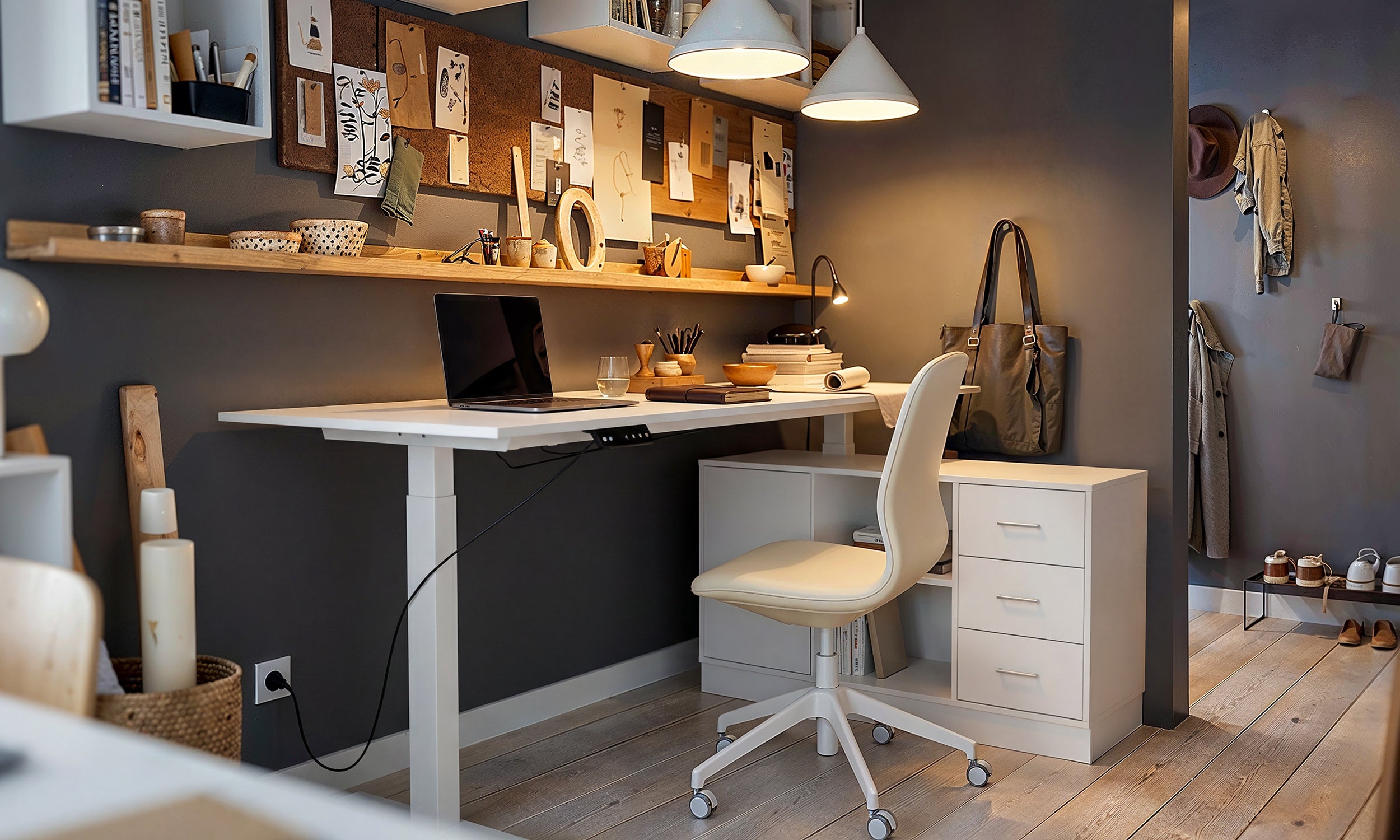
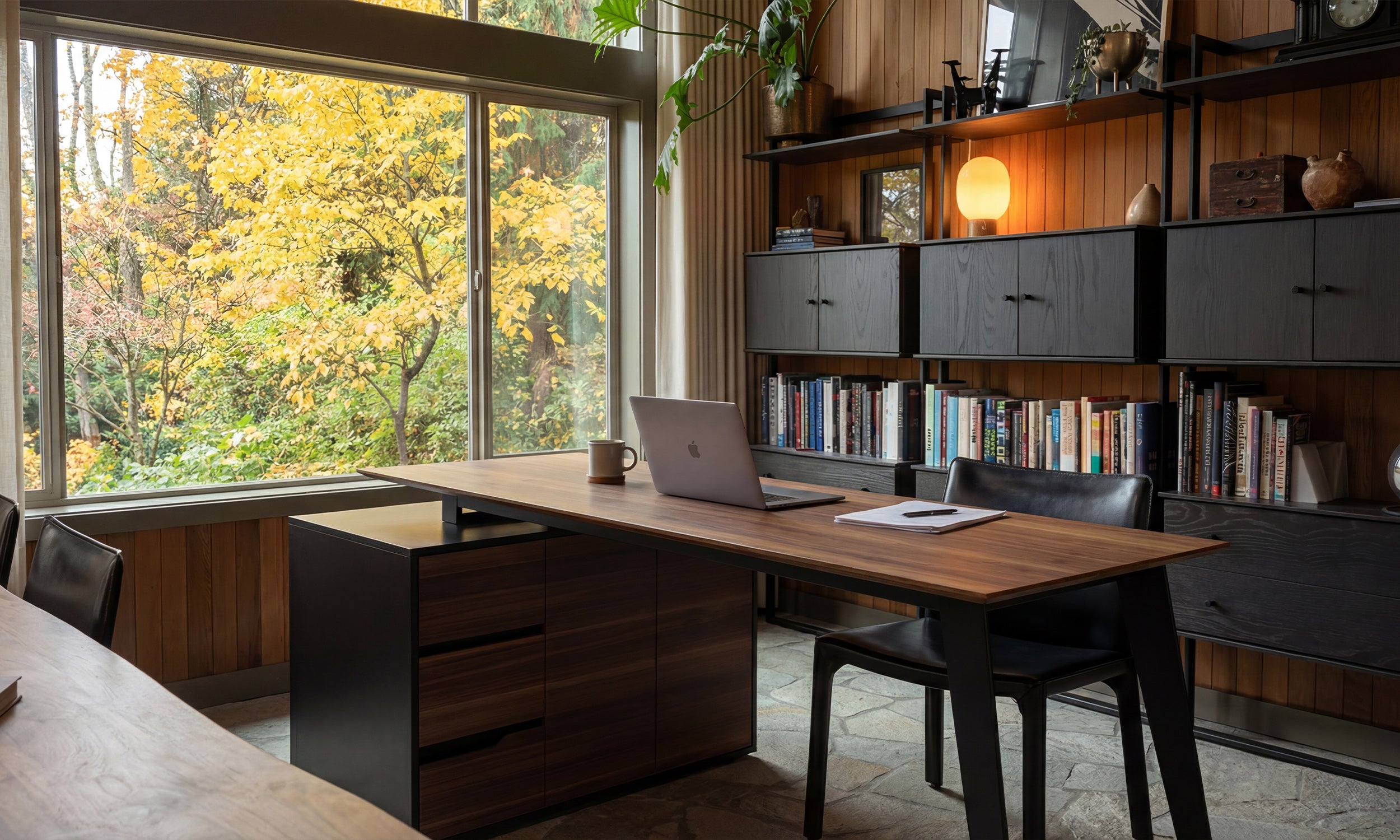


If your kitchen has no pantry, the most effective fix is a freestanding pantry cabinet: a tall unit with doors and adjustable shelves that holds dry goods, canned goods and snacks in a few square feet of floor space, with no remodeling. Put it beside the fridge, at the end of a counter run or on a nearby wall, then add cabinet organizers, door racks and wall shelves to cover the rest. Most of the ideas below also work for renters.
A kitchen without a pantry is common in apartments, older homes and condos. The ideas below start with the biggest gain in storage space and move to smaller tweaks. If you already know you want a cabinet, browse our freestanding pantry cabinets.
1. Add a Freestanding Pantry Cabinet
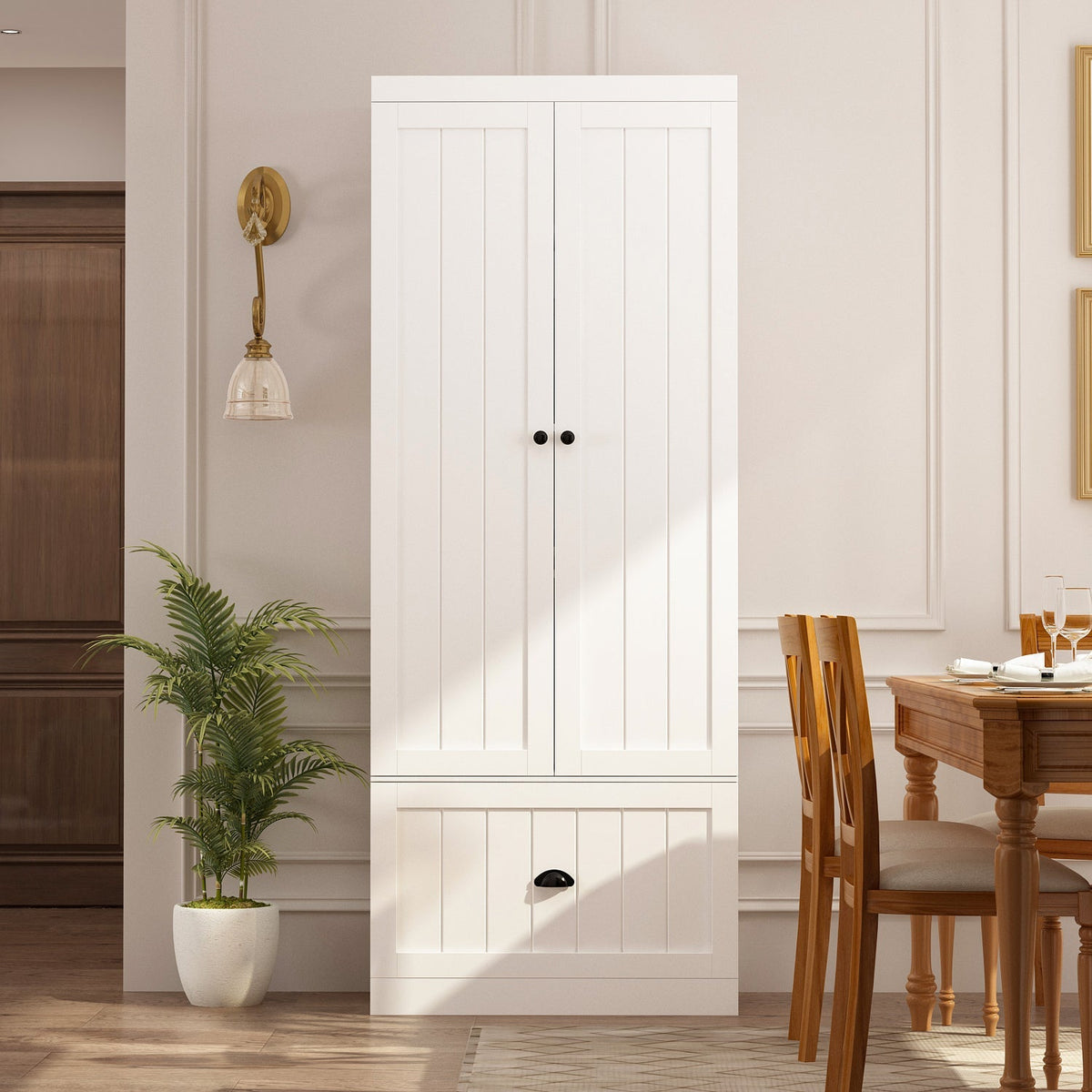
A freestanding pantry cabinet is the closest thing to a real pantry you can buy. It gives you a dedicated pantry behind closed doors, so food storage stops spilling onto the kitchen counter, and it moves with you when you do.
What to look for:
- Depth of 12" to 16" so food stays visible and the cabinet doesn't eat into the walkway. Most FUFU&GAGA pantry cabinets are about 15.7" deep.
- Adjustable shelving so you can set shelves for cans, boxes and bins.
- Door racks or drawers for spices, packets and snacks.
- A tip-over restraint kit, since tall cabinets need to be anchored.
For tight kitchens, the Stilla 27.6" pantry (70.9" tall, 13.8" deep) has two doors, four adjustable shelves and a drawer. The 61" white food pantry is even slimmer at 23.3" wide and 11.8" deep with 5 shelves, which suits a narrow wall.

2. Choose the Right Spot for It
Where the pantry cabinet goes matters as much as which one you pick. Good locations, in rough order of convenience:
| Location | Why it works | Watch out for |
|---|---|---|
| Beside the fridge | Creates one food zone; the tall cabinet lines up visually with the fridge | Leave room for the fridge door to open fully and don't block its vents |
| End of a counter run | Close to the prep area; finishes the cabinet line like a built-in | Keep the walkway clear around the corner |
| Empty kitchen wall | Room for a wider pantry with countertop space | Check the aisle width in front |
| Dining room or hallway | Often has more wall space than the kitchen | Pick a style that suits the room, such as a hutch-style cabinet |
| Laundry room or mudroom | Good for backstock and bulk items | Humidity; keep food sealed |
Two rules apply wherever it goes. First, keep it away from heat: University of Missouri Extension advises storing food in cool cabinets away from appliances that produce heat (MU Extension), so skip the spot next to the oven or dishwasher. Second, keep traffic flowing: the National Kitchen & Bath Association recommends walkways at least 36" wide (NKBA). Our pantry cabinet dimensions guide covers measuring in detail.
3. Renter-Friendly Pantry Solutions
Renters usually can't add built-in cabinetry, which makes freestanding furniture the easiest solution. A few points to keep in mind:
- Freestanding beats built-in. A pantry cabinet, rolling cart or shelving unit comes with you at move-out.
- Ask about anchoring. Tall furniture should be secured to the wall. The U.S. Consumer Product Safety Commission urges families to anchor furniture securely to the wall. Most anti-tip kits attach with a few screws into a wall stud, so ask your landlord before you install one rather than skipping it. Our guide on anchoring tall furniture shows how.
- Use no-drill organizers elsewhere: over-the-door racks, tension rods, adhesive hooks and stackable bins.
- Measure before moving day. A cabinet that fits one kitchen layout may not fit the next, so a mid-size pantry (around 24" to 32" wide) is the most flexible choice.
4. Turn One Kitchen Cabinet Into a Pantry Shelf
If you have more cabinet space than you think, dedicate one upper cabinet entirely to food. Pick one close to the prep area, not the hard-to-reach cabinet above the fridge. Add a shelf riser to double the usable surface, use clear containers so the top shelf stays readable, and keep only dry goods there. Larger cabinets near the stove can hold oils and spices; cans go low.
5. Add Baskets and a Lazy Susan to Existing Cabinets
Deep base cabinets and a corner cabinet waste a lot of space. Add baskets you can pull out like drawers, and a lazy susan in the corner cabinet for oils, sauces and jars. Labeled bins grouped by category (breakfast, baking, snacks) make cabinets work like a pantry shelf system and keep the kitchen clutter free.
6. Use Drawer Space for Pantry Items
Deep drawers in base cabinets or kitchen island drawers can hold pasta, rice, snacks and spices. Lay spice jars on their side with labels up, and use drawer dividers so items stay in their zone. Drawers are easier to see into than high shelves.
7. Use Vertical Space and Wall Space
Empty wall space can carry a lot of light storage:
- Open shelves or a wall-mounted shelving unit for glass jars of pasta, rice and coffee
- A pegboard or rail with hooks for utensils, mugs and baskets
- A narrow wire rack beside the fridge for cans and spices
Keep pantry items on display tidy with matching clear containers, since open storage is in plain sight.
8. Use the Back of Doors
An over-the-door organizer on the kitchen door, a nearby closet or inside a cabinet door holds spices, packets, foil and wraps. Keep it to lightweight items so the hinges aren't strained.
9. Add a Hutch or Sideboard for Bulky Items
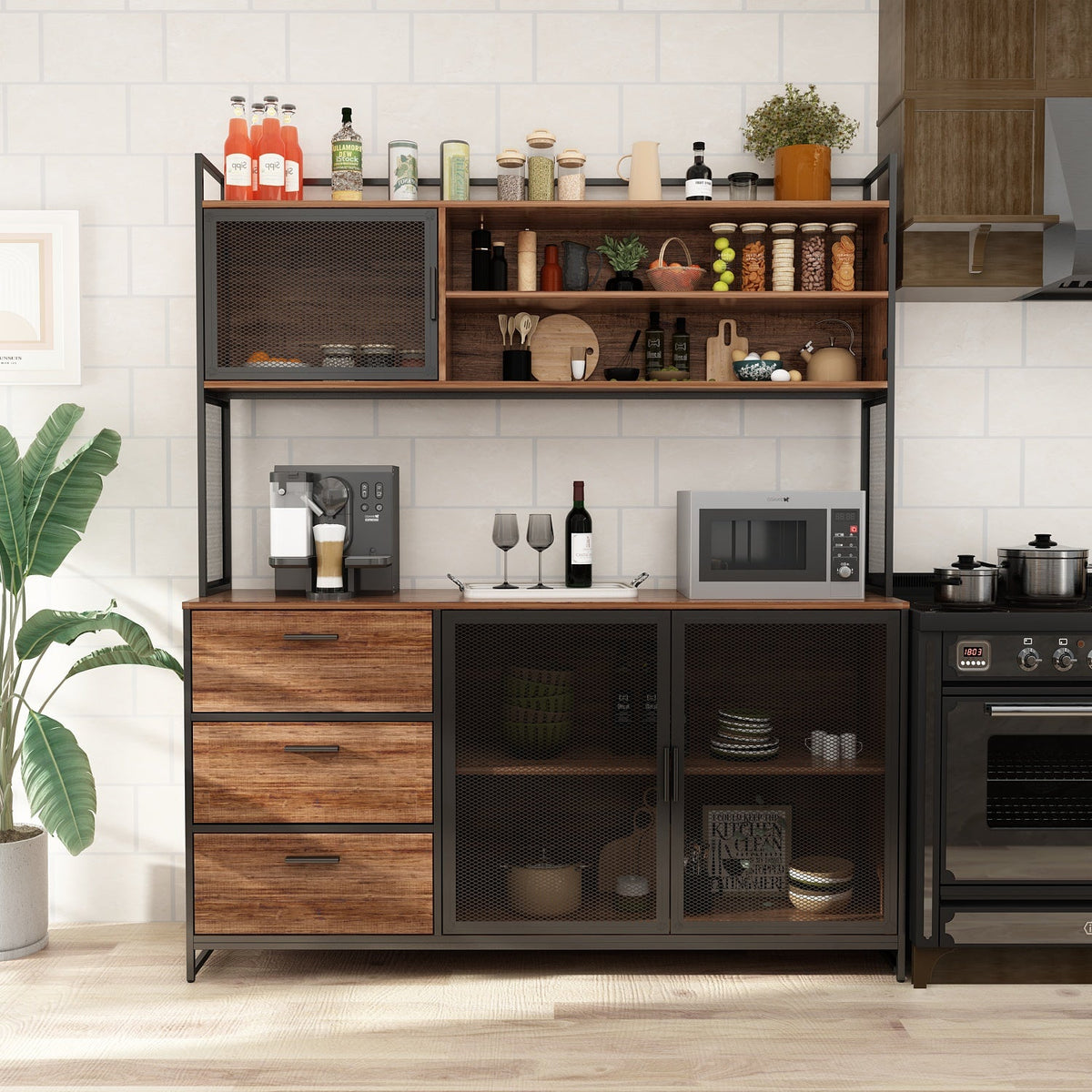
A wider pantry cabinet with a countertop, or a sideboard with a hutch, gives you counter space for a coffee station plus closed storage for extra dishes and bulky items. The 63" pantry cupboard with hutch, 4 doors, 4 drawers and a microwave shelf is one example; if you put a microwave on it, follow our microwave in a pantry cabinet safety tips. For lower, wider buffet-style pieces, see our pantry sideboards.

For an awkward corner, the 40" white pantry cabinet with upper and lower cabinets fits a 40" by 40" footprint.
10. Add a Rolling Cart for Narrow Gaps
A slim rolling cart fits the gap between the fridge and the wall or beside the stove, and it rolls out when you need it. It is one of the easiest solutions for snacks, canned goods and cooking supplies in small spaces.
How to Keep a Kitchen Without a Pantry Clutter Free
- Declutter first. Take everything out, check dates and keep only what you use before buying organizers.
- Measure each space you plan to use.
- Zone it. Give breakfast, baking, snacks and canned goods each one home, whether that is a pantry shelf, a drawer or a bin.
- Store food items cool and dry, away from the stove, dishwasher and sunny windows.
- Rotate first in, first out so older food gets used first.
Our step-by-step guide on how to organize a pantry cabinet covers zones, shelf heights and containers in detail. When you're ready to add pantry space, compare sizes in the FUFU&GAGA pantry cabinet collection; orders ship free to the 48 contiguous states.
FAQ
What do you do if a house has no pantry?
Add a freestanding pantry cabinet on a nearby wall, convert one kitchen cabinet into a dedicated food cabinet, and use drawers, door racks and wall shelves for the rest. Group food by category so everything has one home.
Where should you put a pantry when you don't have one?
Beside the refrigerator or at the end of a counter run is most convenient. A dining room, hallway or laundry room wall also works for backstock. Avoid spots next to the oven or dishwasher, and keep a 36" walkway clear.
What can I use instead of a pantry?
Common pantry alternatives are a freestanding pantry cabinet, a hutch or sideboard, a shelving unit with bins, a rolling cart, over-the-door racks and deep drawers.
What do you do when you have no kitchen counter space?
Move food and small appliances off the counter into a pantry cabinet with a countertop or a microwave shelf, hang utensils on the wall, and use a rolling cart as extra prep space you can move.


Dejar un comentario
Este sitio está protegido por hCaptcha y se aplican la Política de privacidad de hCaptcha y los Términos del servicio.