










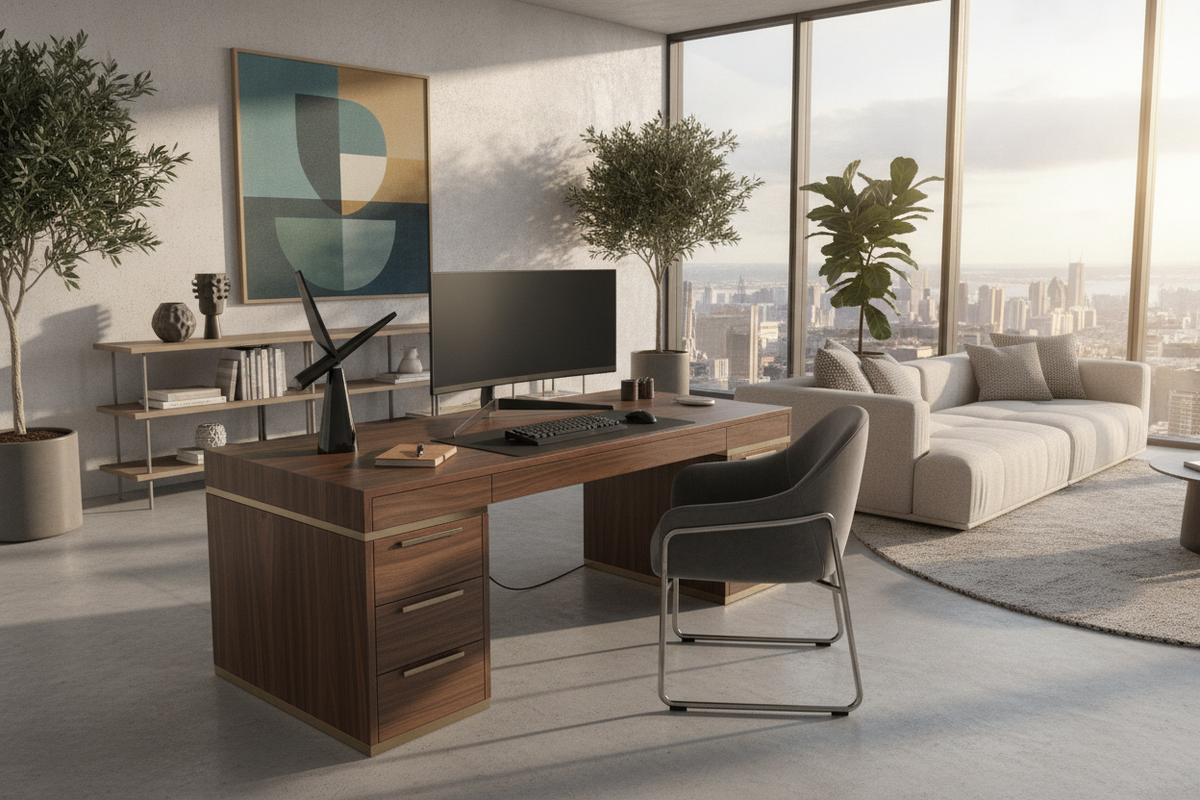
Defining the Luxury Computer Desk: Craftsmanship, Joinery, and Materiality
A luxury computer desk serves as both a refined focal point and an active functional platform within an executive office. Unlike standard contract workstations, an upscale desk is distinguished by deliberate material selection, artisanal joinery, and tactile warmth. The choice between substantial solid hardwoods—such as walnut, white oak, and cherry—and figured architectural veneers sets the visual tone for the entire room. Solid lumber brings natural grain variation and long-term durability, allowing the furniture to develop a rich patina over time.
High-end furniture makers frequently combine these classic hardwoods with architectural accents, including brushed brass, blackened steel, or inset top-grain leather writing blotters. Leather inserts provide a soft resting surface for hands and wrists while shielding desktop finishes from daily wear. Precision joinery—such as exposed dovetails, mortise-and-tenon framing, and chamfered underside edges—reveals structural integrity that cannot be replicated by rapid mass production. When selecting a solid wood writing desk and computer workstation, look for seamless grain transitions across the desktop surface and smooth drawer facades that align perfectly with the surrounding chassis.
Selecting an authentic high-end computer desk means appreciating how materials interact under natural daylight and evening task illumination. Natural oil or satin polyurethane finishes preserve the organic texture of the wood grain without creating harsh glare, balancing timeless beauty with everyday practicality.
Architectural Scale and Sizing Categories for Executive Spaces
Choosing an expensive computer table requires balancing desk dimensions against room architecture. An undersized desk can appear lost in a spacious room, while an oversized piece can overwhelm floor traffic and crowd sightlines. Evaluating desk scale begins with room categorization, depth allowances, and the envelope of movement required behind the work surface.
- Compact Executive Nooks: In curated home libraries or compact private studies, streamlined silhouettes preserve open floor space. Focusing on intentional proportions and tailored storage prevents visual bulk while accommodating a laptop or single ultra-wide display. For modest room dimensions, adopting techniques for small desk organization for a high-end studio look ensures the work surface remains unencumbered.
- Balanced Private Workspaces: Medium-scale offices benefit from generous rectangular or soft boat-shaped surfaces that support dual displays alongside analog paperwork. These tables offer comfortable surface depth, allowing screens to sit at a natural focal distance while leaving room for desk pads and reference materials.
- Expansive Executive Suites: Substantial executive desks and pedestal credenza combinations command presence in large rooms. These installations comfortably host multi-device ecosystems and dedicated meeting zones, demanding ample clearance behind the desk for executive seating travel.
Regardless of total footprint, an expensive computer desk must afford comfortable legroom clearance beneath the apron. Ensuring sufficient width and height for swivel seating prevents armrests from colliding with finished timber edges, safeguarding both chair leather and desk woodwork.
Discreet Technology Integration: Cable Concealment and Hardware Housing
Modern professionals require high-performance computers, multi-monitor arrays, audio gear, and peripheral docks. The central challenge of a luxury computer desk is housing this infrastructure without spoiling the room's refined aesthetic. Exposed power bricks, dangling wires, and plastic surge protectors detract from high-end craftsmanship.
Premier desk designs resolve this through concealed management architecture built directly into the frame. Look for internal wire raceways routed within desk legs or behind rear modesty panels. These channels guide wiring from surface grommets down to floor outlets or baseboard connections without exposing cords to open sightlines. Sub-surface power bays featuring flip-up wooden lids or leather-wrapped access plates keep power outlets readily accessible while maintaining a clean silhouette. When planning your office layout, curating desk setup inspiration for a high-end aesthetic helps harmonize premium peripheral accessories with artisanal wood surfaces.
Furthermore, consider how desktop hardware communicates with peripheral towers. High-end desks often incorporate ventilated pedestal cabinets designed to house computing towers or network drives. These compartments feature subtle rear ventilation slots to encourage continuous airflow, protecting sensitive internal components from heat buildup while dampening operating noise.
Storage Architecture: Coordinated Cabinetry and Drawer Ergonomics
Desktop clutter quickly compromises the serene atmosphere of a luxury workspace. Thoughtful storage architecture ensures that daily work essentials, documents, and reference materials remain out of view yet effortlessly accessible. High-end computer desks integrate ergonomic storage that complements rather than interrupts the desk's visual profile.
Examine the mechanical operation and interior appointments of drawers and pedestals. High-grade drawer boxes typically feature solid wood dovetailed construction mounted on concealed, soft-closing undermount glides. This mechanism ensures silent, controlled closure that preserves the furniture's structural joinery over decades of use. Interior layouts should offer tailored organizational compartments, such as removable solid wood dividers, velvet-lined pen trays, and dedicated utility slots for personal electronics.
For elevated document management, integrated file drawers equipped with heavy-duty suspension hardware prevent tipping and maintain smooth gliding even under full loads. When an expensive computer desk is paired with a matching low-profile credenza or lateral cabinet, it creates an efficient work triangle, allowing you to pivot easily between computer tasks and paper review without overcrowding the primary workspace.
Room Placement and Styling: Floating Arrangements vs. Wall Backdrops
How an executive desk is positioned within an office shapes both daily workflow and visual impact upon entering the space. Unlike standard utility desks anchored against perimeter drywall, a luxury computer desk is often designed to sit centered in the room as a freestanding showpiece.
The Freestanding Floating Layout
Positioning a desk away from the walls facing the main doorway—often referred to as an executive command layout—creates an inviting atmosphere for clients, colleagues, or guests. For this arrangement to succeed, choose a desk featuring a finished back panel or an architectural modesty panel. The rear of the desk will remain on display, making continuous grain matching, flush hardware, and recessed joinery essential on every exposed side. Pair the floating layout with an expansive area rug that defines the work zone and accommodates chair movement.
The Wall-Anchored Backdrop
In settings where room architecture or window configurations favor perimeter placement, positioning the desk against a feature wall creates a grounded, focused environment. Accenting the backdrop with built-in millwork, vertical wood paneling, or floating display shelving draws the eye upward and reinforces the desk's presence. Ambient perimeter lighting combined with focused, warm desk lamps provides gentle, layer-balanced illumination that reduces eye fatigue during extended working sessions.
Ultimately, a high-end computer desk stands as a long-term investment in your daily environment. By balancing artisanal woodwork, proportional room scale, concealed cable pathways, and integrated storage, you create an office environment that elevates productivity through sophisticated design.

Dejar un comentario
Este sitio está protegido por hCaptcha y se aplican la Política de privacidad de hCaptcha y los Términos del servicio.