










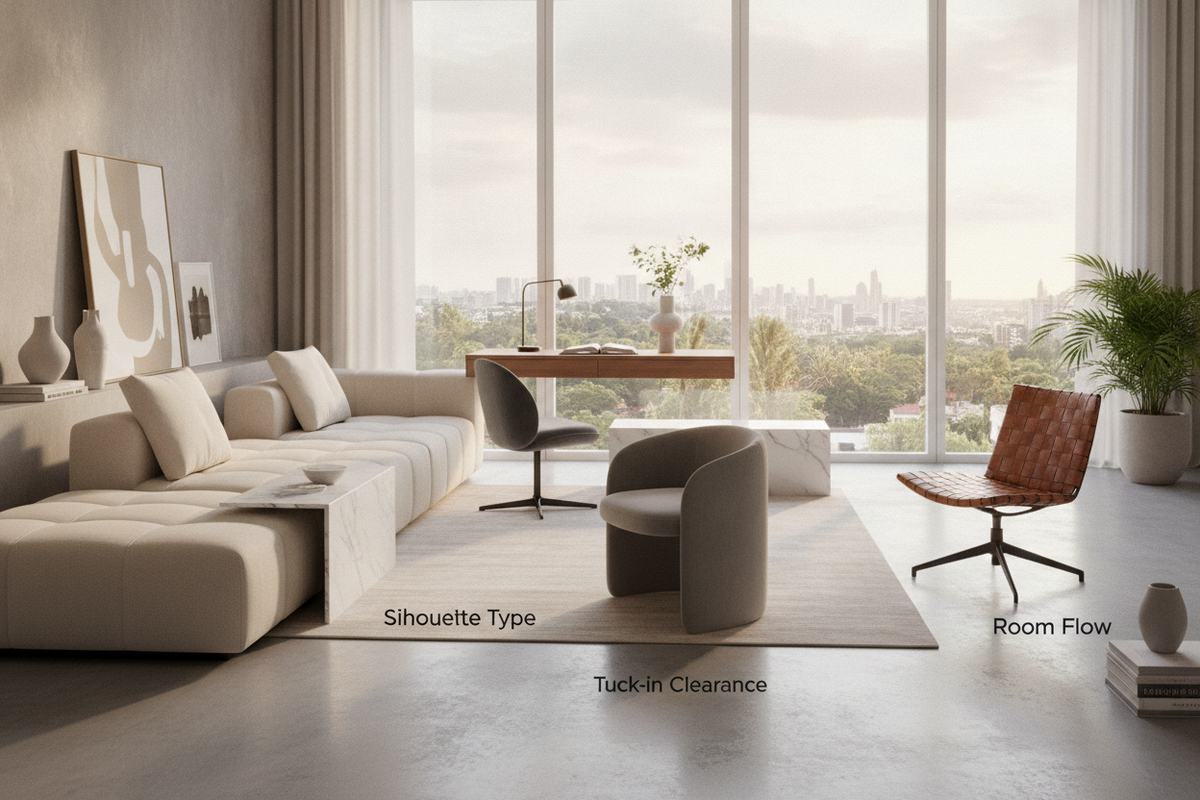
Designing an efficient home office often requires balancing physical support with spatial proportion. In compact dens, open-concept living rooms, or bedroom study alcoves, traditional high-back executive seating can dominate the view and disrupt architectural balance. Incorporating low profile desk chairs offers an elegant alternative, preserving natural light across the room while providing dedicated, functional seating for daily productivity.
Understanding Low Profile Desk Chairs: Visual Lightness and Function
A low profile design typically refers to a chair featuring a reduced backrest height, a slimmed frame perimeter, and often an armless or low-slung arm structure. Unlike imposing task chairs designed for expansive corporate suites, low profile office chairs prioritize architectural lightness. Their backrests generally crest near the mid-back or lower shoulder blades, allowing visual continuity across windows, credenzas, and neighboring seating areas.
From an interior styling perspective, these chairs integrate smoothly into multifunctional spaces. When positioned in an open living area, a compact chair reads more like deliberate accent furniture than purely utilitarian equipment. This subtle integration prevents the workspace from feeling disconnected from the rest of the home aesthetic.
Key Silhouette Categories and Dimensional Considerations
Selecting the right chair begins with identifying which silhouette matches both your physical preference and your layout requirements. Low profile office chairs generally fall into three functional categories:
- Armless Swivel Task Chairs: Featuring a streamlined base and a concise back panel, armless chairs offer exceptional ease of movement. Because they lack side barriers, users can pivot freely and tuck the seat flush against desks of varied heights.
- Mid-Century Low-Back Swivels: Characterized by tailored horizontal stitching, curved wooden accents, or subtle metal frames, these chairs emphasize classic mid-century lines while keeping backrest heights well below eye level.
- Molded Shell Chairs on Casters: Utilizing contoured composite shells with lightly padded cushions, molded models introduce gentle curves that soften the rigid, rectilinear angles of typical desks and file cabinets.
Tuck-In Clearance and Spatial Planning for Compact Workstations
One of the chief spatial advantages of low profile desk chairs is their ability to tuck neatly beneath the desk surface when the workday ends. However, ensuring a clean tuck-in requires evaluating critical clearance measurements across your workstation:
First, inspect the desk apron or center drawer. While the desktop surface may provide comfortable working height, an underside support bar or shallow lap drawer can reduce entry clearance. Chairs with low-profile seat pans or pneumatic height adjustments allow you to lower the seat below the apron line, keeping walkways clear.
Second, measure the knee-hole width between desk pedestals or table legs. Five-star caster bases require adequate floor perimeter to glide smoothly between structural supports. For more detailed spatial planning strategies when selecting work surfaces, consulting a comprehensive office desk guide helps ensure the desk base and chair chassis align properly.
Material Selection: Balancing Texture, Maintenance, and Visual Weight
The upholstery and frame finish of low profile desk chairs establish the visual weight of the seating piece. Selecting materials that harmonize with your existing furnishings creates a cohesive interior composition:
- Textured Woven Fabrics: Woven upholstery introduces warmth and tactile depth. Neutral fabric tones blend smoothly with painted walls, making the chair recede into the backdrop.
- Faux Leather and Smooth Vinyl: Sleek synthetic leather options provide wipe-clean maintenance and pair effortlessly with contemporary wood tones or industrial metal finishes.
- Channeled and Tufted Stitching: Linear stitching creates subtle vertical or horizontal rhythm, imparting a tailored feel without requiring thick, bulky cushioning.
- Frame Finishes: Chrome, matte black, and warm brushed brass bases interact differently with ambient lighting. A matte black base grounds the design, while a polished chrome base bounces light across narrow floorplans.
Pairing Low Profile Seating with Desks and Storage Furniture
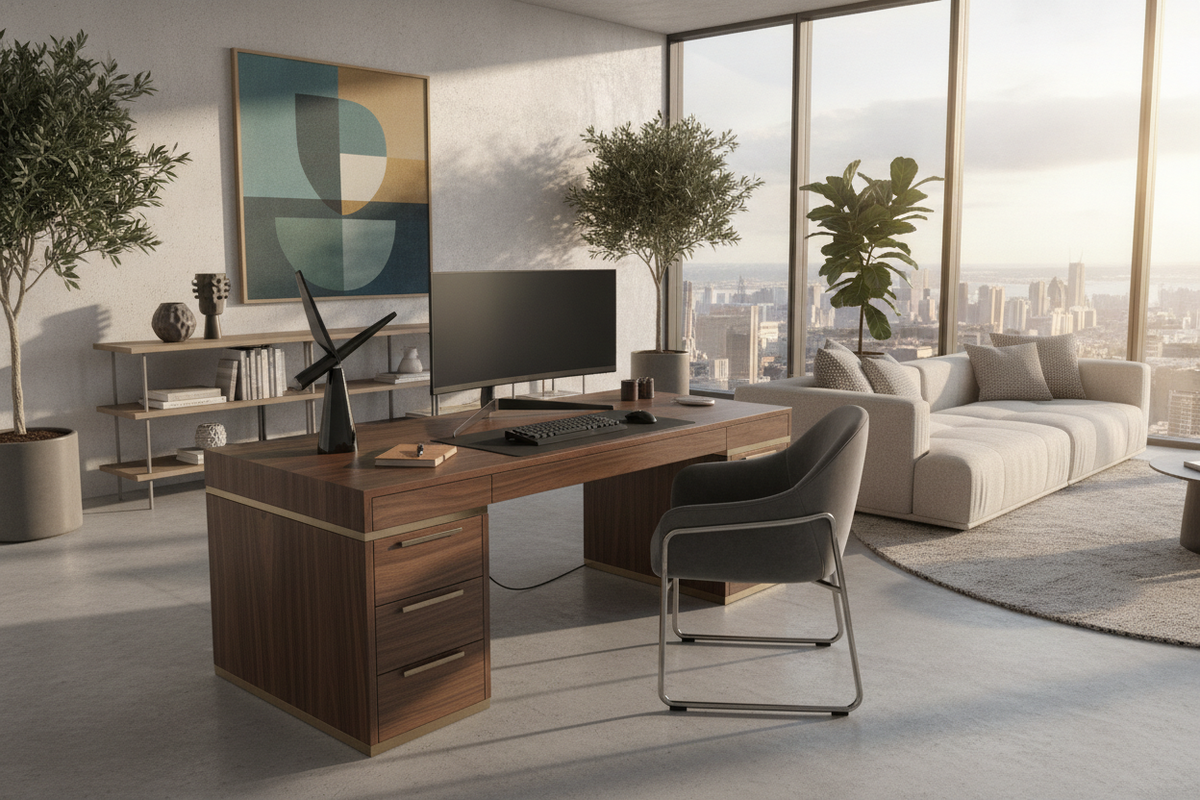
To establish a balanced workspace, pair low profile chairs with desks that share a clean, intentional design language. Heavy, oversized executive desks can make a compact chair appear undersized, whereas streamlined writing surfaces and corner desks create proportional harmony.
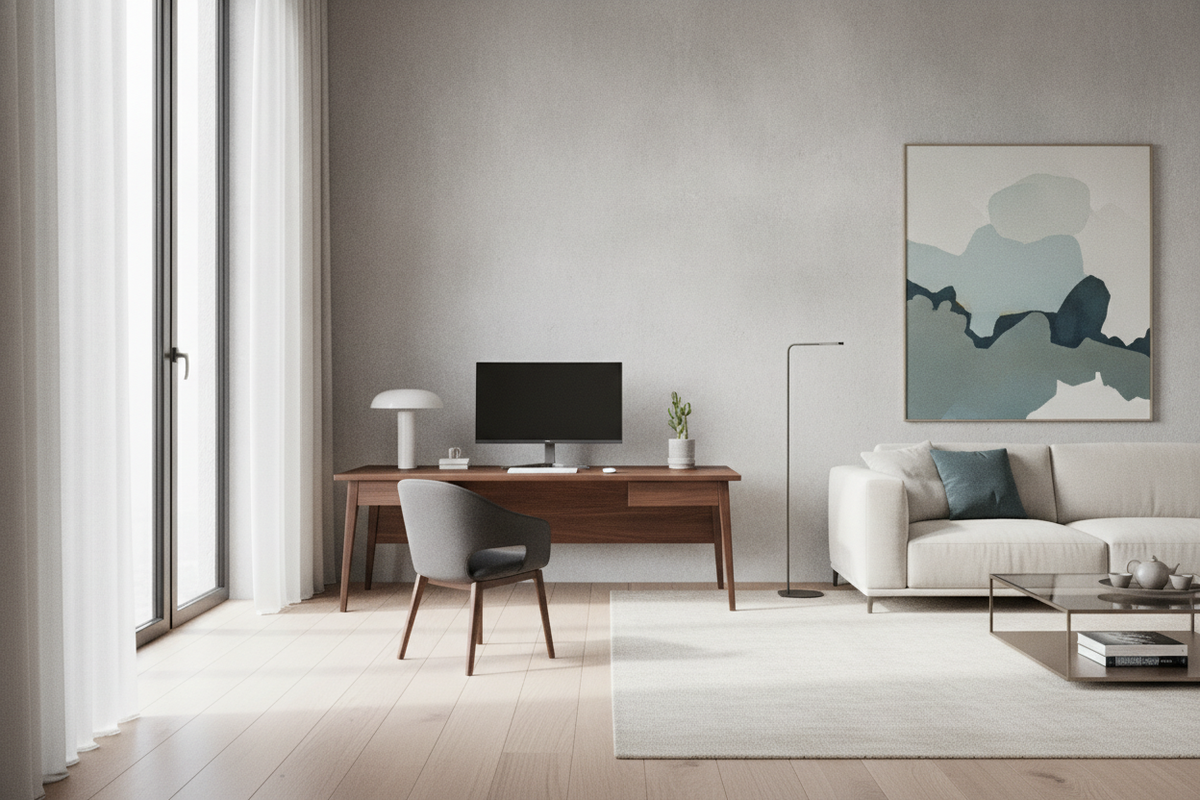
For example, pairing an armless low-back chair with a modern minimalist office desk product maintains open floor lines while preserving corner square footage. The lower backrest stays below the desk monitor or shelf line, preventing visual clutter from dominating the corner junction.
Integrating Storage Cabinets and Multi-Functional Desks
In compact rooms, workstation functionality often hinges on smart cabinetry. Combining a trim chair with a multi-functional office desk product ensures that paperwork and hardware remain hidden within closed cabinetry while the chair stows completely out of circulating foot traffic. In my own styling projects, I find that keeping the chair back level with nearby credenza tops creates a calm, organized horizon line that instantly settles an open-plan room.
Curating an Uncluttered, Elegant Workspace Aesthetic
Because low profile desk chairs occupy minimal vertical space, surrounding decorative elements gain greater prominence. Thoughtful desk curation ensures the entire setting feels intentional rather than sparse:
Balance the low silhouette of the chair with vertical accents, such as a slender architectural table lamp, vertical wall shelving, or framed art hung at seated eye level. For additional guidance on curating complementary desk accents and tabletop balances, reviewing office desk decor ideas offers inspiration for creating a structured, polished working zone.
Assembly, Caster Care, and Daily Posture Best Practices
Maintaining a low profile chair involves straightforward structural care and mindful positioning:
- Stable Base Assembly: When assembling a swivel chair, verify that the gas cylinder sits upright in the caster base before attaching the seat plate. Tighten hardware systematically in an alternating pattern to avoid tilt bias.
- Caster Selection and Floor Care: Hard nylon casters glide easily over low-pile rugs, whereas soft polyurethane wheels protect hardwood and laminate floors from premature scuffing. Periodically clearing hair or debris from the caster axles preserves effortless glide.
- Active Seating Posture: Low-back designs encourage dynamic sitting. Set the seat height so feet rest flat on the floor with knees at an easy angle, and use the supportive lower curve of the backrest to steady the lumbar spine while engaging the core naturally throughout the day.

Dejar un comentario
Este sitio está protegido por hCaptcha y se aplican la Política de privacidad de hCaptcha y los Términos del servicio.