










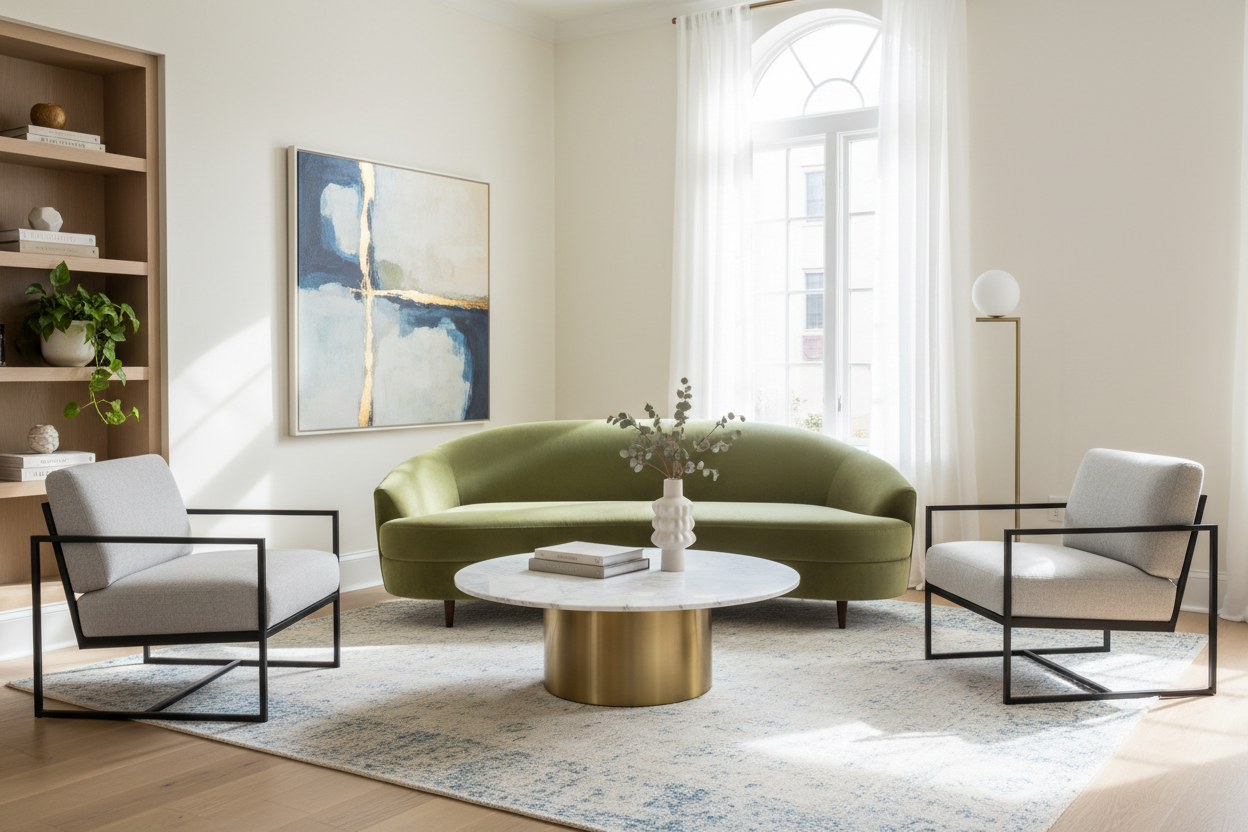
Designing a cohesive seating area often hinges on the secondary pieces, not just the main sofa. The humble living room loveseat is frequently underestimated, yet it serves as the critical bridge between solitary armchairs and the primary sofa. The dilemma most homeowners face isn't finding a piece they like; it is integrating it without creating visual clutter or awkward conversation gaps. Whether you are aiming for a cozy reading nook or a formal sitting area, the right compact sofa dictates the flow of the entire room.
Quick Decision Guide: Key Features to Look For
Before committing to a purchase, review these non-negotiable factors to ensure your new piece stands the test of time and trend.
- Scale & Proportions: Ensure the back height aligns with your existing sofa to maintain a clean visual horizon.
- Frame Construction: Look for kiln-dried hardwood frames rather than particleboard to prevent warping over time.
- Seat Depth: A depth of 21–24 inches is ideal for lounging; anything shallower is strictly for formal sitting.
- Upholstery Performance: For high-traffic areas, prioritize fabrics with a double-rub count over 30,000.
Defining the Silhouette and Style
When selecting loveseat furniture, the silhouette dictates the formality of the space. A tuxedo style (where arms and back are the same height) offers a modern, tailored look perfect for contemporary lofts. Conversely, a roll-arm silhouette leans traditional and invites a more relaxed posture. The goal is to complement, not copy, your main sofa. If your sofa is boxy and heavy, consider a love seat for living room layouts that features exposed legs to introduce negative space and airiness.
Material Integrity and Ergonomics
As a specialist, I cannot stress enough that what is inside matters more than the fabric on the outside. A new loveseat might look pristine in the showroom, but if the suspension system relies on cheap webbing rather than sinuous springs or eight-way hand-tied coils, it will sag within a year.
Fabric Selection
Texture plays a massive role in how the piece reads in a room. Bouclé or velvet adds softness and absorbs light, making the room feel warmer. Tighter weaves like linen or performance canvas reflect light and offer a crisp, clean aesthetic. Always request a swatch to see how the fabric interacts with your room's ambient lighting.
Strategic Placement and Space Planning
Positioning a loveseat in living room environments requires an understanding of traffic flow. A common error is pushing all furniture against the walls. Instead, try "floating" the loveseat perpendicular to the sofa to create an L-shaped conversation zone. This defines the living area in open-concept homes without the need for physical dividers. Ensure there is at least 18 inches between the coffee table and the seat edge for comfortable legroom.
Lessons from My Own Projects
I want to share a specific realization from a project I worked on in a historic downtown apartment. We ordered a stunning, deep-seated velvet loveseat for a client who wanted a "cozy nest." It looked incredible on the floor plan.
However, once installed, we realized a functional nuance I hadn't anticipated: the "two-person" rule. While a loveseat is technically for two, unless the users are a couple comfortable with intimacy, two guests rarely sit on one together. It’s too close. The piece ended up functioning as a deluxe armchair for one person to sprawl out on. Now, when I specify a love seat living room arrangement, I always ask the client: "Is this for entertaining guests, or for your own lounging?" If it's for guests, I often steer them toward a pair of chairs instead. If it's for the homeowners, the loveseat is unbeatable.
Conclusion
Integrating a loveseat is about balancing function with visual weight. By focusing on frame quality, appropriate scale, and strategic placement, you can elevate your living space from a mere collection of furniture to a curated design experience. Trust your measurements, respect the flow of the room, and choose a piece that invites you to sit and stay awhile.
Frequently Asked Questions
How do I mix and match a loveseat with a different sofa?
The key is to have at least one unifying element. If the styles are different (e.g., a modern sofa and a vintage loveseat), ensure they share a similar color palette or leg finish. This creates a curated, collected look rather than a chaotic one.
What is the standard size for a living room loveseat?
Most loveseats range between 52 and 71 inches in length. However, "apartment-sized" sofas often blur this line. Always measure your available floor space and tape out the dimensions on the floor before buying to visualize the footprint.
Can a loveseat work as the only seating in a small room?
Absolutely. In compact urban spaces, a loveseat paired with a small ottoman often functions better than a full-sized sofa that overwhelms the room. It improves traffic flow while still providing a comfortable focal point.


Dejar un comentario
Este sitio está protegido por hCaptcha y se aplican la Política de privacidad de hCaptcha y los Términos del servicio.