










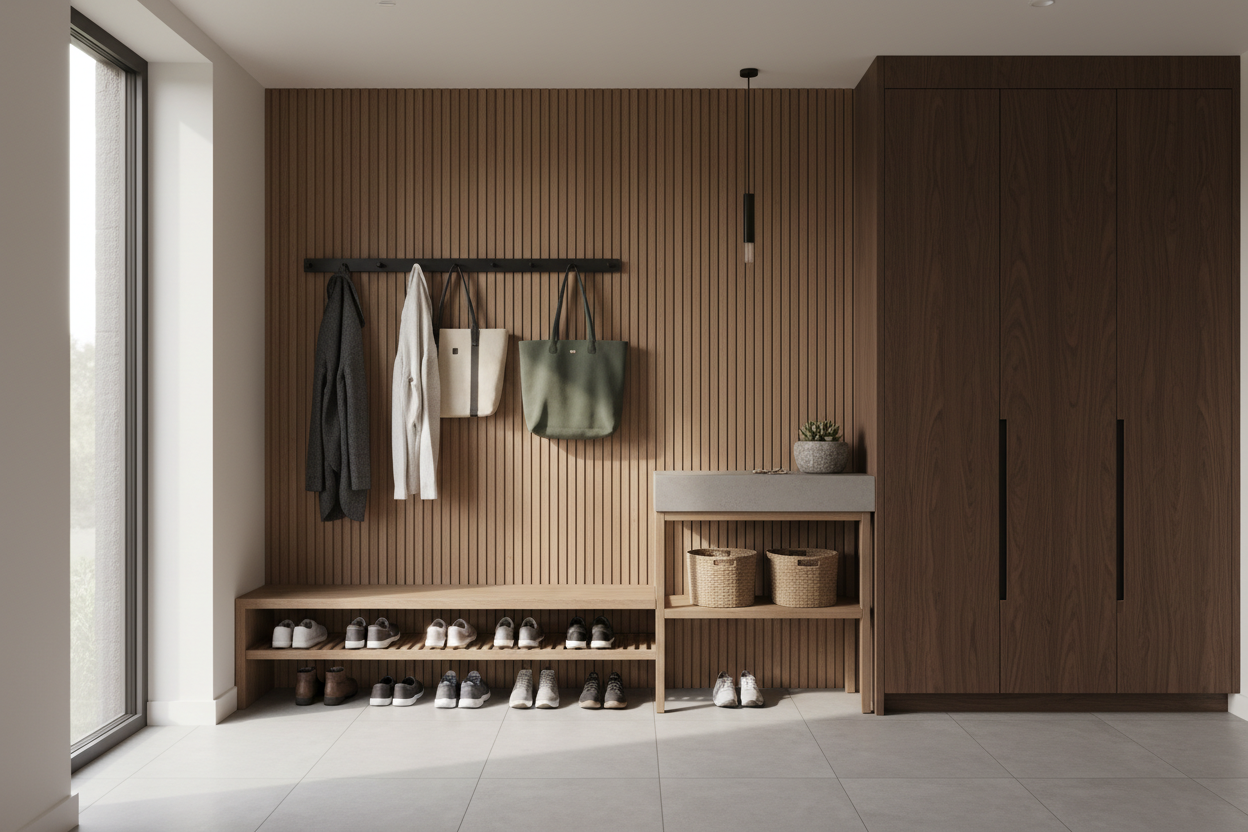
The foyer is the handshake of your home; it sets the expectations for the rest of the interior architecture. Yet, it is often the most neglected zone, becoming a chaotic landing strip for mail, muddy boots, and scattered keys. As a designer, I see clients struggle to balance the need for utility with the desire for a sophisticated aesthetic. Implementing the right entrance storage ideas isn't just about buying a console table; it is about understanding traffic flow, ergonomics, and visual weight to create a space that breathes.
Key Features to Look For
Before investing in millwork or freestanding furniture, evaluate these core functional requirements to ensure longevity and usability:
- Traffic Clearance: Ensure at least 36 inches of walking path remains clear; slim-profile furniture (under 12-15 inches deep) is crucial for narrow corridors.
- Material Durability: Prioritize closed-grain hardwoods or metal finishes that can withstand moisture and high-impact contact from bags and shoes.
- Vertical Utilization: Look for floor-to-ceiling solutions or wall-mounted units to draw the eye upward and maximize cubic footage without occupying floor space.
- Closed vs. Open Ratio: Aim for 80% closed storage (drawers/doors) to hide clutter and 20% open display for decorative styling.
Defining the Layout and Flow
The primary challenge with storage ideas for entryway spaces is usually square footage. In a luxury context, we avoid overcrowding. If you have a narrow hallway, avoid bulky chests. Instead, opt for floating joinery. A wall-mounted console creates negative space underneath, creating an optical illusion of a larger floor area while allowing room for tucking away ottomans or baskets.
The "Drop Zone" Psychology
Human behavior dictates that we drop items within the first three feet of entering. If your storage is ten feet away, it won't be used. Position a surface—be it a slim shelf or a console—immediately adjacent to the door swing. This surface requires a designated vessel, such as a leather catch-all or travertine bowl, to contain keys and wallets, preventing visual entropy.
Materiality and Finishes
The entryway is a high-traffic transition zone. It experiences temperature fluctuations from the opening door and moisture from coats and umbrellas. Consequently, material selection is paramount.
Solid wood, such as white oak or walnut, offers resilience and can be refinished if scratched. Veneers, while cost-effective, risk peeling if exposed to damp raincoats over time. For hardware, I recommend unlacquered brass or matte black; they hide fingerprints better than polished chrome, which requires constant maintenance in such a high-touch area.
Balancing Aesthetics with Utility
Effective design disguises function as art. Consider a floor-to-ceiling cabinet with mirrored fronts. This serves a tri-fold purpose: it hides coats, bounces light around a typically dark area, and allows for a final outfit check before leaving. If bespoke millwork isn't an option, look for furniture with dual functionality, such as a bench with a hinged lid or a console with hidden drawers. The silhouette should remain clean and unobstructed.
My Personal Take on Entrance Storage Ideas
In my early years designing city apartments, I made a specific mistake that taught me a valuable lesson about finishes. I specified a stunning, high-gloss black lacquer console for a client's narrow entryway. It looked incredible in the portfolio photos.
However, three months later, I visited the client and noticed the piece looked perpetually dirty. The high-gloss finish highlighted every single fingerprint, dust mote, and micro-scratch from keys being tossed onto it. It became a source of stress rather than joy for the homeowner. Since then, I strictly advise against high-gloss surfaces for horizontal drop zones. I now steer clients toward textured woods, stone tops, or matte finishes that are forgiving of daily life. Real luxury is low maintenance.
Conclusion
Curating your entrance is about respecting the transition from the outside world to your private sanctuary. By selecting storage that honors the architectural proportions of your space and withstands the rigors of daily use, you create a welcome that is both serene and organized. Approach your entryway not just as a passageway, but as the first room of your home.
Frequently Asked Questions
How deep should entryway storage furniture be?
For standard hallways, aim for a depth between 10 to 14 inches. This slim profile ensures you don't encroach on the circulation path. If you are storing shoes inside a cabinet, you may need 13-15 inches, or look for "tilt-out" shoe cabinets which reduce the required depth to as little as 7 inches.
What is the best way to handle shoe storage without it looking messy?
Avoid open shoe racks unless you are incredibly disciplined. Visual clutter at floor level makes a ceiling feel lower. Opt for closed cabinetry with ventilation slats, or a bench with a solid front and internal compartments. If you must use open storage, use uniform woven baskets to conceal the shoes.
Can I use a rug in a small entryway with storage?
Absolutely. A rug anchors the storage furniture and defines the zone. However, ensure the pile is low enough that the door clears it easily. A runner rug draws the eye down the hall, elongating the space, while a round rug can soften the harsh lines of rectangular storage units.

Dejar un comentario
Este sitio está protegido por hCaptcha y se aplican la Política de privacidad de hCaptcha y los Términos del servicio.