










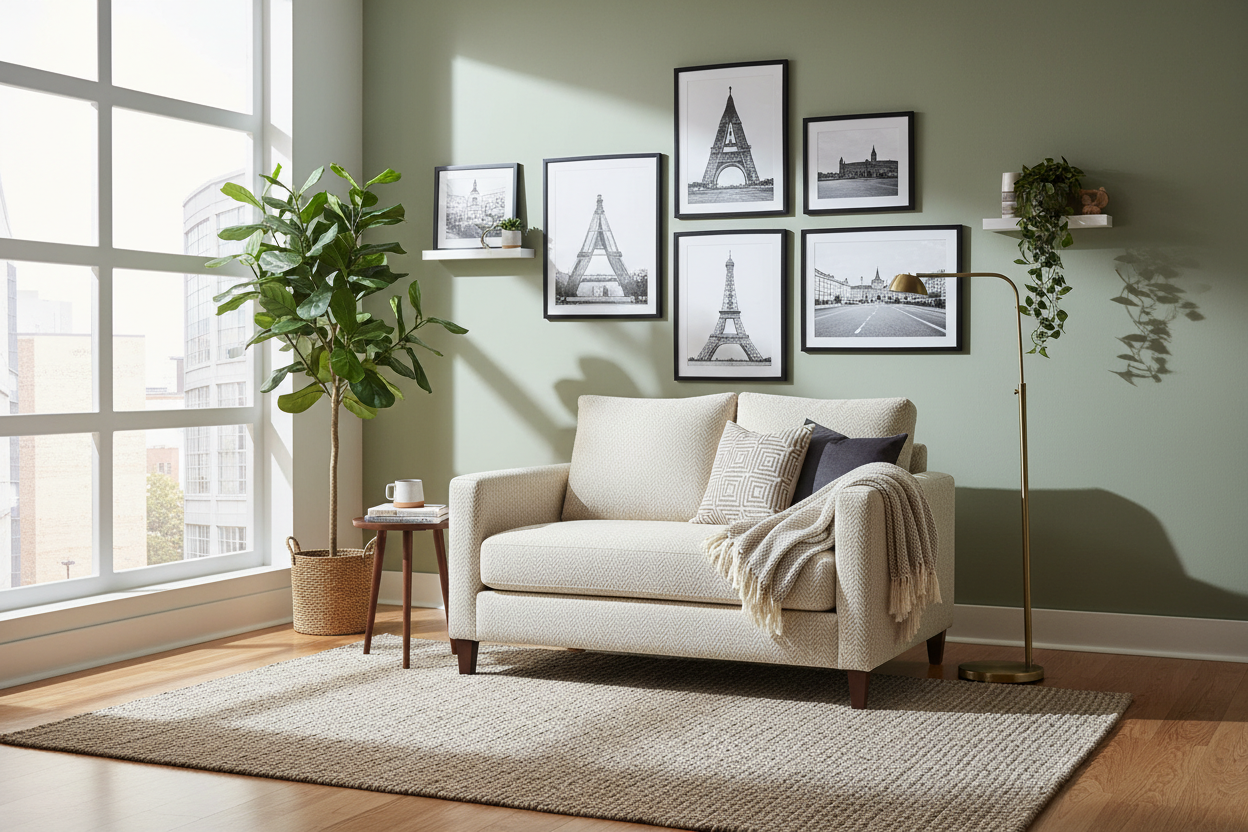
You are likely staring at a corner of your living room or bedroom that feels incomplete. It is too tight for a standard sofa, yet a standard armchair feels underwhelming and lonely. This is the precise design dilemma where the loveseat single thrives. Often referred to in the industry as a "chair-and-a-half" or a "snuggler," this piece offers the substantial visual weight of a sofa with the footprint of a generous chair. It is the ultimate solution for homeowners seeking a dedicated relaxation zone that doesn't dominate the floor plan.
Quick Decision Guide: Key Features to Look For
If you are rushing to make a purchase, review these critical specifications first. Focusing on these factors will ensure you select a piece that lasts longer than a single trend cycle.
- Frame Construction: Look for kiln-dried hardwood frames rather than soft pine or particleboard to prevent warping over time.
- Seat Depth: For a true lounge experience, aim for a depth of at least 24 inches. Anything shallower feels like a waiting room chair.
- Suspension System: Eight-way hand-tied springs are the gold standard for longevity, while sinuous springs offer a firmer, more modern sit.
- Upholstery Durability: Check the Martindale rub count. For a daily-use one person loveseat, you want a fabric rated above 20,000 rubs.
Defining the Silhouette and Scale
The terminology can be confusing. A single loveseat sofa usually ranges between 45 and 55 inches in width. Unlike a standard loveseat designed for two people to sit upright, this variation is engineered for one person to lounge expansively—perhaps with a pet or a pile of books.
Visual Weight and Balance
When placing this item, you must consider its visual weight. Because these pieces are often deep and wide, they can look heavy if upholstered in dark, velvet fabrics or chunky leathers. If your room is small, opt for a silhouette with exposed legs. Seeing the floor beneath the furniture creates an illusion of more space, keeping the room from feeling stuffy.
Choosing the Right Material
As a designer, I cannot stress enough that texture dictates the mood. A one seat loveseat is a tactile experience because it surrounds you more than a standard chair.
Performance vs. Luxury
If this piece is going into a high-traffic family room, look for Crypton or performance linen blends. These resist staining while maintaining a soft hand-feel. For a master bedroom reading nook, you might lean into a high-pile boucle or a mohair velvet. Just be aware that softer, looser weaves require more maintenance to prevent pilling.
Ergonomics and Cushion Fill
The fill determines how the chair holds you. A 100% down-filled cushion feels luxurious and creates that "sinking in" sensation, but it requires daily fluffing to avoid looking sloppy. For a structured look that retains its shape, I recommend a high-density foam core wrapped in a down or poly-fiber blend. This gives you the initial softness without the constant maintenance.
Lessons from My Own Projects
I learned the hard way that dimensions on a spec sheet don't tell the whole story. A few years ago, I specified a stunning, deep-seated one person loveseat for a client in a historic walk-up apartment. We measured the floor space perfectly, but we failed to account for the diagonal depth required to pivot the piece through the narrow entryway.
The legs were fixed (non-removable), and the back was high. We ended up having to hire a furniture medic to partially dismantle the arm on-site just to get it inside. It was a nightmare. Since then, I always check the "minimum door width" spec and prioritize models with screw-off legs. Furthermore, regarding comfort, I once bought a budget version for my own home with poor foam density. Within six months, I could feel the front rail of the frame against my legs because the cushion had flattened out. It is always worth investing in a superior suspension system; the fabric can be changed, but a bad frame is forever.
Conclusion
Integrating a loveseat single into your home is about claiming space for yourself. It is a declaration that comfort matters just as much as aesthetics. By focusing on solid joinery, appropriate scale, and durable textiles, you can curate a corner that serves as a personal retreat for years to come.
Frequently Asked Questions
What is the difference between an armchair and a one seat loveseat?
The primary difference is width. A standard armchair is typically 30-35 inches wide, whereas a single seat loveseat or "chair-and-a-half" ranges from 45 to 55 inches, allowing for more dynamic lounging positions.
How much space do I need around a single loveseat sofa?
To maintain good traffic flow, leave at least 30 to 36 inches of clearance between the front of the seat and a coffee table or ottoman. Ensure there is at least 18 inches on the sides for a side table.
Are these suitable for small apartments?
Absolutely. In a studio apartment, a substantial single loveseat can actually replace a full-sized sofa, freeing up floor space while still providing a cozy spot to relax or watch a movie.

Dejar un comentario
Este sitio está protegido por hCaptcha y se aplican la Política de privacidad de hCaptcha y los Términos del servicio.