










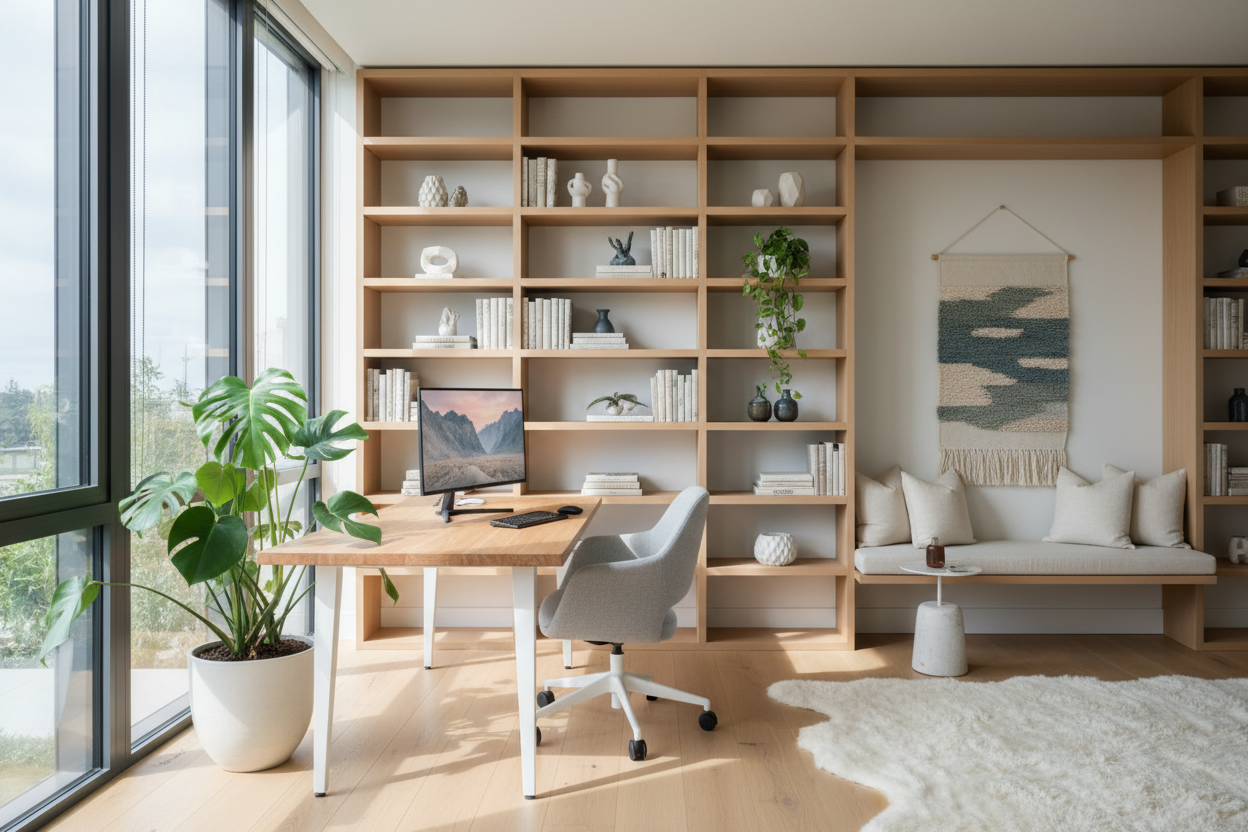
Visual noise is the silent killer of productivity. We often blame our lack of focus on digital distractions, but the physical environment plays a massive role in our cognitive load. If your workspace feels chaotic or sterile, your stress levels will naturally rise. As an interior designer, I don't just pick furniture; I curate environments that regulate the nervous system. Implementing calming office decor isn't just about aesthetics—it is a strategic move to enhance mental clarity and professional stamina.
Core Elements of a Tranquil Workspace
- Color Temperature: Opt for low-saturation hues like sage green, warm beige, or dusty blue to lower heart rates.
- Tactile Materials: Prioritize natural grains (walnut, oak) and soft textiles (bouclé, wool) over cold metals and glass.
- Layered Lighting: Avoid overhead fluorescence; use floor lamps and task lighting with 2700K-3000K bulbs.
- Biophilic Design: Integrate living plants to improve air quality and provide a visual rest for the eyes.
- Acoustic Softening: Use rugs and upholstered furniture to dampen echoes and create a hushed atmosphere.
Establishing the Foundation: Palette and Materials
To create a genuinely soothing office decor scheme, we must start with the shell. Stark white walls often feel clinical rather than clean. I recommend shifting toward "greige" or soft earth tones. These colors absorb light gently rather than reflecting it harshly.
The Role of Natural Wood
For a peaceful office space, the desk material is paramount. Solid wood or high-quality wood veneer introduces organic imperfection that is pleasing to the eye. Unlike glass, which feels cold and clammy to the touch, wood warms to your skin. When selecting a desk, look for a matte or satin finish. High-gloss finishes create glare, which contributes to eye strain and disrupts the relaxed office vibe you are aiming for.
Lighting: The Mood Setter
You cannot achieve a tranquil office decor aesthetic with a single overhead light source. Lighting requires distinct layers. Start with ambient lighting—perhaps a linen-shade floor lamp in the corner to wash the room in a soft glow. Then, add specific task lighting. A calming desk decor setup should include a lamp with an adjustable arm and a warm-dim feature. This allows you to transition from high-focus brightness in the morning to a sunset-like glow in the late afternoon, aligning with your circadian rhythm.
Zoning: Creating an Office Relaxation Room
Even in a compact footprint, zoning is essential. If you have the square footage, designate a specific corner as an office relaxation room or nook. This doesn't require construction; a high-back armchair paired with a small side table and a plush rug creates a psychological boundary.
For smaller areas, focusing on calming cubicle decor or tight corners means utilizing vertical space. Floating shelves with trailing plants like Pothos can soften hard architectural lines without consuming floor space. These relaxing office ideas allow you to step away from the screen and reset without leaving the room.
Ergonomics and Visual Balance
A relaxing home office must also be physically supportive. There is nothing peaceful about back pain. However, ergonomic furniture often looks industrial. Look for task chairs that conceal their mechanisms within fabric upholstery. The goal is to maintain a residential, soft silhouette while retaining lumbar support. Furthermore, manage your cables aggressively. Visual clutter triggers anxiety. Use cable sleeves and under-desk trays to keep the technology invisible, ensuring your relaxing desk accessories remain the focal point.
My Personal Take on Calming Office Decor
I learned a hard lesson about "calming" design during a project for a high-profile client in finance. He wanted a "Zen" office, so I initially specified a stunning, ultra-minimalist glass desk and polished concrete floors. It looked incredible in the rendering.
Two weeks after installation, he called me. He hated it. The issue wasn't the look; it was the acoustics and the temperature. Every time he set his coffee cup down on the glass, it made a sharp clink that shattered his focus. The concrete radiated cold, making him physically tense up while sitting there.
We swapped the desk for a white oak table with a leather writing blotter and added a thick wool rug. The visual change was subtle, but the sensory shift was massive. The leather absorbed the sound of his movements, and the wood felt grounding. It taught me that a tranquil office isn't just about what you see—it's about what you hear and feel. Real relaxation comes from softening the hard edges of the room.
Conclusion
Curating a calm office space is an investment in your daily well-being. By layering warm textures, controlling your lighting, and prioritizing organic materials, you transform a place of work into a space of focus. Start with one change—perhaps a lamp or a plant—and build your sanctuary from there.
Frequently Asked Questions
How can I add calming decor to a small cubicle?
Focus on sensory inputs. Use a high-quality desk mat to soften the surface, bring in a low-light plant like a ZZ plant, and use a small, warm-toned lamp instead of relying solely on overhead fluorescents. Even changing your desktop wallpaper to a nature scene can help.
What are the best plants for a relaxing office space?
Snake plants and Peace Lilies are excellent choices. They are visually structural yet soft, require minimal maintenance, and are known for their air-purifying qualities, contributing to a fresh, tranquil office environment.
Is a minimalist style always best for a peaceful office?
Not necessarily. While clutter causes stress, extreme minimalism can feel cold and sterile. A style often called "warm minimalism" is better—keep surfaces tidy, but use rich textures, warm woods, and personal artifacts to make the space feel inviting rather than empty.

Dejar un comentario
Este sitio está protegido por hCaptcha y se aplican la Política de privacidad de hCaptcha y los Términos del servicio.