










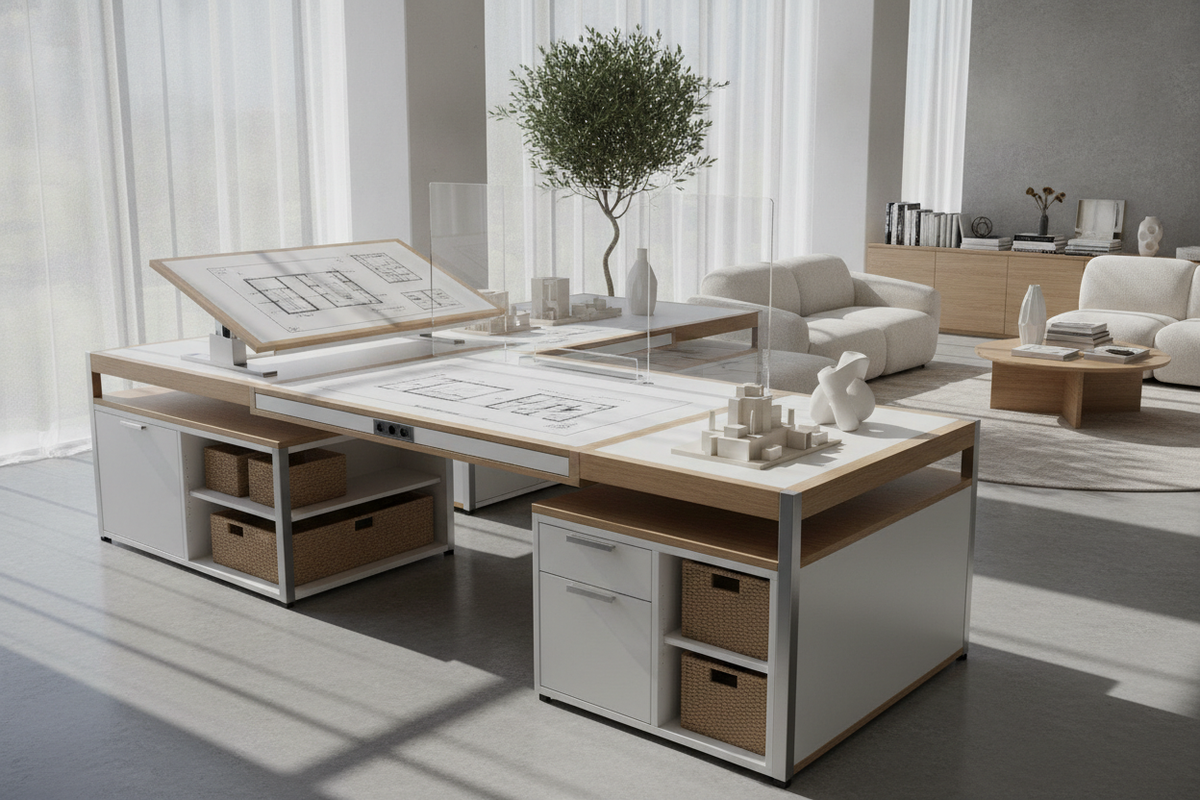
Architectural Geometry and the Appeal of a Modular White Desk
Modern workspaces demand agility, clarity, and structural balance. A modular white desk serves as a functional foundation in contemporary interior planning, balancing visual lightness with long-term layout adaptability. Unlike static, single-piece furniture, modular systems allow continuous adaptation to changing room dimensions, evolving workflow requirements, and personal ergonomic preferences. Crisp white finishes naturally reflect ambient natural and artificial light, helping compact studies, guest room nooks, and open-concept living spaces feel expansive and organized.
The underlying value of a modular white desk lies in its component-based architecture. Standardized connection brackets, reversible returns, and interchangeable storage modules empower homeowners and design professionals to transition between linear writing surfaces, expansive executive stations, and collaborative dual-workstation zones without discarding core pieces. This systematic adaptability provides a future-proof investment that evolves alongside your changing functional needs.
Dimensional Scaling and Layout Archetypes
Selecting the ideal desk footprint requires evaluating room circulation, daily task sequences, and equipment density. When integrating a dedicated white desk product into a home office, understanding footprint archetypes ensures that the workspace integrates naturally into the room architecture rather than overwhelming it.
Linear vs. Corner Configurations
Linear configurations align cleanly along single perimeter walls, preserving central floor space in narrow studies or shared multipurpose spaces. They establish clean horizontal sightlines, streamline floor maintenance, and simplify perimeter wall power access. In contrast, an L-shaped setup or a dedicated desk white product creates dedicated zones for computing, analog paperwork, drafting, and peripheral hardware within an effortless swivel radius. Corner returns make efficient use of underutilized room perimeters, establishing an enveloping workstation that enhances focus.
Clearance Envelopes and Circulation Pathways
Ergonomic spatial planning requires generous clearance margins around every desk element. A functional workspace must balance desk surface area with comfortable movement corridors and architectural features:
- Seating Envelope: Maintain sufficient floor depth behind the primary work surface to accommodate full chair mobility, reclining adjustments, and effortless entry and exit.
- Passage Corridors: Plan clear perimeter walkways between desk edges, structural walls, and entry doors to prevent bottlenecks in high-traffic zones.
- Storage Access Clearances: Ensure that mobile file pedestals, pull-out utility trays, and side cabinet doors have fully unobstructed opening paths free from rugs or adjacent seating.
- Visual Sightlines: Position the main desk surface relative to windows to minimize screen glare while maintaining open views into the room.
Material Dynamics: Balancing Crisp White Surfaces with Warm Walnut Accents
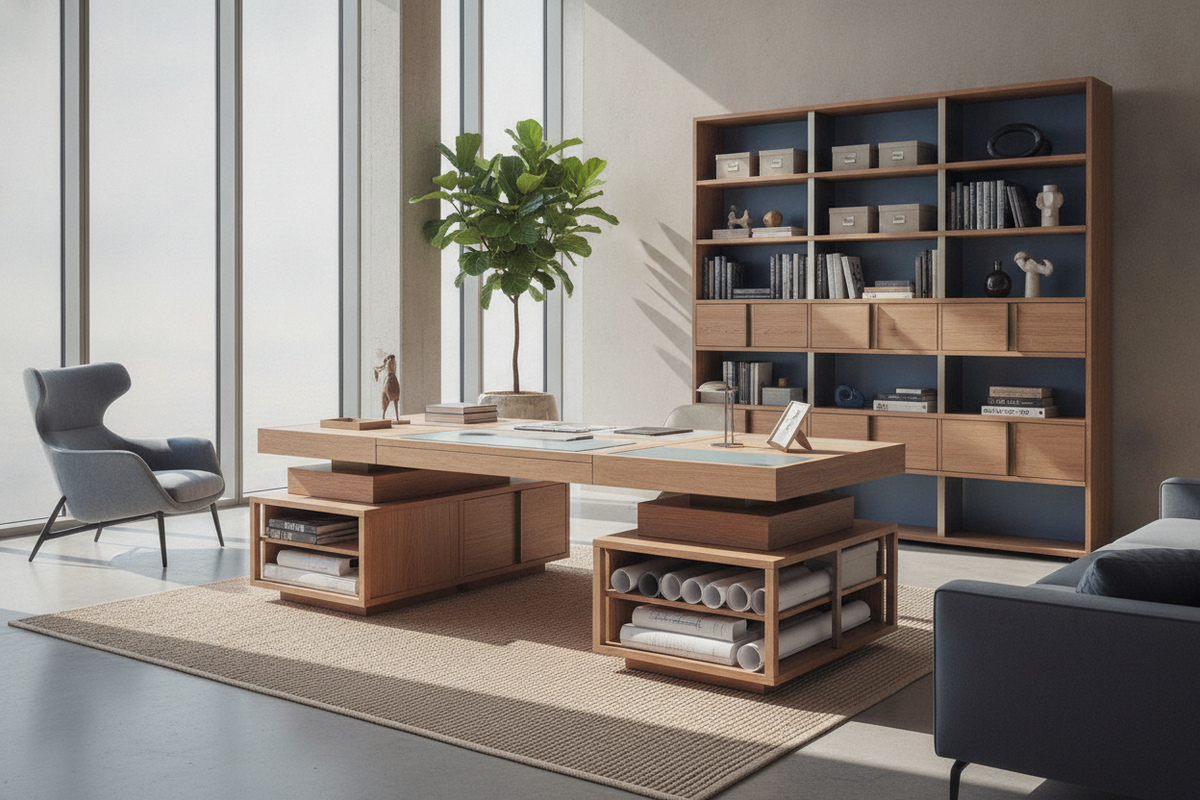
While an all-white palette provides a clean, modern aesthetic, incorporating contrasting textures prevents the environment from feeling clinical. Interior designers frequently balance matte white laminate tops with warm walnut accents, fluted drawer fronts, or natural wood frames. Reviewing an editorial white desk guide reveals that warm wood accents ground high-reflectance white surfaces, introducing tactile depth and organic balance to minimalist office layouts.
High-quality engineered wood substrates faced with resilient melamine, thermofoil, or high-pressure laminate deliver dependable resistance against daily surface wear, pencil markings, and ambient moisture. When combined with natural woodgrain veneers, powder-coated steel understructures, or brushed metallic hardware, the modular workstation achieves a timeless mid-century modern or Scandinavian aesthetic that complements surrounding residential furnishings.
Storage Architecture: Integrated Drawer Units and Modular Add-Ons
A clutter-free desktop is essential for sustained productivity. Effective modular workstations manage administrative supplies and digital accessories through intentional, adaptable storage components. Coordinating your primary desk with supplementary pieces from an expansive modular collection allows you to scale storage capacity as your project archives and hardware inventories grow over time.
- Reversible Pedestal Units: Storage blocks engineered for left- or right-hand orientation ensure your most frequently used drawers align with your dominant hand and room layout constraints.
- Concealed Utility Drawers: Low-profile under-desk drawers organize writing instruments, charging cords, and compact tech accessories, keeping the main work plane clear.
- Open Tower and Cubby Returns: Lower side cubbies provide ventilated housings for desktop computer towers, reference manuals, or decorative storage bins without obstructing legroom.
- Vertical Modular Hutches: Sturdy desktop-mounted shelf units maximize vertical wall space for reference libraries and display objects while preserving usable desktop area.
Assembly Workflows and Reconfiguration Protocols
The defining strength of modular furniture is its ability to reconfigure as living situations shift. Following methodical assembly and maintenance practices preserves the longevity and structural stability of every joint and surface:
- Level Foundation Alignment: Begin assembly by fine-tuning leveling glides across all legs, returns, and support pedestals prior to tightening structural connector plates. This prevents uneven stress across panel seams.
- Progressive Hardware Fastening: Loosely thread all cam locks, machine bolts, and dowels across connecting modules before applying final torque, ensuring tight, uniform alignment between desktop surfaces.
- Organized Reconfiguration Labeling: When shifting an L-desk configuration from a left-hand to a right-hand layout, systematically label modular brackets and store unused hardware in designated containers for future adjustments.
- Periodic Fastener Inspection: Periodically check joint tightness and re-level glides to compensate for natural floor settling or carpet compression over time.
Curating an Cohesive Workspace Ecosystem
A modular white desk delivers its greatest value when integrated thoughtfully into a complete, harmonious office ecosystem. Layering ergonomic task lighting, adjustable monitor mounting arms, and discreet under-desk wire raceways preserves the crisp silhouette of the furniture. For additional styling ideas and decor harmony, exploring a comprehensive white desk guide can inspire complementary selections of textured desk pads, neutral acoustic wall panels, and coordinating accent credenzas to establish a cohesive, professional workspace.

Dejar un comentario
Este sitio está protegido por hCaptcha y se aplican la Política de privacidad de hCaptcha y los Términos del servicio.