










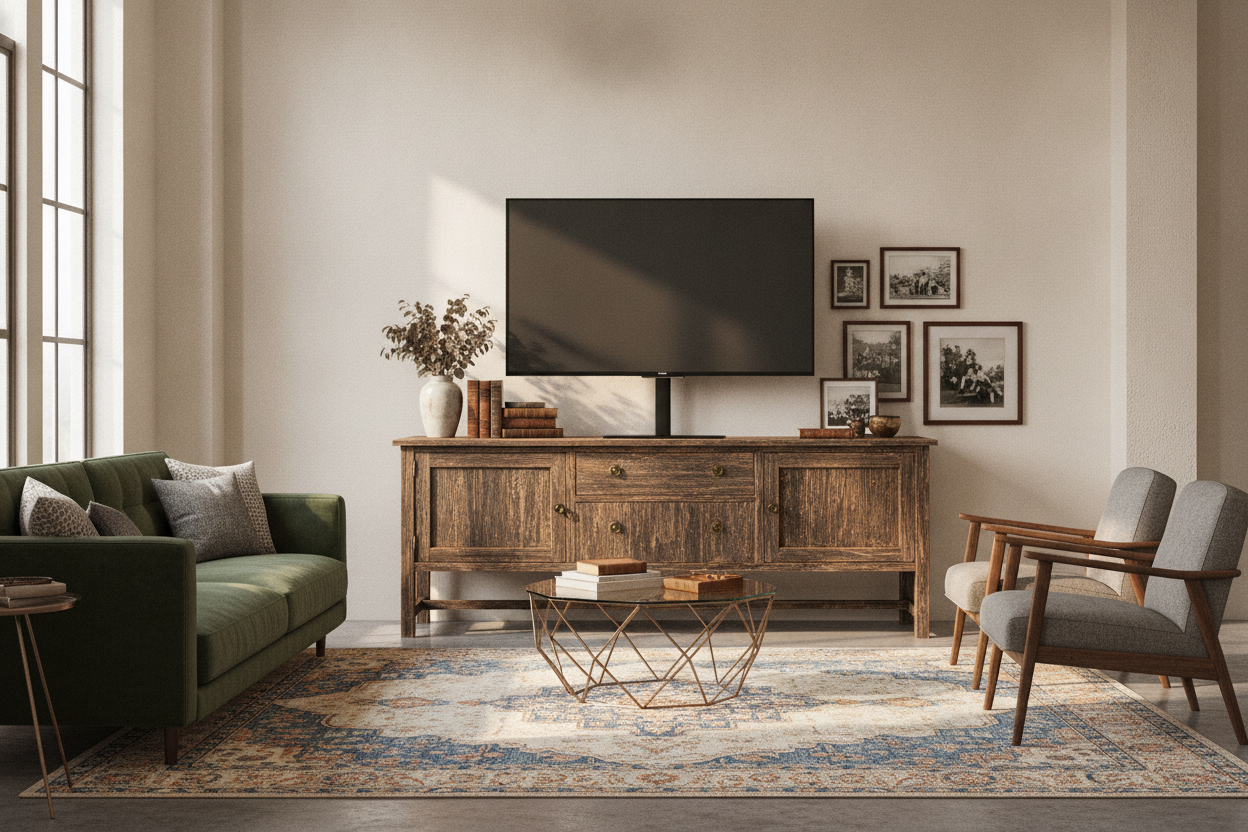
I spent three months scouring estate sales for the perfect mid-century credenza. When I finally found it—a gorgeous teak piece with original brass hardware—the last thing I wanted to do was slap a massive 65-inch screen on top of it using those hideous, wide-set plastic 'chicken feet' that come in the box. Those factory legs are a disaster waiting to happen; they’re flimsy, they usually hang dangerously close to the edge, and they’re guaranteed to leave deep gouges in old wood.
I realized I needed a heavy-duty table mount tv solution. Not just for the aesthetics, but because my floor isn't perfectly level and a top-heavy TV on plastic legs is a recipe for a shattered screen and a ruined heirloom. Switching to a centralized pedestal changed everything about how my living room looks and functions.
- Stability first: Central pedestals distribute weight better than edge-mounted legs.
- Surface protection: Most aftermarket mounts have padded bases to prevent scratches.
- Height control: Factory stands are usually too low; mounts let you clear a soundbar easily.
- Swivel power: Easily pivot your screen for the best viewing angle from the kitchen or the couch.
The Plastic Leg Problem (Why Factory Stands Ruin Good Furniture)
Most modern televisions are designed with cost-cutting in mind, and that includes the stand. They give you these ultra-wide, spindly legs that require a massive footprint. If you have a beautiful solid wood modern sideboard, you shouldn't be forced to buy a wider, uglier media console just to accommodate the TV's footprint. These legs are often made of hard, unpadded plastic that vibrates against the wood, creating micro-scratches every time you walk past.
Upgrading to flat screen tv table mounts isn't just about being fancy; it's about physics. By moving the support to the center of the furniture, you reduce the risk of the TV tipping forward if someone bumps the table. Plus, it just looks cleaner. It turns a piece of tech into something that feels integrated into the room rather than just balanced precariously on top of it.
Wait, What Exactly is a Table Mount TV Setup?
If you haven't looked at the back of your TV lately, there are four screw holes in a square pattern. That’s the VESA interface. A tv stand table mount uses those holes to bolt the screen onto a heavy-duty steel or tempered glass pedestal. It basically replaces the manufacturer's legs with a single, sturdy spine.
It’s a much more robust setup than what you get at the big-box stores. For example, the Atlantic universal table top stand is a popular choice for people who want to ditch the wide legs for a more compact, centered footprint. These mounts are designed to handle the torque of a large screen without wobbling like a leaf in the wind.
How I Secured a TV Mount on Table Surfaces Without Scratching
Installing a heavy metal tv mount on table surfaces made of delicate vintage wood requires a little bit of prep. Even if the mount claims to have rubber feet, I don't trust them. Over time, cheap rubber can actually react with wood lacquer and leave a permanent 'melted' mark. I always add my own heavy-duty felt pads to the bottom of the base before I even think about putting it on the sideboard.
If you are placing your TV on a glossy entertainment center, you might think you're safe from scratches, but dust trapped under a heavy base acts like sandpaper. Always wipe the surface down with a microfiber cloth before setting the mount. I also recommend using the cable management clips that come with these stands. Keeping the wires taut and tucked behind the pedestal prevents them from dragging across the wood and dulling the finish over time.
The Best Table Mounts for Flat Screen TV Displays I've Found
When shopping for table mounts for flat screen tv setups, don't cheap out. I look for three specific things: a base weight of at least 10 pounds, a swivel range of at least 30 degrees, and height adjustability. Being able to raise the TV just four inches can make the difference between looking at your soundbar or looking at the screen.
Solid steel bases are my preference over tempered glass. Glass looks sleek, but it’s a fingerprint magnet and can be terrifying if you accidentally drop a remote on it. For screens over 55 inches, you want a mount rated for at least 80 pounds. Even if your TV only weighs 40, that extra weight capacity means the internal joints are tighter and the screen won't lean to one side over time.
Why I Will Always Choose This Over Drilling Drywall
Wall mounting is a commitment I’m rarely ready to make. I like to rearrange my living room every six months, and I hate patching drywall. By using a tabletop mount, I keep the flexibility of a traditional stand while getting the 'floating' look of a wall mount. It also keeps the screen at a perfect eye-level height—most wall mounts end up 'r/TVTooHigh' territory because people mount them like paintings.
I've lived in three different apartments in four years. Every time I move, my TV setup comes with me without a single 'sorry' to my landlord for holes in the wall. It's the main reason I refuse to wall mount and stick to these heavy-duty bases. They offer the best of both worlds: stability, style, and the ability to change my mind whenever I want.
FAQ
Will a table mount fit any TV?
As long as your TV has VESA mounting holes on the back (almost all do), it will work. Just check the VESA dimensions in your manual—usually something like 400x400mm—and match it to the mount's specs.
Are these stands stable for homes with pets or kids?
Yes, usually more so than factory legs. Because the base is heavy and centralized, it’s harder to tip. However, I still recommend using a discrete safety strap anchored to the back of the furniture if you have a very active household.
Can I adjust the height after the TV is mounted?
Most require you to choose a height setting during assembly. You can change it later, but you'll usually need to take the TV off the mount to move the brackets up or down a notch.


Dejar un comentario
Este sitio está protegido por hCaptcha y se aplican la Política de privacidad de hCaptcha y los Términos del servicio.