


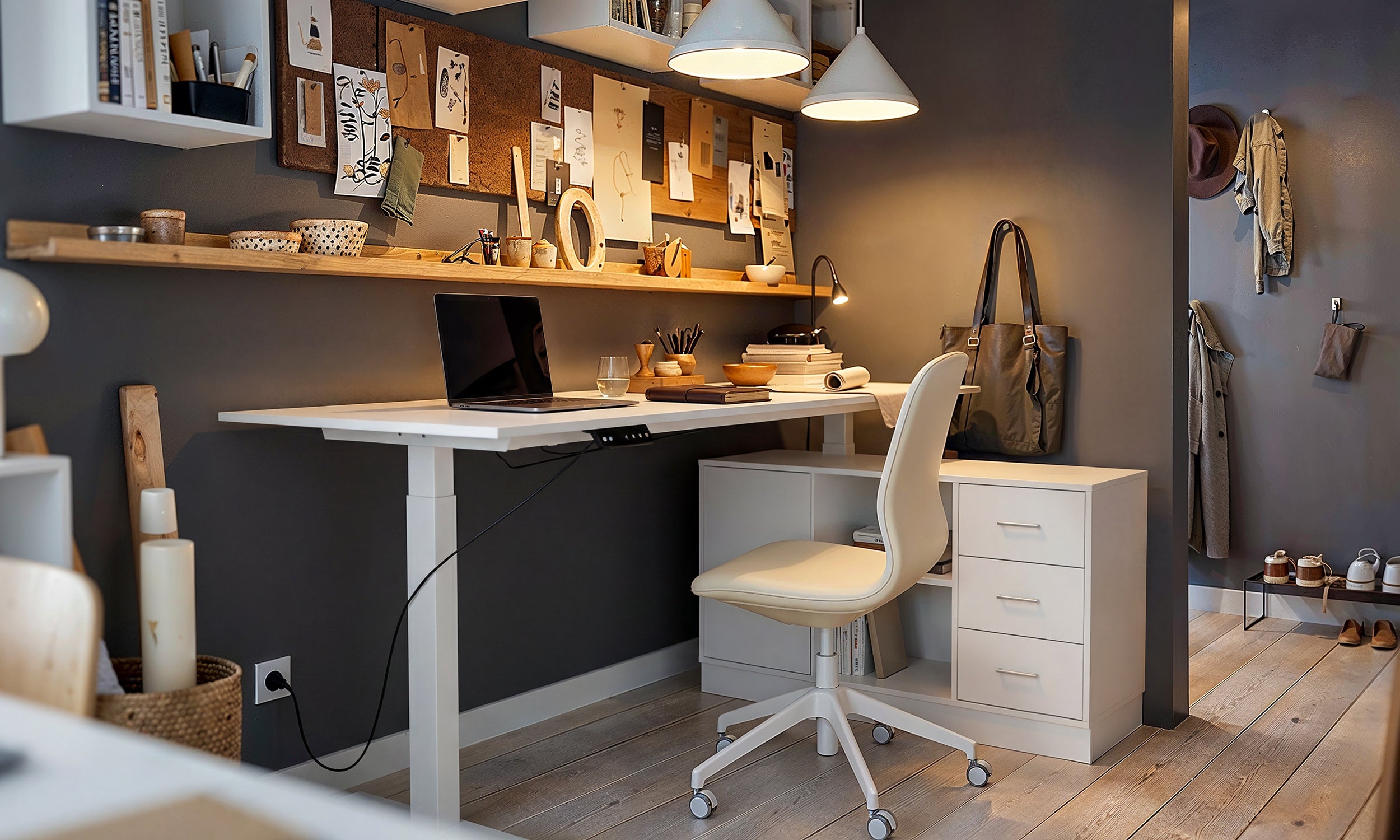
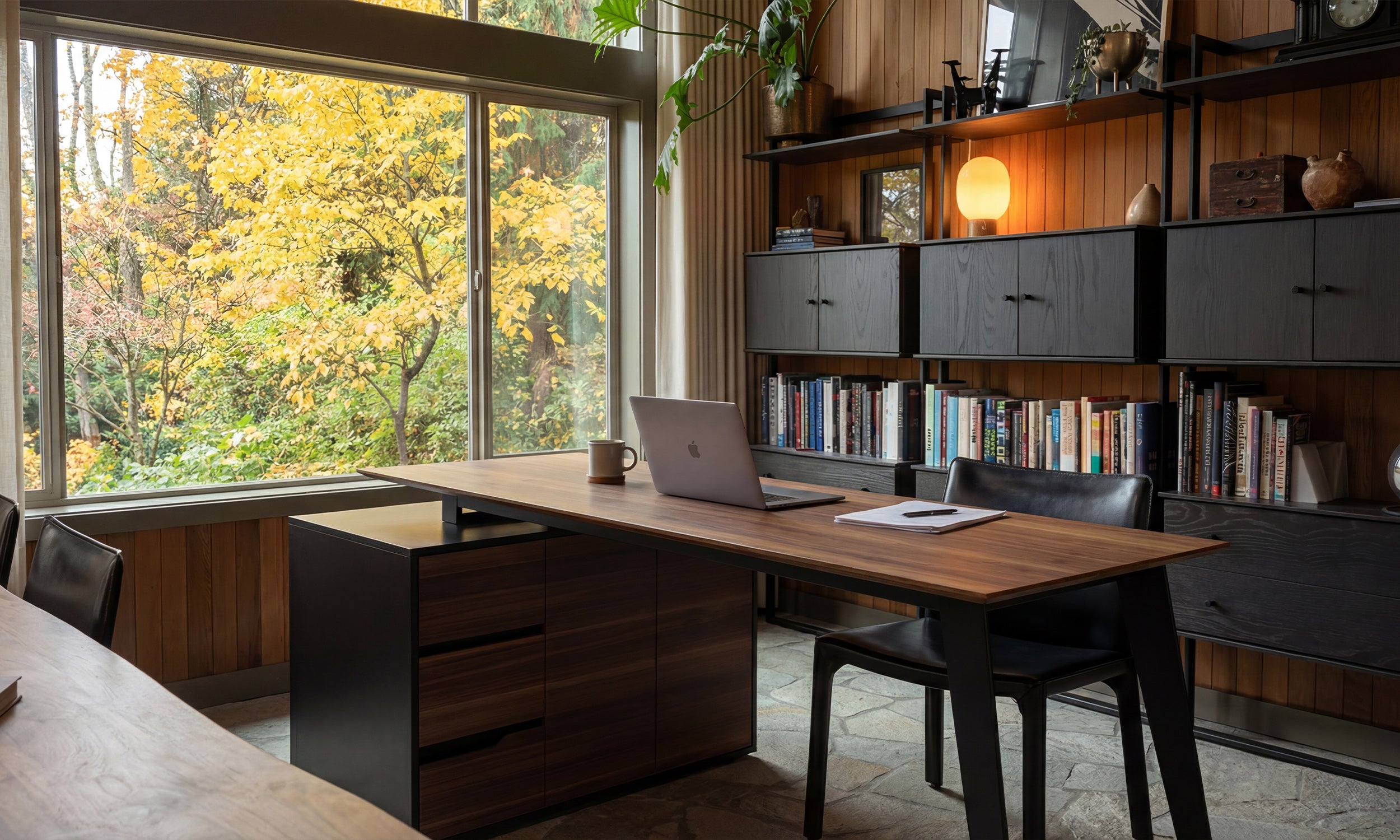


Understanding the Pneumatic Standing Desk Frame Only Concept
Selecting a pneumatic standing desk frame only allows creators and homeowners to build a bespoke workstation without relying on electric motors, power outlets, or pre-drilled generic surfaces. Unlike motorized standing frames that use gearboxes and electronic control boxes, a pneumatic system relies on pressurized gas cylinders combined with mechanical linkages to assist vertical movement. By consulting a dedicated standing desk resource, interior planners often observe that non-electric workstations provide distinct layout versatility, silent elevation shifts, and immunity to motor burnouts or cable clutter.
Opting for a bare frame creates an open canvas. You select the tabletop material, width, depth, and finish that aligns with your surrounding interior cabinetry. Because there are no power cords binding the frame to a specific wall outlet, a pneumatic computer desk can float anywhere within an office, library, or creative workshop. However, successful implementation requires a clear understanding of counterbalance mechanics, desktop weight allowances, and spatial clearance.
Mechanical Principles: Gas Springs, Counterbalance, and Load Windows
A counterbalance mechanism forms the core of every pneumatic adjustable table. Inside the support columns, sealed gas cylinders contain compressed nitrogen. When you release the adjustment lever, this internal pressure provides an upward force designed to offset the combined mass of your tabletop, monitor setup, and office peripherals.
Every pneumatic system operates within an engineered counterbalance window. If the total payload on top of the frame is significantly lighter than the cylinder's lifting force, the surface will feel stiff when pushed downward and may rise briskly upon lever activation. Conversely, if the installed weight exceeds the counterbalance threshold, elevating the workstation demands physical lifting effort from the user. Achieving smooth, near-effortless movement requires matching the cumulative weight of your selected desktop and daily hardware with the base's specified mechanical range.
Custom Desktop Selection and Pairing Guidelines
Pairing a custom surface with a standalone frame involves evaluating both dimensions and material densities. Solid hardwoods such as oak, walnut, or maple offer structural rigidity and rich grain textures, but their inherent density adds substantial baseline weight to the frame before any monitors or work gear are mounted. In contrast, engineered core panels such as medium-density fiberboard or lightweight composite surfaces provide predictable weights and dimensional stability across seasonal humidity changes.
To configure a well-balanced desk surface, consider these core pairing factors:
- Overhang and Balance: Ensure the tabletop depth does not extend excessively past the frame's mounting brackets to prevent tipping leverage during height adjustments.
- Substrate Fastening: Wood screws must seat securely into the desktop underside without puncturing the top surface, ensuring solid anchor points for the lever assembly and frame plates.
- Weight Allocation: Calculate the anticipated weight of screens, desk mats, and accessories before finalizing desktop thickness to avoid overloading the counterbalance cylinder.
- Edge Profiles: Softened or beveled edges reduce wrist pressure during keyboard work, especially when the desk is adjusted between sitting and standing elevations.
Room Placement and Workflow Configurations for Cord-Free Desks
The absence of wall tethers alters interior office architecture. While electric workstations often remain anchored against perimeter walls near power receptacles, a non-electric pneumatic workstation offers total directional freedom. Reviewing options across a broader computer desk collection highlights how flexible furniture can redefine work zones across modern floor plans.
With a self-contained pneumatic mechanism, you can establish varied spatial arrangements:
- Center-Room Island: Position the desk in the heart of a home office or study facing an entryway or exterior window without running cord covers across walking paths.
- Perpendicular Room Divider: Project the workstation outward from a bookshelf or storage wall to delineate distinct focus and lounge areas within an open-concept room.
- Dynamic Collaborative Pods: Group multiple frames together in shared creative studios, allowing teammates to change heights independently during collaborative discussions.
Storage Planning and Under-Desk Clearance Management
Because a pneumatic frame relies on central crossbars, lever cables, and internal strut housings, integrating storage requires intentional clearance planning. Unlike traditional fixed writing desks with built-in pedestals, adjustable workstations must preserve an unobstructed vertical travel path.
Mobile storage carts, rolling file pedestals, and detached credenzas serve as ideal companions for pneumatic frames. By keeping storage units low enough to sit beneath the frame at its lowest descent, or positioning them adjacent to the desk, you maintain full range of motion. For workspaces where integrated drawers and upright storage partitions are preferred over separate mobile units, exploring a dedicated height adjustable standing product provides a helpful benchmark for built-in cabinetry integration.
Evaluating What Makes the Best Pneumatic Adjustable Height Standing Desk for Your Space
Determining the best pneumatic adjustable height standing desk setup for your environment comes down to balancing structural stability, adjustment range, and daily workflow habits. A sturdy base constructed from cold-rolled steel helps minimize horizontal sway when typing at full standing elevation. Furthermore, intuitive lever placement allows immediate tactile control without requiring you to reach awkwardly beneath the desktop edge.
By thoughtfully matching your custom surface material, balancing equipment loads, and planning unhindered perimeter storage, a pneumatic standing frame delivers an adaptable, cord-free centerpiece tailored to your personal aesthetic and ergonomic routine.


Dejar un comentario
Este sitio está protegido por hCaptcha y se aplican la Política de privacidad de hCaptcha y los Términos del servicio.