






Choosing the right workstation can transform how naturally you move through your workday. For anyone who writes, navigates with a mouse, or reaches for desktop tools with their dominant hand, selecting a dedicated right handed desk provides immediate physical comfort and fluid organization. In a standard corner or corner-adjacent workstation, orientation dictates where your secondary screen sits, where paperwork lands, and how easily your chair swivels between projects. When you set up a purposeful right handed l-shaped desk, your primary reach zone aligns directly with your most frequent physical tasks.
Understanding how a right handed desk functions within a balanced home office setup ensures you avoid unnecessary neck twisting, cramped arms, or awkward reaches. Whether you are upgrading an existing room or building out a new workspace from scratch, paying attention to return orientation, peripheral clearance, and underlying legroom keeps your daily routine seamless and comfortable.
What Defines a Right Handed Desk Layout?
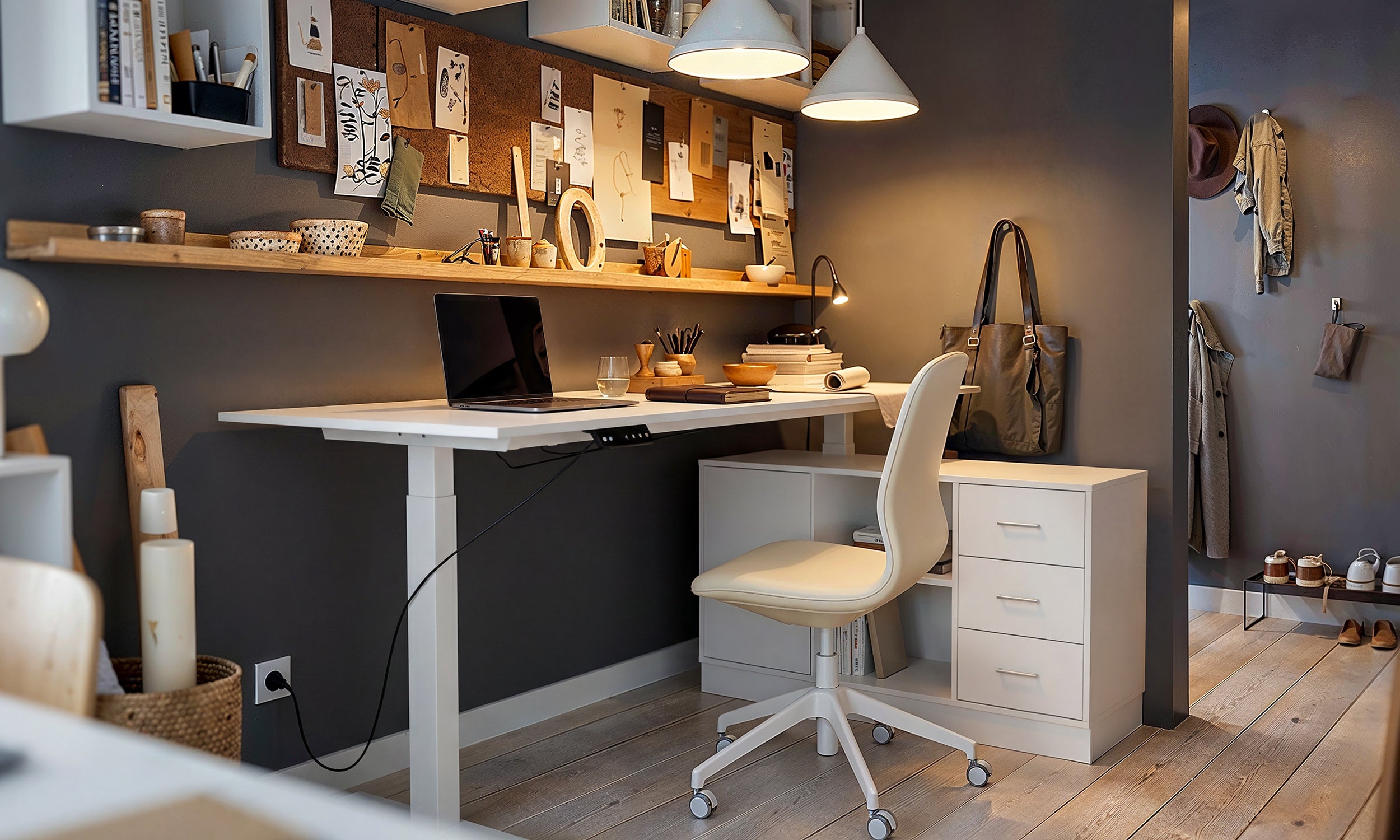
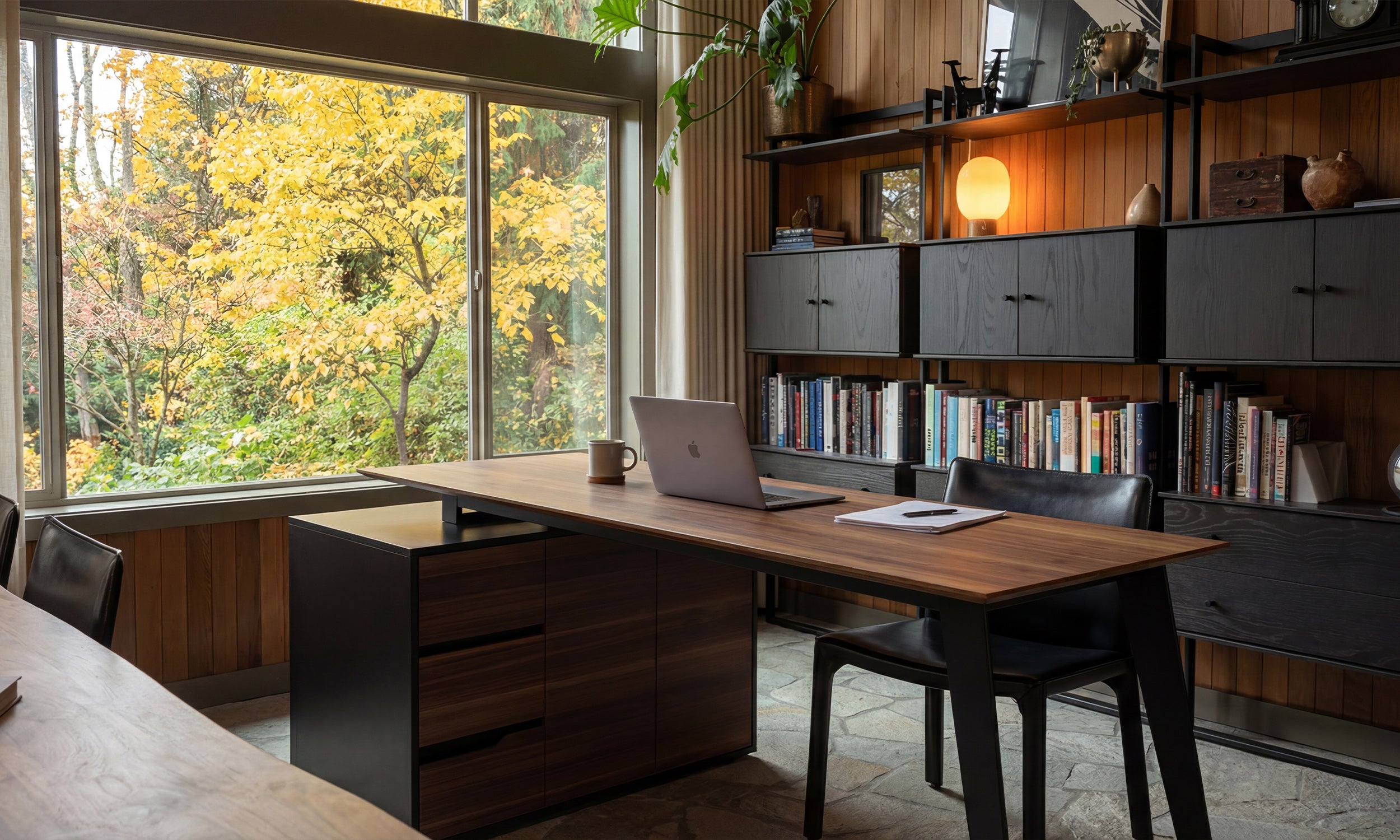
A right handed desk layout is defined by having the secondary surface or extension positioned directly to the user's right-hand side while seated at the primary workspace. In furniture terms, this secondary wing is known as the desk return. When you sit facing the main desk surface, your keyboard and central display occupy the front center, while the wing extends outward along your right side to create an L-shaped boundary. This places notebooks, secondary screens, and desktop gear within an effortless sweep of your dominant arm.
For many professionals, a standard rectangular table forces everything to cluster around the keyboard, restricting free movement. By contrast, a right handed l-shaped desk creates distinct, purposeful zones. Your primary workstation remains uncluttered for focused typing and conferencing, while the adjacent work surface handles reference binders, graphics tablets, or a dedicated writing space. Having this immediate extension on your dominant side reduces the effort needed to grab pens, review physical drafts, or handle reference materials.
Which Side Should the Return Be on for a Right-Handed Worker?
The return should generally sit on the right side for a right-handed worker because it mirrors the natural outward arc of the dominant arm. When operating a mouse, your arm naturally sweeps outward toward the right edge of your desk pad. On a standard rectangular table, running out of surface area can cause mouse friction against edge bevels or adjacent desktop items. Placing a right hand return beside your mouse station provides ample overrun area for an oversized mouse pad, supporting fluid pointer control during design work or spreadsheets.
Furthermore, transitioning between typing and physical handwriting feels noticeably more fluid when the secondary counter sits to your dominant side. Rather than having to push your keyboard out of the way or twist your torso awkwardly to reach a left-hand ledge, you can simply pivot your office chair to the right. A dedicated right handed desk establishes this natural posture, letting you switch from digital tasks to physical notation without interrupting your mental concentration.
Planning Your Right Hand Return Dimensions and Room Fit
Evaluating your room dimensions before buying any furniture avoids costly placement headaches. A spacious corner desk needs to fit comfortably within the perimeter walls without blocking entryways, closets, or window light. While shopping, carefully assess your available desk depth alongside the overall length of each wing. For detailed insights on maintaining adequate walkways and proportion, explore our resource on planning your desk depth and room clearances to help align your layout with your room dimensions.
Equally critical is legroom clearance beneath both the primary table and the connected desk return. When sitting at a right handed l-shaped desk, your lower body requires generous horizontal clearance so your knees do not strike support brackets or inner table legs during quick pivots. Ensure you factor in adequate office chair clearance as well; your chair base needs several feet of unobstructed floor space behind the primary station so casters roll smoothly without snagging on area rugs or baseboards.
Dual Screens and Monitor Placement on a Right Handed Desk
Dual displays are a cornerstone of modern office productivity, but they can quickly overwhelm your visual field if positioned without care. On a right handed desk, you can orient your screens to take full advantage of your natural sightlines and dominant-hand reach:
- Primary Display Alignment: Place your main visual screen directly centered in front of your keyboard along the main desk surface to support upright head alignment.
- Secondary Display on the Return: Mount your auxiliary screen along the inner edge of the right hand return, angling it slightly inward toward your line of sight.
- Arm Mounting Flexibility: A sturdy monitor arm clamps to the rear edge, freeing up valuable desktop area underneath the screen for notebooks or audio interfaces.
- Cable Route Management: Keep wires organized by using dedicated channels for cable management, preventing tangled cords around your right-hand arm path.
A balanced dual monitor setup mounted on a right handed l-shaped desk minimizes neck strain by positioning reference tools within a gentle glance to the right. Because your secondary panel rests along the angled wing, your primary view remains centered and calm throughout the workday.
Choosing a Standing Right Handed Desk
Many professionals prefer the movement that a height adjustable frame provides throughout long work hours. Setting up a sit-to-stand routine on an L-shaped frame introduces unique mechanical factors that require attention. When choosing an electric standing desk with an extended right wing, pay close attention to frame stability and motor distribution. Models with multi-motor drive systems lift both surfaces simultaneously, ensuring the transition between sitting and standing remains level and smooth.
A versatile choice for this configuration is an electric L-shaped standing desk with side storage, which pairs powered lift mechanics with integrated utility on the right-hand wing. When outfitting a rustic wood desk with adjustable height, confirm that your computer cables, display cords, and power strips have enough slack to travel the full vertical range. Keeping cords organized prevents dangerous snagging against base legs or adjacent wall fixtures as the desk moves upward.
Can a Reversible L-Shaped Desk Be Set Up for Right Hand Use?
Yes, a reversible desk can be configured with the return on either the left or right side during initial assembly. This modular flexibility makes a reversible corner unit highly appealing if you anticipate moving between different apartments or reorganizing your workspace later on. Unlike a rigid, factory-fixed right handed l-shaped desk, a modular frame allows you to attach the return wing to either side of the central tabletop using universal pre-drilled brackets.
However, fixed-frame models often deliver enhanced rigidity or seamless edge joints compared to reversible counterparts. If you share an office or are planning a layout for multiple team members, studying multi-workstation and shared room layouts can help you evaluate whether modular reversible designs or dedicated right-hand builds fit your long-term plan best. In my own workspace, I have found that a dedicated right-hand layout feels noticeably sturdier under daily typing pressure than multi-piece universal joints.
Storage Options for a Right Handed Desk
Keeping an uncluttered work environment requires smart storage that stays within reach without restricting your seating position. A right handed desk works best when auxiliary cabinetry is integrated along the outer perimeter of the return rather than directly beneath your primary seating zone. Many workers prefer a built-in side storage cabinet or a stack of smooth-gliding storage drawers positioned under the far end of the right wing. This keeps critical files, stationery, and charging cables accessible to your dominant hand without crowding your knees.
If you prefer a clean aesthetic for smaller rooms, a compact white L-shaped corner desk provides balanced surface area while fitting neatly into tighter wall alcoves. Selecting a bright white corner desk creates visual openness in compact spaces, while a rich rustic wood desk introduces warm, grounded texture to open floor plans. Regardless of whether you select a clean painted look or a textured wood-grain finish, ensure your storage units leave sufficient office chair clearance so you can swivel without your armrests bumping into drawer handles.
Checklist for Buying Your Right Handed Workstation
Before purchasing your next right handed desk, run through a practical checklist to ensure your chosen model matches your daily habits and physical space:
- Surface Configuration: Decide whether a fixed right handed l-shaped desk or a modular reversible desk fits your moving frequency and assembly preferences.
- Overall Dimensions: Measure wall lengths, desk depth, and doorway clearance to guarantee your new FUFU&GAGA desk fits smoothly into your room.
- Corner Placement: Determine whether the desk will sit flush against walls for efficient corner placement or float outward as an open-room focal point.
- Accessory Accommodation: Check that the desktop thickness can accommodate a standard clamp-style monitor arm, slide-out keyboard tray, or under-desk cable baskets.
- Work Habits: Confirm that the secondary surface provides sufficient writing space for physical documents alongside your primary digital gear.
Investing in a thoughtfully constructed right handed desk streamlines your workflow by supporting your natural movements. By choosing an L-shaped configuration tailored to your dominant hand, you establish an ergonomic, clutter-free workspace that supports all-day comfort and sustained productivity.


Dejar un comentario
Este sitio está protegido por hCaptcha y se aplican la Política de privacidad de hCaptcha y los Términos del servicio.