










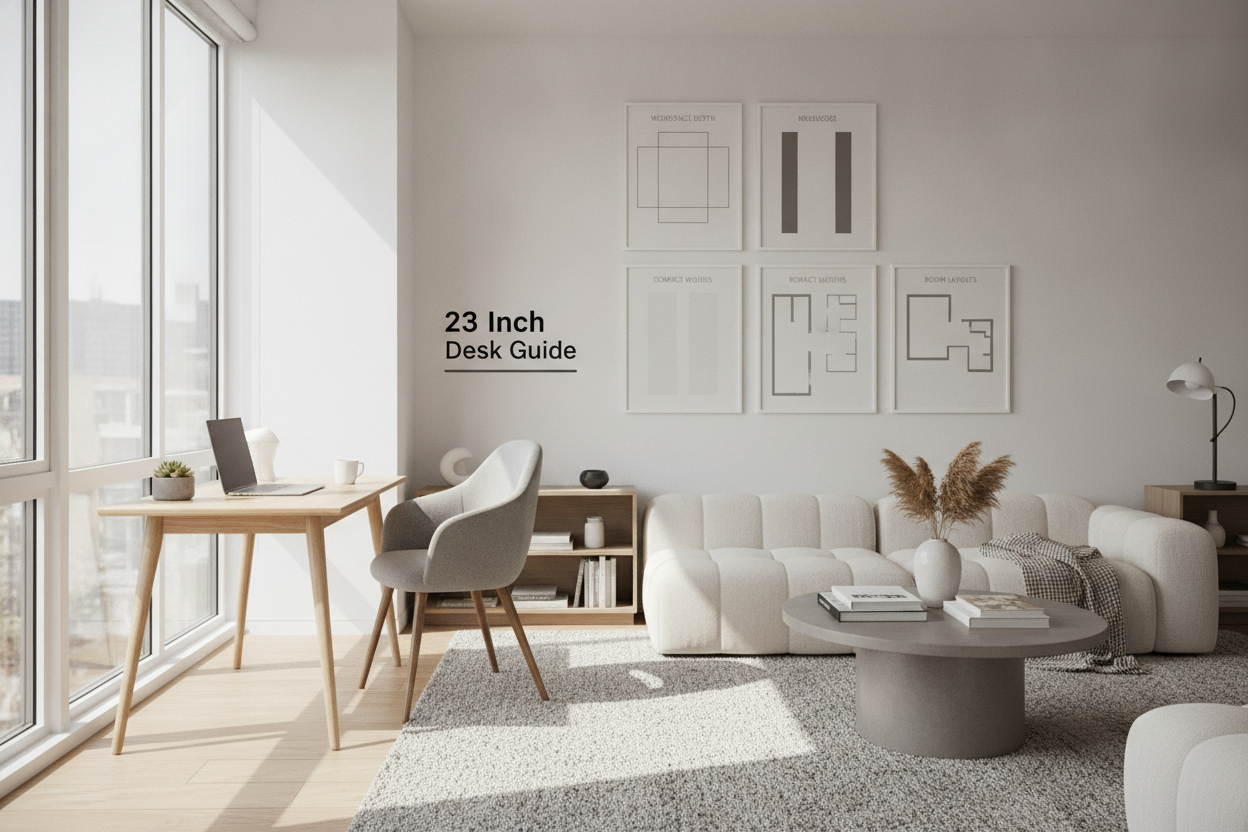
Understanding the 23 Inch Desk: Depth vs. Width Planning
When searching for a 23 inch desk, the first step is determining which dimension the measurement refers to. In home furniture terminology, a 23-inch dimension typically describes either the front-to-back work surface depth or an ultra-compact overall width. Clarifying this distinction ensures your workspace fits your equipment needs without overcrowding your room.
Workstation depth determines how far your screen sits from your eyes, how much forearm support you enjoy, and how far the furniture extends into the room. Conversely, overall width dictates whether the piece fits into a narrow architectural recess, a bedroom alcove, or alongside existing furniture runs.
The 23-Inch Deep Workstation: Balanced Screen Distance and Arm Reach
A desktop depth near 23 inches represents a functional sweet spot for many home workstations. It accommodates standard external monitors, laptop stands, and full-sized desktop peripherals while maintaining a comfortable focal distance. This depth helps keep keyboards, mice, and notepads within easy reach without requiring deep, bulky furniture frames that intrude into high-traffic walkways.
For rooms that serve multiple purposes, such as guest rooms, apartments, or living room study corners, a 23-inch deep surface delivers enough room for dedicated task lighting and cable routing behind a monitor base while keeping the overall floor profile manageable.
The 23-Inch Wide Desk: Niche Placement and Micro-Office Setups
When 23 inches represents the total width of the furniture, the piece functions as a dedicated micro-desk or writing vanity. These compact designs fit tight architectural niches, awkward wall offsets between doorways, or unused spaces beside wardrobes.
While a narrow footprint requires efficient surface management, it serves admirably for focused laptop work, journaling, or secondary study stations. If your room can accommodate slightly more span for stationery and side drawers, comparing these micro-units against a compact width desk with built-in storage helps identify whether additional lateral drawers are worth the wider footprint.
Room Fit and Spatial Clearance Frameworks
Arranging a workspace within a tight footprint requires evaluating both the stationary footprint of the furniture and the dynamic clearance needed during daily use.
- Chair Push-Back Clearance: Ensure adequate open flooring behind the desk so your task chair can slide in and out without striking baseboards, beds, or door casings.
- Visual Sightlines: Desks placed adjacent to windows or natural light sources should be positioned to avoid screen glare while keeping window tracks accessible.
- Traffic Corridors: Maintain unimpeded walking lanes between the desk edge and nearby furniture to preserve natural movement throughout the room.
Bedroom Corners and Multi-Use Living Areas
Integrating a desk into a bedroom or living area demands careful attention to surrounding furniture. When placed beside a bed frame, a compact desk can double as a bedside surface during evening hours. In living rooms, aligning the desk against an accent wall or tucking it into an unused corner creates an organized work nook that blends with your general decor rather than overwhelming the living space.
Dedicated Small Home Offices and Wall Runs
In compact home offices, aligning a 23-inch desk along a primary wall allows you to build a structured work zone. Leaving adjacent wall space open provides room for modular additions, such as a companion printer stand or a tall bookcase, establishing a cohesive workstation run that keeps the center of the room open.
Storage Solutions and Vertical Organization for 23 Inch Desks
Because moderate and compact desktop footprints offer focused surface area, maintaining an uncluttered work plane relies heavily on vertical and auxiliary storage strategies.
Under-Desk Pedestals and Slim Drawer Units
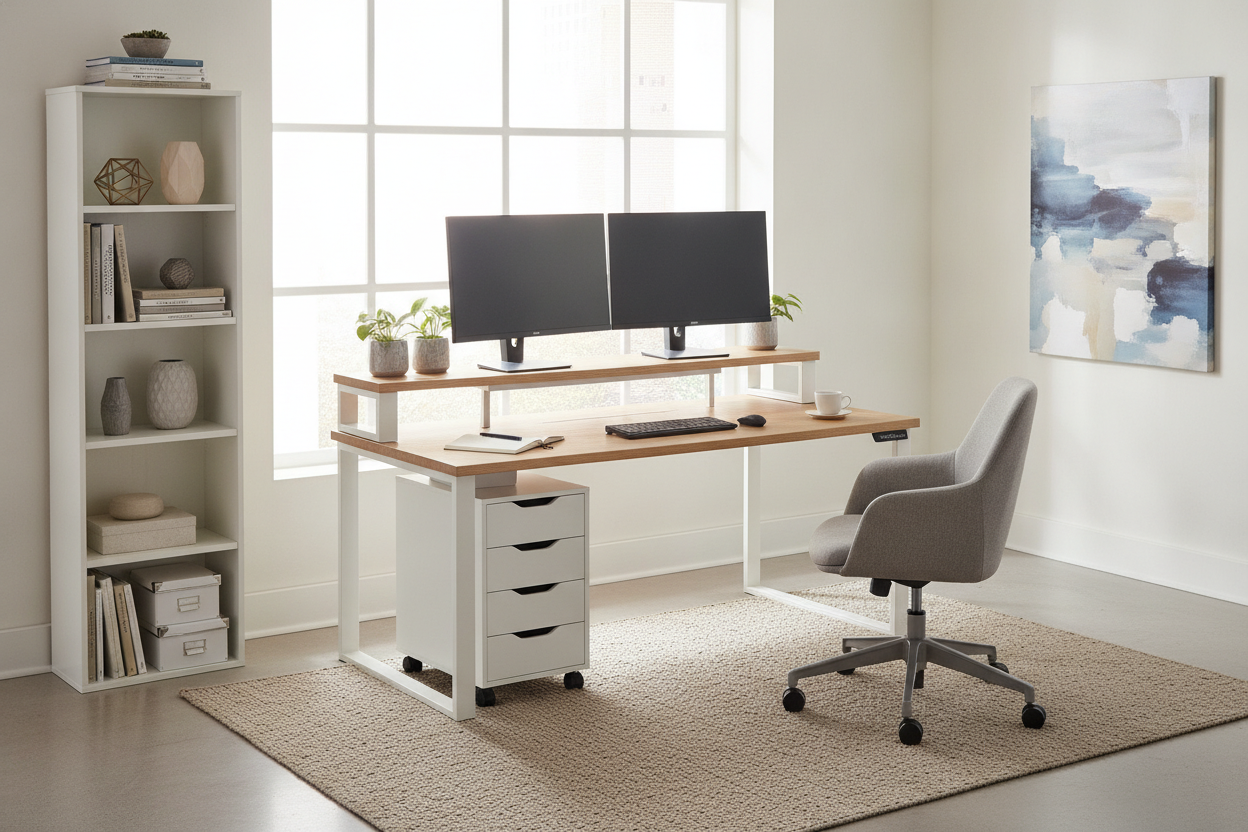
Low-profile under-desk drawer units help stow office supplies, notebooks, and charging cables without encroaching on leg clearance. When selecting an under-desk drawer pedestal, measure the internal clearance between the desk legs to ensure comfortable knee and thigh movement during long work sessions.
Overhead Hutches, Wall Shelving, and Adjacent Cabinets
Taking advantage of vertical wall space above and around the desk prevents desktop clutter from accumulating. Wall-mounted floating shelves accommodate reference books, file holders, and small desk plants. For larger storage requirements, pairing your desk with a slim auxiliary storage cabinet gives you dedicated vertical space for binders, filing boxes, and tech accessories while preserving your primary work surface.
Material Selection, Frame Construction, and Visual Weight
The visual impact of your desk is just as important as its physical dimensions in small rooms. Choosing the right combination of materials and silhouettes helps maintain an open, uncluttered ambiance.
- Open Metal Frames: Minimalist steel or aluminum legs allow light to pass beneath the desk surface, making small rooms appear larger and more open.
- Engineered Wood Finishes: Warm wood tones and clean laminate surfaces add warmth and tactile appeal while resisting everyday surface scuffs.
- Neutral Color Palettes: White, light oak, or soft gray finishes blend effortlessly into light-toned walls, reducing visual contrast in multi-use spaces.
Comparing Workstation Footprints for Small Spaces
Choosing the right desk layout depends on your workflow, equipment, and available floor plan. In our editorial view, assessing how much physical gear you use daily is the most reliable way to select the right workstation scale.
If your daily tasks involve dual monitors, heavy paper files, or extensive creative tools, you may find that micro-desks feel restrictive. In those cases, exploring larger corner workstation options can wrap functional work surfaces into room corners without obstructing central walkways. For full-scale home offices requiring comprehensive integrated storage and wide work surfaces, reviewing full-span executive computer desk setups can help you decide between modular compact pieces and expansive all-in-one workstations.
By clearly defining whether a 23-inch depth or a 23-inch width matches your spatial constraints, you can create an organized, comfortable, and productive work environment tailored to your home layout.

Dejar un comentario
Este sitio está protegido por hCaptcha y se aplican la Política de privacidad de hCaptcha y los Términos del servicio.