










Introduction
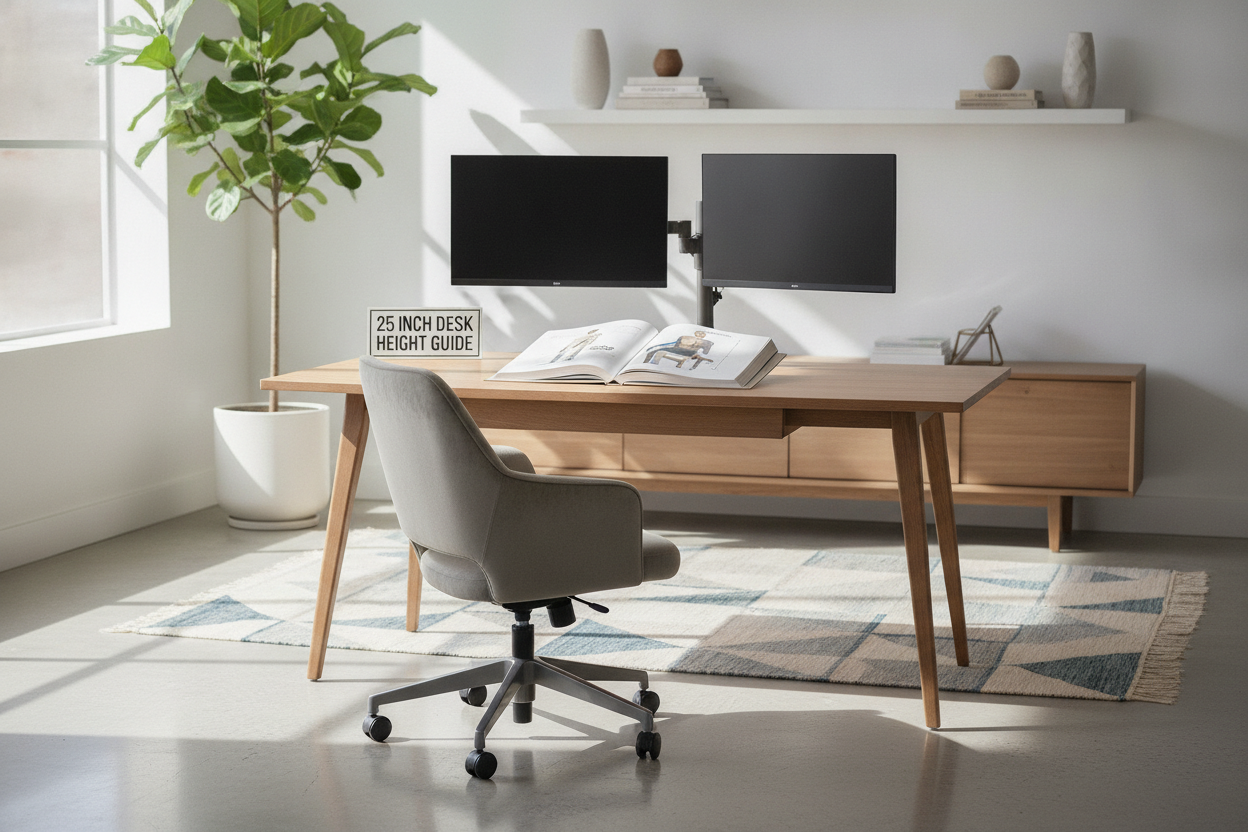
Finding the right work surface often means looking beyond standard commercial dimensions. While most conventional office desks sit around twenty-eight to thirty inches off the floor, specialized workstations with a 25 inch desk height serve specific ergonomic, architectural, and spatial needs. A lower desk surface can provide tailored comfort for shorter individuals, create a dedicated typing tier for high-volume writing tasks, or slide effortlessly beneath architectural constraints like low-hanging window frames and sloped walls.
Understanding how a 25 inch height desk functions within a living room, bedroom, or dedicated study requires balancing chair seat height, thigh clearance, and auxiliary storage. In this guide, we examine the practical reasons to choose a low-profile desk, how to pair it with the right seating, and how to organize under-desk zones without sacrificing comfort.
Why Choose a 25 Inch Desk Height?
A lower workstation offers distinct advantages for users who find conventional tables uncomfortably elevated. Standard desks frequently force individuals with petite frames to shrug their shoulders or raise their arms unnaturally, which can lead to upper-body strain over long sessions. A 25 inch tall desk lowers the keyboard and mouse level closer to natural forearm resting height, fostering a more relaxed posture without requiring an oversized footrest.
Beyond personal ergonomics, a lower desk height works exceptionally well in multi-tiered or specialized setups. In digital audio production, secondary writing stations, or creative drafting nooks, lower surface heights keep peripheral equipment easily reachable. Additionally, attics, lofts, and older homes with deep, low-set window sills benefit from furniture profiles that nest beneath trim lines without obstructing natural daylight or window operation.
Seating Pairings and Vertical Clearance
Pairing a chair with a low-profile desk requires close attention to vertical dimensions. Because the underside of the table sits lower than usual, the distance between the seat pan and the top of the desk must accommodate the user's thighs while maintaining a relaxed elbow angle. Look for office chairs or accent stools with wide vertical adjustability so you can fine-tune the seating level to the surface.
Key seating considerations include:
- Seat Height Adjustment: Choose a chair capable of dropping low enough to keep feet flat on the floor while maintaining a comfortable distance from the tabletop.
- Armrest Clearance: Ensure armrests can either adjust downward or tuck beneath the desktop edge so you can sit close to your work surface without pushing the chair back.
- Dynamic Workflows: If multiple users share the space, pairing your low-profile station alongside a versatile height adjustable standing desk allows household members of varying heights to switch between sit-to-stand options seamlessly.
Managing Knee Clearance and Under-Desk Storage
One of the primary structural trade-offs of a lower work surface is the reduced vertical space underneath the tabletop. Thick center drawers, heavy aprons, or thick desktop slabs can quickly consume valuable knee clearance. When selecting a low-profile desk, prioritize thin, streamlined tabletops or open leg frames that maximize unobstructed legroom.
To maintain ample storage without crowding your legs, consider alternative storage strategies. Instead of built-in under-desk pencil drawers, shift organization to side-mounted drawer pedestals, low mobile filing carts, or vertical wall shelving. For deeper planning on integrating drawers into compact workspaces, consult our compact desk storage guide to balance accessible storage with daily comfort.
Room Layouts and Multi-Purpose Uses
Because of its compact visual profile, a low-height workstation blends easily into multi-functional living areas. It can serve as a daytime laptop station, an evening vanity corner, or a dedicated crafting table without visually dominating a small room.
- Bedroom Vanity Nooks: A low desk pairs naturally with low vanity stools, mirrors, and soft lighting, creating an elegant grooming area. Flexible furniture designs like a vanity desk with adjustable height provide practical adaptability for grooming and daily tasks alike.
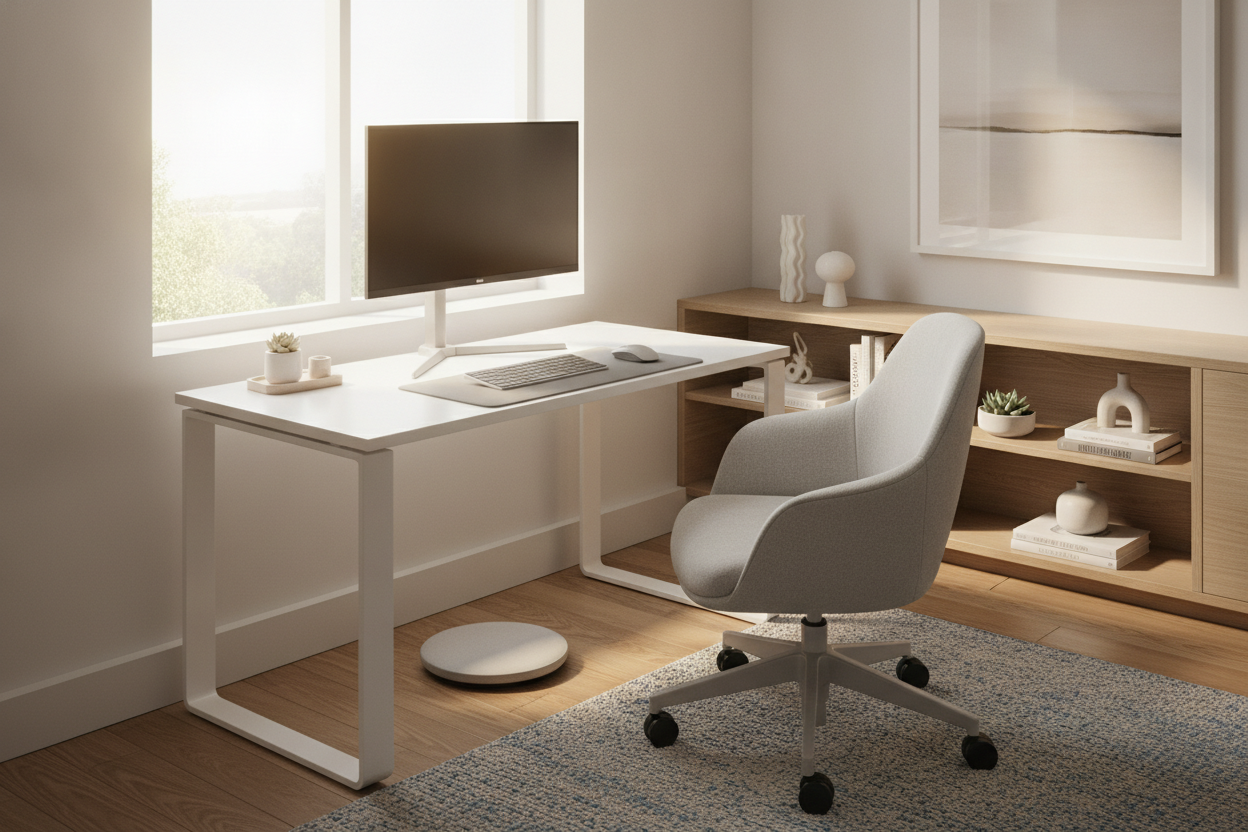
- Window Alcoves: Placing a low desk directly against a window wall keeps views clear and lets natural light flood the work surface throughout the day.
- Under-Stair and Loft Nooks: Slanted ceilings and structural under-stair spaces often make standard furniture feel cramped; a lower desk profile opens up breathing room overhead.
Comparing Low-Profile Desks with Corner and Compact Layouts
When planning a compact room, you might weigh a dedicated low-height desk against other space-saving furniture options. While corner desks and standard compact desks offer substantial surface depth, they usually feature standard higher table tops that may require elevated task seating. Low-profile desks, in contrast, keep the room feeling open and light.
If you are deciding between different spatial footprints and configurations, reviewing a small layout desk guide can help you compare linear wall placements against corner arrangements, ensuring your chosen furniture matches your room's traffic flow and daily routines.
Materials, Leg Structures, and Long-Term Stability
A lower desk design benefits from a naturally low center of gravity, which aids overall stability. However, the choice of materials and frame style remains crucial for long-term durability and wobble-free daily use.
- Steel and Metal Frames: Minimalist metal legs or C-frames provide exceptional rigidity while keeping the under-desk area visually clear and physically open for leg movement.
- Engineered Wood and Solid Panels: Full panel legs offer a warm, finished aesthetic suitable for bedrooms and living rooms, though open-sided frames are generally preferred to preserve side-to-side legroom.
- Leveling Feet: Adjustable floor glides or leveling pads are essential for stabilizing the desk on uneven floors or area rugs, preventing tilt and preserving exact surface alignment.
Final Buyer's Checklist for a 25 Inch Height Desk
Before purchasing or building a low-profile desk, run through these essential checks to ensure it fits your physical requirements and room layout:
- Measure your existing chair's lowest seat height to verify adequate thigh clearance beneath the desk frame.
- Check whether your monitor or laptop screen requires a tabletop riser to keep the display at comfortable eye level.
- Map out cable management paths along the legs to keep power cords tidy in open-frame designs.
- Confirm that nearby doors, drawers, or low window sills can open freely without colliding with the desk edges.

Dejar un comentario
Este sitio está protegido por hCaptcha y se aplican la Política de privacidad de hCaptcha y los Términos del servicio.