










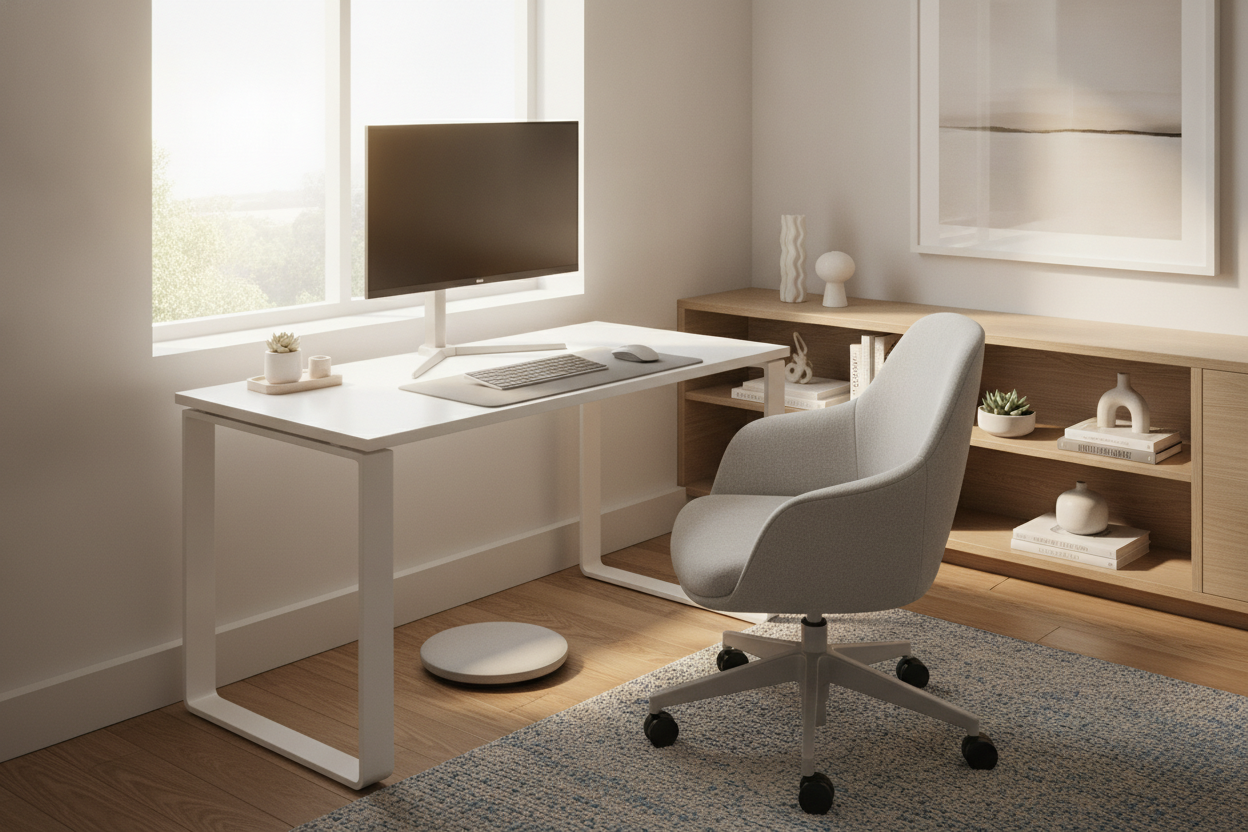
Finding the right work surface often means stepping away from standard office dimensions. Most off-the-shelf tables sit around twenty-nine to thirty inches tall, which can feel uncomfortably high for individuals with petite builds, dedicated typists seeking lower forearm positioning, or anyone designing a compact multi-use nook. A 25 inch high desk offers a grounded, ergonomic alternative that aligns your arms naturally without forcing your shoulders toward your ears.
Why Choose a 25 Inch High Desk?
Standard work surfaces were historically designed around average heights that do not suit every body type or task. When a desktop sits too high, users often compensate by raising their chairs, which lifts their feet off the floor and introduces pressure points beneath the thighs. Alternatively, keeping the chair low while using a tall table can lead to winged elbows, wrist extension, and upper back tension during long typing sessions.
A desk 25 inches high lowers the working plane so your forearms can rest parallel to the floor while your feet remain planted firmly on the ground. Beyond standard computer tasks, a low-clearance surface works exceptionally well for specialized home activities:
- Typing Stations: Eliminates the need for wobbly drop-down keyboard trays by bringing the entire tabletop to natural typing level.
- Youth and Student Study Corners: Provides younger family members with a properly proportioned writing and reading surface.
- Craft and Sewing Tables: Keeps fabric manipulation or cutting tools at an approachable leverage point where you do not have to hunch.
- Multi-functional Beauty Stations: If you are styling a bedroom corner, choosing an adaptable desk height product helps balance cosmetic storage with comfortable daily seated tasks.
Fixed Low Desks vs. Standing Desks with a 25-Inch Minimum Height
When curating a low-profile workstation, you generally choose between two core framework designs: dedicated fixed-height frames or motorized sit-stand bases configured with wide adjustment ranges.
A fixed 25" height desk offers minimalist construction, fewer moving components, and a clean, grounded silhouette. These tables fit seamlessly into intentional minimalist interiors, guest rooms, or specialized craft rooms where the working height rarely needs to change.
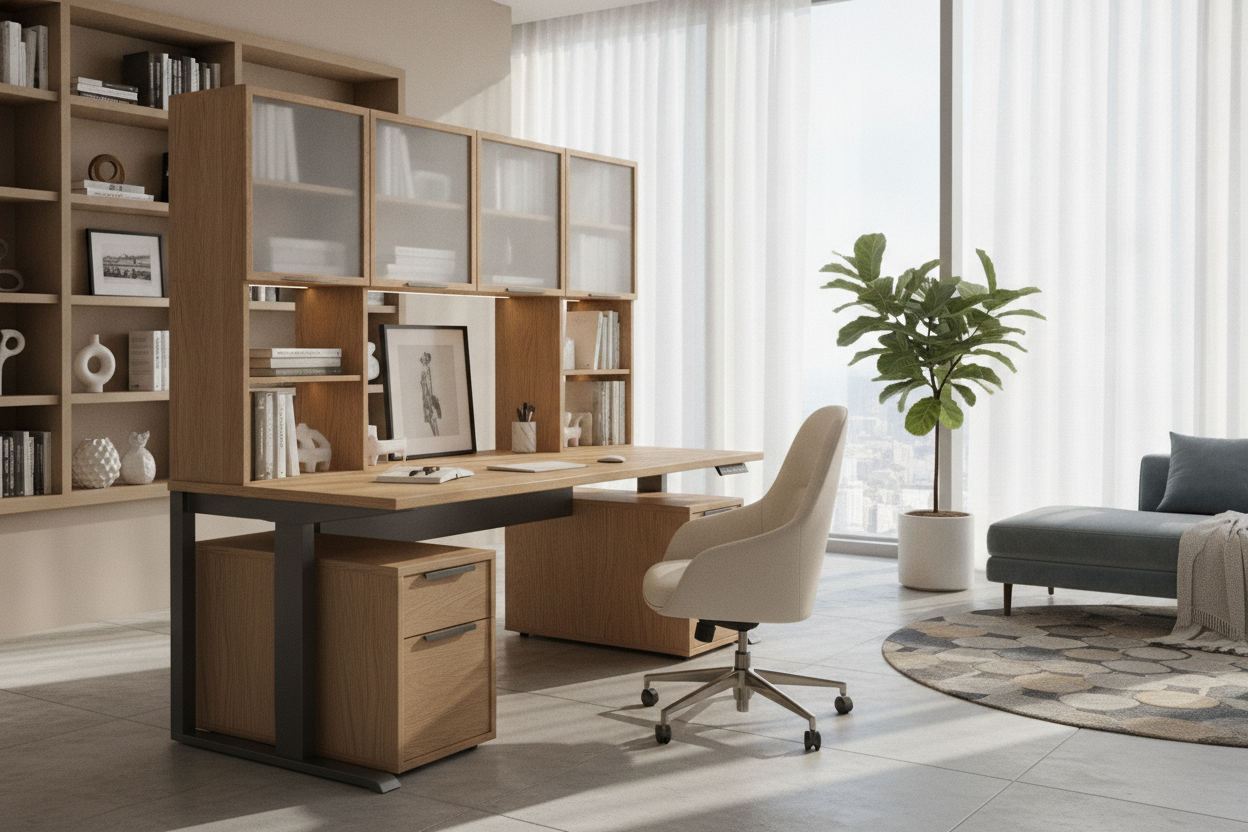
For households shared between users of different heights, an adjustable electric frame is often the most practical route. Many standard sit-stand desks bottom out around twenty-eight inches, which defeats the purpose for petite ergonomics. However, advanced dual-stage leg mechanisms can drop down smoothly to twenty-five inches or lower. Opting for a spacious height standing desk product gives you ample tabletop surface while allowing low-seated work during focused writing blocks. Furthermore, choosing a motorized height standing desk product with integrated memory buttons allows you to save your exact low typing level alongside custom standing heights with one touch.
Chair Selection and Vertical Clearance Planning
Pairing the correct seating with a low desk requires careful attention to vertical dimensions. Because the desk surface is closer to the ground, your task chair must adjust low enough to keep your knees at a comfortable angle while preserving space under the tabletop.
- Seat Height Travel: Look for task chairs whose pneumatic cylinders descend easily so your feet rest flat without relying on footrests.
- Armrest Clearance: Ensure the chair armrests can either adjust downward or slide beneath the desktop frame. Fixed, high armrests may collide with the edge of a 25-inch table, preventing you from pulling close to your screen.
- Thigh and Knee Space: Pay attention to the thickness of the desktop and any supporting crossbars or apron rails. A slim tabletop profile maximizes vertical knee room so you can shift comfortably throughout the day.
Room Placement and Low-Profile Workstation Layouts
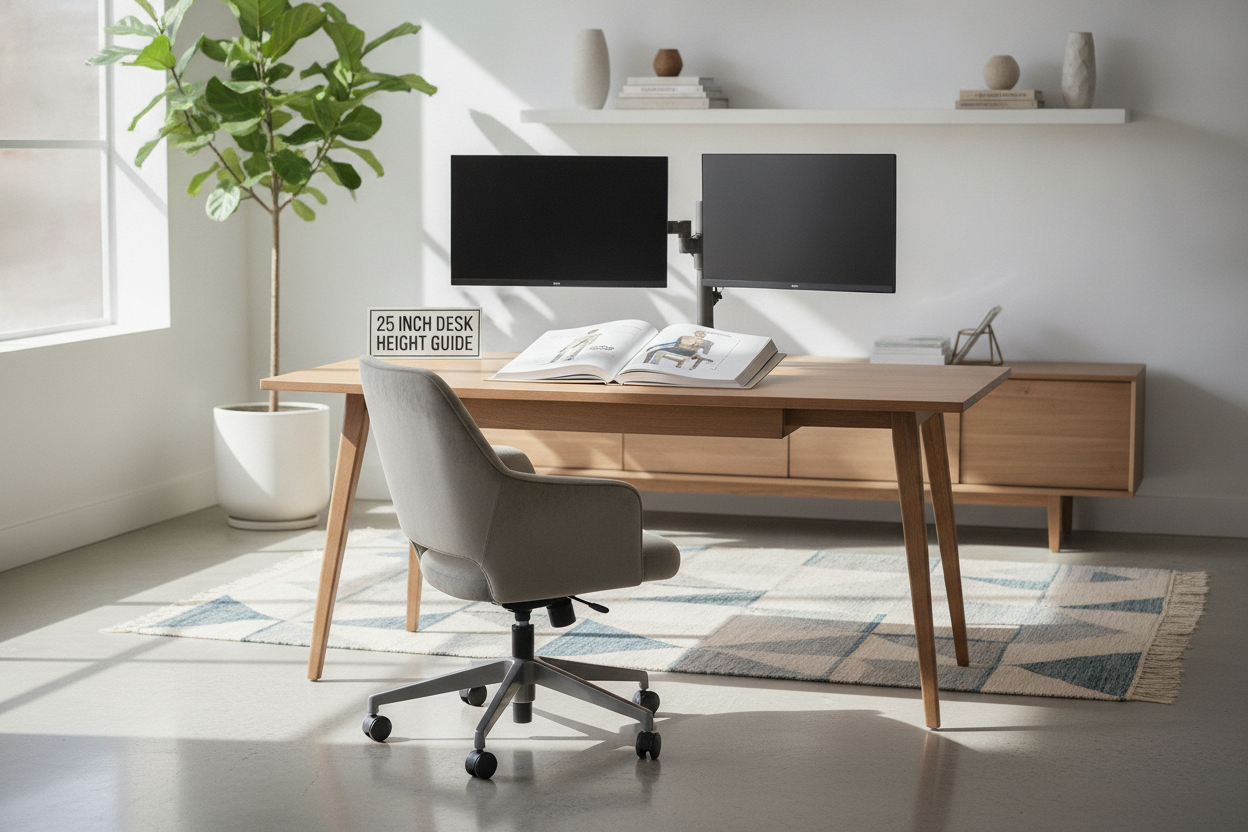
A lower horizontal plane creates distinct interior design advantages, making compact spaces feel open and uncluttered. If you want aesthetic inspiration for styling cozy workstations, exploring a high desk guide can give you creative ideas for color palettes, decorative organizers, and wall decor.
Consider these practical layout strategies for a 25-inch desk:
- Under Low Window Sills: Architectural features like historic trim, low sills, or sloped attic ceilings often exclude tall furniture. A low desk slips under window frames, bringing natural daylight directly onto your workspace.
- Float in Open Rooms: Because the profile sits below standard sightlines, a low desk avoids visual clutter when floated in the center of an open living room or studio apartment.
- Bedroom Alcoves: Tucking a compact desk into a quiet bedroom niche preserves a restful ambiance while establishing a distinct work zone.
Under-Desk Storage and Cable Organization at 25 Inches
One challenge of a low desk setup is managing under-desk real estate. Standard three-drawer filing cabinets may not fit underneath a surface positioned twenty-five inches off the floor. Efficient storage planning keeps the area clutter-free while protecting leg comfort.
Choose low-profile rolling pedestals or horizontal storage credenzas placed adjacent to the desk rather than stuffed beneath it. If you enjoy coordinating balanced furniture heights across the room, reviewing a high guide can help you align complementary side tables and low consoles with your desk proportions.
For wire management, keep power strips and excess cords off the floor using horizontal under-desk wire trays or adhesive routing clips attached to the back edge of the top. In a lower workspace, stray cords are more visible and easier to bump with your feet, making tidy cable tracks essential.
Key Takeaways for Designing a 25-Inch Workspace
Creating an ergonomic, stylish workstation around a 25 inch high desk comes down to matching your equipment with your physical proportions:
- Verify that your chair drops low enough to support a natural elbow bend and flat feet.
- Check the table frame structure to ensure ample knee clearance beneath the tabletop.
- Utilize wide-range sit-stand desks if multiple people share the workstation.
- Keep under-desk storage low or offset to maintain complete legroom freedom.
By tailoring your desk height to your specific posture and room dimensions, you build a healthier, more organized workspace that supports productivity day after day.

Dejar un comentario
Este sitio está protegido por hCaptcha y se aplican la Política de privacidad de hCaptcha y los Términos del servicio.