










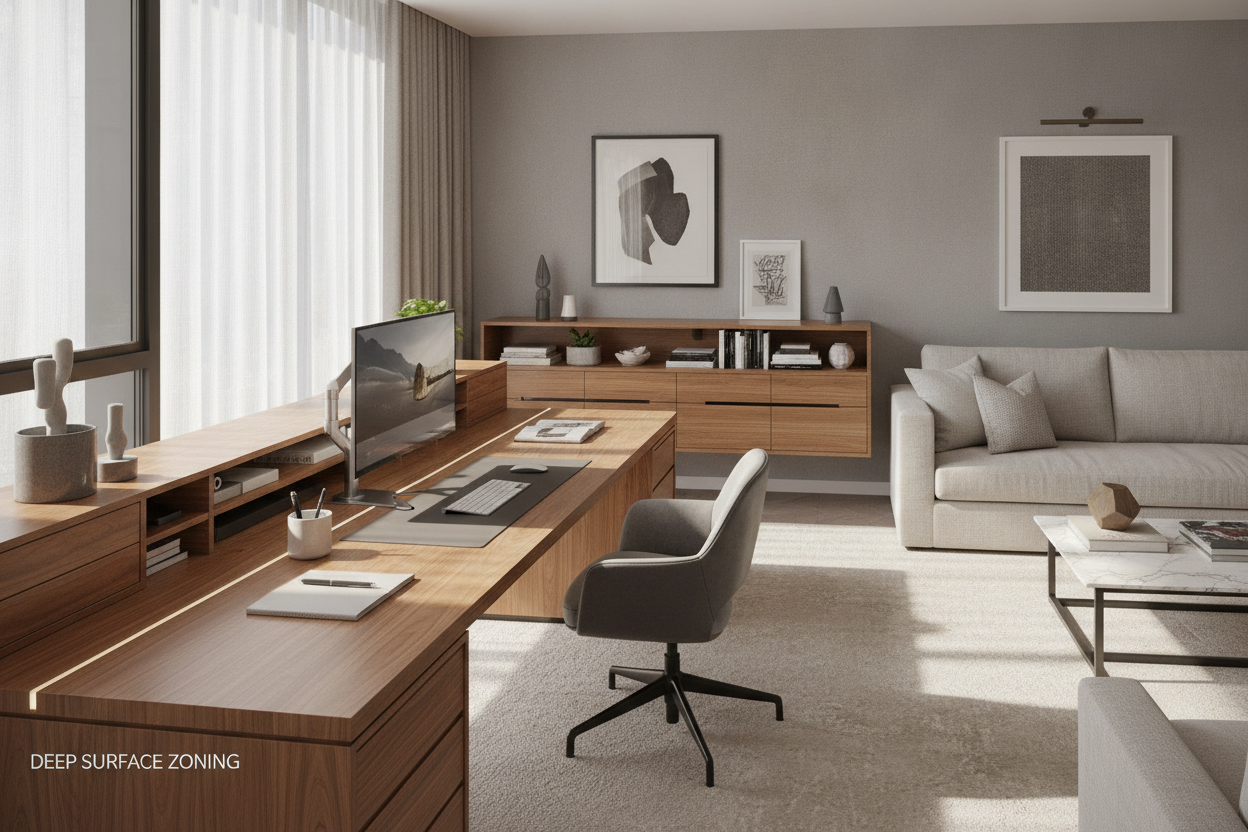
When selecting a workstation, surface width often receives the most attention, yet desktop depth dictates how comfortably equipment, paperwork, and digital displays interact. A standard office setup frequently utilizes shallower depths between twenty and thirty inches, which can quickly feel crowded once extra screens, drafting pads, or tabletop accessories arrive. Upgrading to a 36 deep desk fundamentally alters your workspace geometry, transitioning the desk from a simple flat ledge into a multi-tiered command center.
Understanding the 36-Inch Depth Profile: Expanding Beyond Standard Desktops
The core advantage of an extra-deep workspace lies in front-to-back real estate. Shallow work surfaces force monitors close to your keyboard, restricting where you can place note pads, drawing tablets, or audio hardware. A 36 inch deep desk expands the horizontal viewing distance, allowing larger displays or multi-monitor arrays to sit comfortably at arm's length while leaving ample foreground space uncluttered.
Beyond screen clearance, this depth accommodates hybrid workflows where digital tasks coexist with analog projects. Illustrators, architectural planners, software engineers, and audio editors frequently switch between physical blueprints, reference books, mixing interfaces, and primary computer inputs. A deep profile establishes distinct layers of activity so you do not have to continuously move gear out of the way to write a note or review documents.
Three-Tier Desktop Zoning for 36-Inch Depths
To take full advantage of a 36" depth desk, organizing the surface into three purposeful operational bands prevents clutter and reduces awkward reaching:
- The Immediate Reach Zone (Front 0–12 Inches): This boundary is reserved for high-frequency input tools such as mechanical keyboards, mice, trackpads, and dedicated writing blotters. Keeping this primary zone clear of permanent bulk ensures natural forearm support and relaxed shoulder positioning.
- The Active Midground Zone (Middle 12–24 Inches): The central plane serves as a transitional staging area for secondary devices, open notebooks, graphics tablets, reference sheets, or a morning coffee mug. Items in this zone can be slid forward when needed and pushed back when typing resumes.
- The Deep Perimeter Zone (Rear 24–36 Inches): The back third of the tabletop anchors oversized displays, studio monitor speakers on isolation stands, vertical shelf risers, ambient backlighting, and desktop power hubs. Because this zone remains permanently occupied by display hardware, it does not infringe on your active task area.
Room Planning, Floor Footprints, and Chair Clearances
While an expansive desktop provides unparalleled utility, a 36" deep desk occupies a substantial footprint within any floor plan. Proper room layout planning is essential to prevent the desk from obstructing walkways, entryways, or closet doors.
When calculating floor dimensions, remember that the desk surface is only part of the equation. You must also account for task chair roll-back space and personal egress behind the front edge. In smaller rooms where perimeter space is tight, reviewing a compact desk guide can help you compare proportions and decide whether a deep surface fits comfortably or if layout modifications are required. Similar spatial principles appear when managing depth in shared zones, as discussed in our living room deep guide on slim profiles versus full-depth furniture.
In larger home offices, a deep desk performs exceptionally well as a floating island workstation positioned centrally in the room. Floating configurations allow you to access the back edge easily for cable adjustments while presenting a finished, professional profile toward the room entrance.
Structural Support, Under-Desk Knee Clearance, and Frame Integrity
A deeper desktop experiences distinct structural loads compared to standard-depth furniture. Because the span from front to back is broad, frame architecture must prevent sagging across the central expanse while maintaining open legroom.
- Under-Desk Crossbeams: Premium deep desks rely on robust longitudinal support rails or perimeter steel subframes to distribute weight evenly toward the corner legs.
- Knee Pocket Clearance: Ensure horizontal support braces or modesty panels are positioned high enough or set far back to avoid restricting knee and foot movement during seated transitions.
- Material Rigidity: Solid wood, high-density composite boards, and reinforced metal understructures provide the structural integrity required to support multi-arm monitor mounts clamped onto the rear rim without warping the tabletop over time.
Storage Configurations and Companion Furniture Pairings
The generous under-desk cavity of an extra-deep surface creates prime opportunities for integrated storage solutions. Because the knee pocket reaches thirty-six inches inward, you can position low-profile mobile pedestals, filing units, or subwoofers near the rear floor perimeter without cramping your natural sitting posture.
For extensive archives and professional display needs, consider pairing your main work hub with modular storage pieces. Combining a deep focal surface with an expansive setup like an desk product creates dedicated zones for computer hardware on one wing and project staging on the return. Alternatively, dedicated full-wall storage systems, such as a large desk product featuring overhead cabinetry, offer balanced vertical capacity that harmonizes with a substantial floor footprint.
Workflow Scenarios: Is a 36-Inch Deep Desk Right for Your Workstation?
Choosing a deep work surface depends on your daily operational demands and how you interact with your tools:
- Creative and Audio Studios: Ideal for producers and sound engineers who need audio interfaces, mixing surfaces, and reference monitors lined up behind their standard typing zone.
- Designers and Technical Planners: Excellent for architects and visual artists who lay out physical drawings or large graphics tablets directly in front of their primary software viewports.
- Multi-Monitor Power Users: Perfect for dual- or triple-screen setups where deep viewing distance prevents visual fatigue and keeps heavy mounting hardware stable.
By thoughtfully matching room dimensions, structural underpinnings, and front-to-back zoning, a 36 deep desk becomes a versatile, long-term foundation for productivity and creative focus.

Dejar un comentario
Este sitio está protegido por hCaptcha y se aplican la Política de privacidad de hCaptcha y los Términos del servicio.