










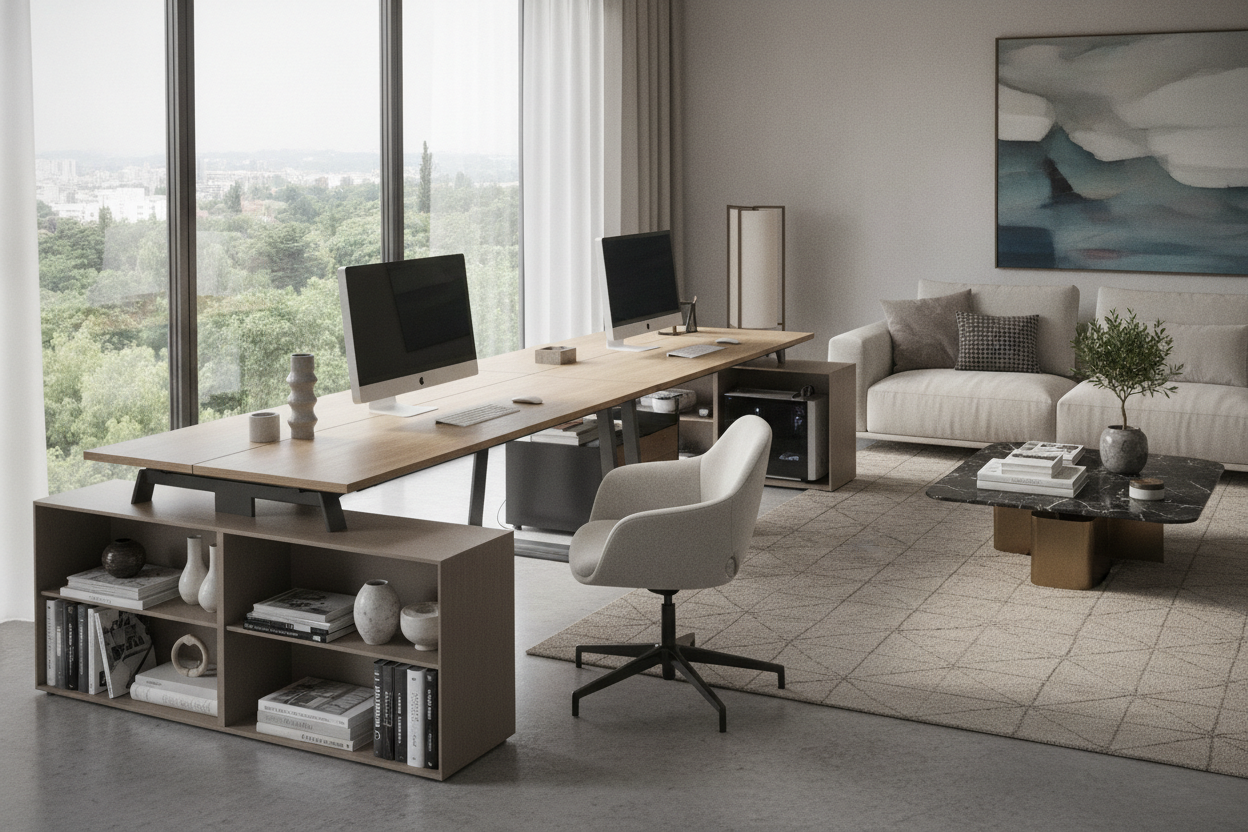
Understanding the 9-Foot Desk: Spatial Footprint and Multi-Zone Potential
An expansive 9 foot desk transforms an ordinary home office, creative studio, or shared study into a versatile productivity hub. Stretching across a vast horizontal plane, a 9 ft desk offers ample room to separate complex digital tasks from analog projects, craft work, or collaborative meetings without crowding your daily workflow.
When introducing furniture of this scale, spatial proportion becomes essential. A 9 foot long desk commands significant visual attention and requires thoughtful floor planning. Leaving adequate perimeter clearance around the workstation ensures comfortable movement, effortless chair roll, and smooth access to nearby storage units or doorways.
Structural Integrity: Preventing Sag Across a 9-Foot Long Desk
The primary engineering challenge of any 9 ft long desk is maintaining a level, stable tabletop over a broad span. Without proper structural reinforcement, downward forces from desktop equipment, heavy monitors, and daily arm pressure can cause the surface to deflect or bow over time. Planning adequate under-table support preserves both the aesthetic line and long-term durability of the surface, much like the foundational principles covered in our modular long desk guide.
Mid-Span Legs vs. Underframe Stiffeners
To eliminate center deflection, builders and homeowners frequently choose between dedicated vertical supports and horizontal under-mount bracing:
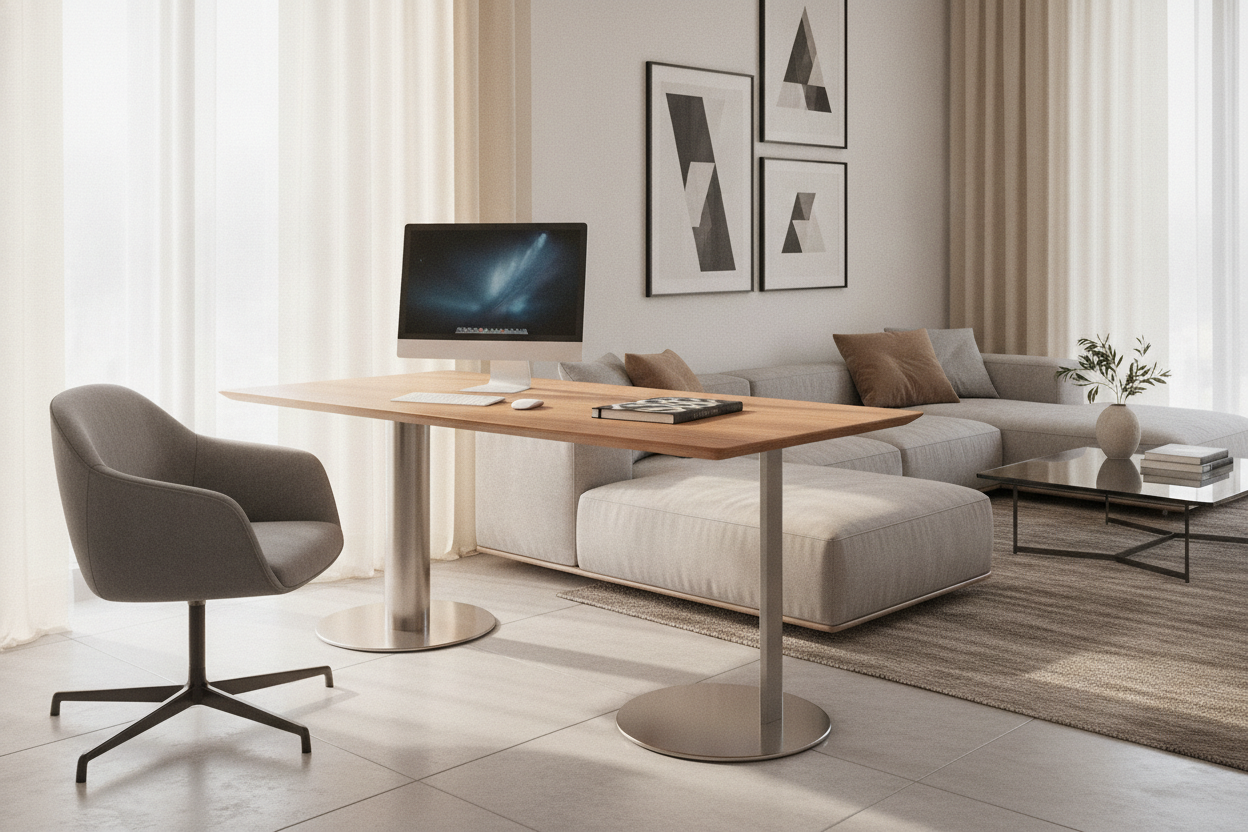
- Mid-Span Support Legs: A central vertical post offers direct load transfer from the middle of the tabletop straight to the floor. While highly reliable, careful placement is necessary so the post does not obstruct leg movement or chair positioning.
- Longitudinal Steel Apron Channels: Stiffener rails mounted along the underside reinforce the span without introducing a middle post, keeping the entire knee space completely open.
Modular Drawer Units as Structural Anchors
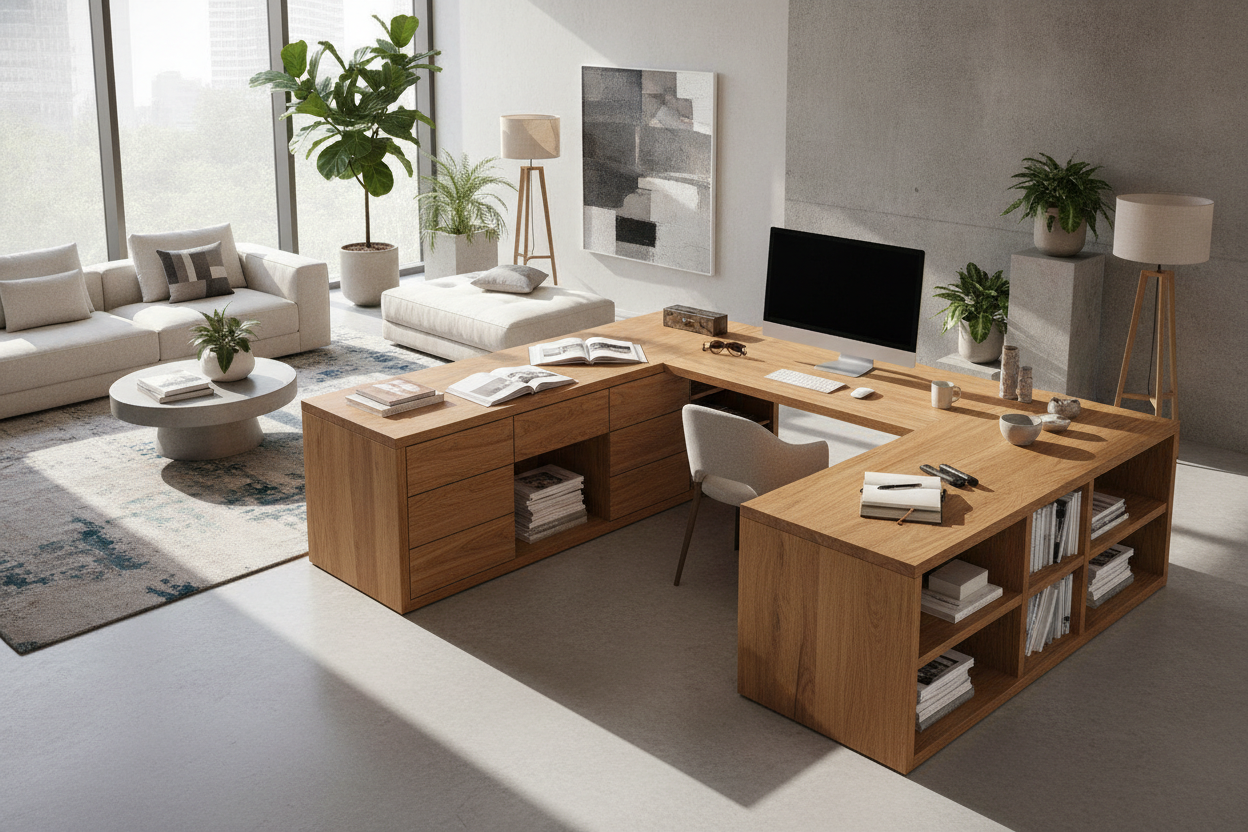
Another popular approach utilizes sturdy storage pedestals as load-bearing anchors. Positioning drawer cabinets at both ends and in the exact center breaks the horizontal span into two balanced, manageable sections. This technique provides continuous downward support while supplying dedicated organization compartments for office supplies, paper files, and hardware accessories.
Popular Layout Archetypes for a 9-Foot Workstation
A broad continuous surface accommodates distinct functional layouts tailored to specific daily routines. Selecting an archetype before arranging equipment ensures balanced weight distribution and ergonomic convenience.
Side-by-Side Dual-User Setup
For co-working partners or two full-time remote professionals, a 9 foot desk provides a generous side-by-side arrangement. By establishing identical left and right work zones separated by a shared central storage unit or subtle divider, both users enjoy personal space, individual task lighting, and dedicated monitor mounts without encroaching on each other's workspace.
Hybrid Tech and Creative Crafting Hub
Single users often utilize a multi-zone layout. One half of the desk hosts a comprehensive computer setup with multiple screens, studio audio monitors, and peripheral docking stations. The remaining span remains entirely clear for drafting, journaling, sketching, or textile work, allowing effortless movement between digital computing and tactile creation.
Expansive Cable Routing and Power Distribution Across 108 Inches
Managing cords across an extended horizontal workstation requires proactive planning to avoid tangled wires hanging beneath the tabletop. Effective cable management maintains clean visual sightlines and simplifies future gear upgrades.
- Dual Under-Desk Cable Trays: Mounting dedicated wire trays beneath both outer zones keeps power bricks, surge protectors, and display cables neatly tucked away.
- Integrated Desktop Grommets: Strategically drilled cable pass-throughs near monitor arms allow cords to drop directly beneath the surface instead of trailing across the desktop.
- Vertical Cord Raceways: Routing bundled cables along the back of a rear leg or behind a central pedestal conceals connections as they travel down to floor outlets.
Coordinating Peripheral Storage and Room Balance
Because an expansive workstation serves as a major focal point, the surrounding walls and accent pieces must maintain visual harmony. Similar to strategies for styling expansive furniture, balancing an ultra-wide desk involves distributing vertical height throughout the room.
Pairing your workstation with vertical bookcases, low-profile FUFU&GAGA credenzas, or coordinated floating shelving draws the eye upward, preventing the room from feeling bottom-heavy. Ensuring matching wood finishes, paint tones, or complementary hardware across surrounding storage units ties the workspace together into a cohesive, inviting interior.
Pre-Purchase and Assembly Planning Checklist
Before ordering components or beginning assembly on a large workstation project, verify these practical room requirements:
- Access Way Clearances: Confirm that hallways, stairwells, and doorways offer sufficient clearance to maneuver long tabletop panels into the intended room.
- Wall and Power Proximity: Map out wall outlet locations relative to your primary equipment zones to determine whether extension cords or integrated power hubs will be necessary.
- Floor Leveling: Wide desks highlight minor slopes in flooring; use adjustable leveling glides beneath support legs and drawer units to ensure a completely flat work surface.
- Surface Care: Establish a maintenance routine using soft microfiber cloths and appropriate surface cleaners suited to your specific wood, laminate, or composite finish.

Dejar un comentario
Este sitio está protegido por hCaptcha y se aplican la Política de privacidad de hCaptcha y los Términos del servicio.