










Spatial Zoning Strategies: Where to Put a Desk in a Living Room
Designing an apartment living room with desk integration requires harmonizing two fundamentally different functions: focused productivity and restful leisure. In compact footprints, treating a workspace as an afterthought often leads to visual chaos, where monitors, cables, and paperwork encroach upon relaxation zones. By approaching the living area with intentional spatial zoning, you can establish dedicated work boundaries while keeping the broader environment welcoming, balanced, and open.
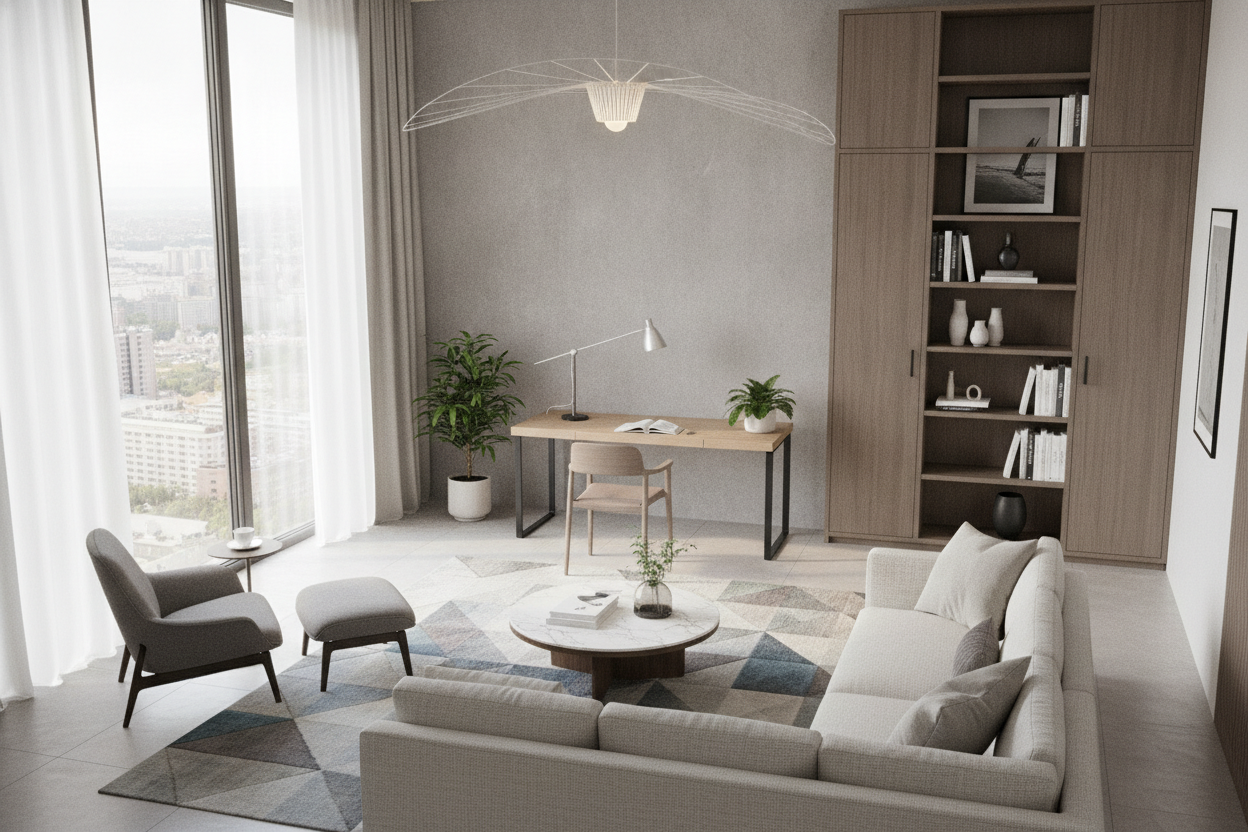
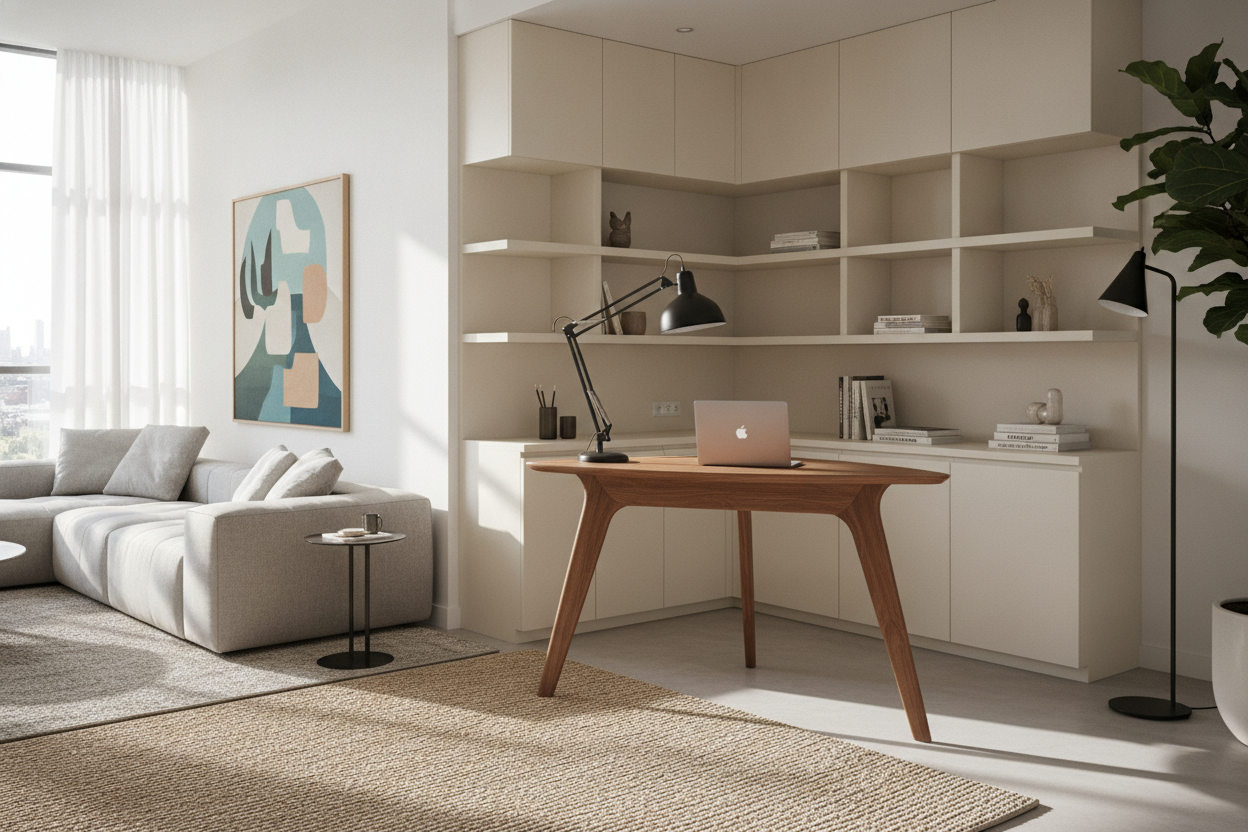
When deciding where to put a desk in a living room, examine the structural boundaries and traffic paths of your room. Perimeter walls offer a clean foundation, allowing slender work tables to sit flush against drywall without obstructing movement. Recessed architectural alcoves or unused corners can be turned into quiet micro-studios by matching the desk surface width to the wall niche. Placing a living room with work desk configuration perpendicular to a window provides natural task lighting without direct screen glare. For deeper layouts, a floating arrangement in the center of the room can anchor distinct zones. To explore foundational spacing principles across compact homes, consult our dedicated where put desk guide.
- Perimeter Placement: Keeps central circulation clear and offers vertical wall space for mounted task lighting or shelves.
- Window Orientation: Enhances daytime focus through natural daylight while keeping monitors angled away from harsh reflections.
- Architectural Niches: Transforms underutilized indentations into built-in style workstations.
- Central Float: Defines room divisions in open-concept floor plans without physical partition walls.
Living Room Desk Table Placement: Behind the Sofa vs. Desk Next to Sofa
One of the most effective techniques for open-plan apartments is the sofa-back placement. Positioning a living room desk table directly behind a floating couch allows the seating frame to act as a natural spatial divider. This configuration prevents the desk from dominating the visual field when you enter the room, as the back cushions obscure lower-level wiring and desk legs. In this setup, the workstation serves a dual purpose, functioning as a console table for decorative lamps or books when you finish working for the day.
Alternatively, placing a desk next to sofa seating works exceptionally well in long, narrow living rooms. In this layout, the work surface stands alongside the arm of the couch, doubling as an extended end table for reading materials or accent decor. When pairing work furniture with substantial seating such as a deep sofa living product, maintain proportionate scale. Choose a desk with slender metal or tapered timber legs to balance the visual weight of heavy upholstery, preserving an airy feel throughout the shared lounge.
Styling Nuances: Maintaining Cohesion with a Desk in Formal Living Room Spaces
Integrating a desk in formal living room layouts presents a unique aesthetic challenge. Work furniture often leans utilitarian, with synthetic laminates and stark silhouettes that clash with warm woods, layered textiles, and refined decorative accents. To keep your work corner unified with the surrounding decor, select desks that share material finishes, hardware tones, and design lines with your coffee tables, sideboards, and media consoles.
Warm walnut, rich oak, fluted panels, and brushed brass details allow work furniture to blend seamlessly into curated living rooms. Selecting an executive or writing table from a dedicated computer desk collection ensures the piece looks like an intentional piece of furniture rather than office equipment. At the end of the day, store task accessories away and display an elegant ceramic tray, a small table lamp, or an art book on the surface to complete the transition from workspace to formal lounge.
- Material Continuity: Match timber stains, metal accents, and paint tones with existing living room cabinetry.
- Dual-Purpose Seating: Use an upholstered accent chair or dining chair that tucks neatly under the desk and complements lounge seating.
- Surface Curations: Swap plastic organizers for stone, leather, or ceramic catchalls that elevate the tabletop aesthetic.
Dual-Zone Storage Solutions and Visual Concealment Tactics
Visual clutter is the primary obstacle to maintaining tranquility in a combined living room and desk area. Exposed cords, notebooks, power adapters, and desktop peripherals quickly erode the calm of a shared living space. A cohesive apartment living room with desk relies on closed storage systems to conceal work paraphernalia once the workday ends.
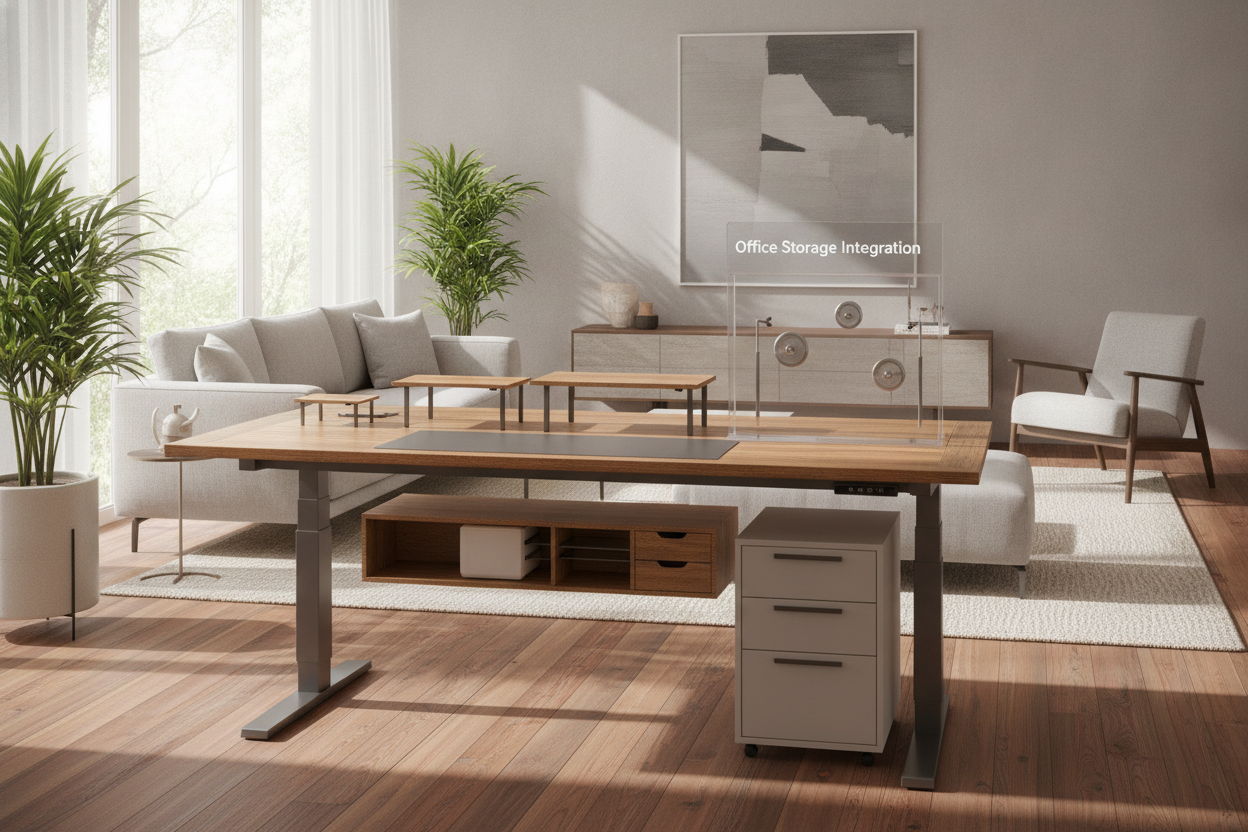
Consider positioning a versatile credenza or closed-door accent piece near your desk. Incorporating a complementary unit, like a multipurpose living bedroom product, gives you ample drawer and cabinet volume for hardware, folders, and tech components. Route cables through discreet raceways along baseboards or furniture legs to eliminate cord tangles. Establishing a clear evening pack-down routine ensures your living room returns to its core purpose as a place of rest and hospitality.
- Tier One (Surface Essentials): Keep only your active machine, a streamlined task light, and a single decorative object on the desk surface.
- Tier Two (Daily Utilities): Store notebooks, pens, and daily chargers in shallow desk drawers or matching desktop boxes.
- Tier Three (Secondary Storage): Keep printers, paper archives, and bulk electronics tucked inside adjacent closed cabinetry.
Spatial Trade-Offs: Computer Desk in Living Room or Bedroom?
Deciding between a computer desk in living room or bedroom footprints comes down to personal habits, daily schedules, and floor plan dynamics. A living room desk benefits from greater natural light, wider spatial clearance, and a lively atmosphere during daytime hours. However, in shared households, ambient noise from television viewing or cooking can interrupt focus during critical meetings.
Conversely, a bedroom workstation offers privacy and acoustic isolation, but bringing office equipment into a sleep environment can disrupt evening relaxation. If you lean toward setting up a dedicated desk in your sleeping quarters instead, reviewing our bedroom desk next guide can help you navigate tight clearances and restful zoning. Ultimately, selecting the right placement depends on how your household uses communal rooms throughout the day.
By prioritizing deliberate zoning, unified materials, and discrete storage, an apartment living room can support productive work hours while remaining an elegant sanctuary for evening downtime.

Dejar un comentario
Este sitio está protegido por hCaptcha y se aplican la Política de privacidad de hCaptcha y los Términos del servicio.